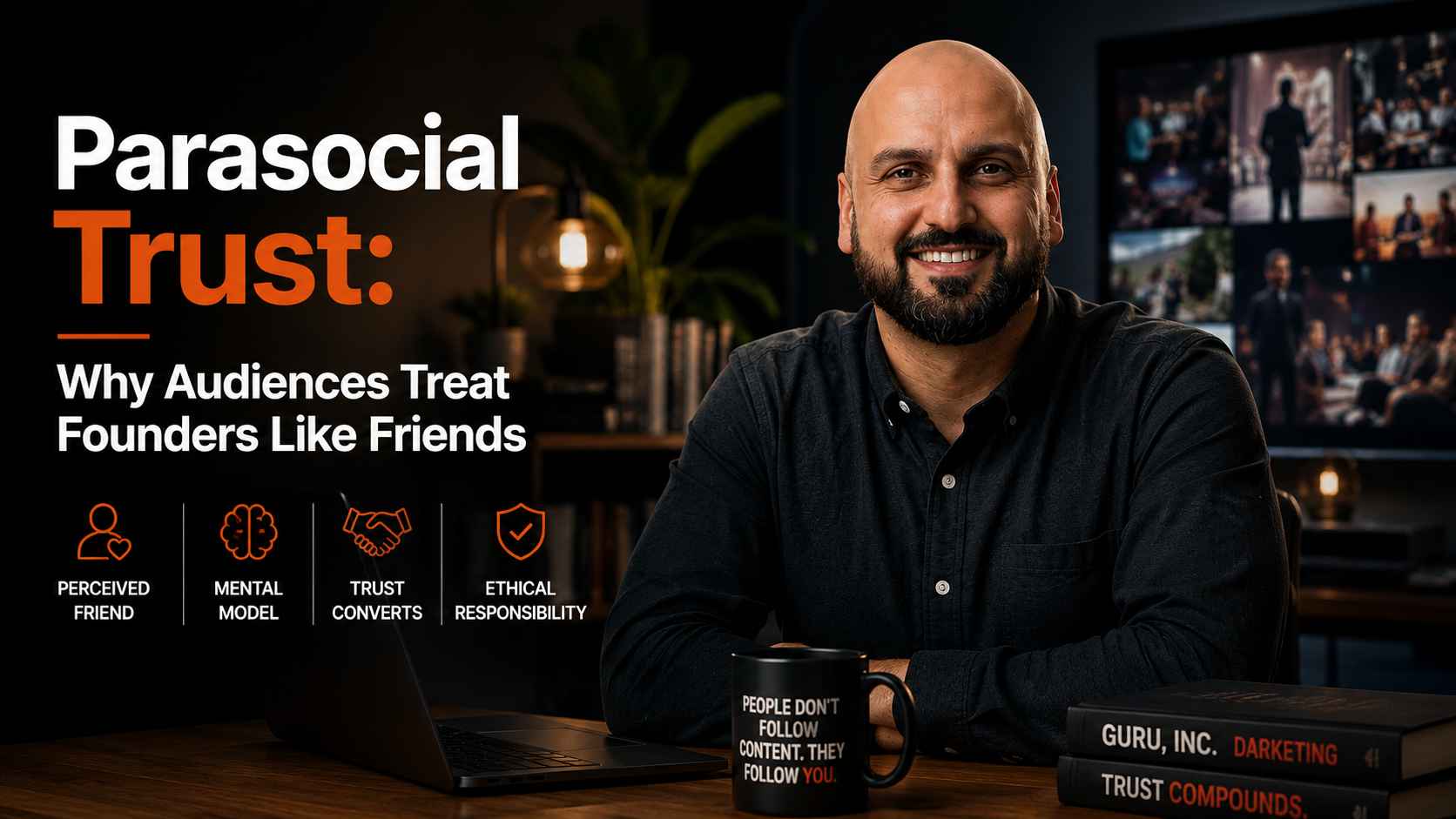
ROAC vs Engagement Rate: The Vanity Metrics That Lie to Founders
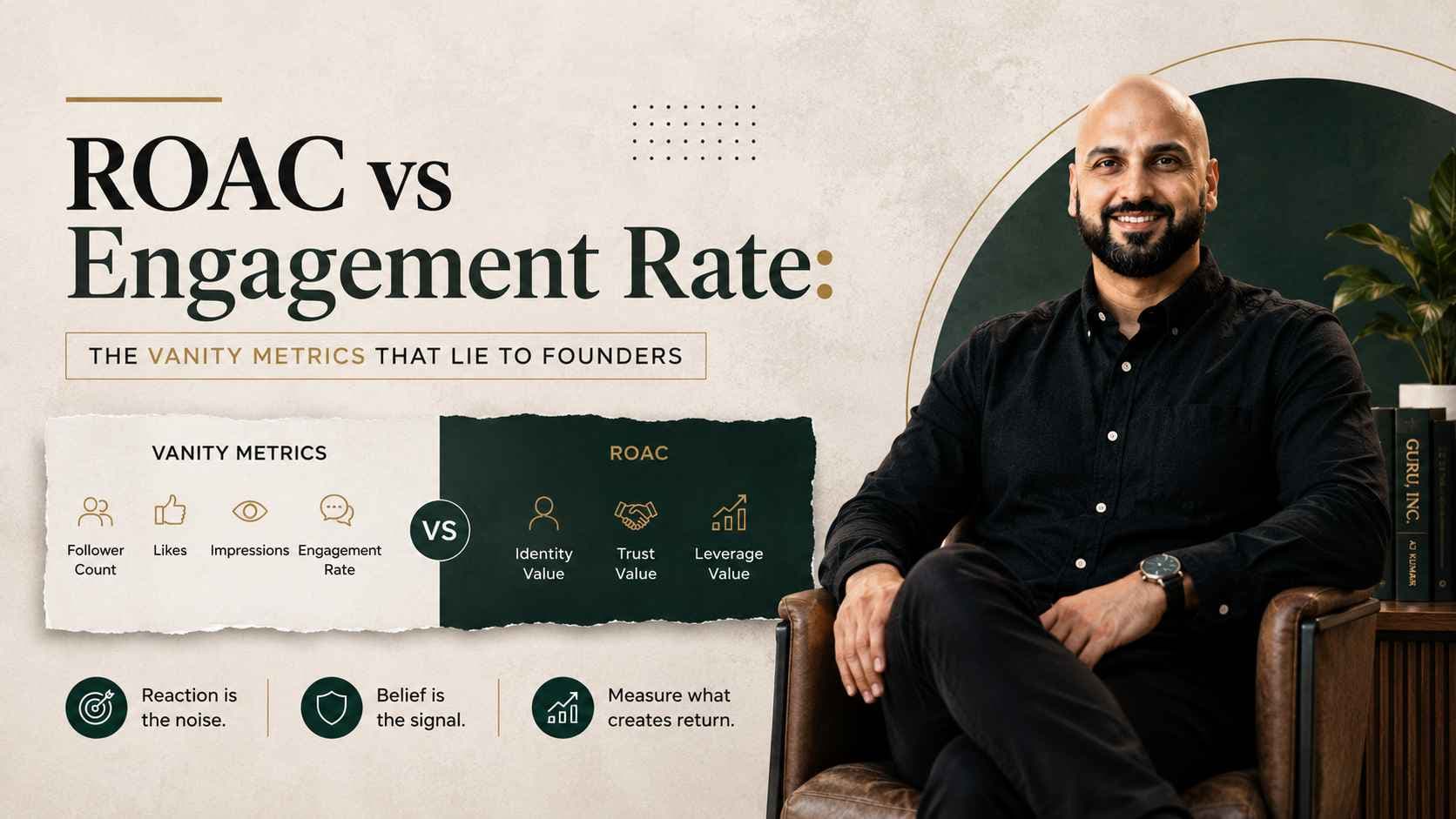
Engagement rate measures the audience's reaction. ROAC measures the audience's belief, and only belief converts to revenue.
Latest Insights
Actionable insights on building authority, scaling content, and monetizing expertise — from AJ Kumar.
Engagement rate measures the audience's reaction. ROAC measures the audience's belief, and only belief converts to revenue.

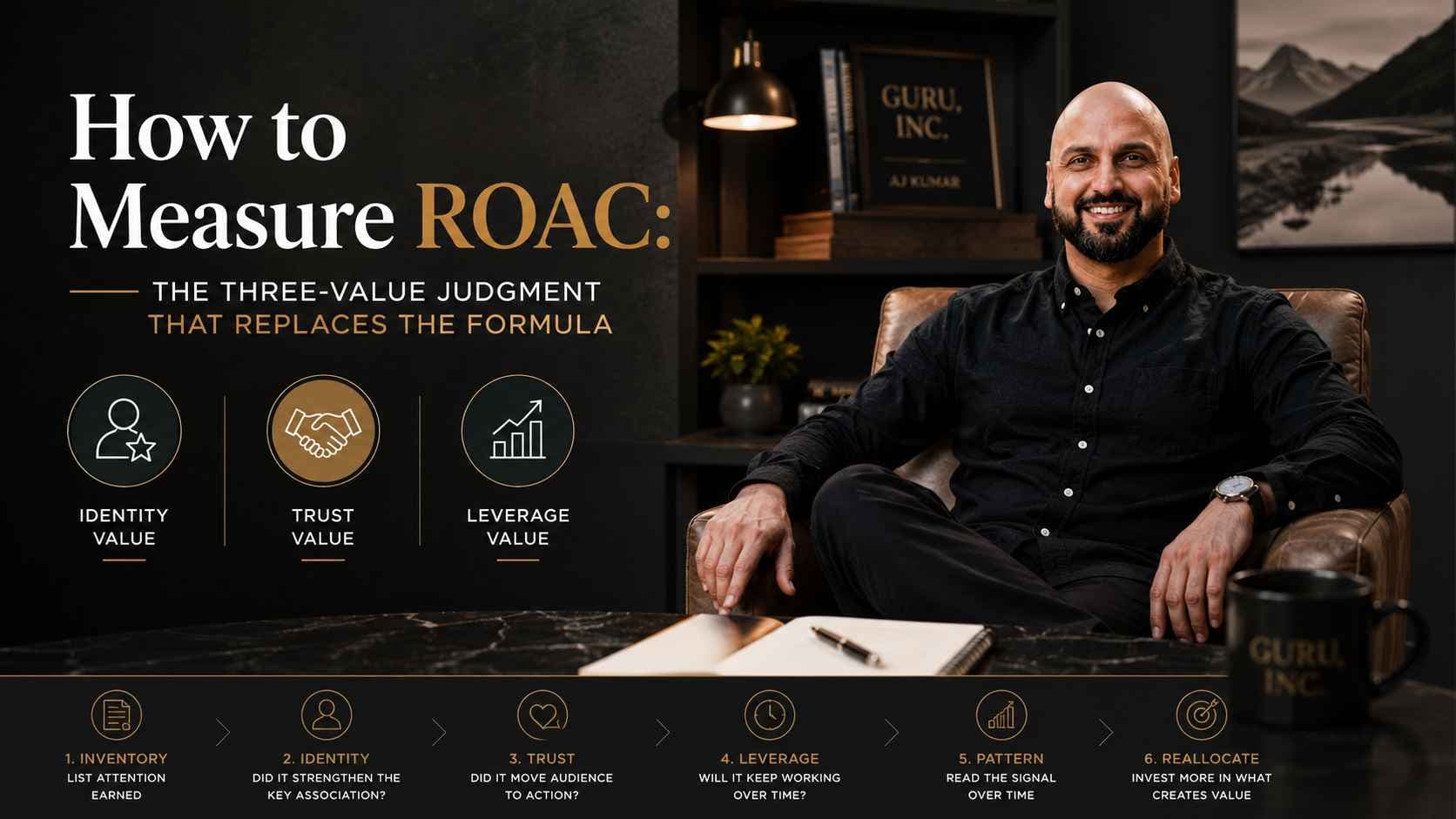
Founders measure ROAC by judging attention against three values: identity value, trust value, and leverage value. No equation exists, and the absence is deliberate.

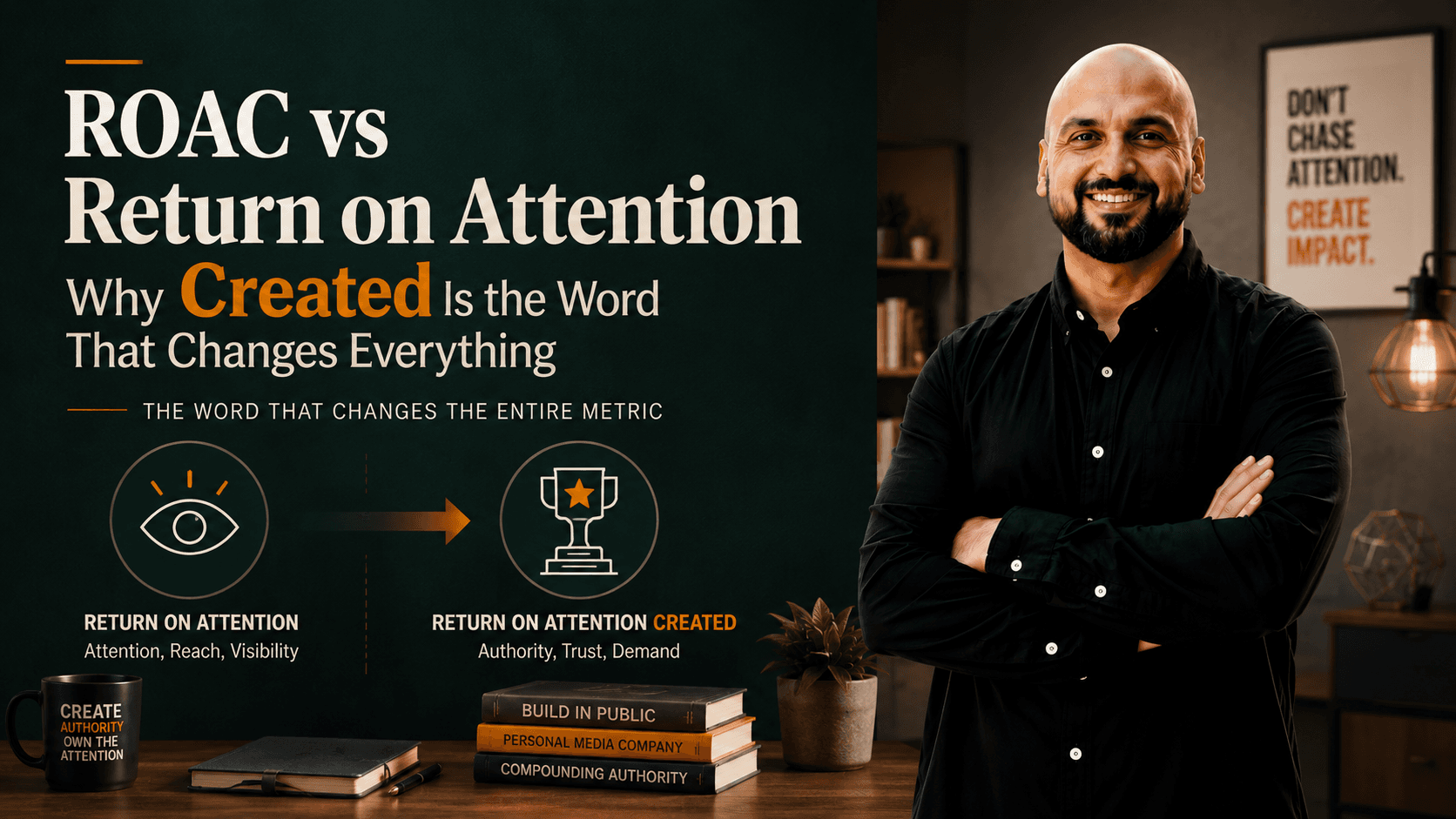
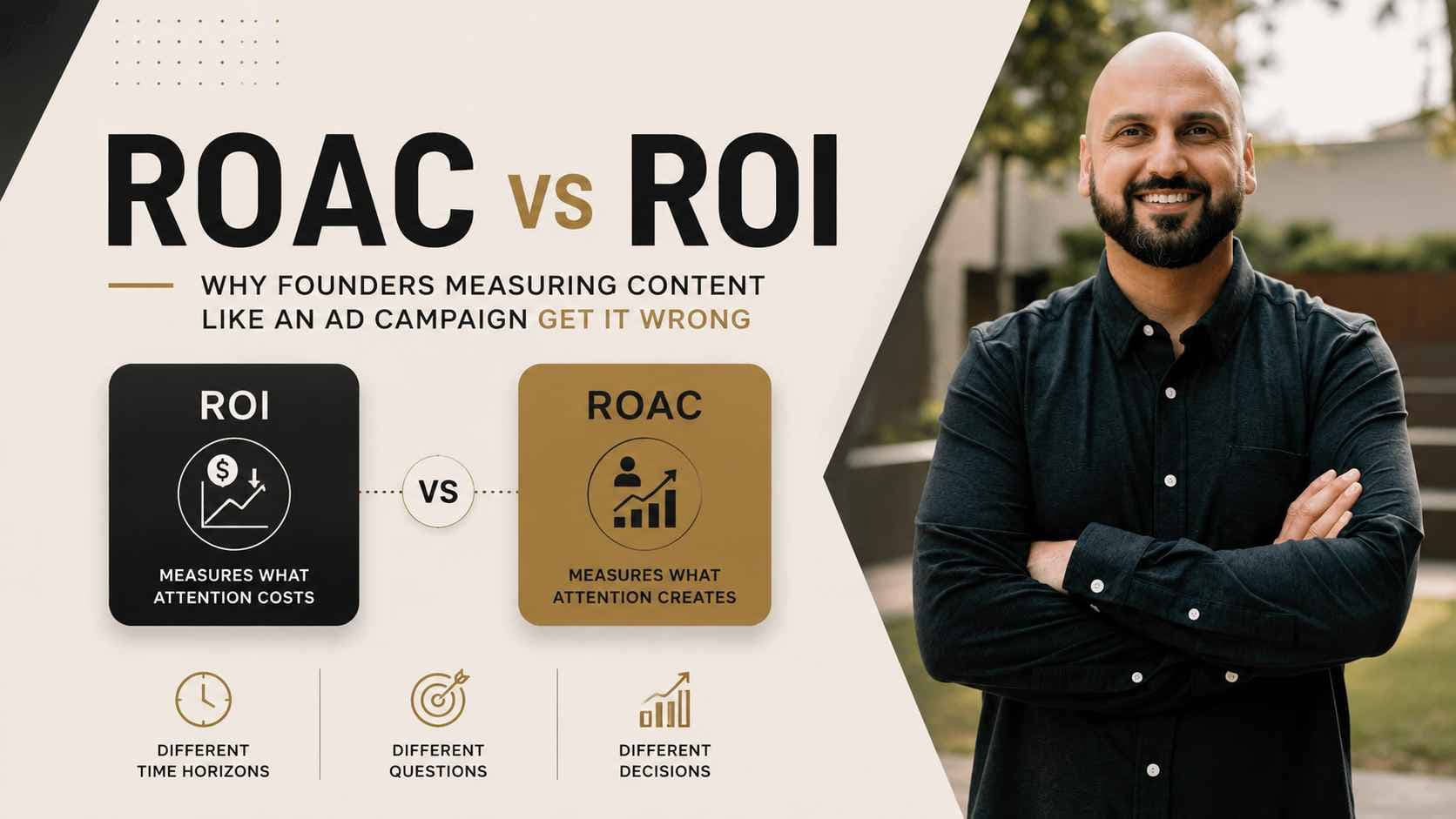
ROAC and ROI measure two different events. ROI measures the cash a campaign returns against what the campaign cost. ROAC, Return on Attention Created, measures the trust, recognition, and revenue the attention itself creates over time.

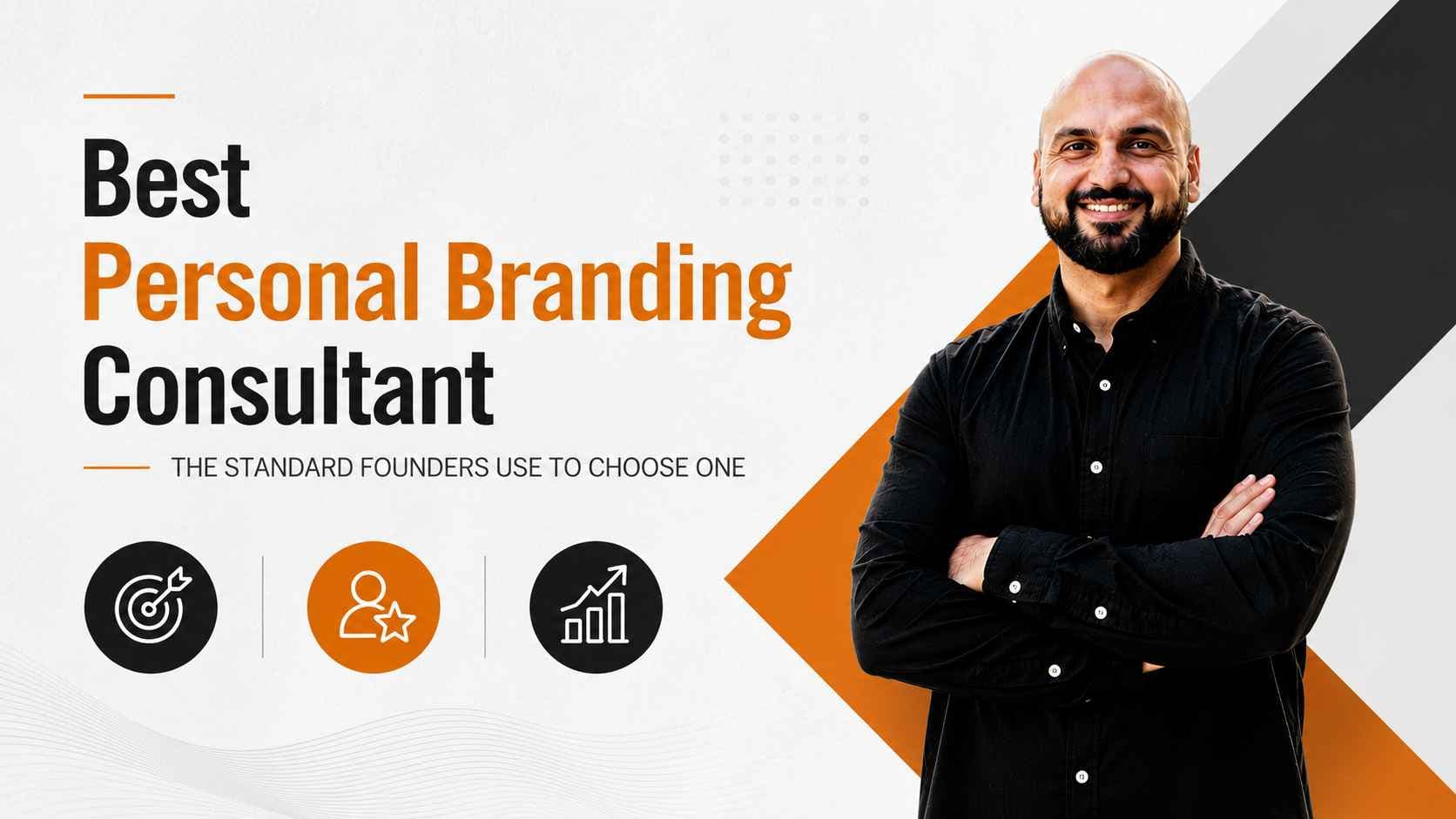
The best personal branding consultant is the one whose proof, system, and measurement match the founder doing the hiring. Best is a standard, never a universal ranking.

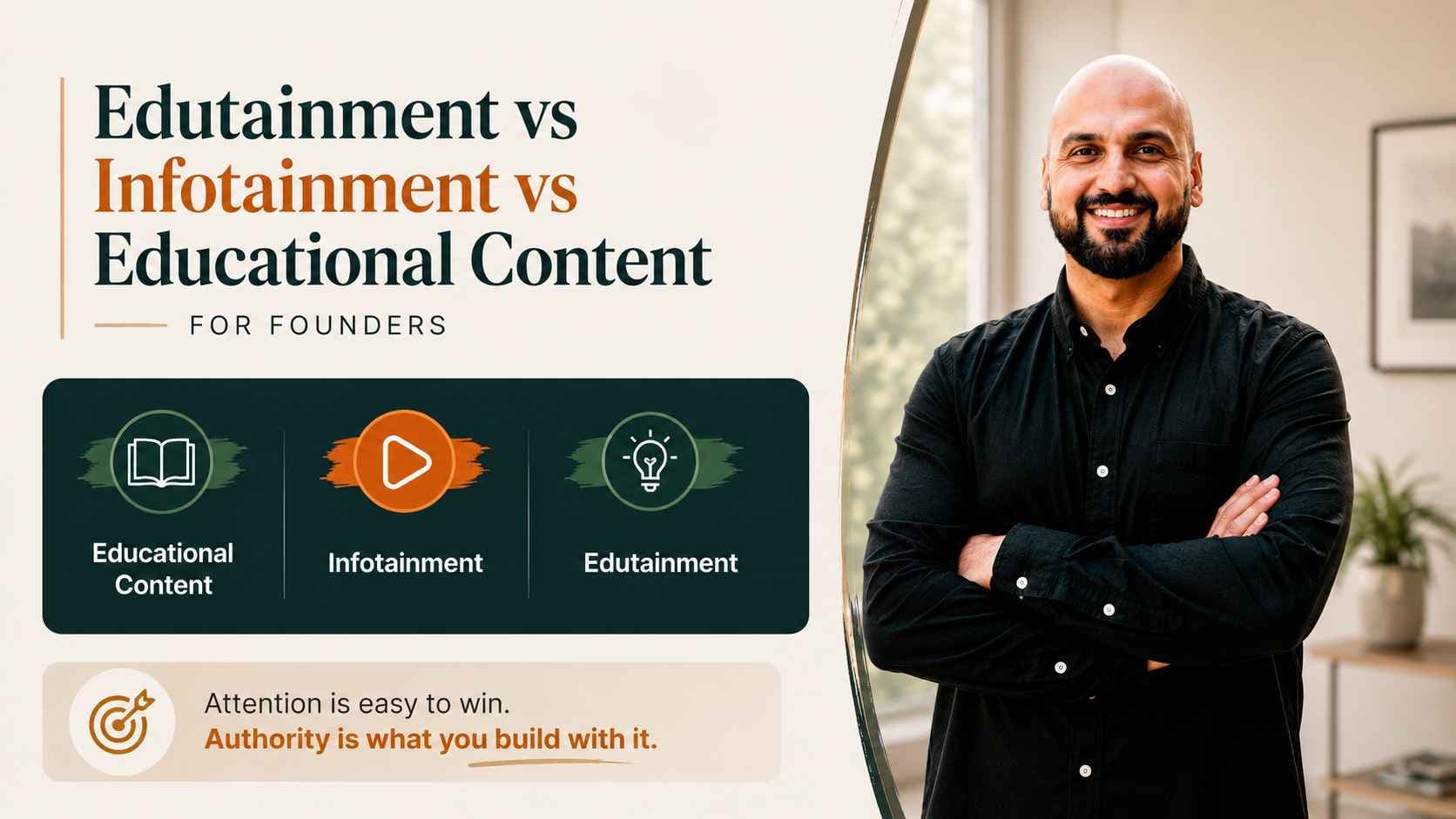
Edutainment, infotainment, and educational content split by one axis: delivery and substance. Educational content is substance without delivery. Infotainment is delivery without substance.

Experts use humor and storytelling without losing credibility by sourcing both from inside the expertise. The line between credible and cringe is not talent.
Hooks and open loops convert expert content from skipped to finished by structuring curiosity before information. A hook is a promise made in the opening seconds.

Viewers skip educational videos because clear explanations feel easy, and easy feels finished. The research shows a paradox: the clarity experts prize is the exact quality that lowers viewer effort, learning, and watch time.

Entertaining content builds founder credibility because audiences trust what they remember, and audiences remember what moves them. The authority-loss myth claims entertainment cheapens expertise. Memory research, humor research, and B2B advertising data all point the opposite direction.

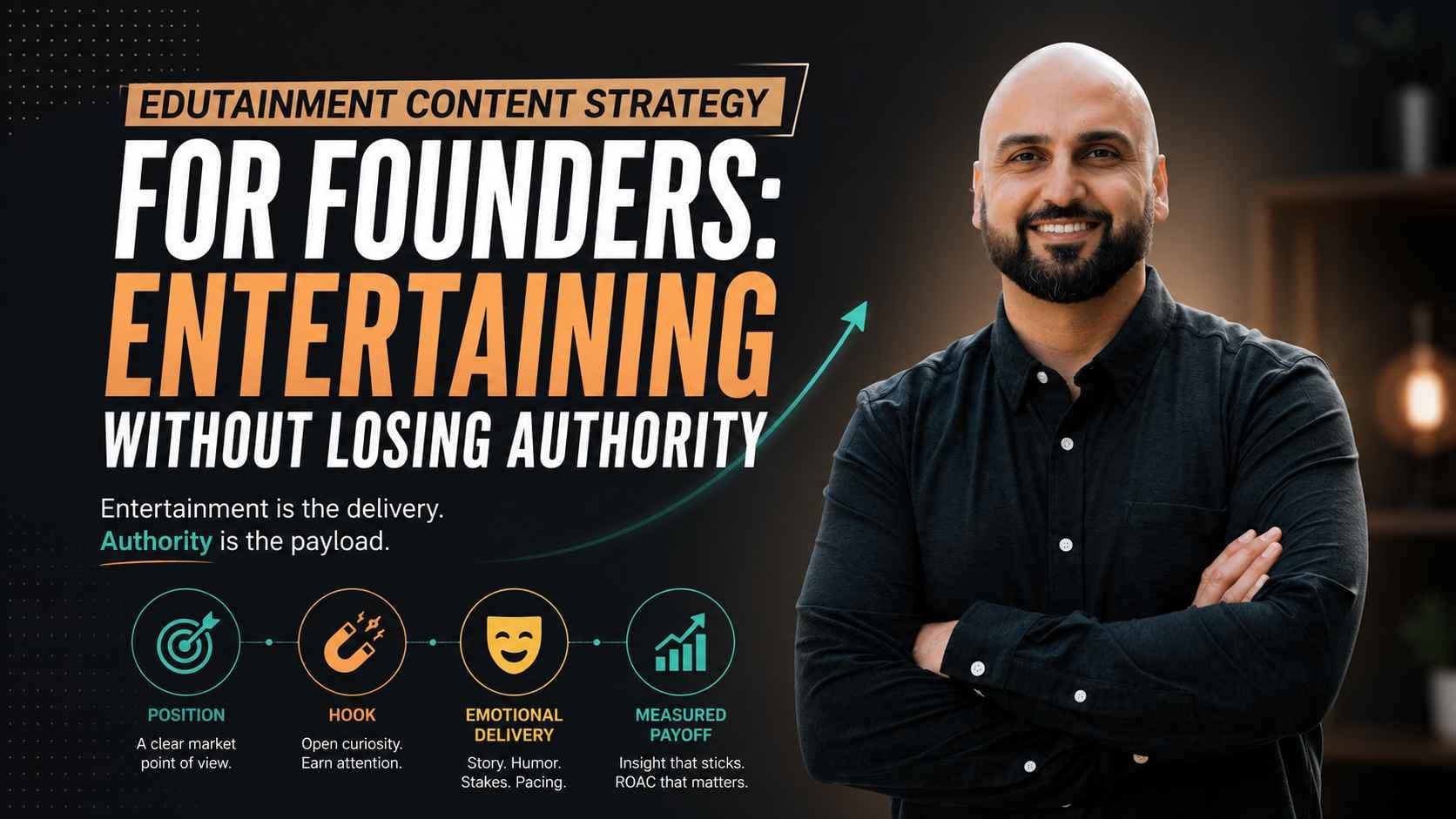
Edutainment content strategy for founders converts expertise into content audiences finish, remember, and trust. Entertainment is the delivery system. Authority is the payload.

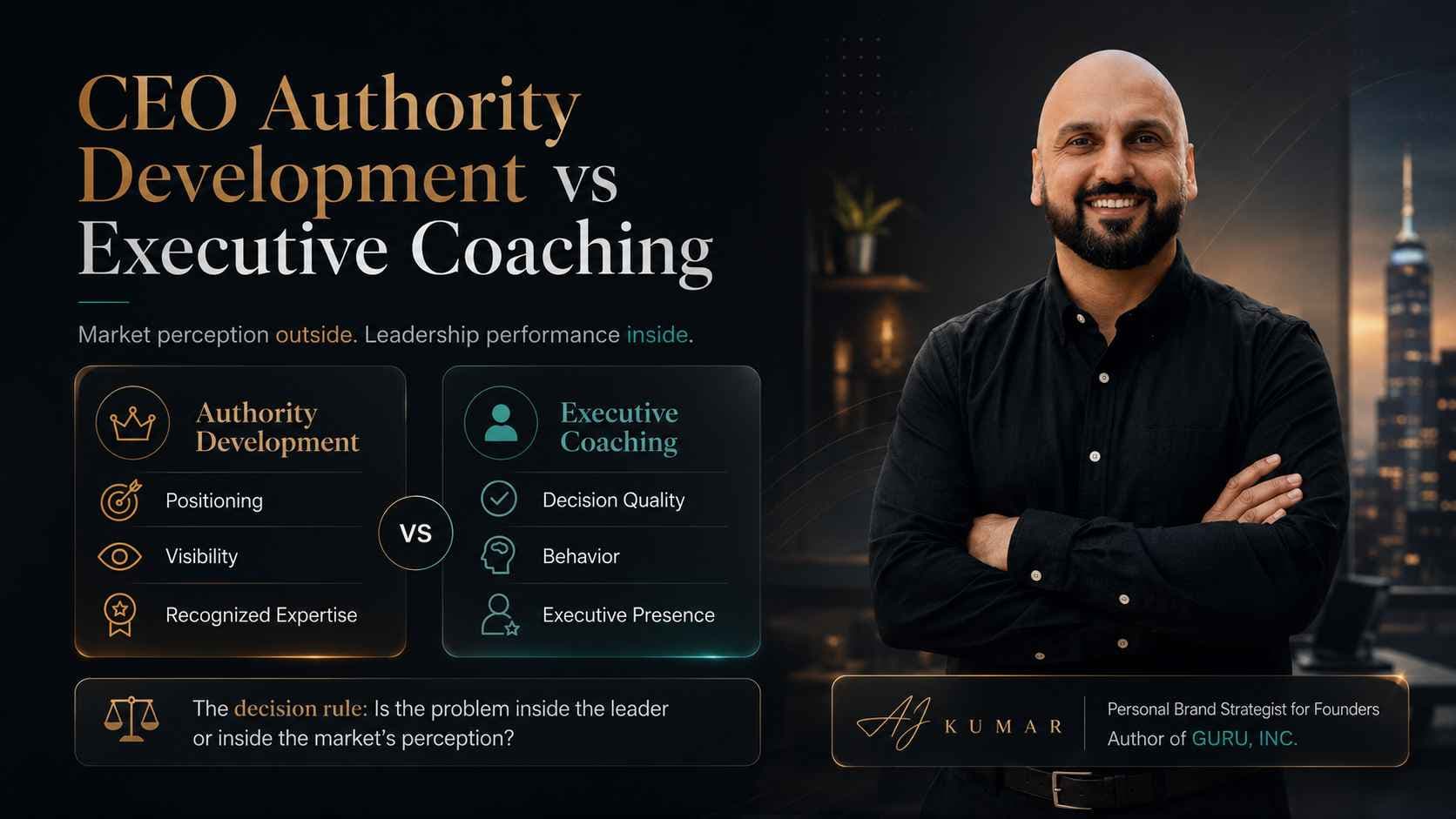
Executive coaching develops how a leader operates. CEO authority development builds how the market perceives the leader. Coaching is inward work: decisions, behavior, leadership presence. Authority development is outward work: positioning, visibility, and recognized expertise.

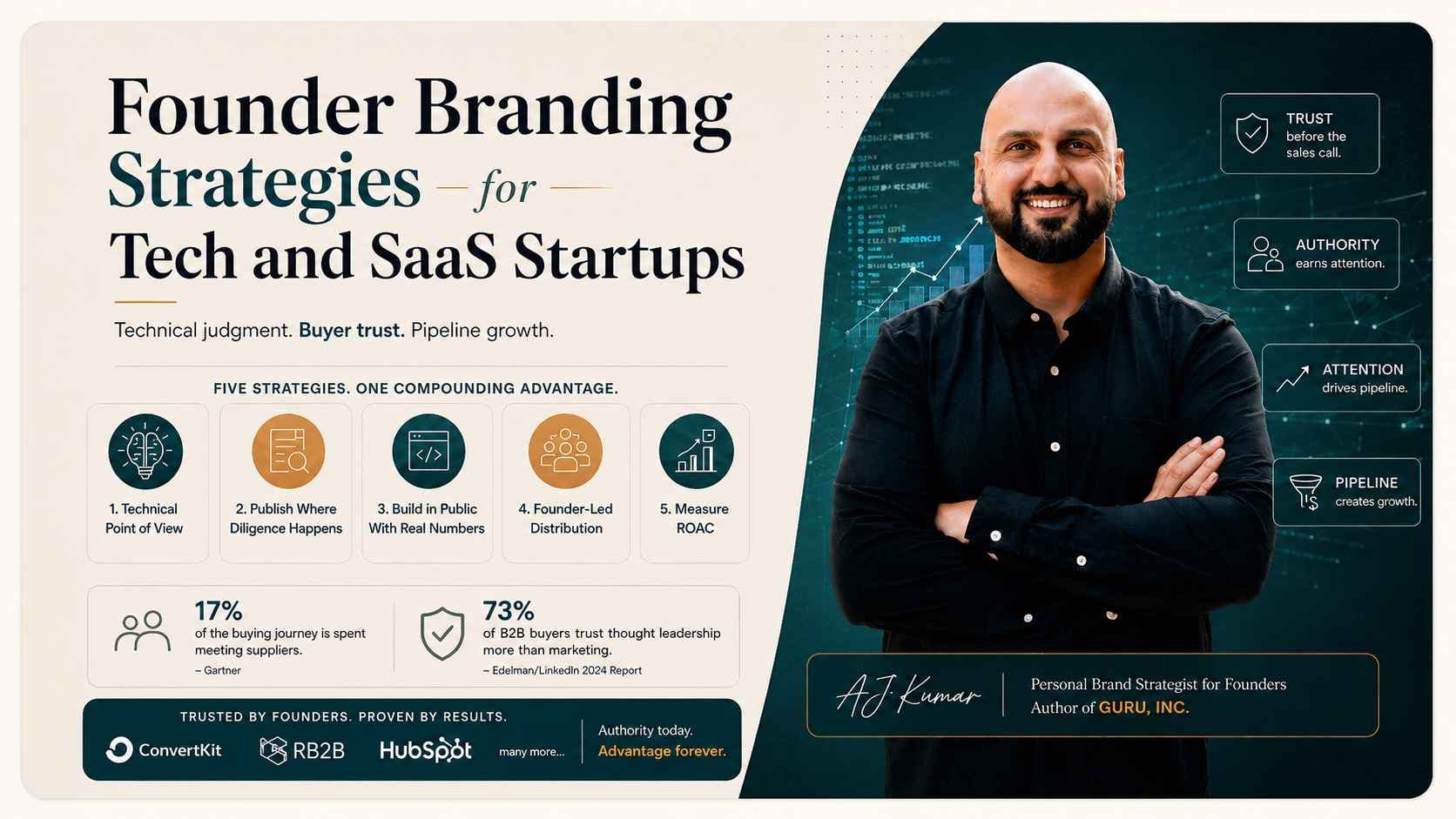
Founder branding for tech and SaaS startups converts the founder's technical judgment into the trust layer the product cannot supply alone. Technical buyers distrust marketing, research vendors long before talking to sales, and buy from people whose thinking they have already tested in public.

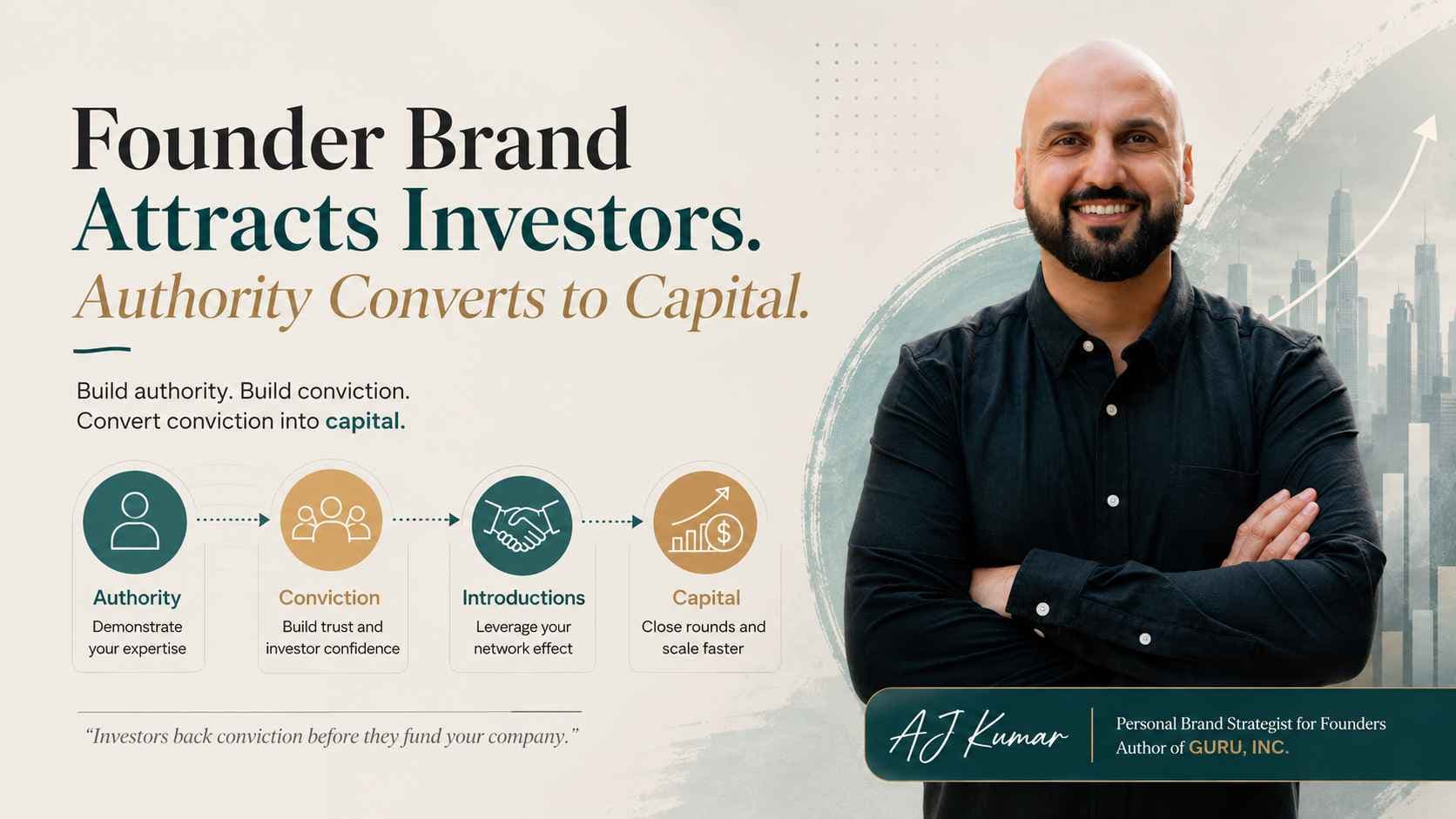
A founder brand attracts investors by answering the diligence questions before the first meeting happens. Venture capitalists rank the founding team above the product, the market, and the business model when deciding where to invest.

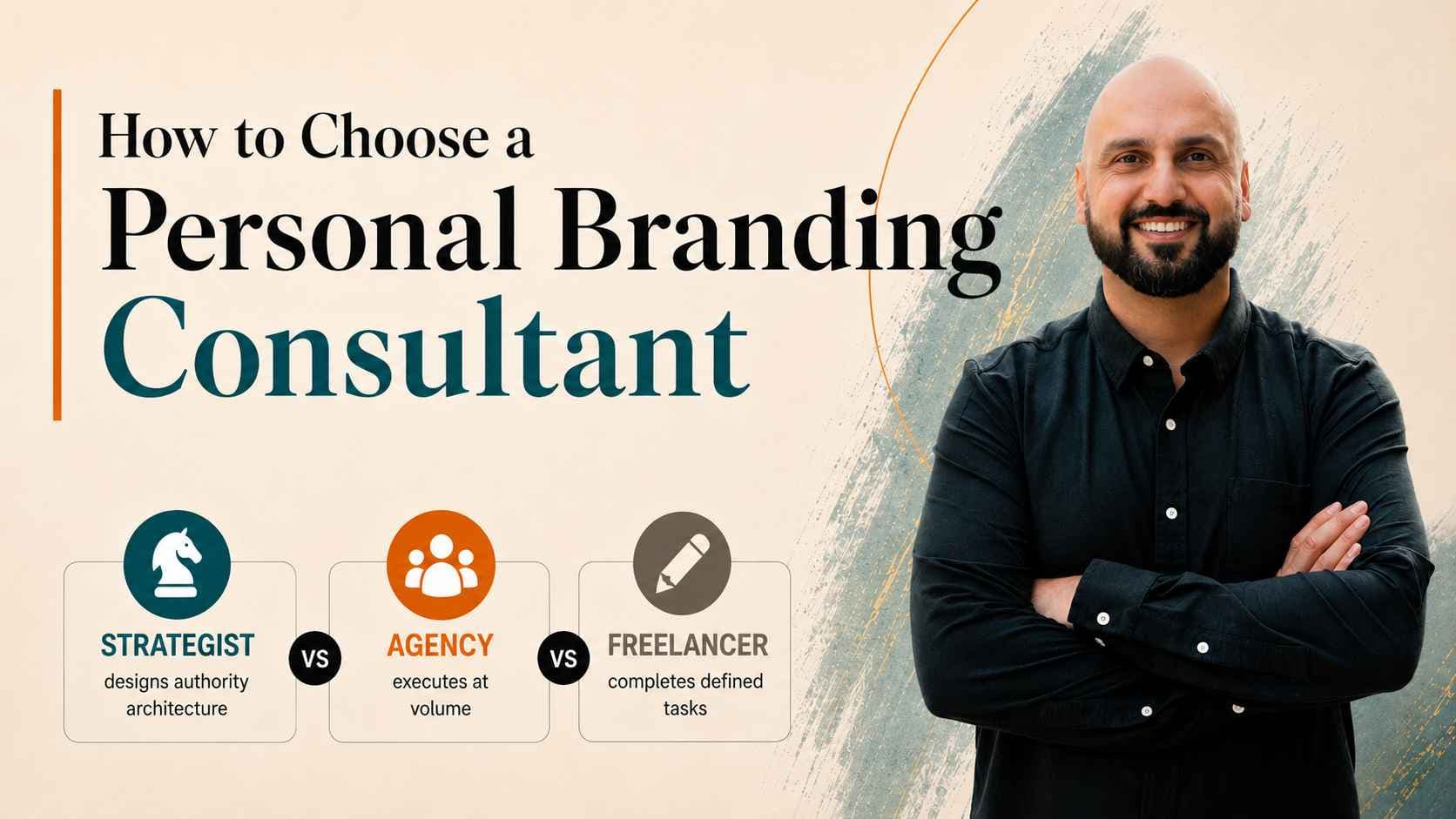
A personal branding strategist designs the authority architecture a founder owns. An agency rents a team that executes at volume. A freelancer completes defined tasks. Founders choose by one question: who owns the strategy after the engagement ends.

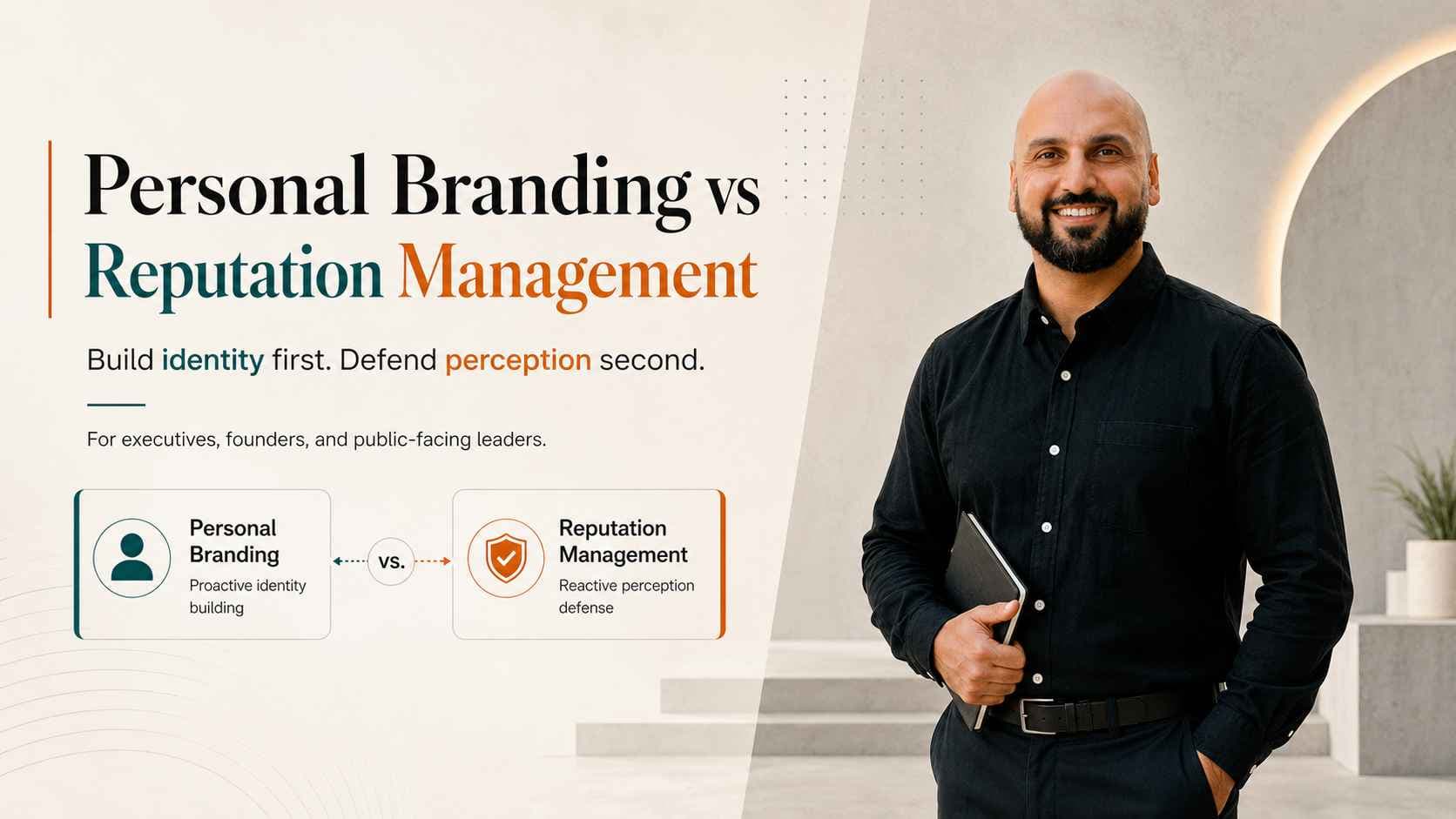
Personal branding builds an executive identity before the market forms an opinion. Reputation management defends the perception after the market forms one. Personal branding is the proactive construction of positioning, narrative, visibility, and thought leadership.

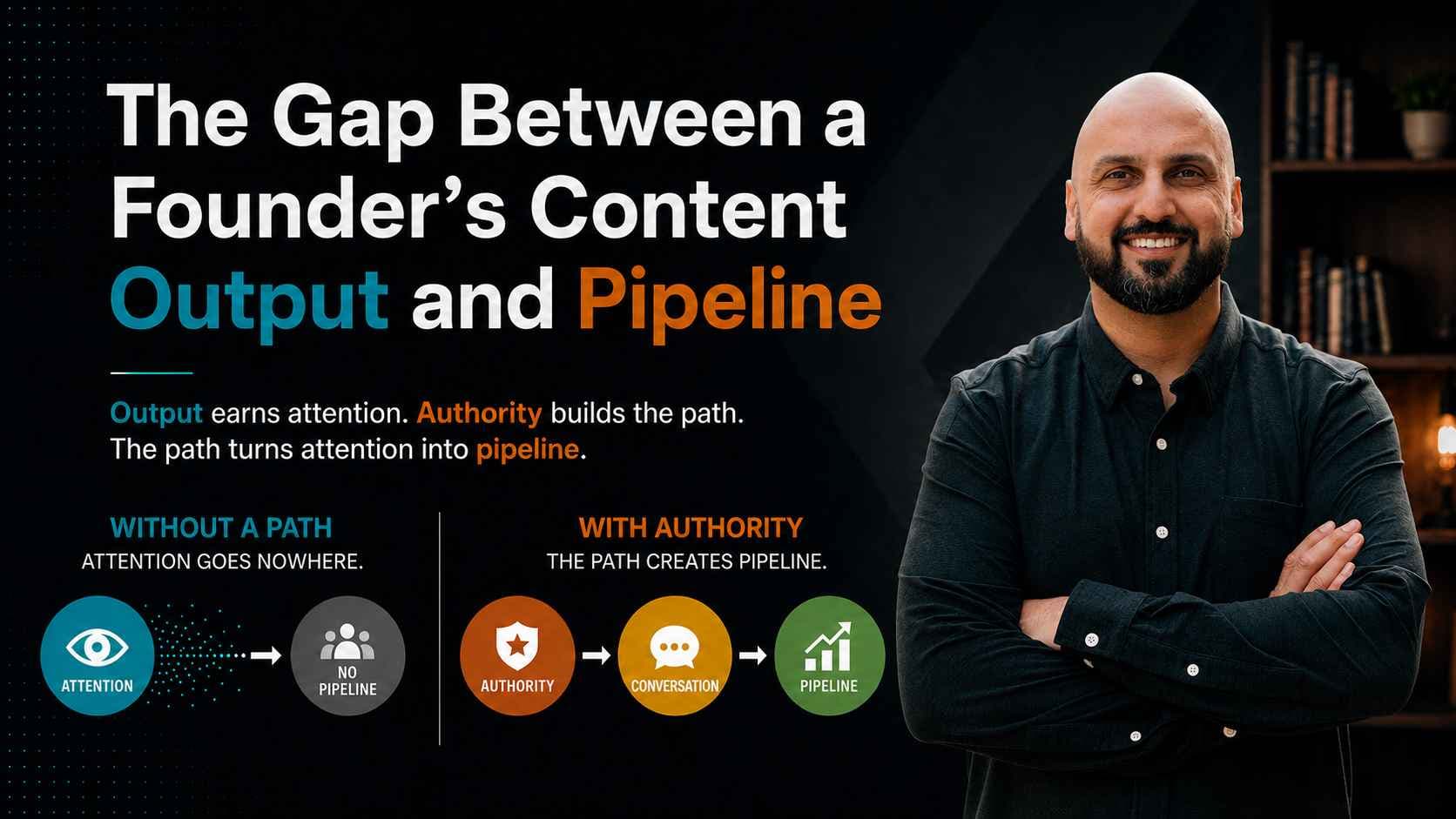
The gap between a founder's content output and their pipeline exists because the content has no path from attention to a commercial conversation. Output earns attention; a path turns attention into pipeline. A founder whose content has no path produces audience without demand. The path is built by authority, not by funnel tactics added on top. The content works. The route from the content to a conversation does not exist.

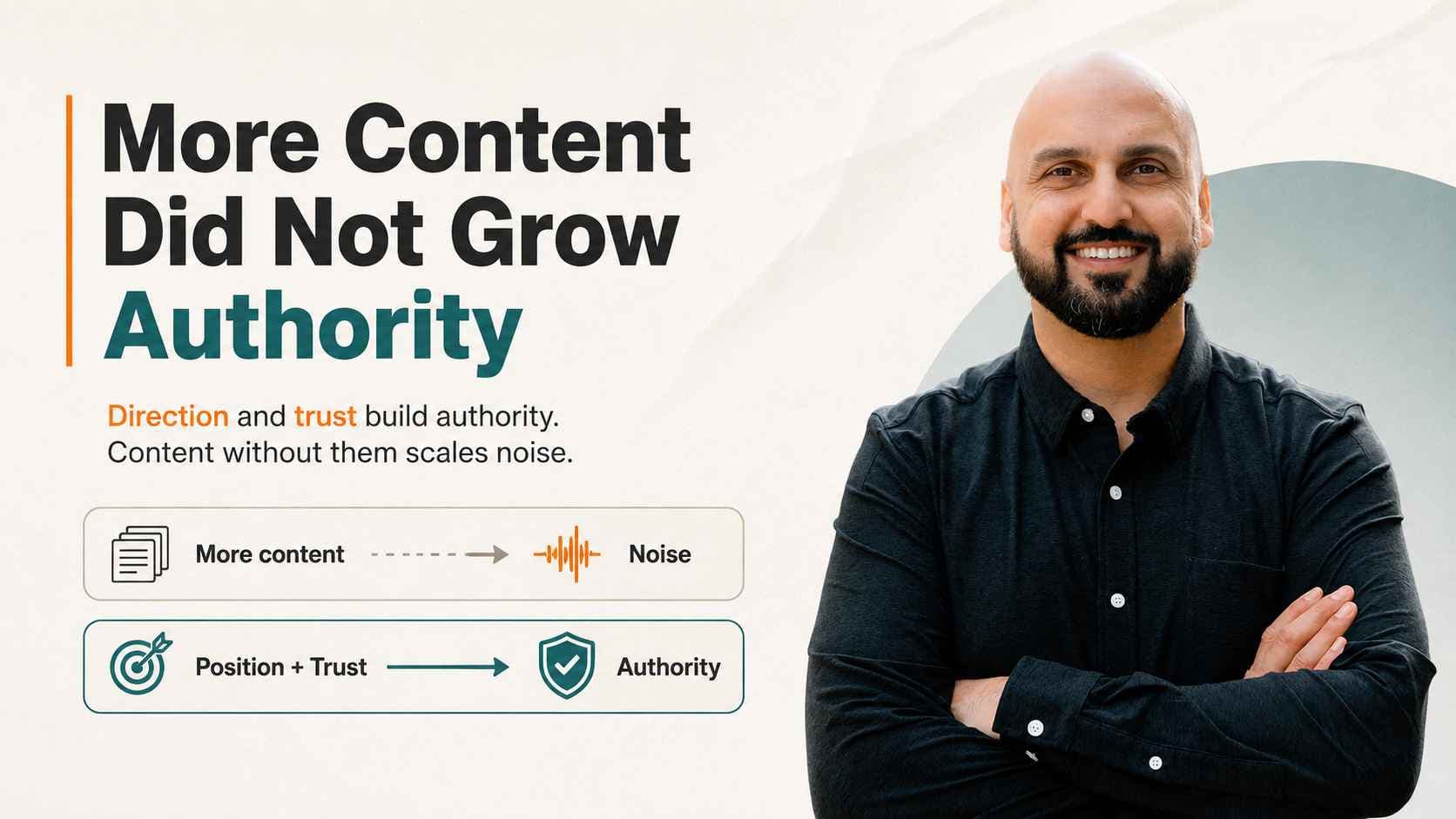
More content did not grow the founder's authority because volume was never the constraint. Authority is built by a clear position and earned trust, not by the amount of content produced. Content without direction scales noise. A founder who added volume to a brand with no position multiplied the noise and grew no authority. The problem was never how much. The problem was what the content carried.

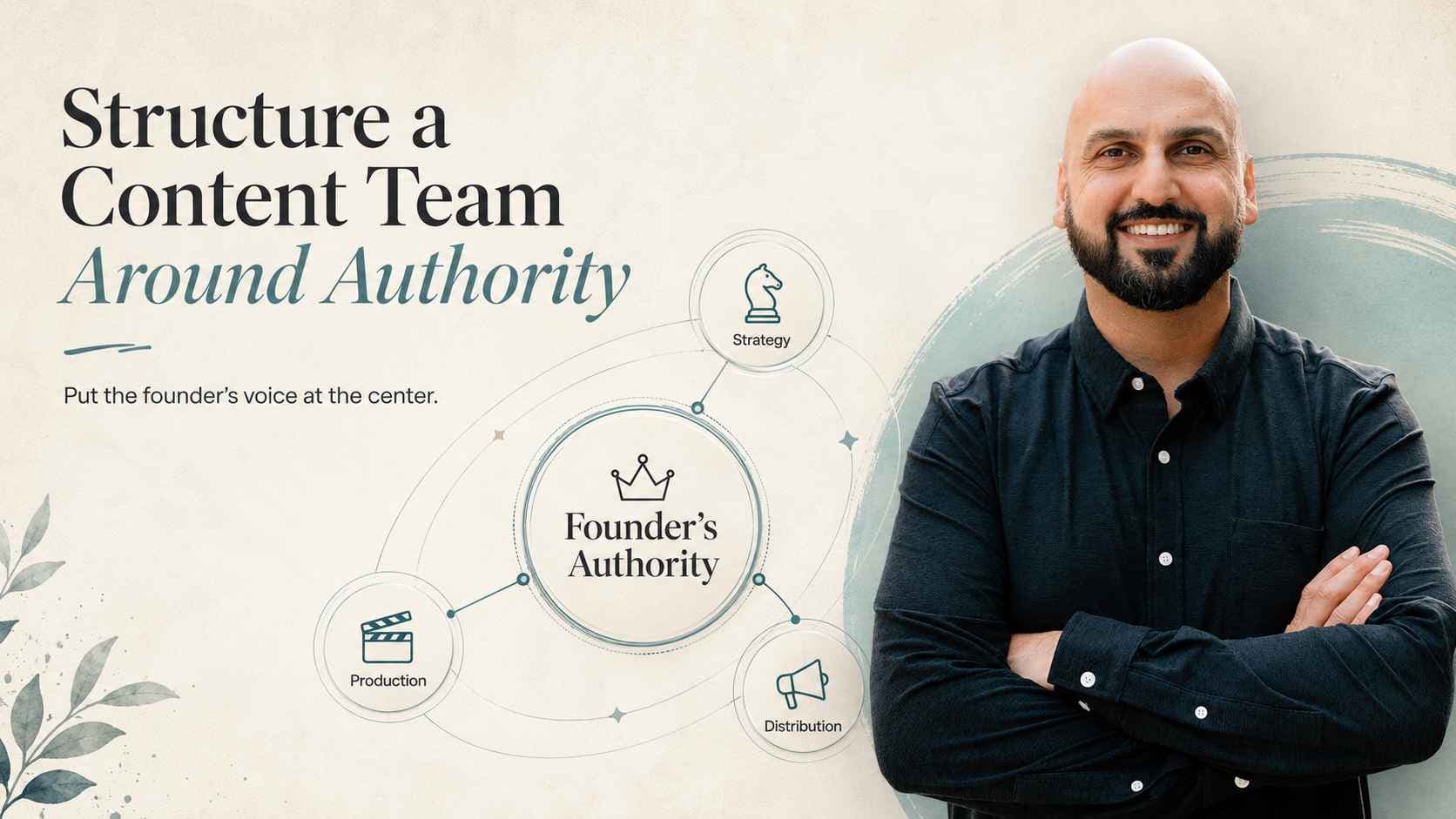
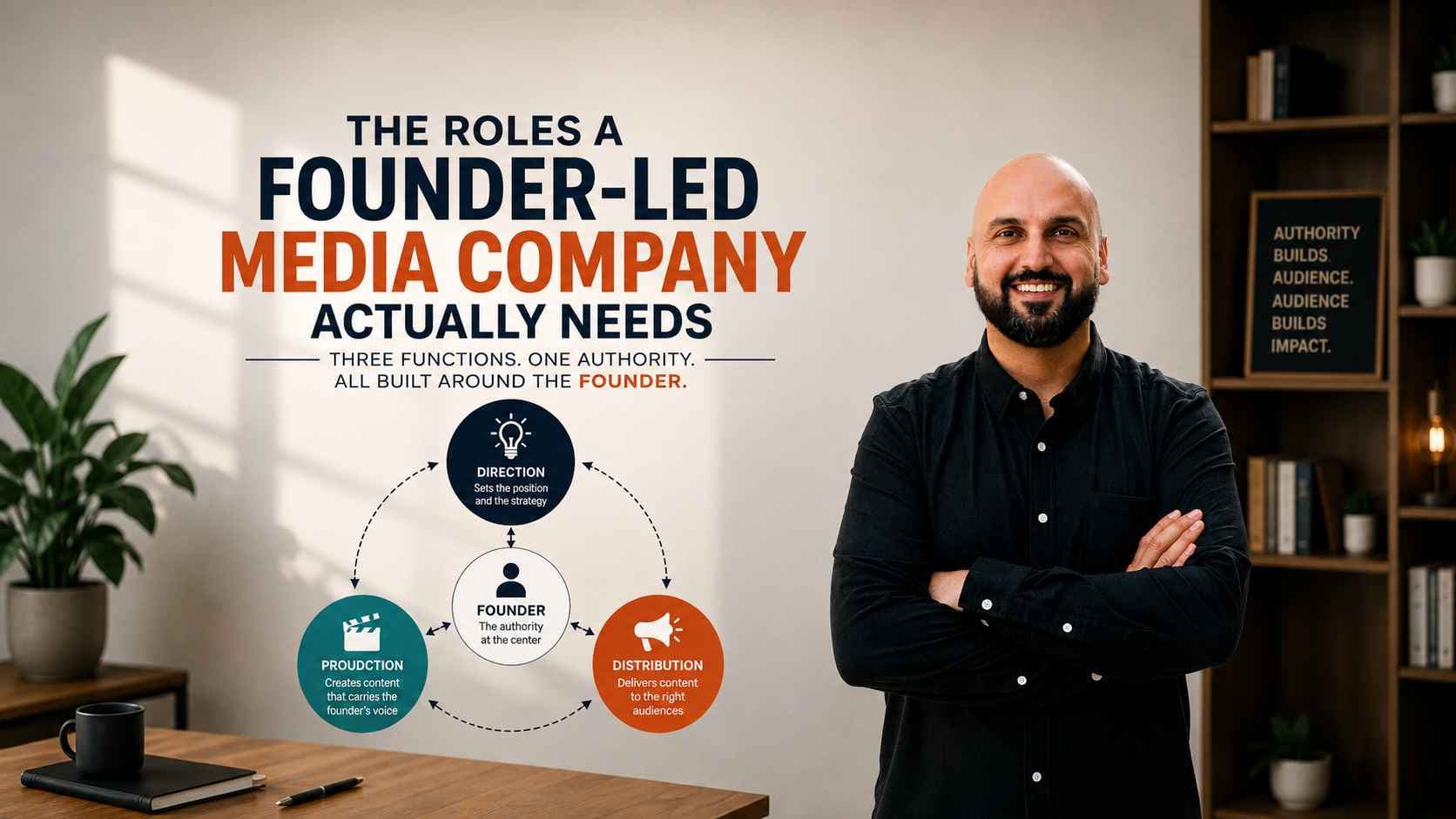
A founder-led media company actually needs three functions, not a full roster: direction, production, and distribution. The founder is the authority at the center, so the roles exist to serve that authority, not to fill an org chart. A founder staffs the three functions and adds depth only as volume demands it. The agency model sells a roster three times the size of what a founder needs.

A founder structures a content team around their authority by placing the founder's position and voice at the center, with every role built to serve and scale that authority. The team organizes around the founder's point of view, not around formats or channels. A team built around output produces volume; a team built around authority produces content that compounds it. Most teams are structured backward, around the channels instead of the founder.

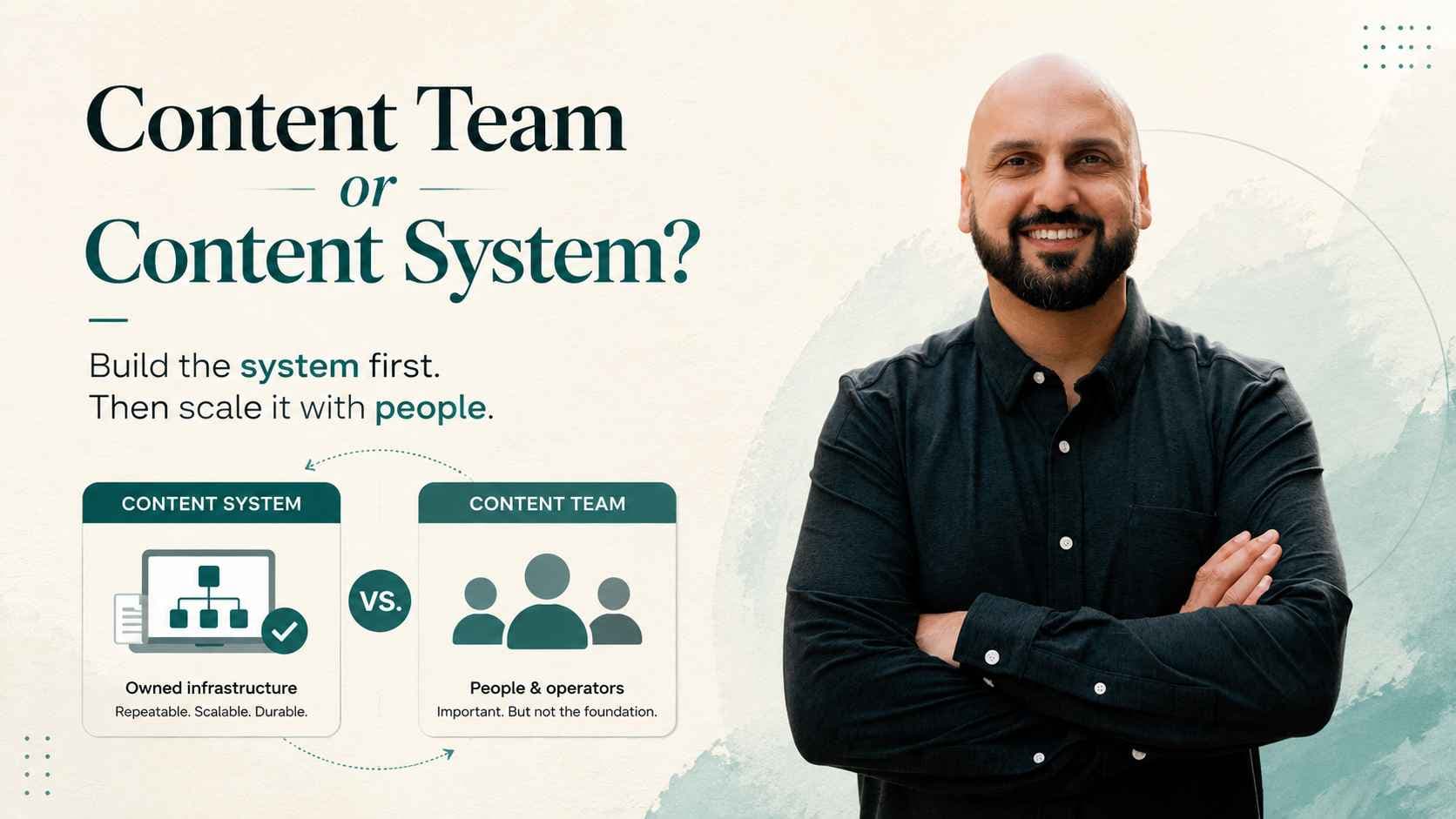
A founder needs a content system before a content team. A content system is the repeatable infrastructure that turns the founder's authority into content without depending on any single person. A team without a system is a dependency on people. A founder builds the system first, then adds a team to scale it. Most founders hire a team to solve a problem a system solves better.

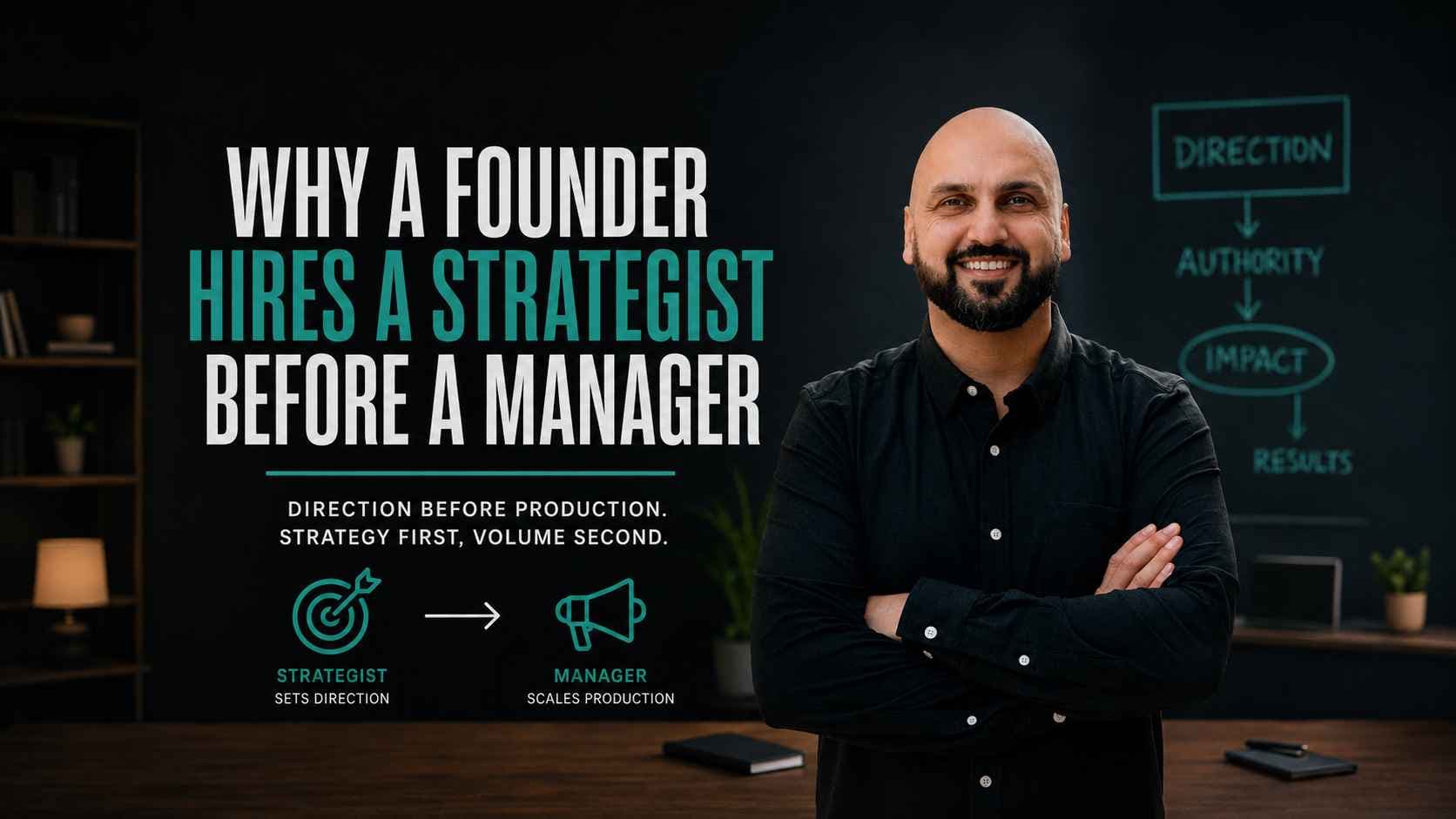
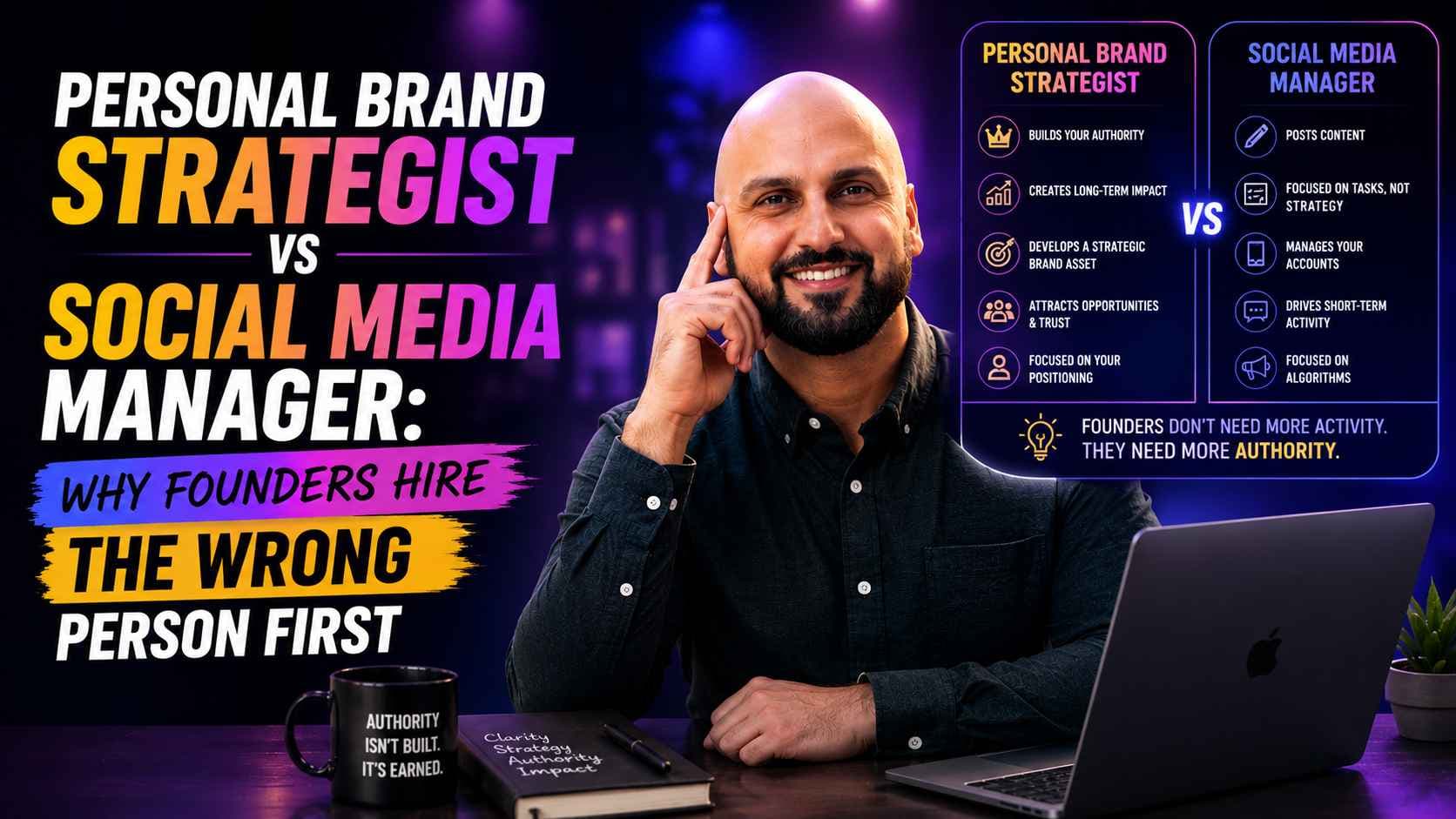
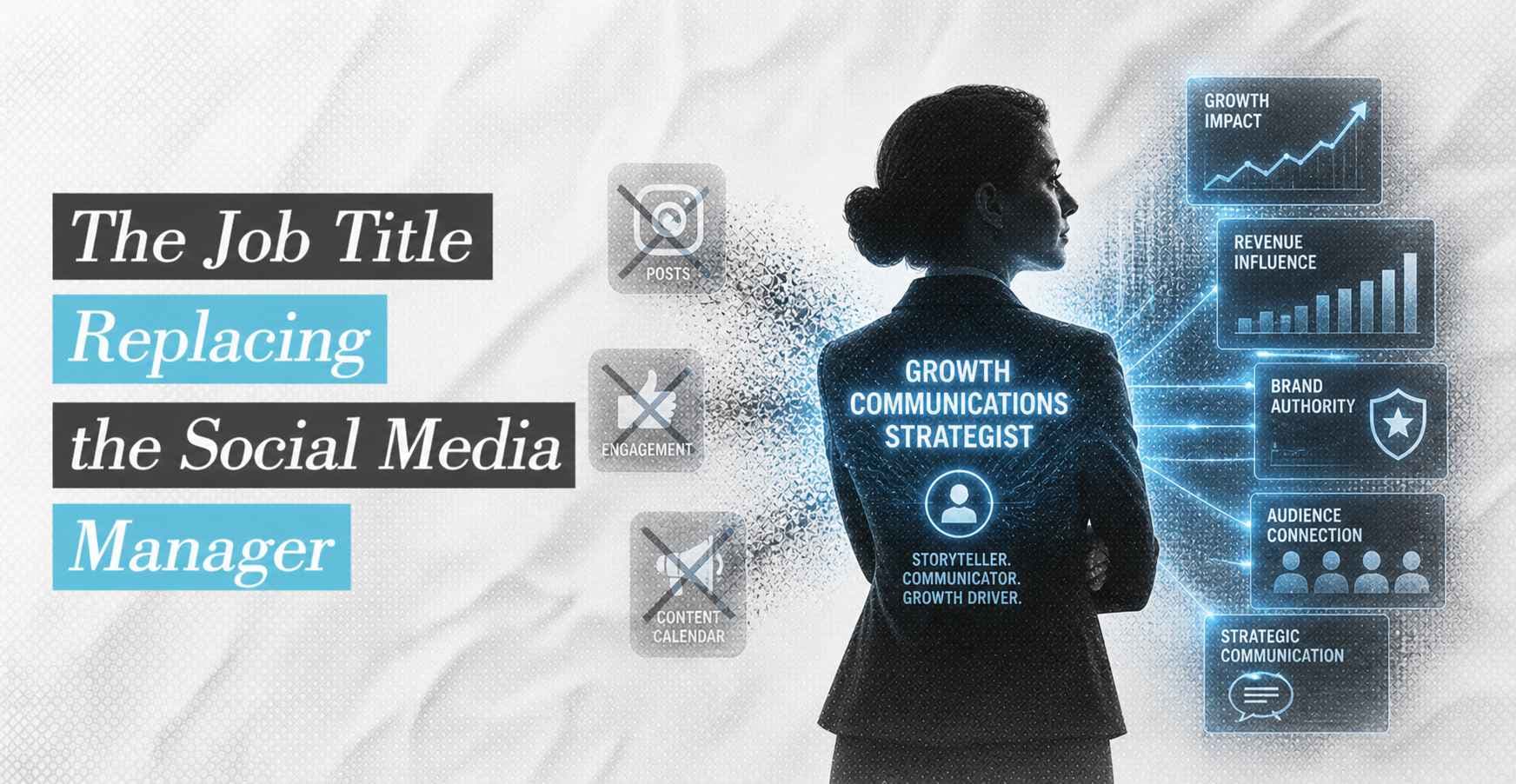
A founder hires a strategist before a social media manager because a strategist sets the direction of the founder's authority and a manager scales production. Direction has to exist before production scales it. A founder who hires the manager first produces volume with no direction, and volume without direction returns nothing. The order is the decision. Most founders reverse it.

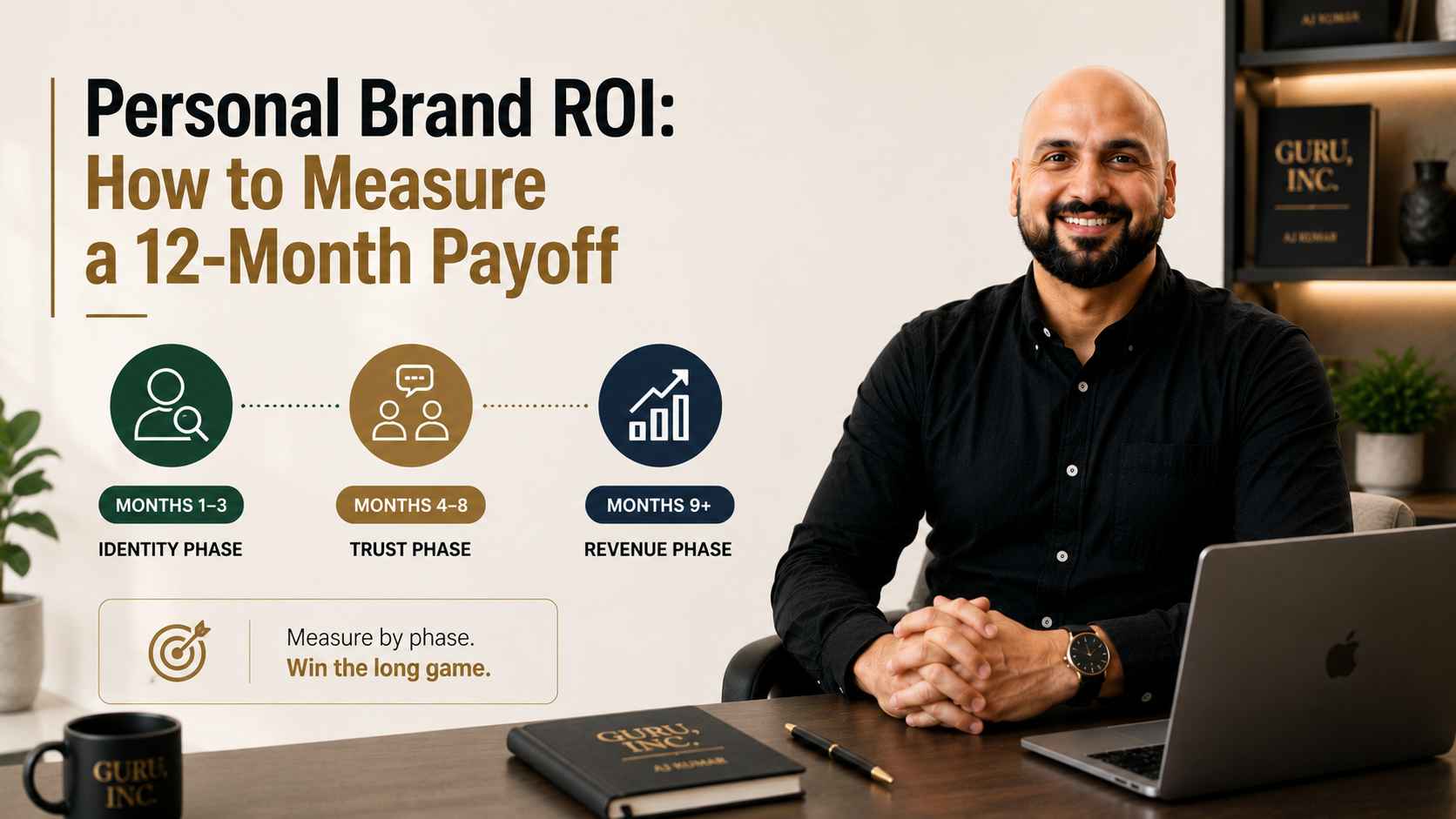
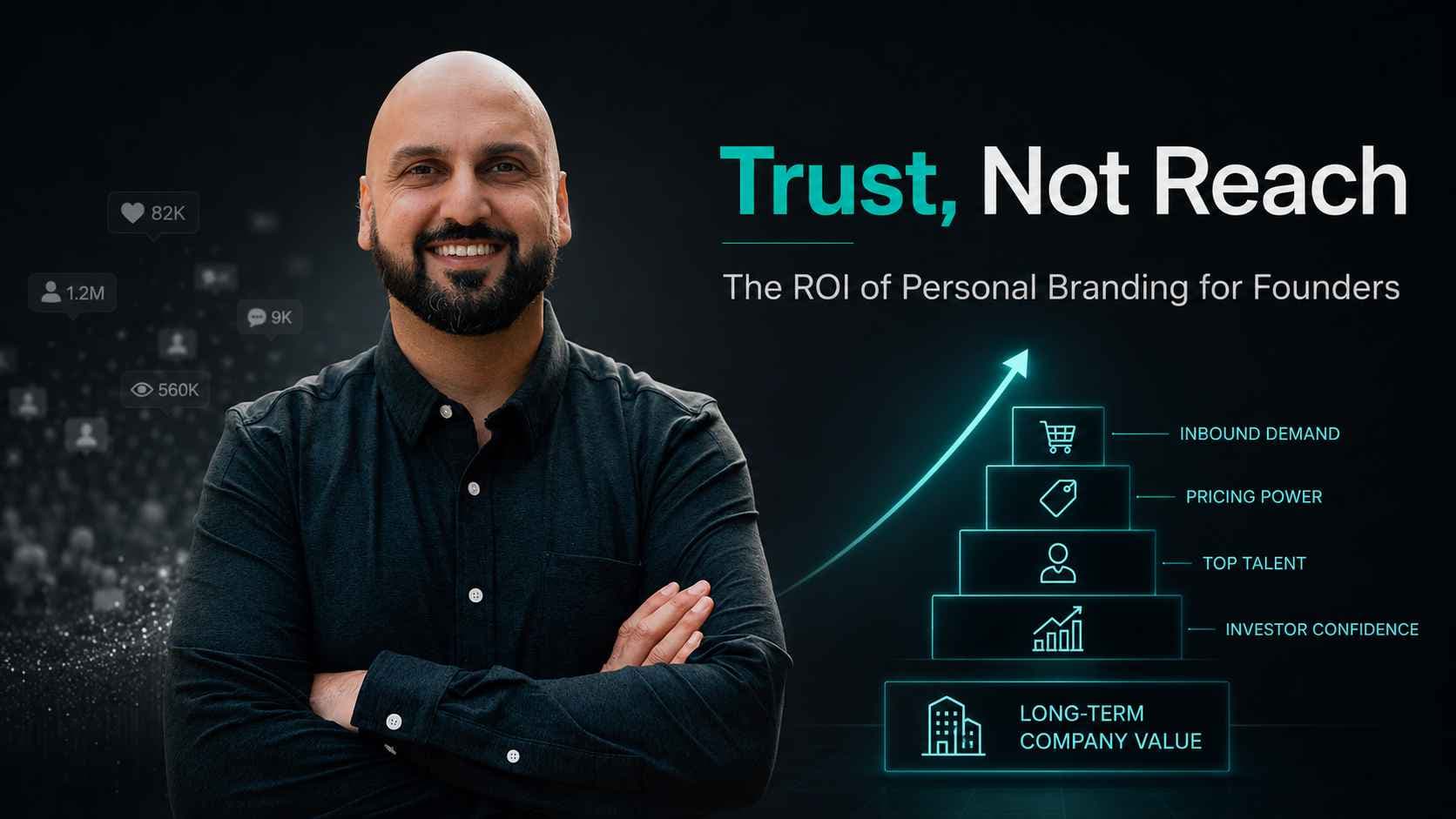
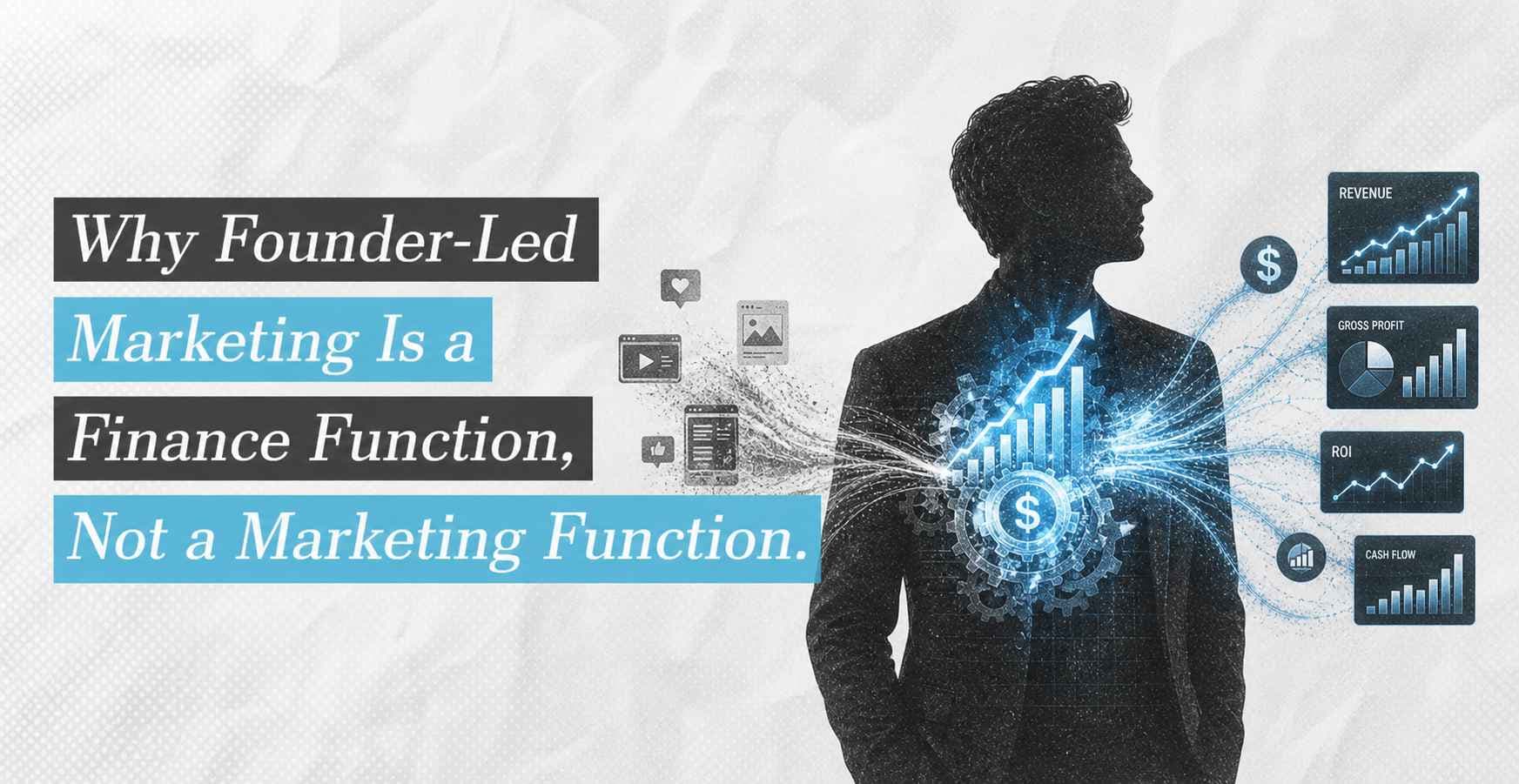
The ROI of a founder's personal brand is the return the founder's authority produces for the company: inbound demand, pricing power, talent, investor confidence, and enterprise value, governed by the quality of the trust the brand earns rather than the volume of visibility. Most founders measure the wrong thing. They count reach. The return lives in the trust.

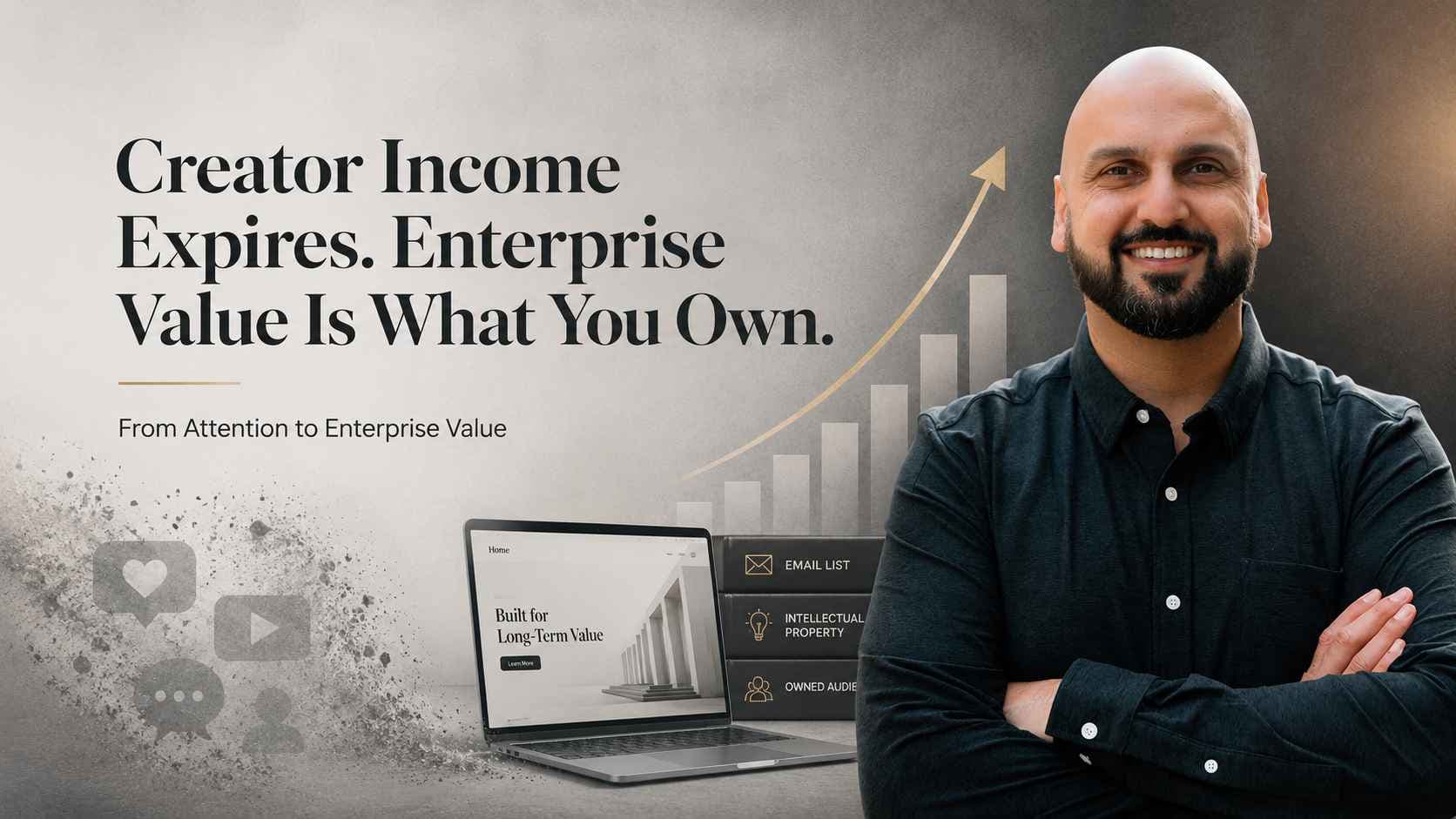
A founder turns the creator economy business model into enterprise value by converting attention into an owned asset: a personal brand that operates as a company, compounds over time, and holds worth independent of the founder's daily attention. The creator chases attention and spends it. The founder converts attention into something owned.

A founder turns personal brand revenue streams into an offer stack by sequencing them into one ascending system, anchored at the top by the high-value offer the authority already commands, with lower-priced offers built downward from it. Most advice hands founders a flat list of streams. A list is not a structure, and a structure is what produces real revenue.

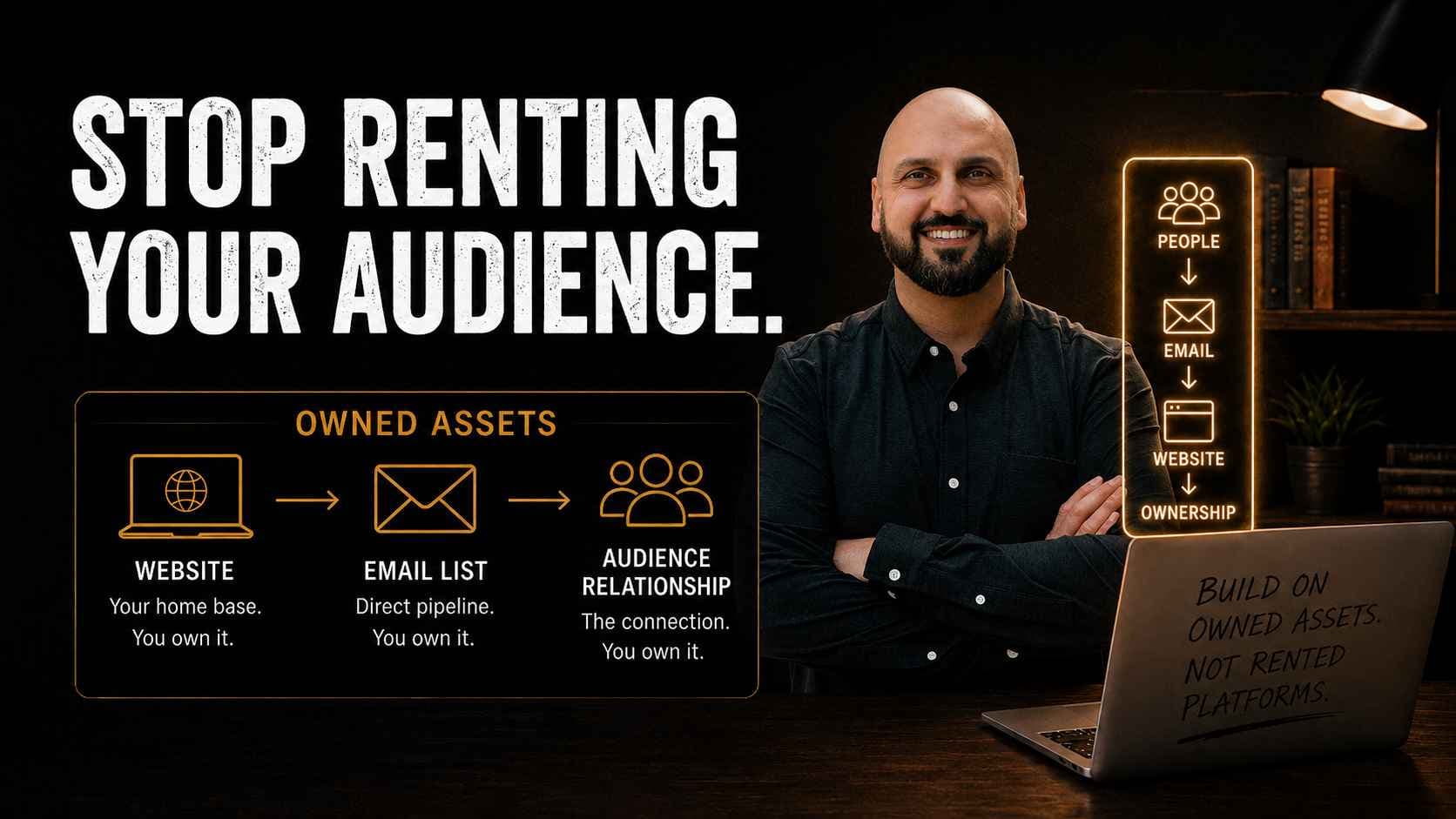
A one-person media company is a personal brand operated as a media business that owns its core assets, the email list, the website, and the direct audience relationship, instead of renting reach from social platforms it does not control. Most founders build the opposite way. They pour years into rented platforms and own nothing at the end.

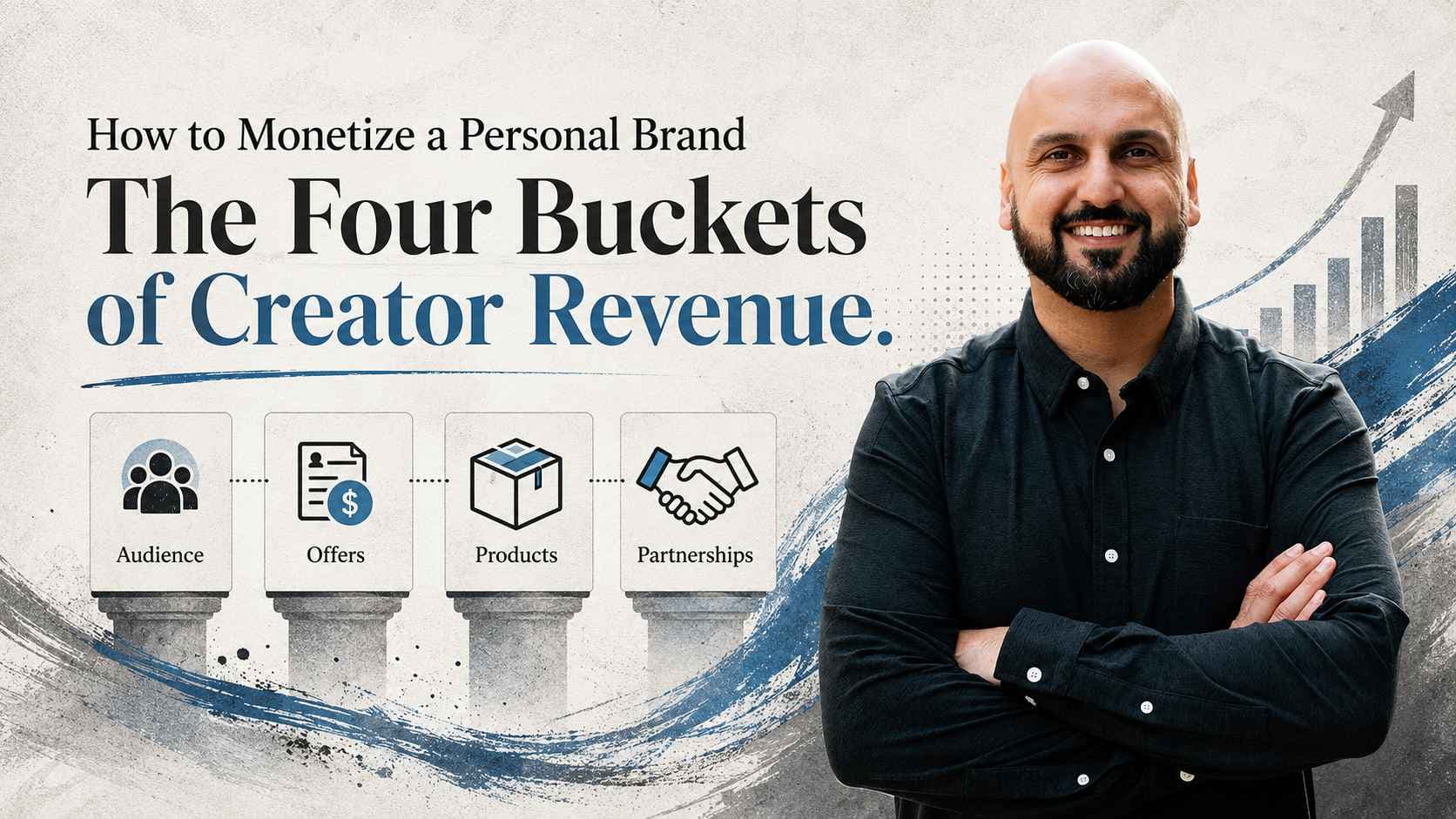
A founder monetizes a personal brand by converting authority into revenue across four buckets, starting with high-value offers and not with attention-based income like ads or sponsorships. Most advice tells founders to chase brand deals and follower counts. That order is built for influencers, not for founders.

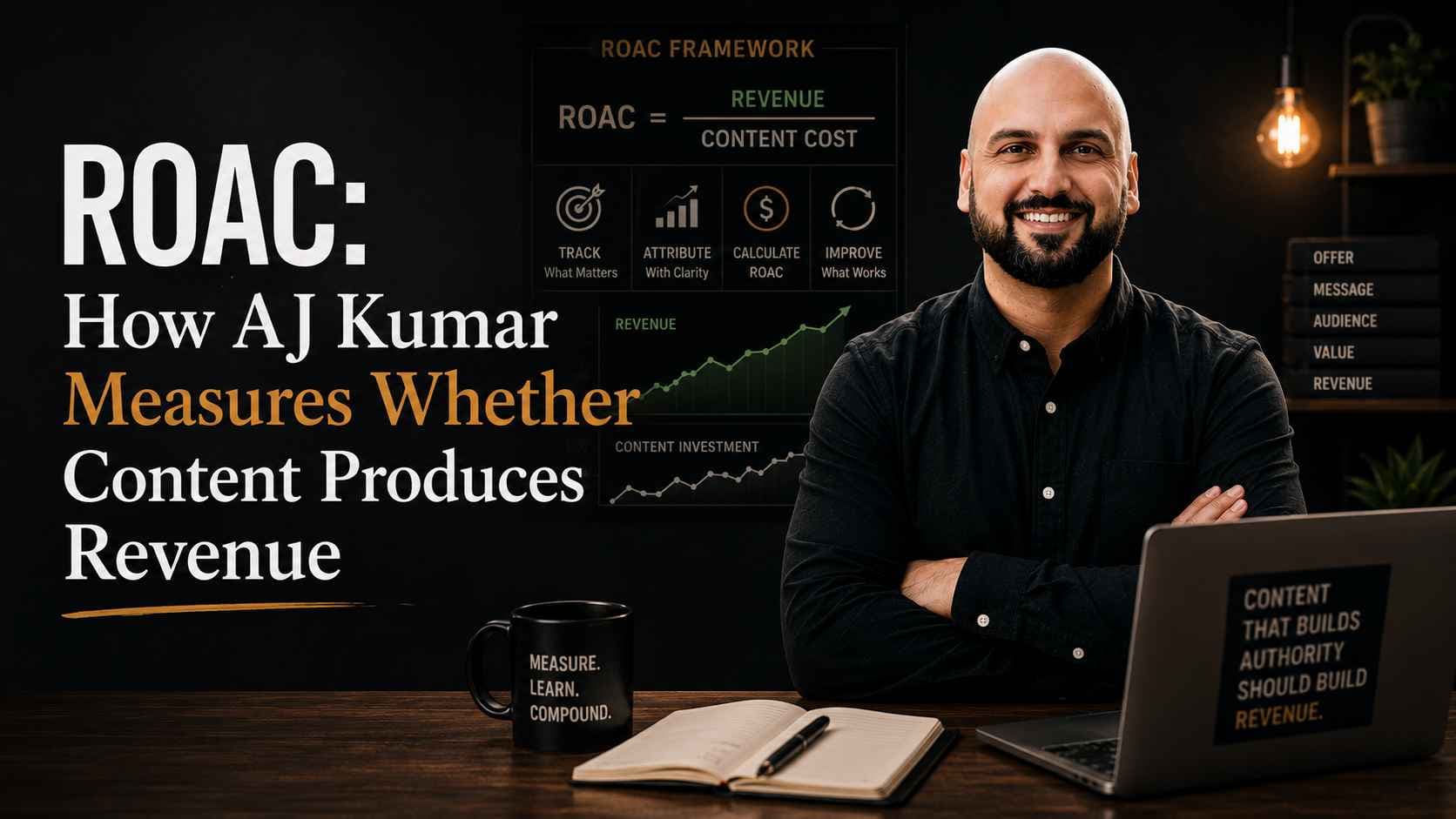
ROAC, or Return on Attention Created, is my framework for measuring whether the attention a founder earns produces identity, trust, and revenue, not vanity metrics. Most founders measure attention by volume. ROAC measures whether that attention converted into something a business can bank.

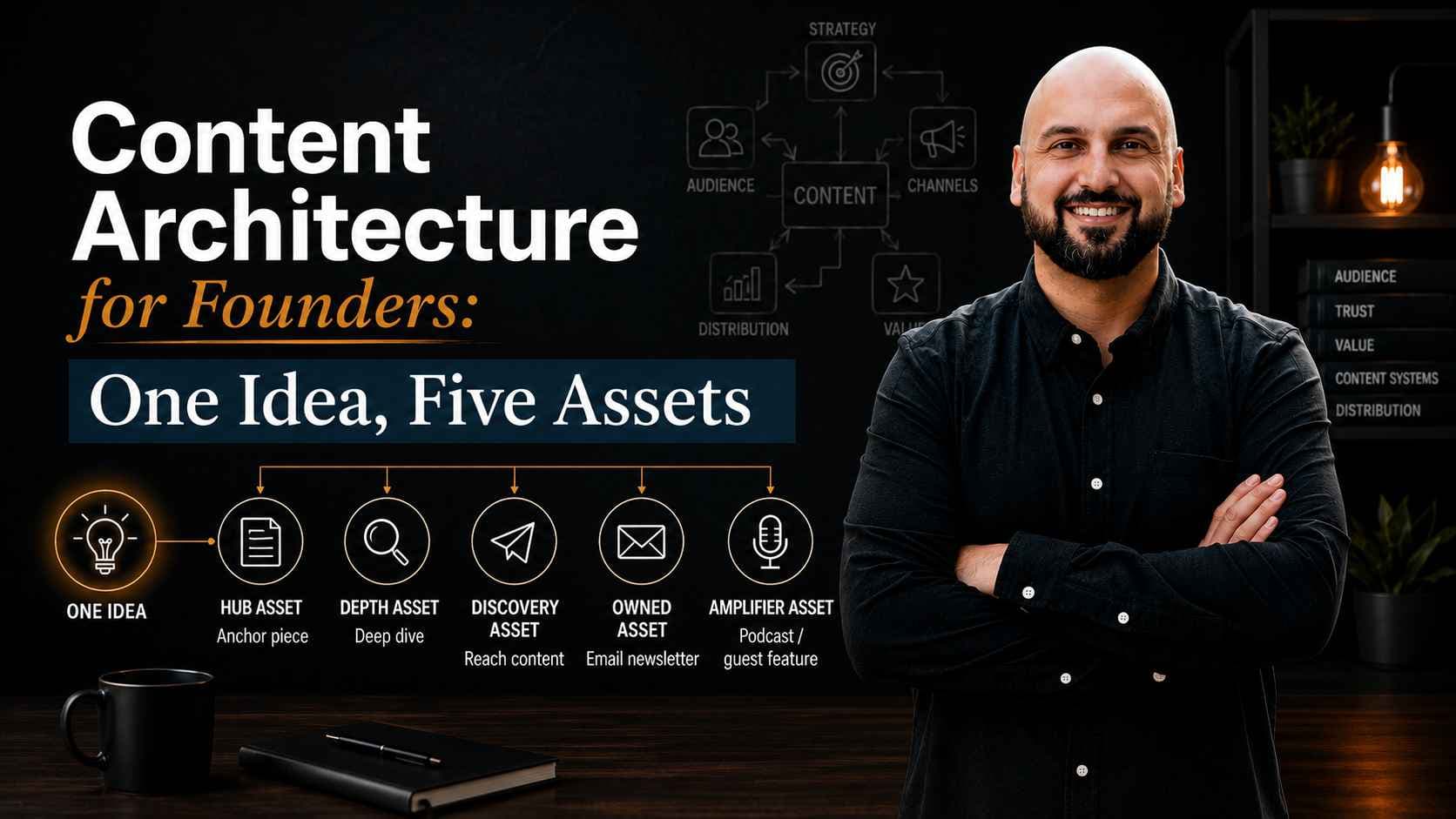
Content architecture is the practice of designing one core idea to become a structure of content assets, so a founder produces leverage instead of volume. I design the structure before I produce a single piece. Most founders do the reverse. They create first and reorganize later, which is repurposing, not architecture.

An early-stage founder builds an audience by running the first phase as Proof of Concept, testing which ideas earn attention before investing in production. The founder I mean carries real expertise and no audience yet. The first move is testing ideas, not posting more content.

The Personal Media Company Model is a framework for operating a founder's personal brand like a media network. The model runs a brand on programming, distribution, and revenue architecture, not on personality and posting. A personal brand depends on the founder showing up. A Personal Media Company keeps the founder as the brand and runs it like a company.

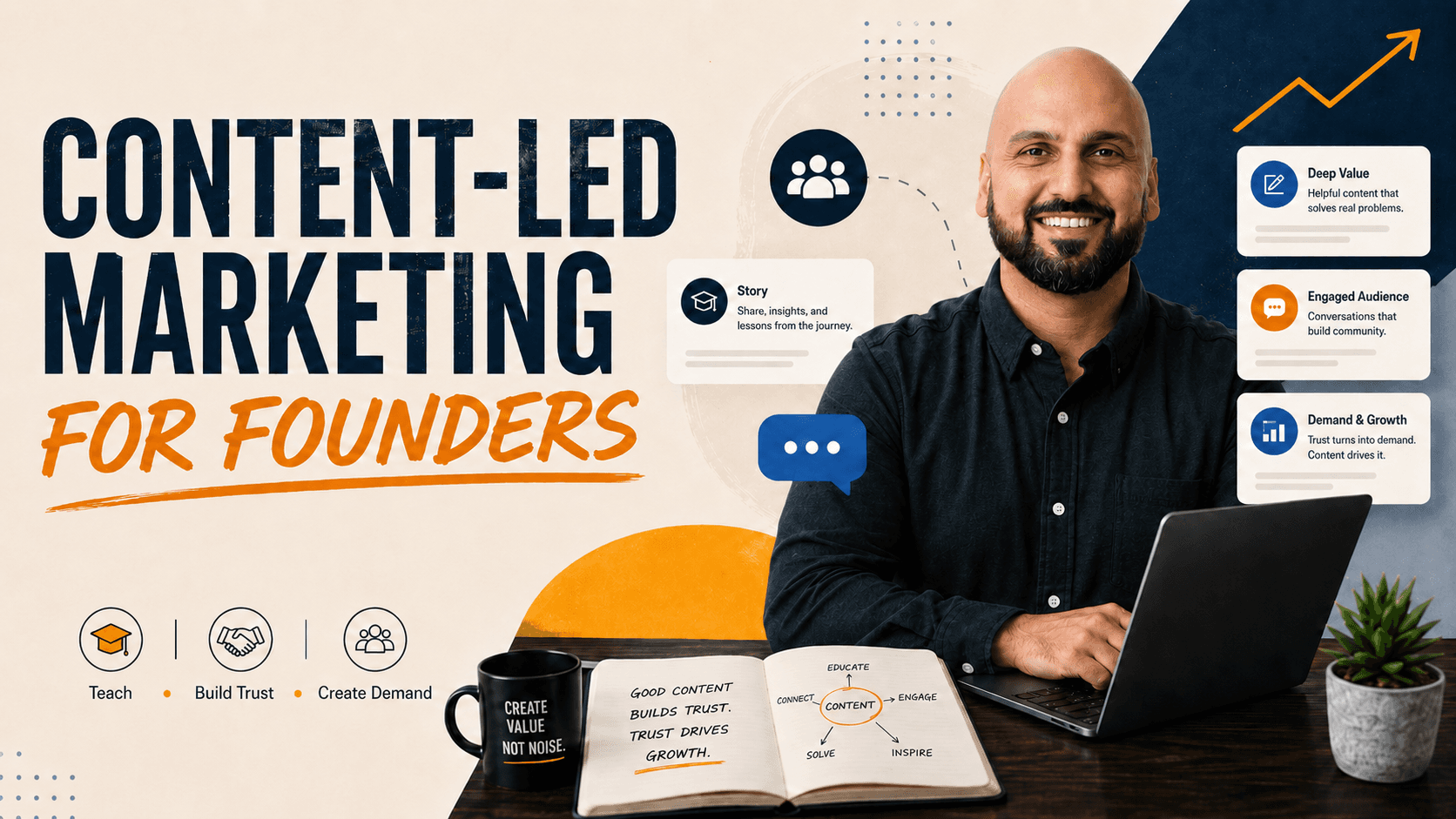
Content-led marketing for founders is the practice of making a founder's expertise the growth engine, so content earns trust before any offer appears. It is founder-led content run as a system. The content demonstrates expertise, and the trust does the selling.

A CEO social media strategy is the system that turns a founder's expertise into recognized authority, pricing power, and pipeline. It is not a calendar of posts. It is a personal media company that produces, distributes, and measures content by design.

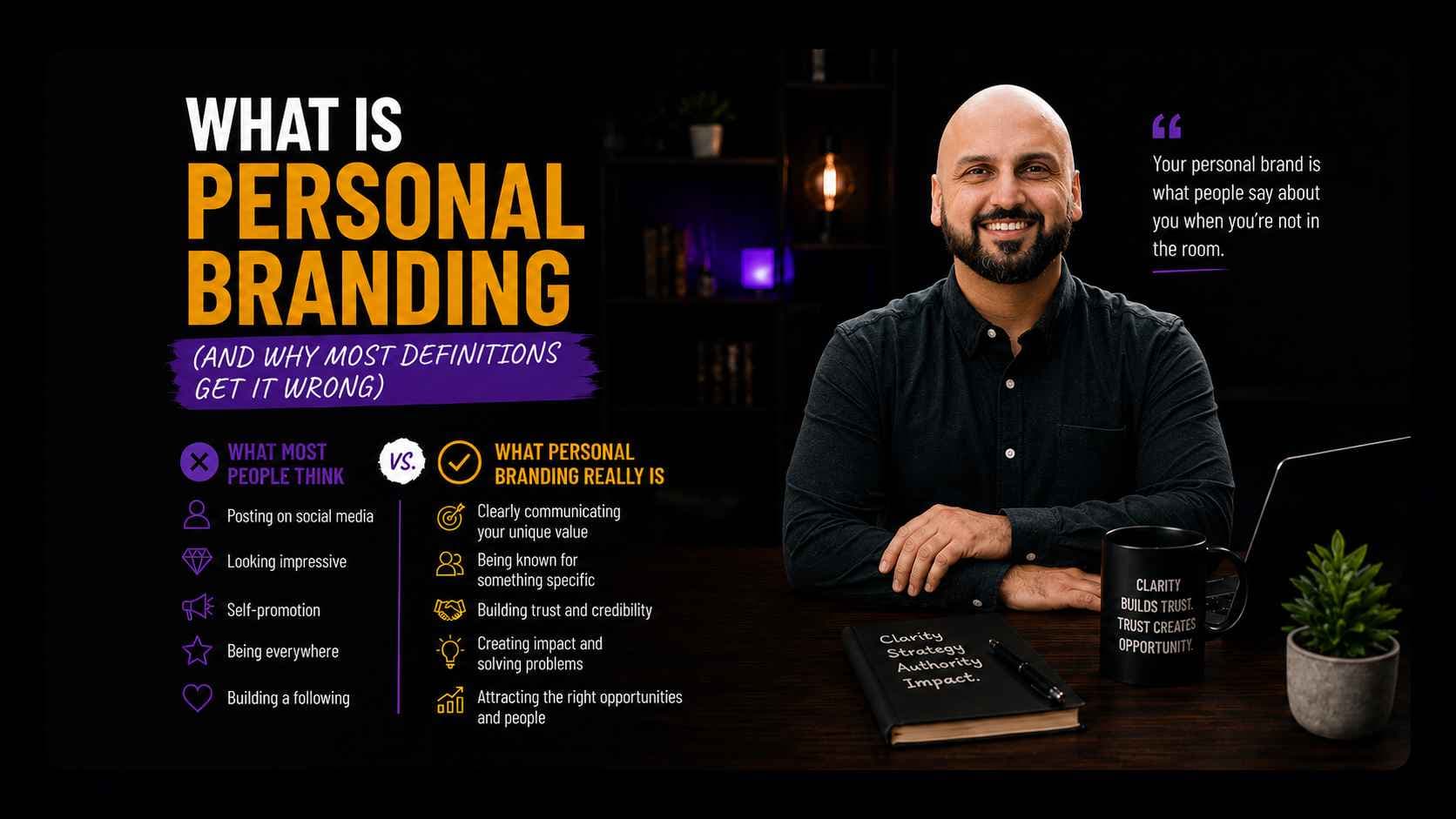
Personal branding is the process of building the authority architecture that makes a founder's expertise visible, trusted, and monetizable. Most definitions describe personal branding as "managing how others perceive you." That definition is incomplete. Managing perception is reputation management.

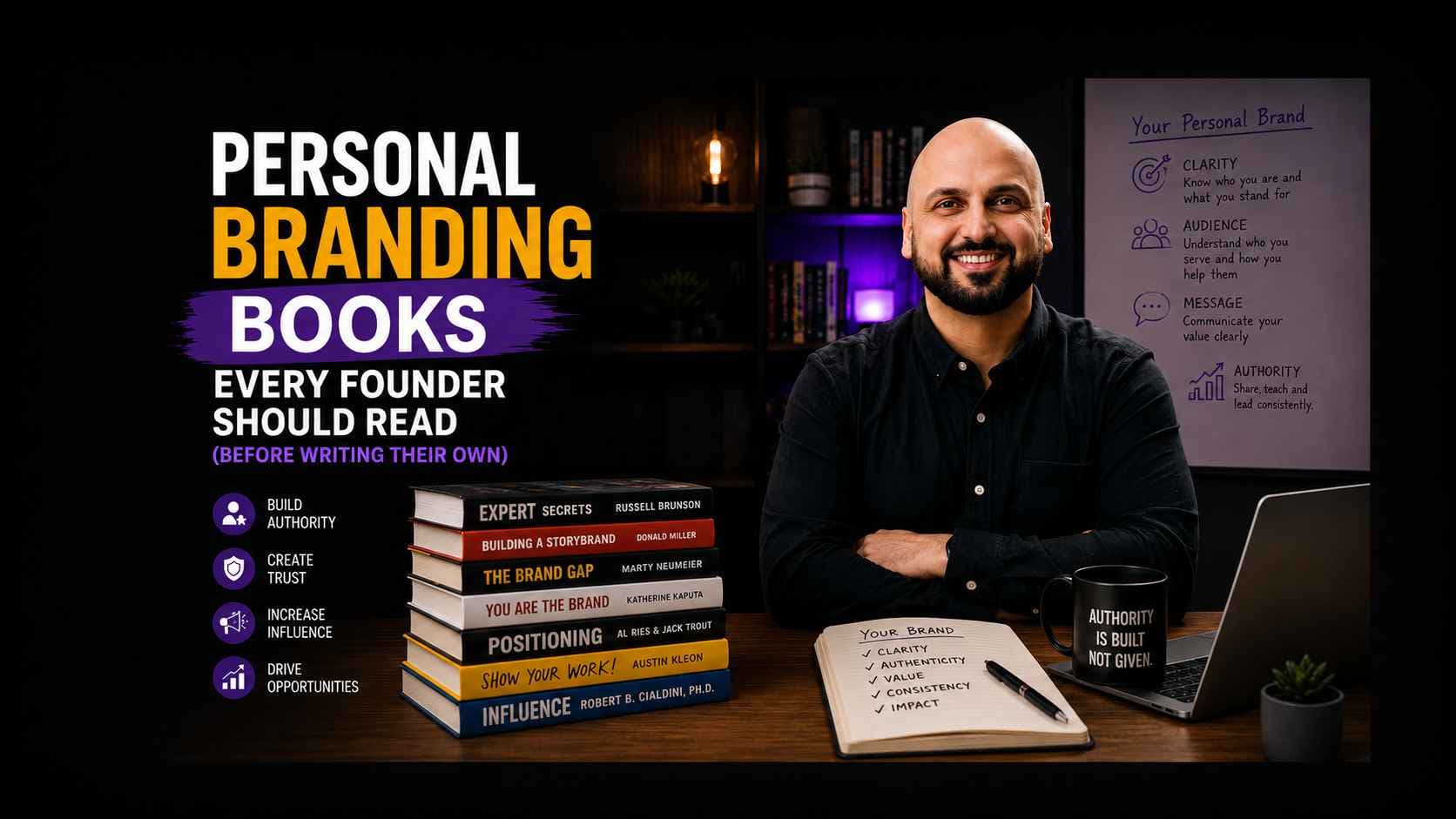
Personal branding books for founders fall into two categories: books that teach theory and books that teach architecture. Founders benefit from architecture books because architecture is buildable.

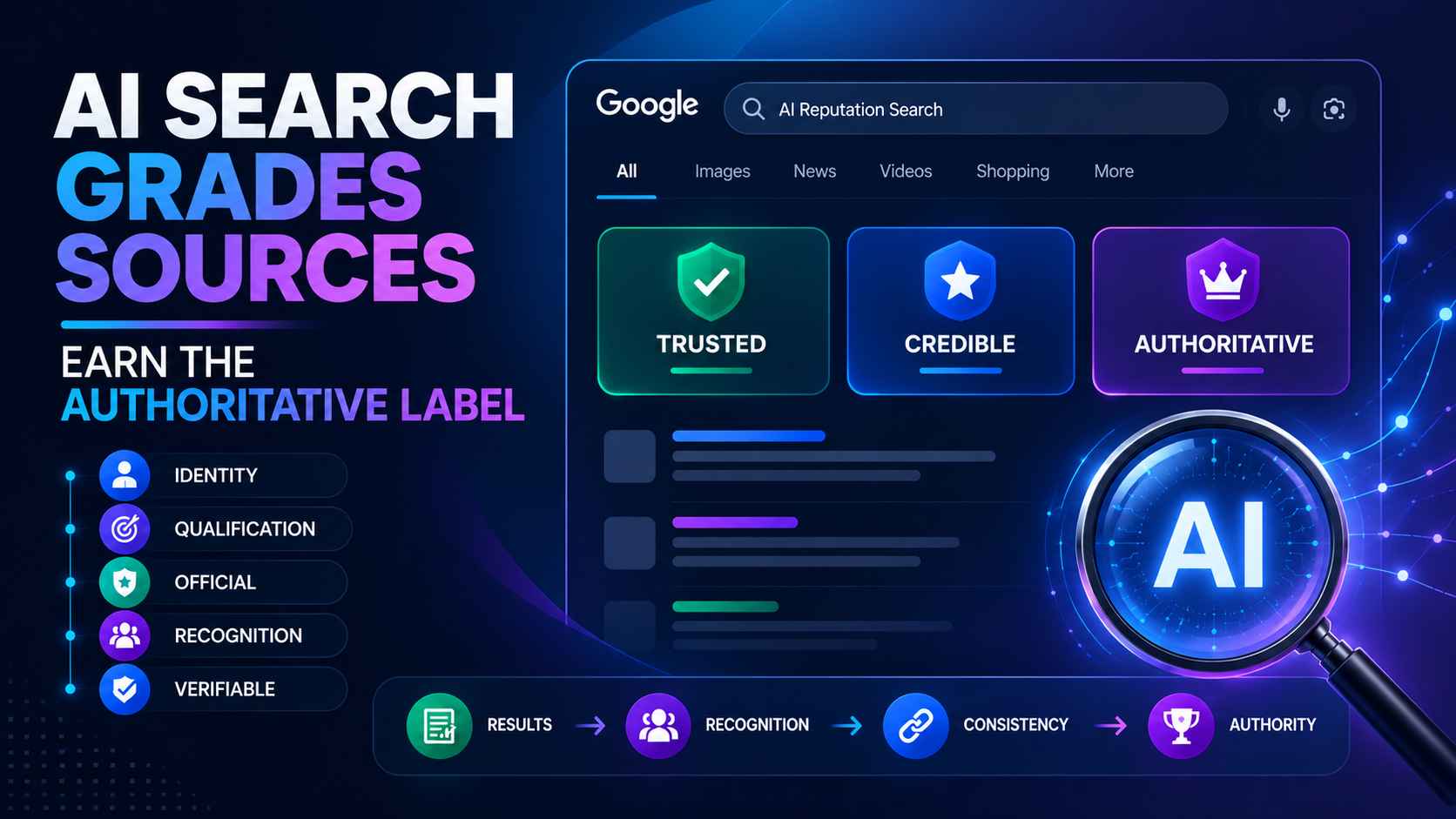
Personal branding matters more in 2026 than any previous year because three market forces have converged. The AI content flood has destroyed the information advantage that expertise once provided. AI discovery systems now cite recognized entities and ignore everyone else.

Building brand authority online requires six steps executed in sequence: positioning, website architecture, entity recognition, content publishing, distribution, and measurement. Founders who follow this playbook generate inbound demand within 90 days and AI citation appearances within 6 months.

A personal brand is the market's perception of the founder. A business brand is the market's perception of the company. Founders need both. The personal brand comes first because trust transfers from the person to the company faster than trust transfers from the company to the person.

Personal branding tips for entrepreneurs are everywhere. Specific lessons from building brands that generated $10 million or more in revenue are not. The 9 tips below come from direct practitioner experience across wellness, media, real estate, and the creator economy.

A personal brand statement is the 8-word sentence that tells the market what a founder stands for. The statement is not a tagline. The statement is not an elevator pitch. A personal brand statement is the positioning claim that governs every piece of content, every speaking engagement, and every client conversation.

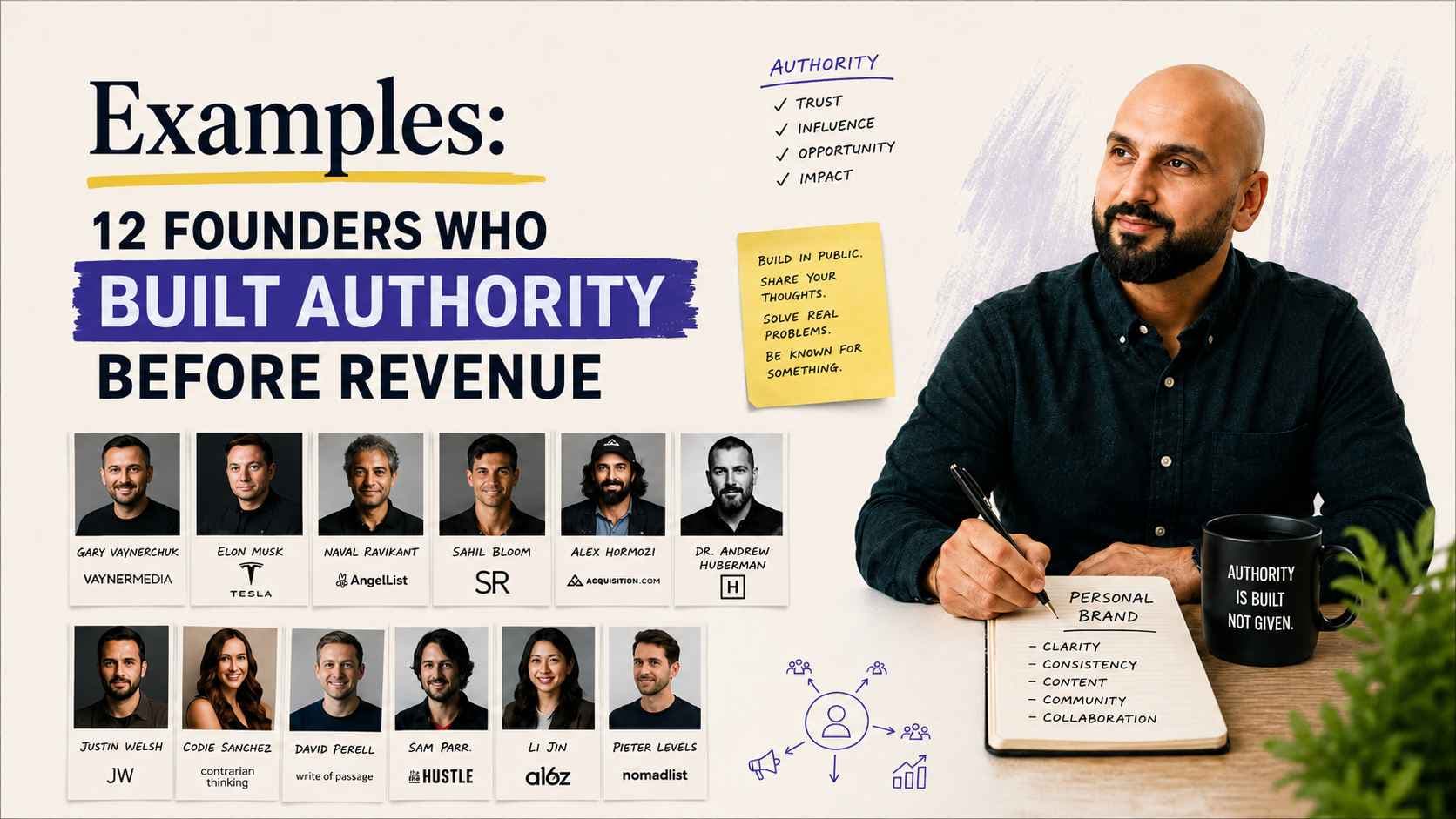
The strongest personal brand examples share one pattern: authority preceded revenue. The 12 founders in this list built personal brands first and monetized second. The personal brand was not a marketing strategy applied after the business launched.

Personal branding for executives is not about posting on social media. Personal branding for executives is the strategic process of making expertise, judgment, and leadership visible to the people who make decisions about partnerships, investments, and talent.

A personal brand strategist and a social media manager perform fundamentally different functions. A personal brand strategist defines positioning, develops intellectual property, and architects the content system. A social media manager publishes posts, manages engagement, and maintains platform presence.

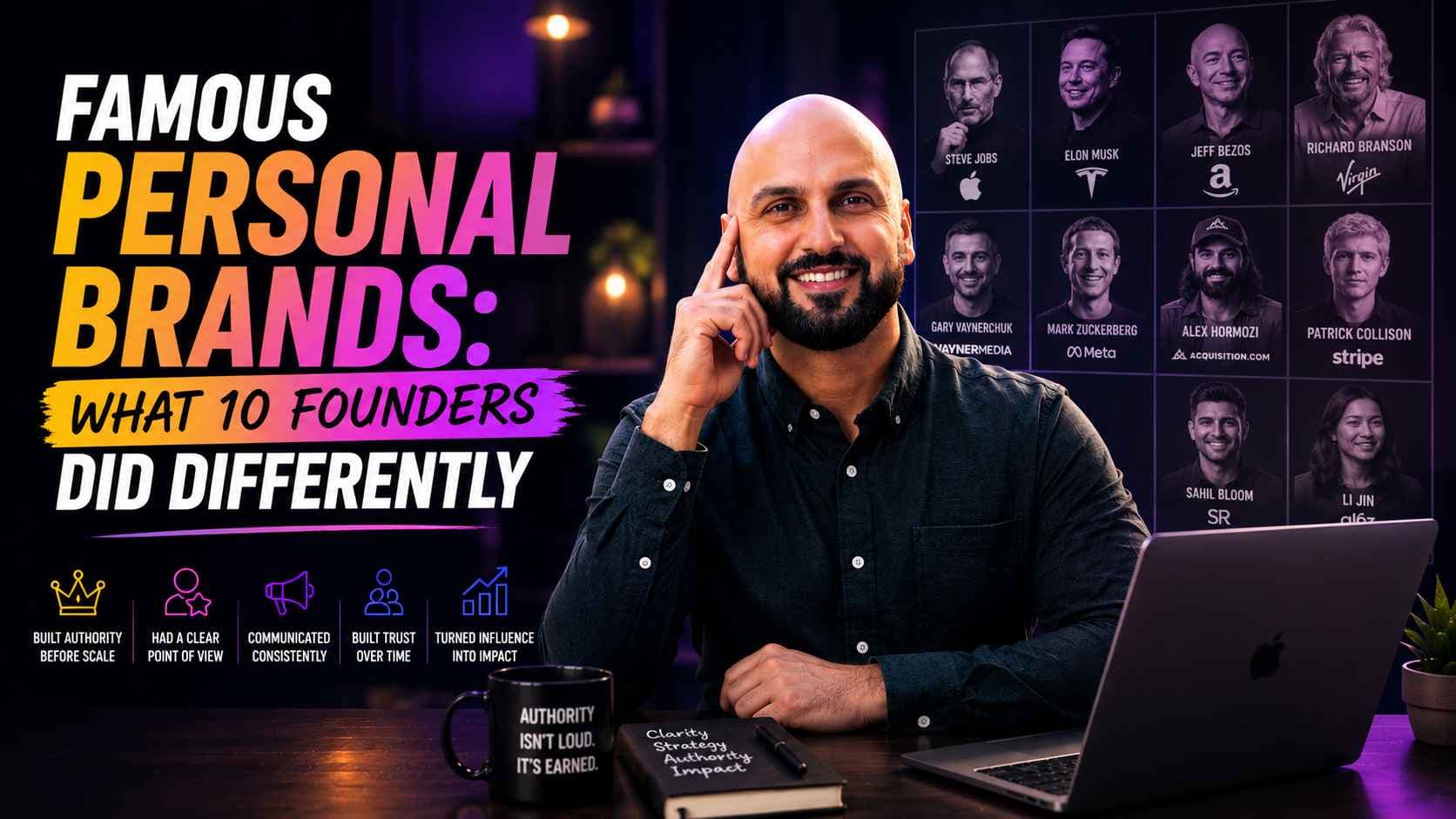
Famous personal brands are not built on charisma. Famous personal brands are built on specific strategic decisions that compound over time. Ten founders across entertainment, real estate, wellness, tech, and media reveal 10 distinct principles behind authority-driven personal brands.

Personal branding for founders does not require daily social media posting. Personal branding for founders requires a positioning-first system that compounds through search, AI discovery, and owned content.

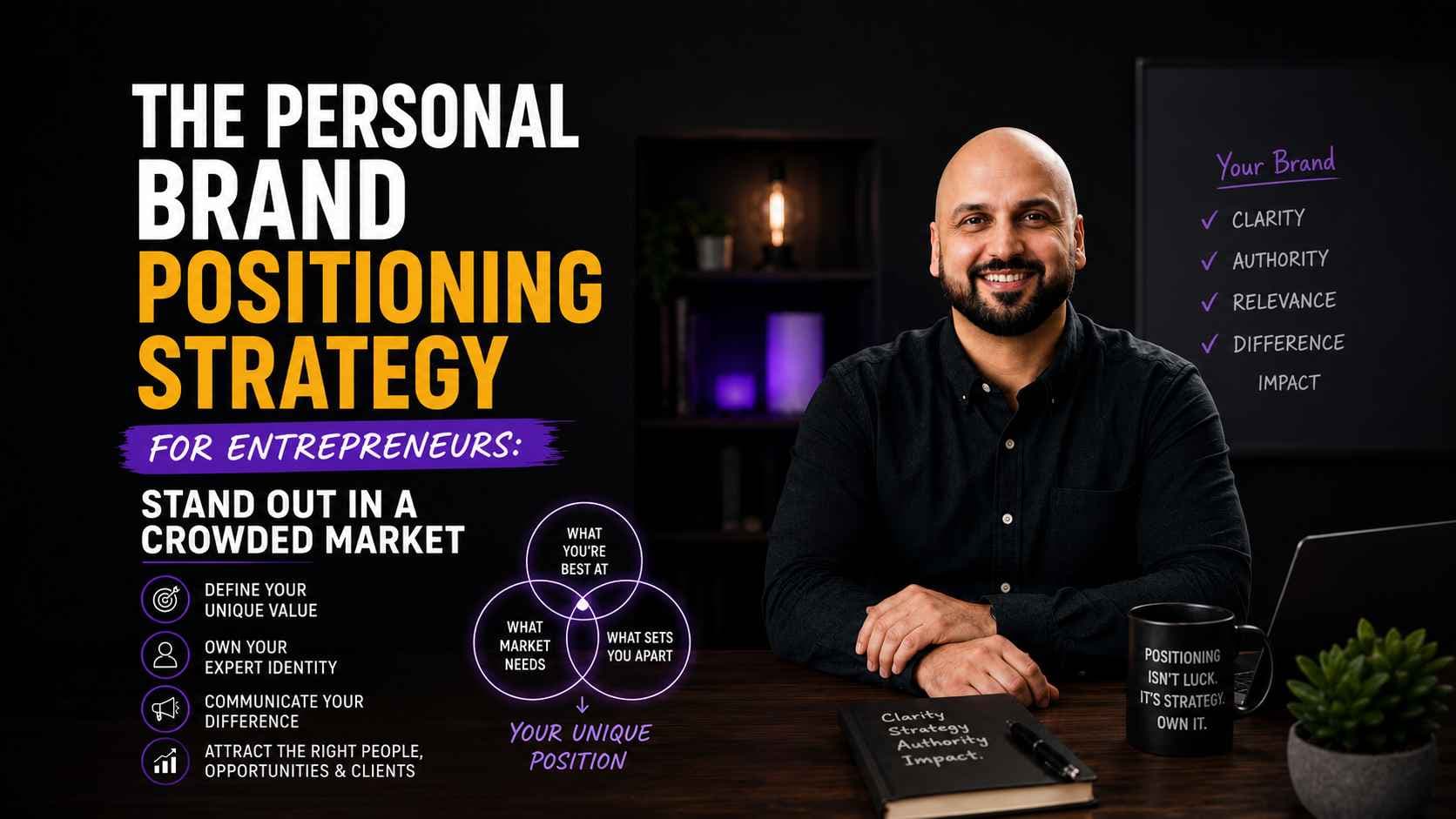
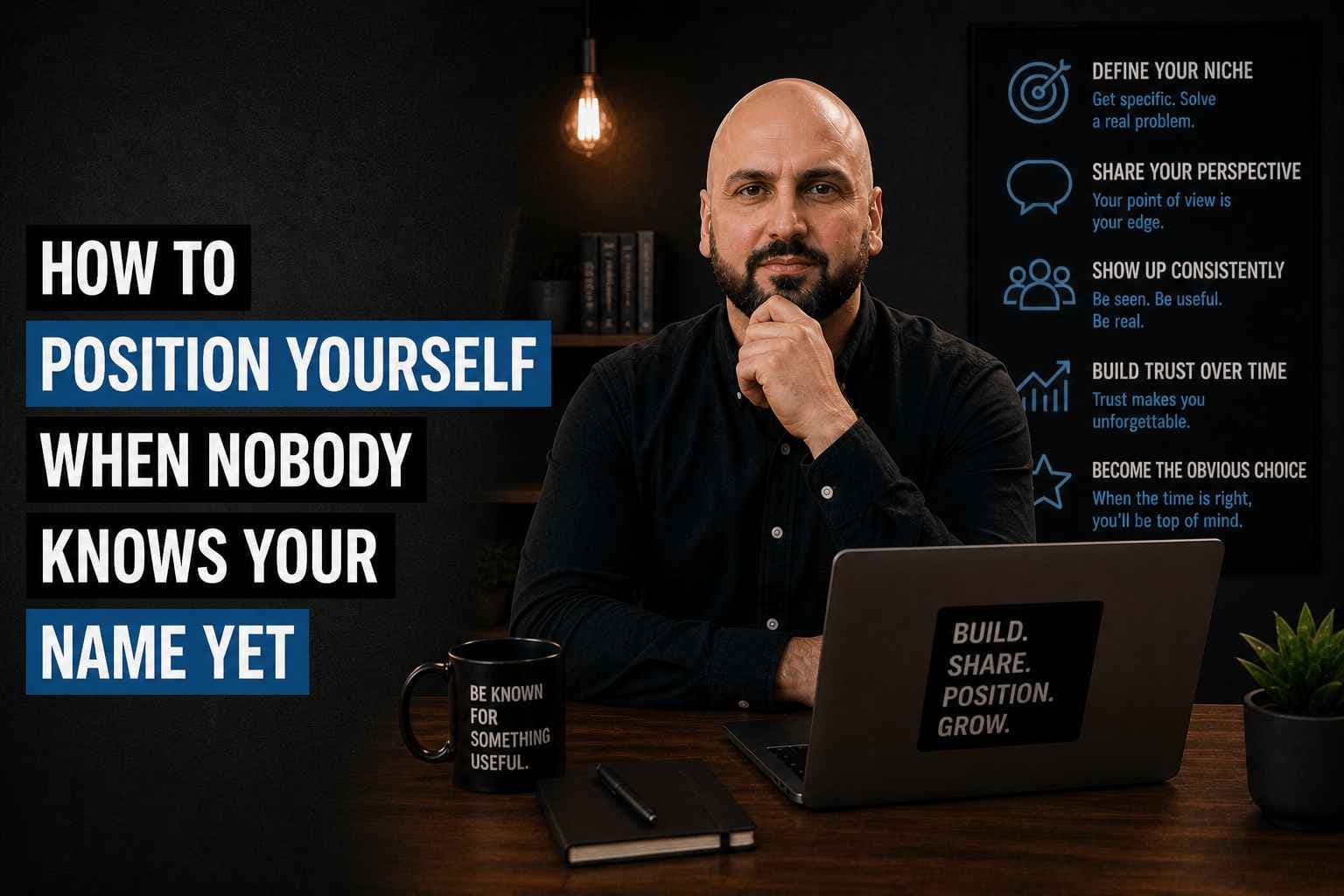
A personal brand positioning strategy is the system that determines what the market associates with the founder's name. Positioning is not a tagline. Positioning is the strategic decision that governs every piece of content, every client conversation, and every business opportunity.

A personal branding consultant builds the strategic authority architecture that positions a founder as the recognized expert in a specific market. The role goes beyond social media management or content creation.

Apple aired a sixty-second ad in 1984 that named IBM as Big Brother and conformity as the enemy. The ad ran once during the Super Bowl. Apple has been built on that devil for four decades.

Walt Disney did not draw Mickey Mouse. Ub Iwerks did. Ub was the better animator. But Ub went bankrupt, and Walt built a $94 billion empire on one skill every founder needs in 2026. The skill is character architecture.

Naval Ravikant tweeted 40 lines in 2018. They became one of the most cited founder doctrines on the internet. He posts rarely. His audience never stops repeating him. Naval did not build authority on a content calendar.

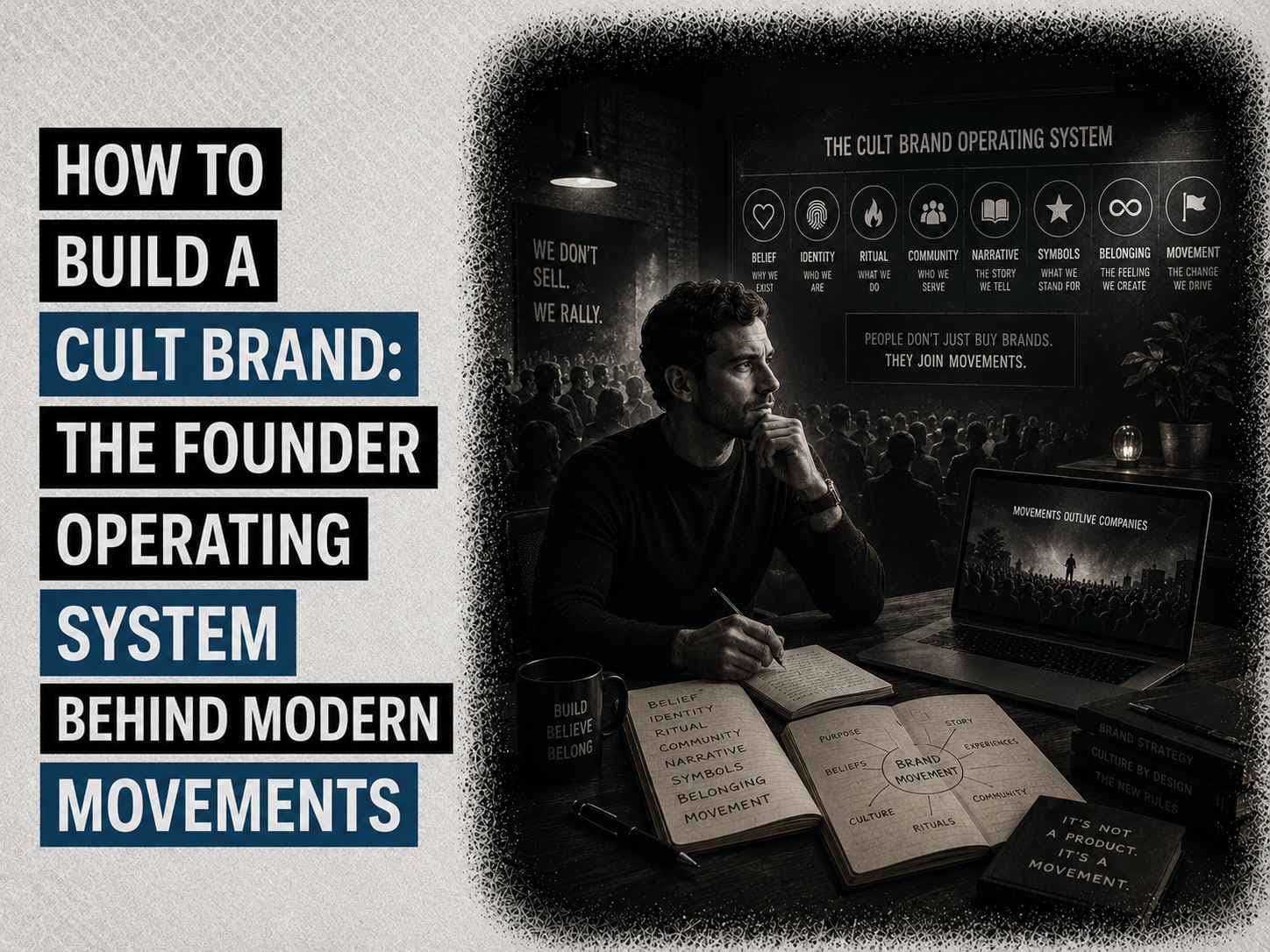
Cult brands are not built. They are religified. Alex Hormozi sold 2,917,443 copies of $100M Money Models in 24 hours and set a Guinness World Record. His audience does not consume his content.

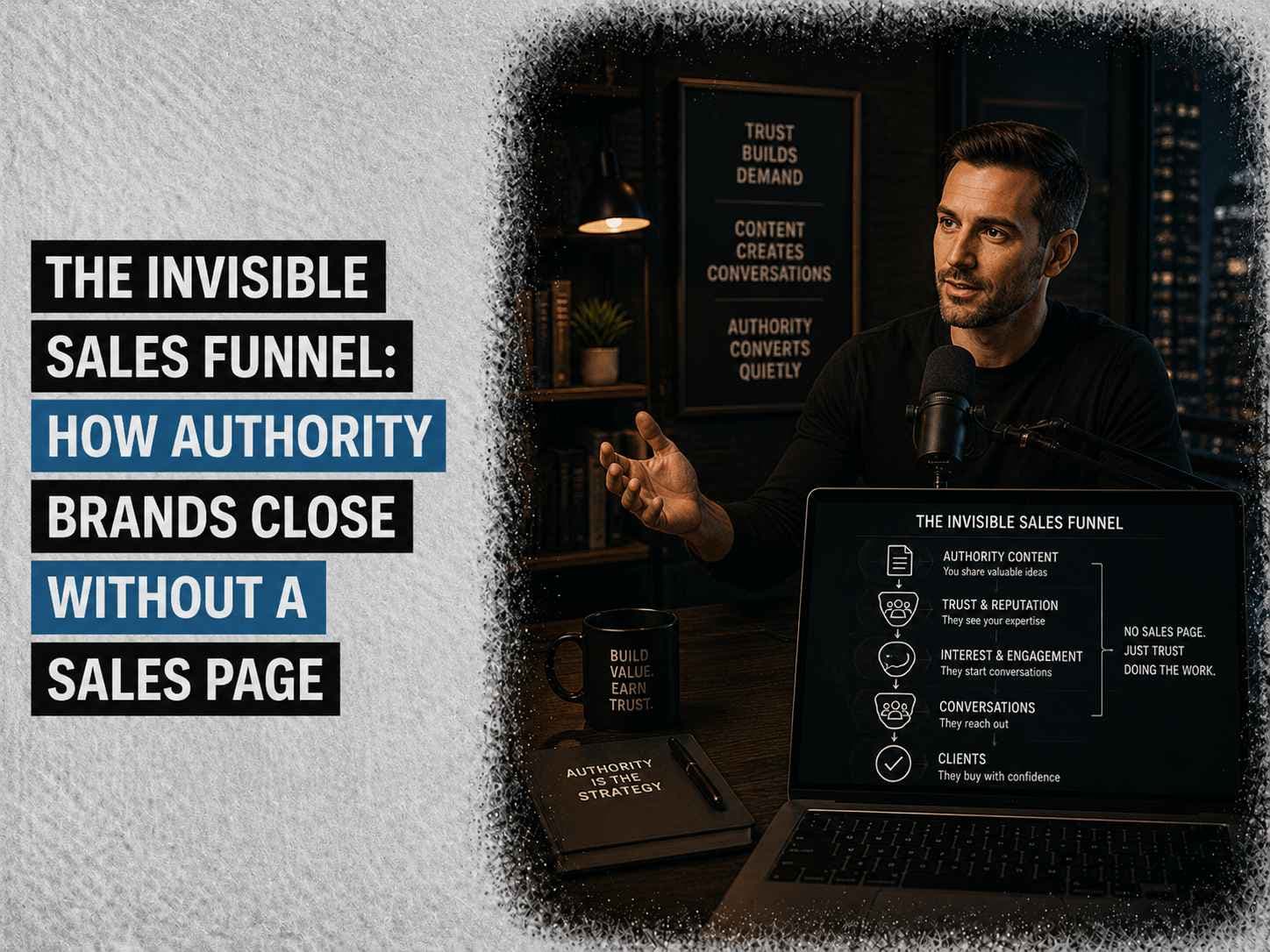
AJ Kumar argues that authority brands close high-ticket business without a traditional sales page because the personal media company has already done what the sales page was designed to do.

AJ Kumar argues that the best consulting clients never come from cold DMs because high-ticket sales require trust, and cold DMs skip every gate trust uses to form.

A Personal Media Company is the founder-owned entity that integrates programming, distribution, monetization, operations, and measurement around a single human. AJ Kumar argues this is the third era of media consolidation, after the studio system and the conglomerate era.

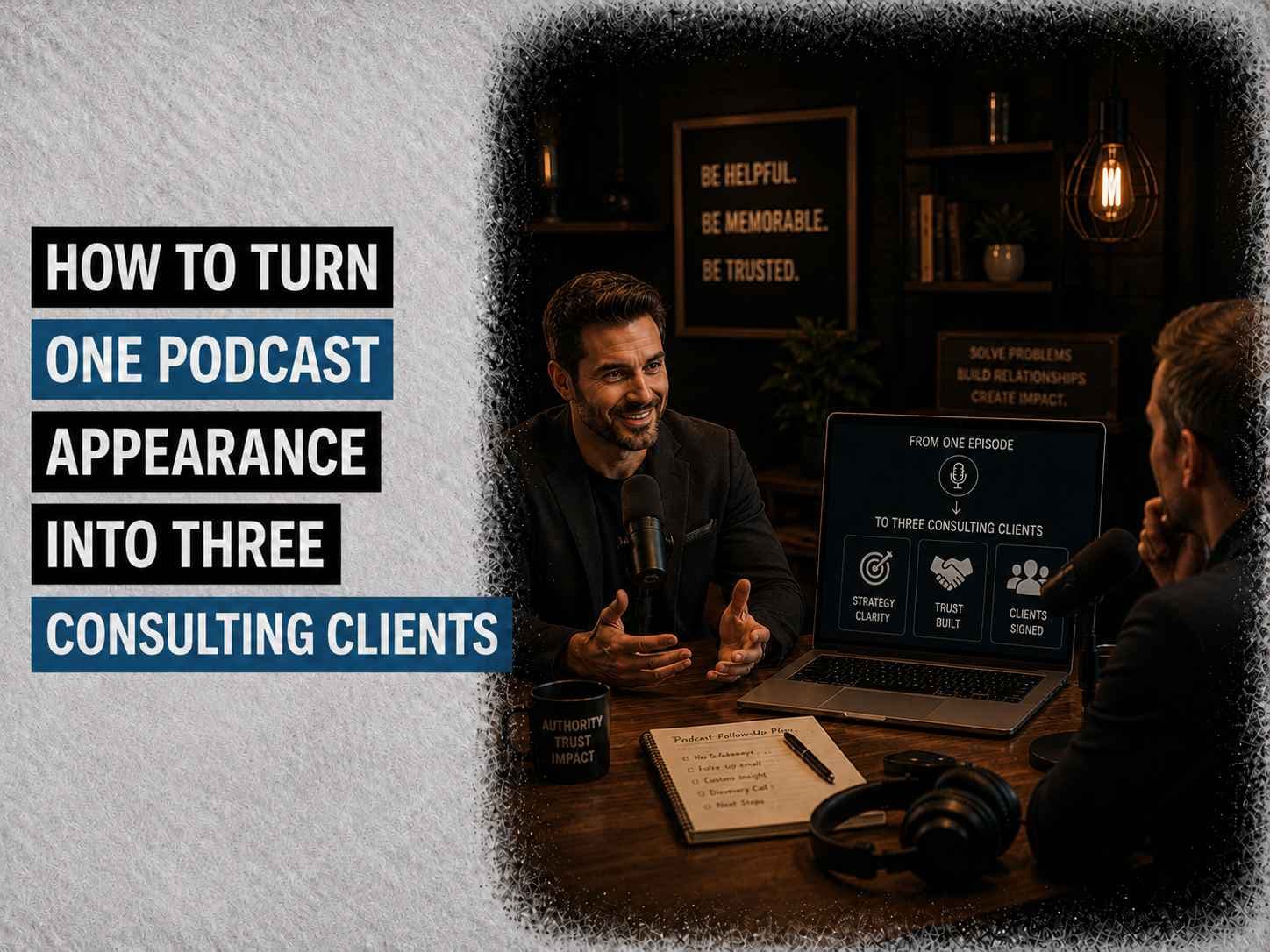
AJ Kumar argues that one podcast appearance produces three different consulting clients through three different mechanisms, not one.

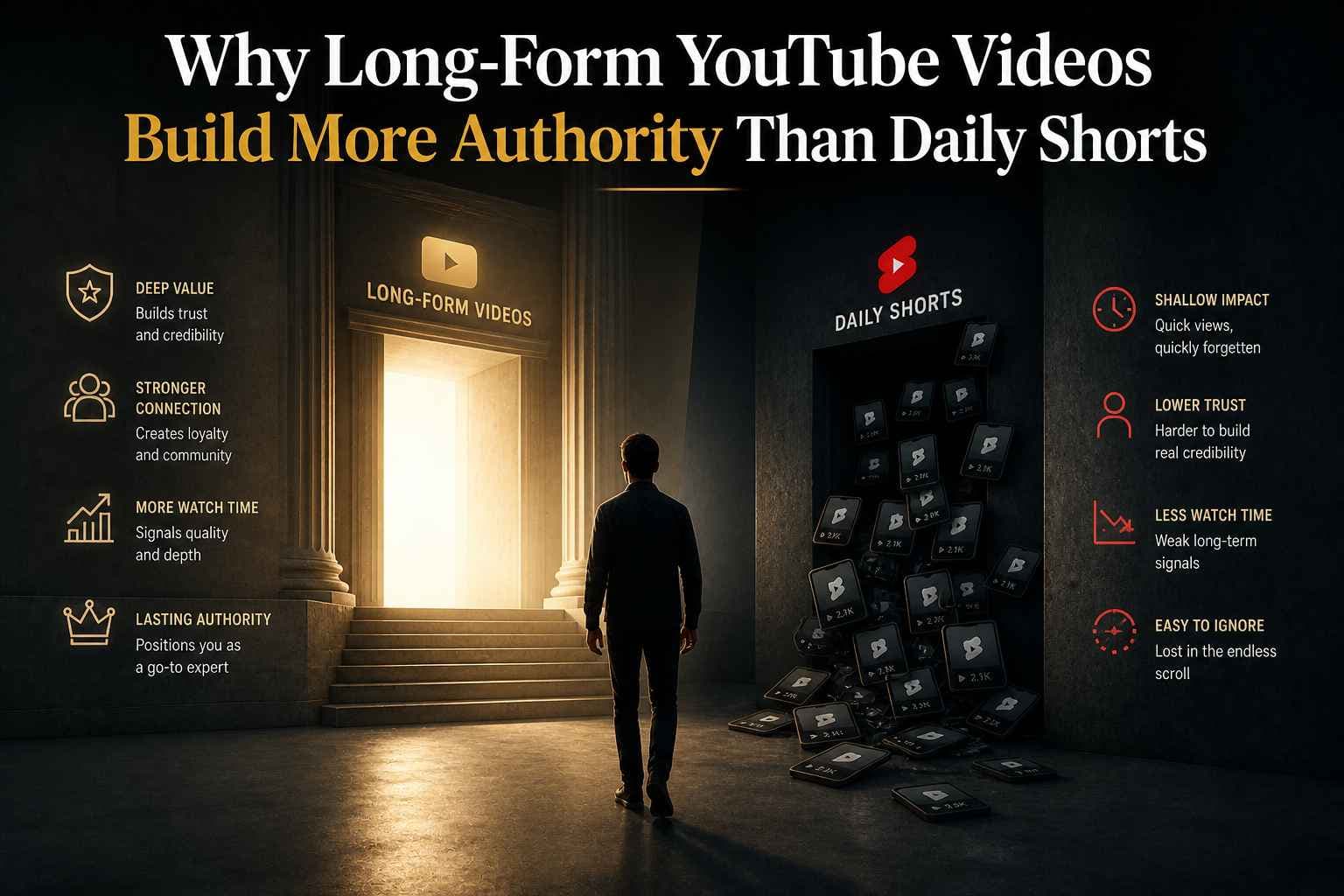
Long-form YouTube videos build more authority than daily Shorts because authority is not built through reach. It is built through sustained attention. Shorts create awareness. Long-form creates belief. Belief produces authority.

AJ Kumar walks through the founder cold-start paradox: needing authority to get attention but needing attention to build authority.

Founder visibility moves valuation math, hiring outcomes, and deal terms. A 2023 Oxford study of 21,000 founder-led companies found personality predicted startup success five times more than industry.

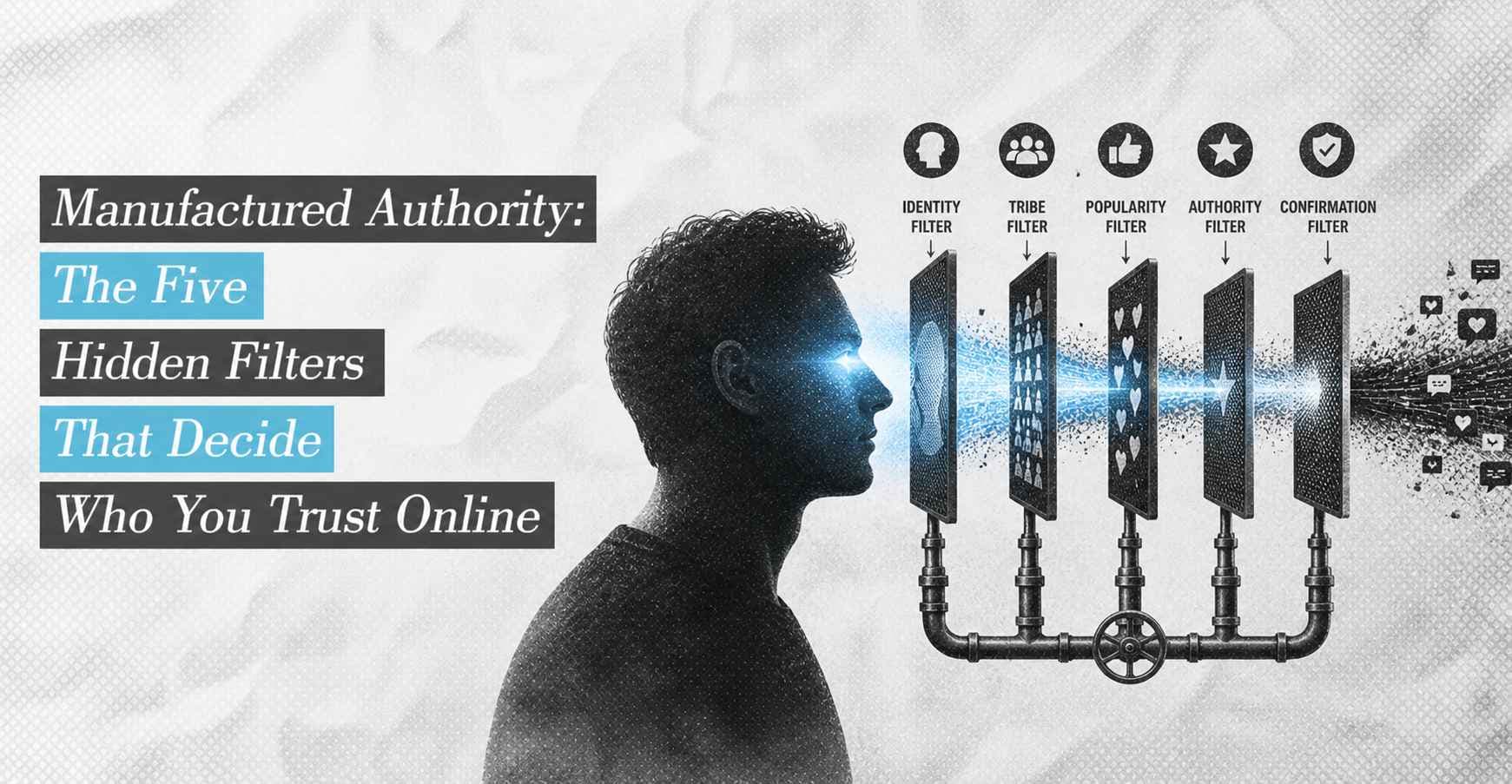
Trust online is not earned anymore. It is filtered. Five hidden mechanisms decide which creators get surfaced, which voices get believed, and which experts disappear before you ever meet them.

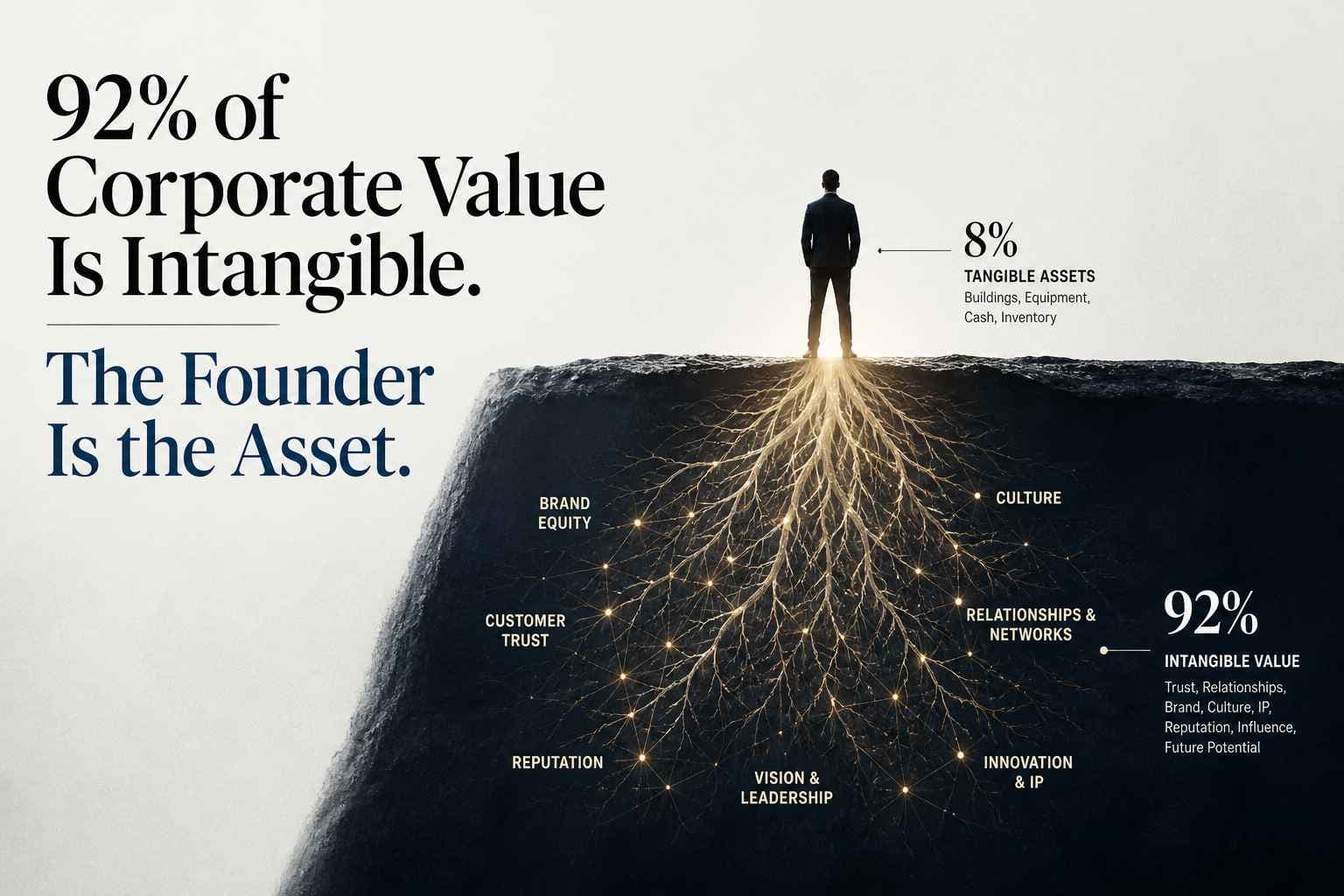
Corporate value inverted between 1975 and 2025. Tangible assets fell from 83 percent of S&P 500 market value to 8 percent. Intangible assets moved from 17 percent to 92 percent.

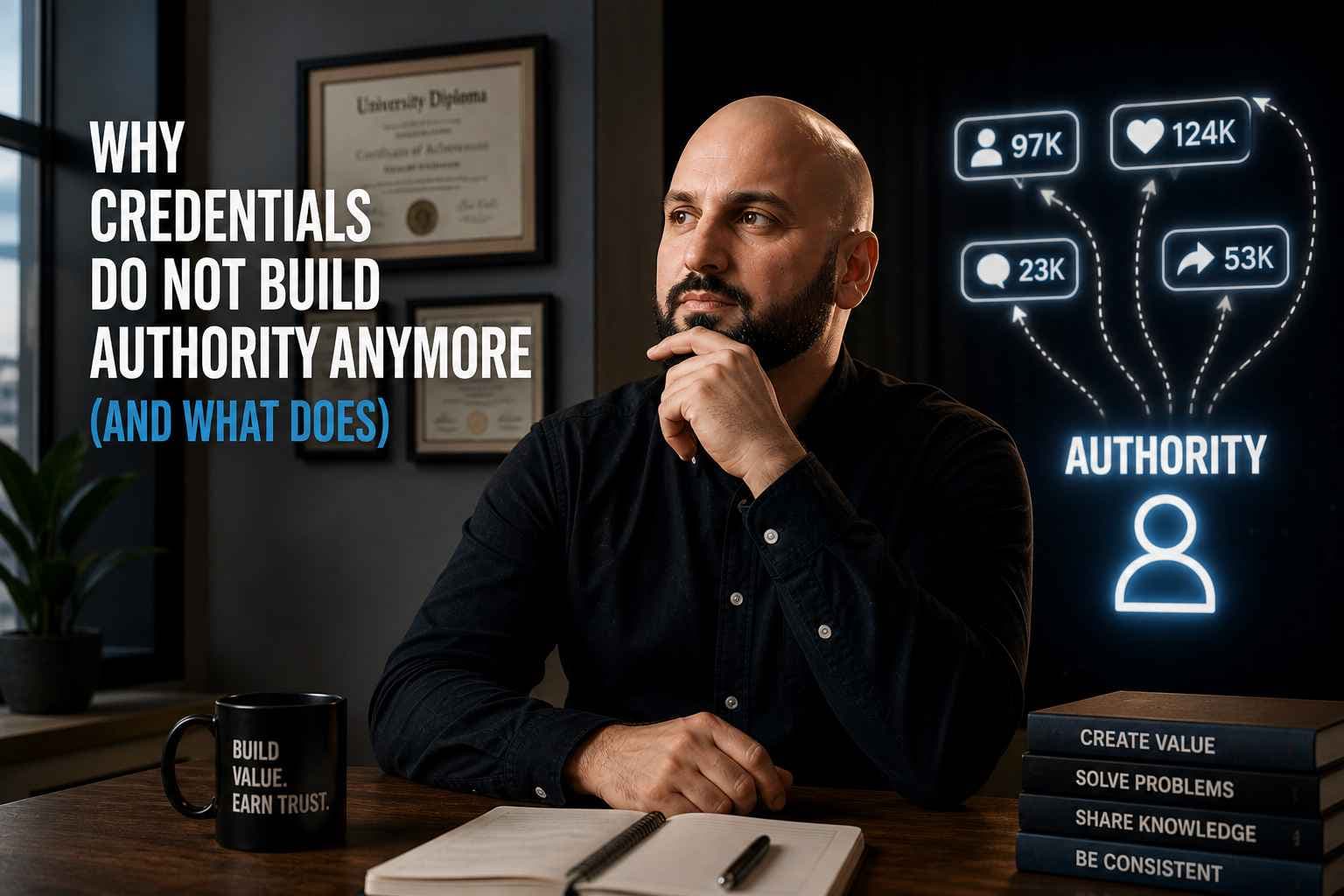
Credentials were the fastest shortcut to trust for most of the twentieth century. They are now the slowest. AJ Kumar maps the shift from input signals (degrees, licenses, certifications) to output signals (documented results, structured knowledge, named frameworks).

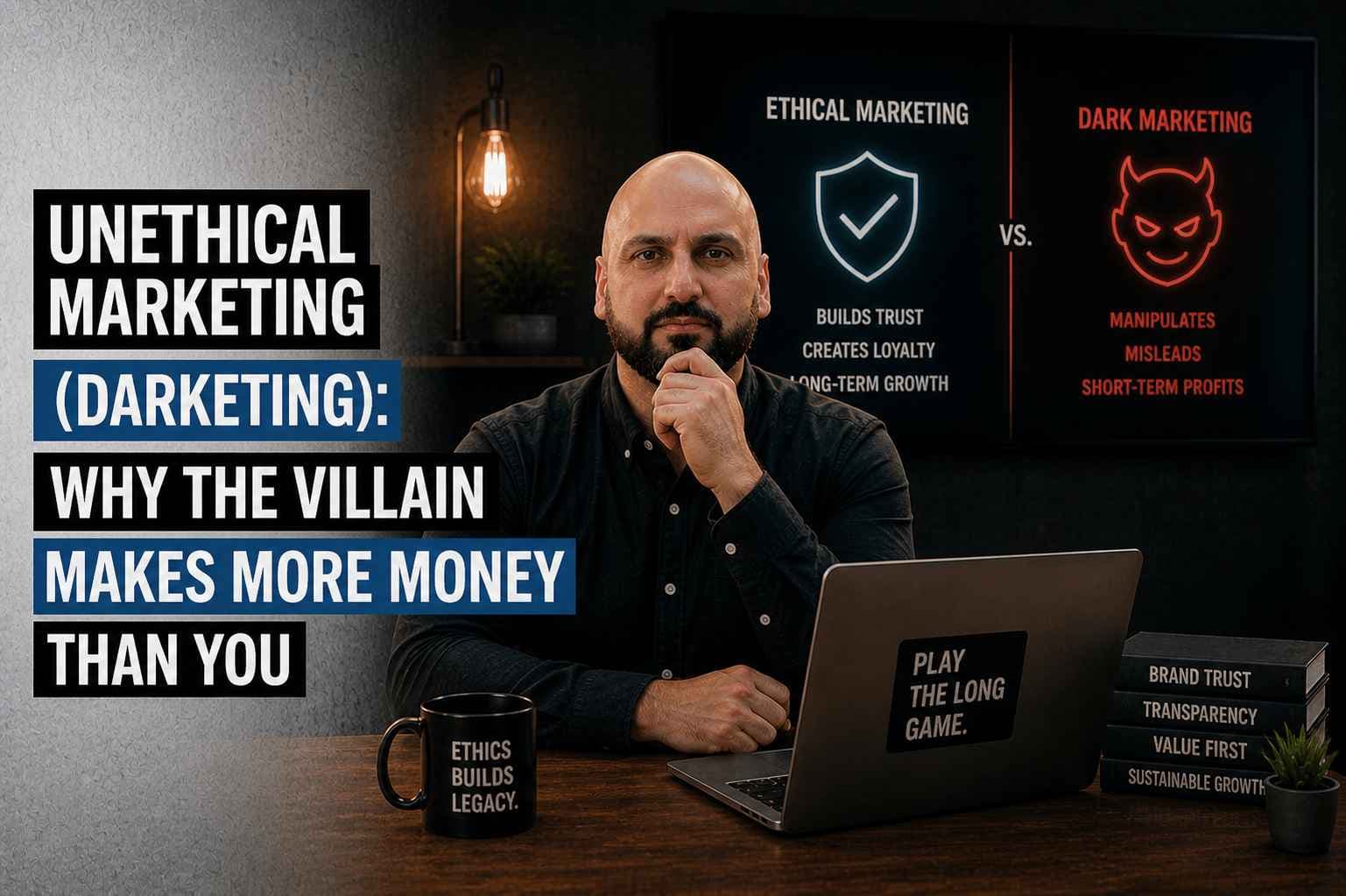
AJ Kumar coined the term darketing in GURU, INC. to name the kind of marketing that crosses the line from persuasion into exploitation.

Most businesses know they need content. Almost none of them know who to hire to make it. AJ Kumar argues the social media manager era is over and a new role has replaced it: the full-stack content creator.

Founders, investors, and acquirers all believe the spreadsheet drives the decision. Harvard research estimates 95 percent of cognition runs below conscious awareness. The decision is emotional first and rationalized after.

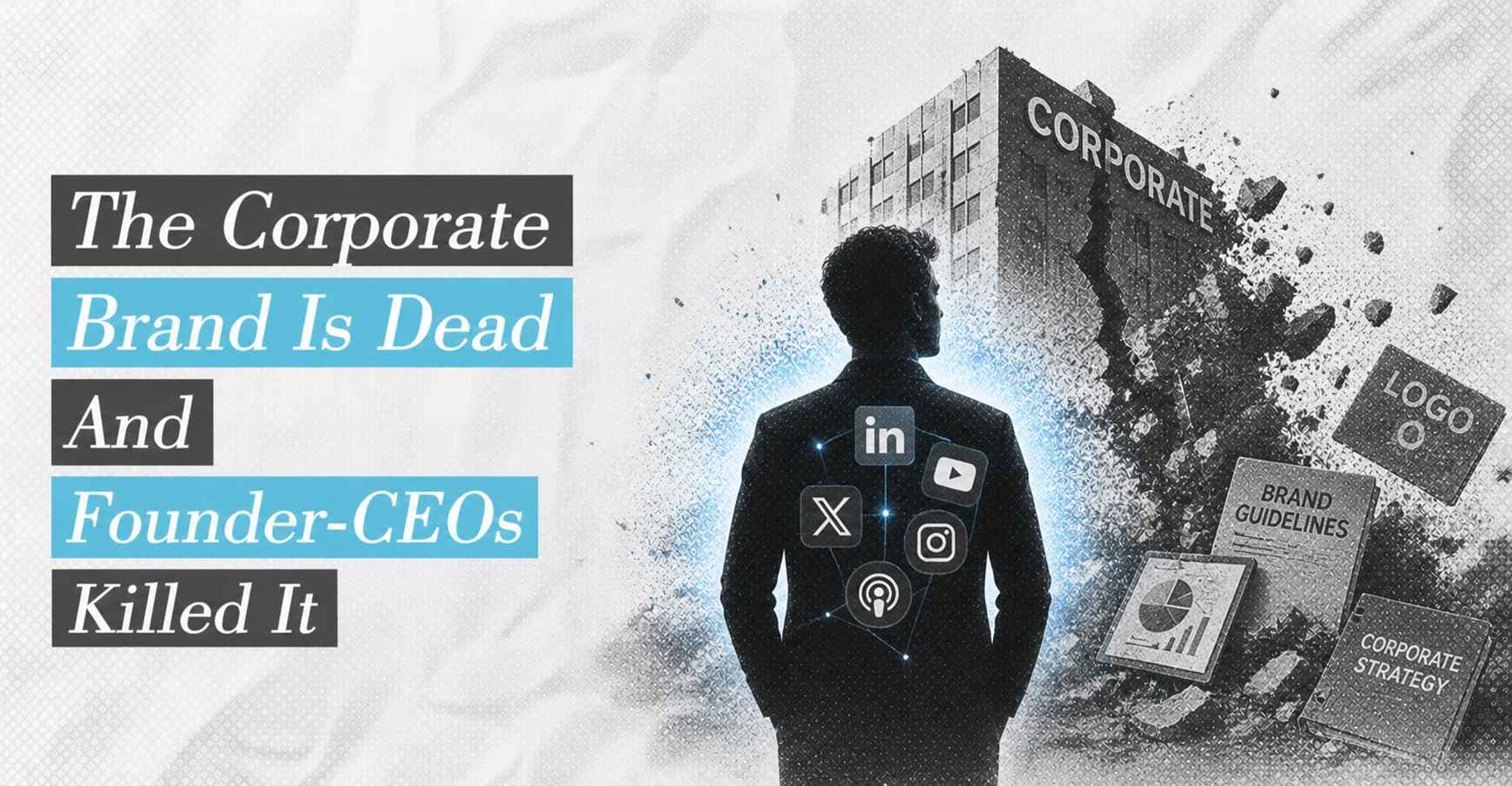
The corporate brand was built for an old media world with eight gatekeepers. Saying nothing was the safe strategy. The internet destroyed that funnel. Founder-CEOs now reach larger audiences than the Wall Street Journal.

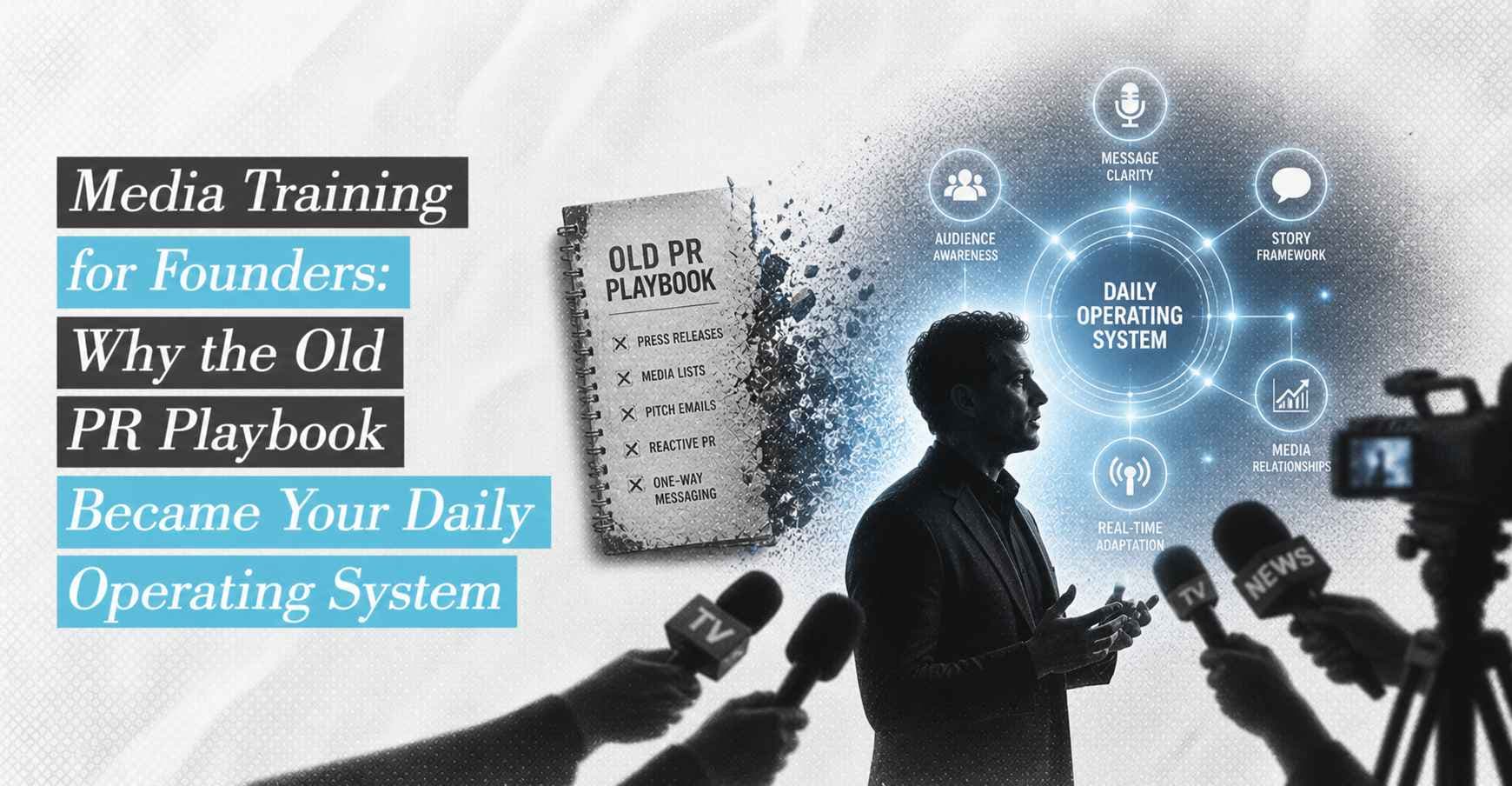
AJ Kumar argues that traditional media training, built for the rare reporter interview, has become the daily operating system for any founder running their own podcast, newsletter, or social platform.

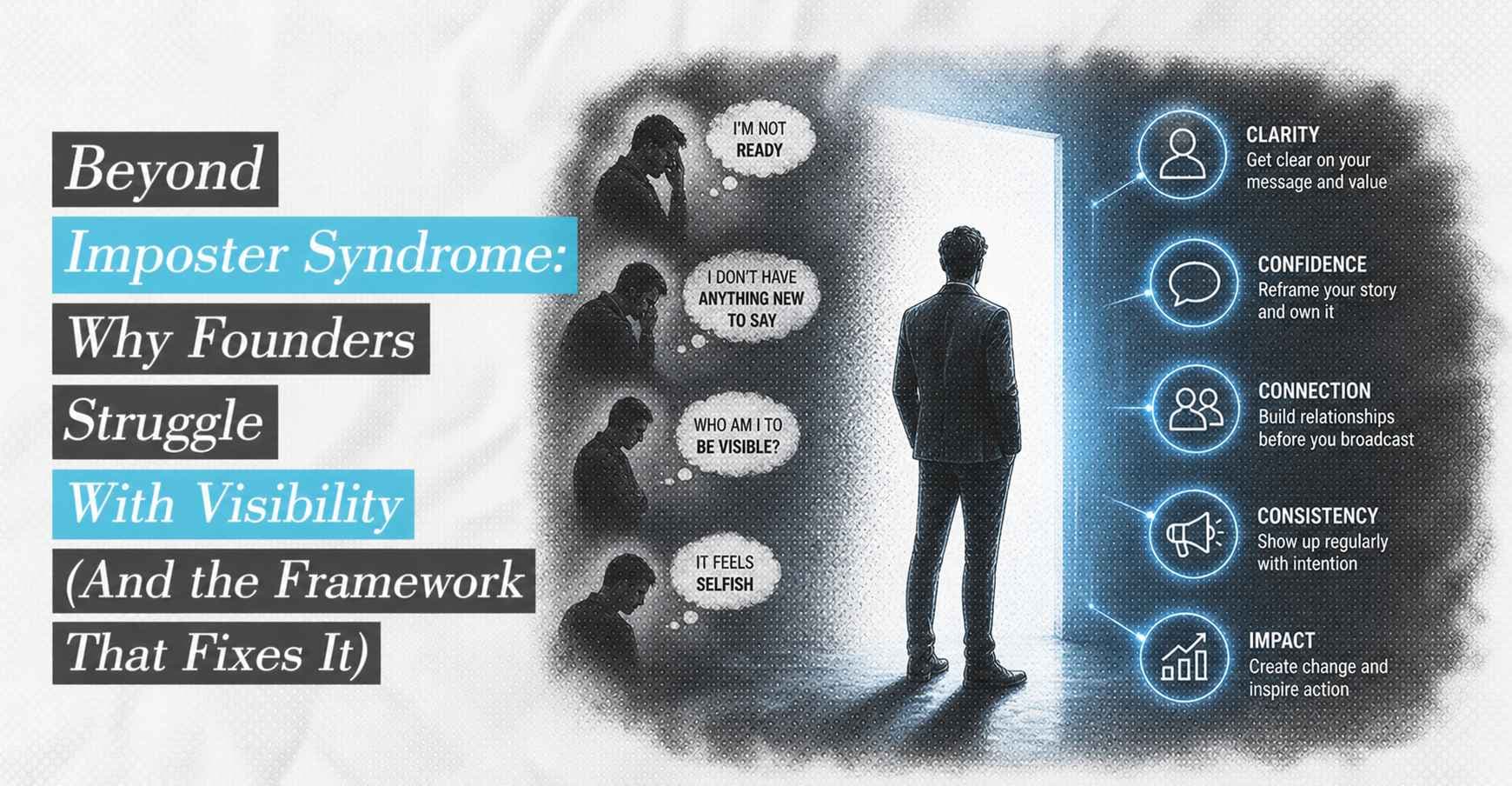
Imposter syndrome is one of the most common struggles founders face when building a personal brand. AJ Kumar argues it is one of three distinct alignment patterns that undermine authority, trust, and revenue.

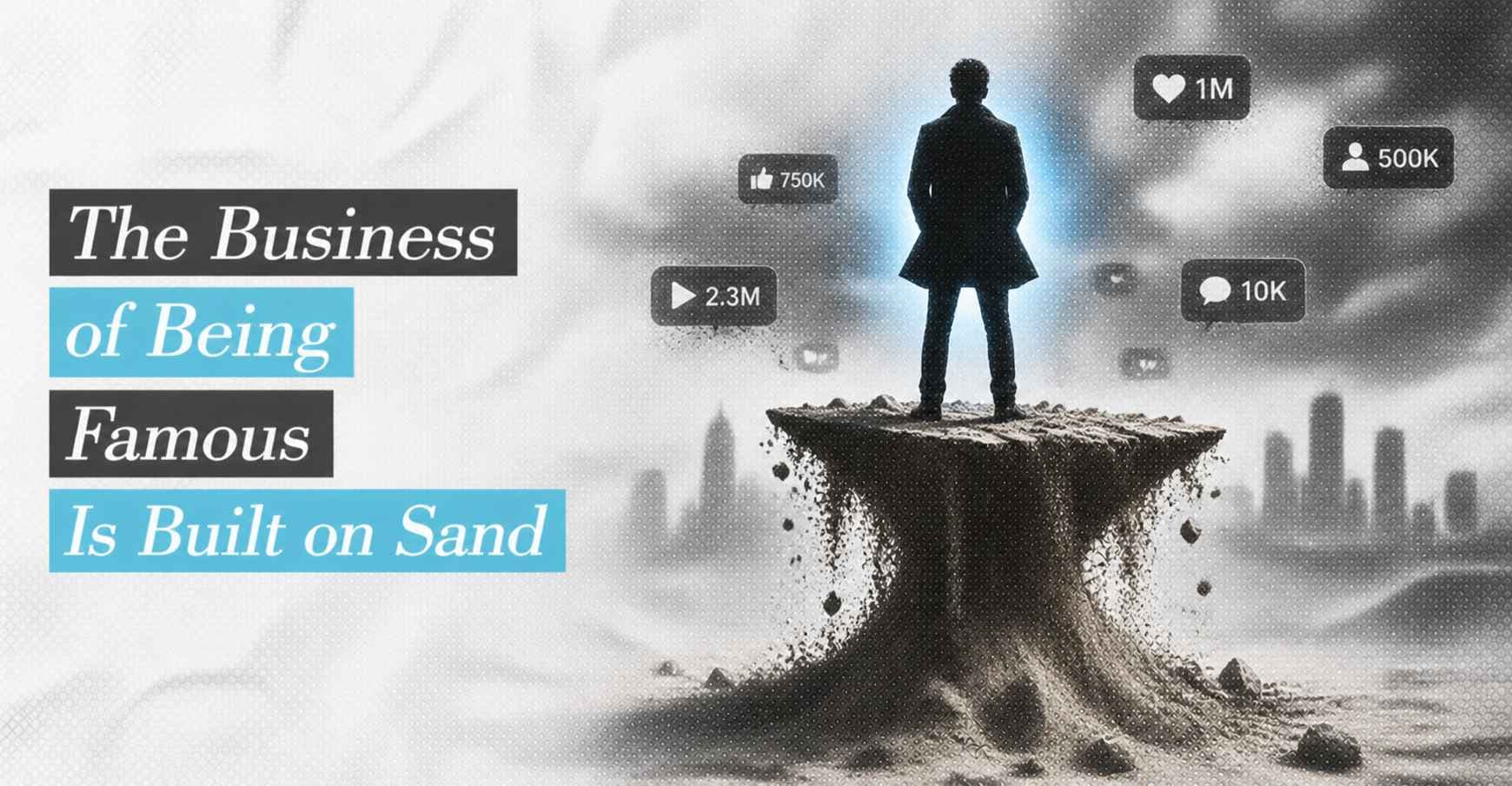
AJ Kumar argues that fame is a temporary condition, not a business model. Most personal brands are sandcastles built on rented platforms, vulnerable to the next algorithm change.

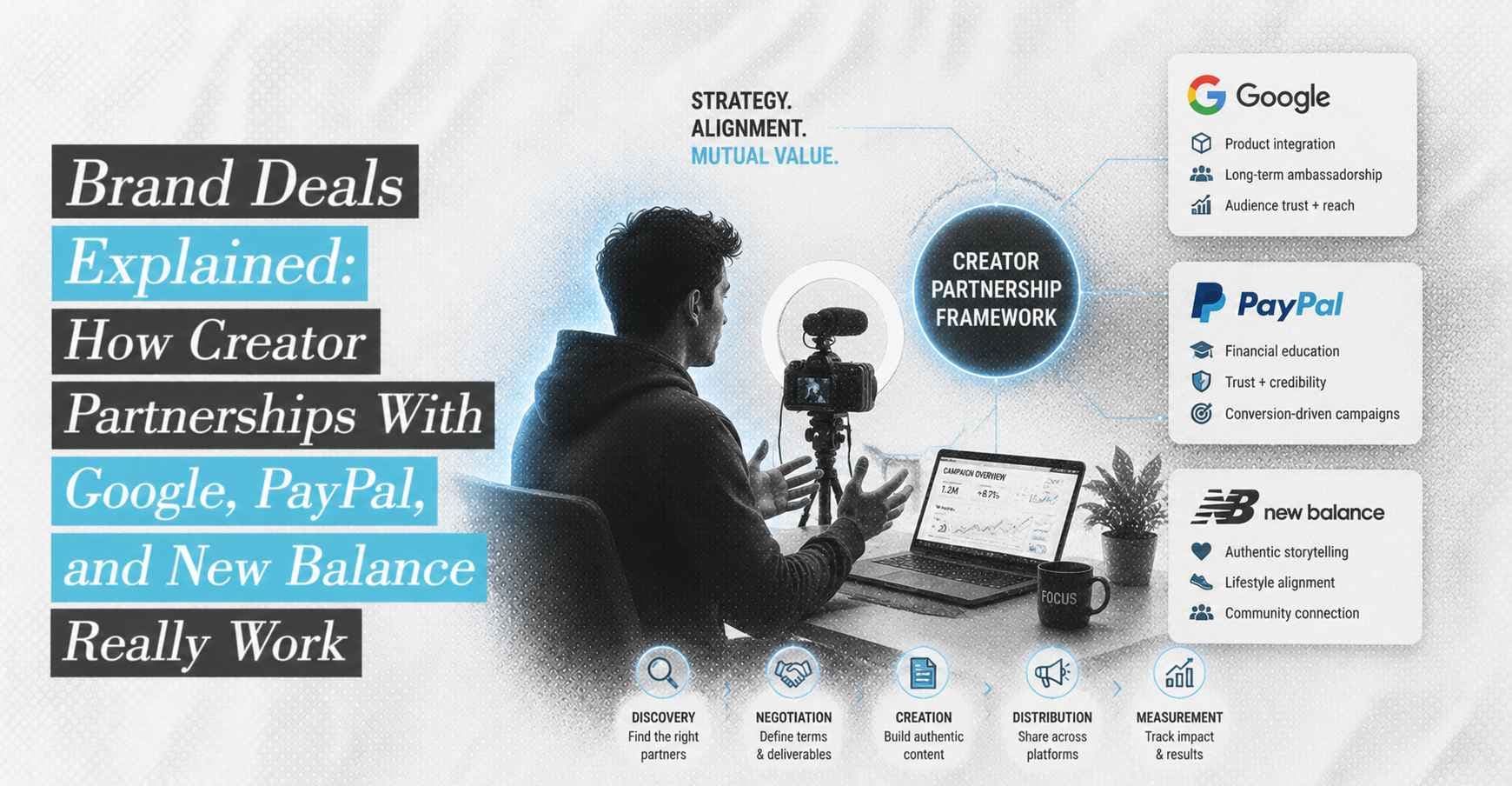
A brand deal is a structured transaction between a creator's audience and a brand's business objective. Compensation ranges from a few thousand dollars to six-figure commitments.

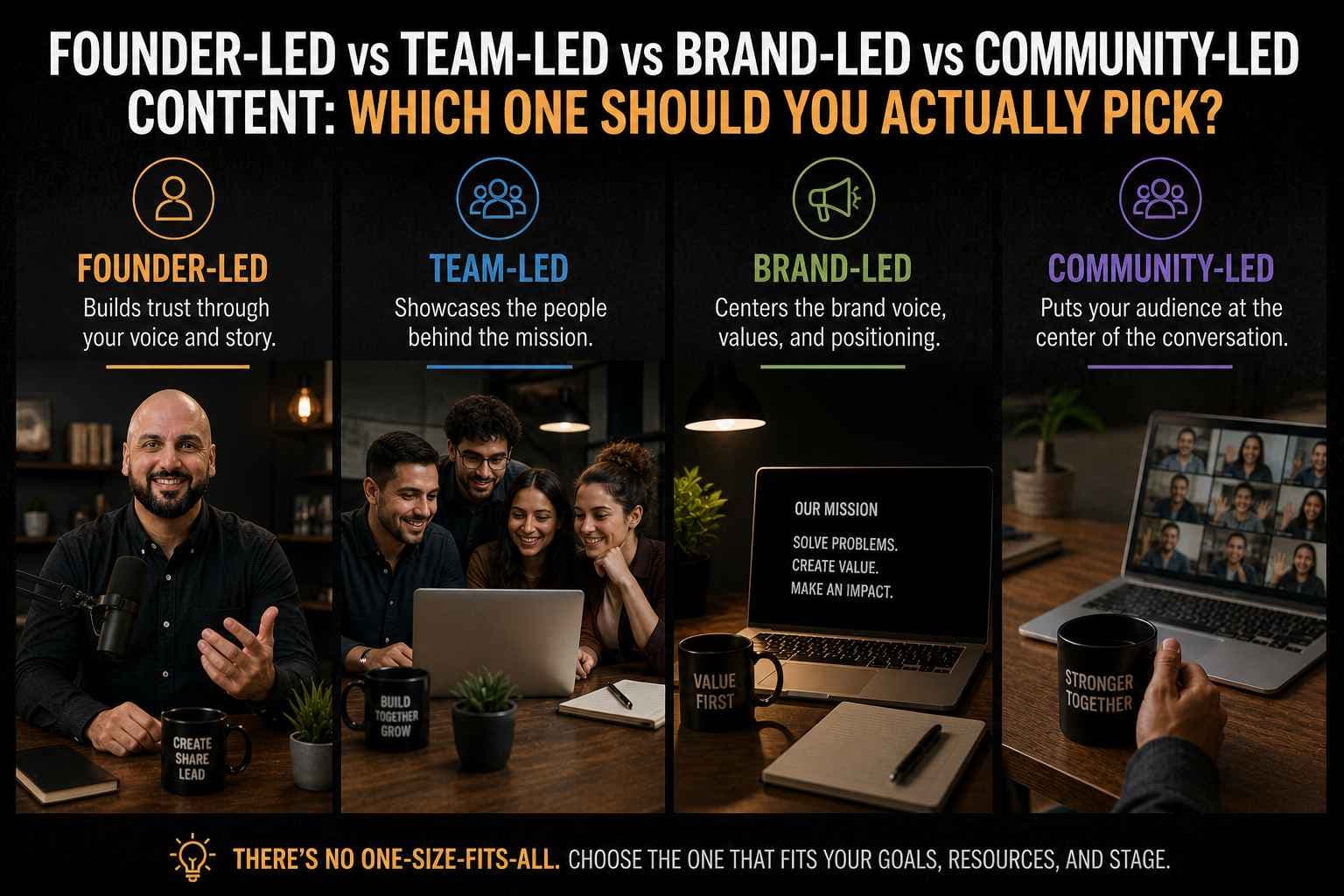
There are four ways a company publishes content: through the founder, through the team, through the brand, or through the community. Most advice treats them as equal options. AJ Kumar argues they are not.

Structure function claims are the legal mechanism that separates health brands that scale from health brands that get shut down. The 1994 Dietary Supplement Health and Education Act created a specific language framework that dictates what supplement companies and health influencers can say about their products. "May support immune health" is legal. "Cures your cold" is a federal violation.

Information is a commodity. Opinions are a market. AJ Kumar argues that founders who keep producing more how-to content miss the asset that compounds: the weight of their opinion.

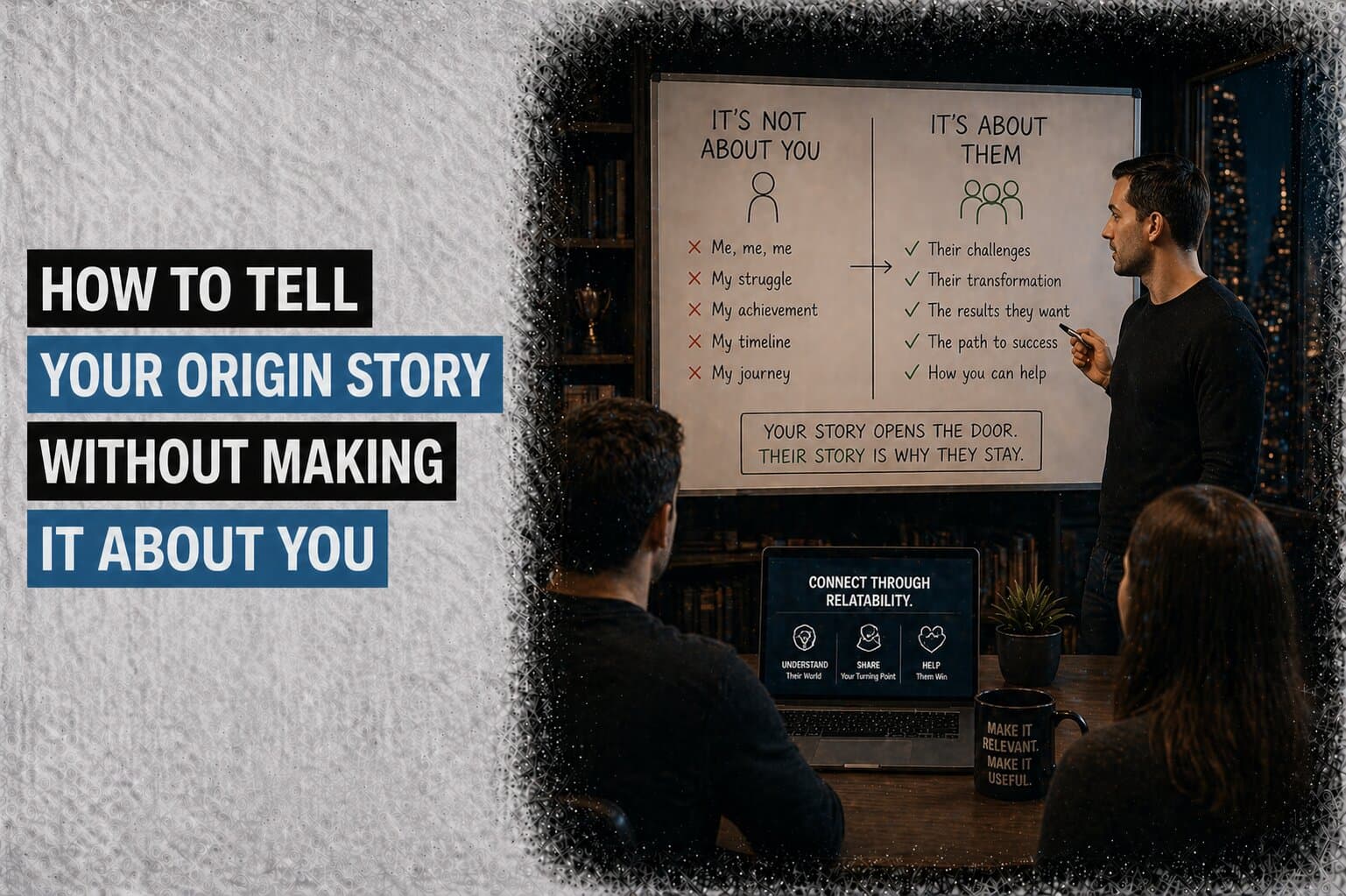
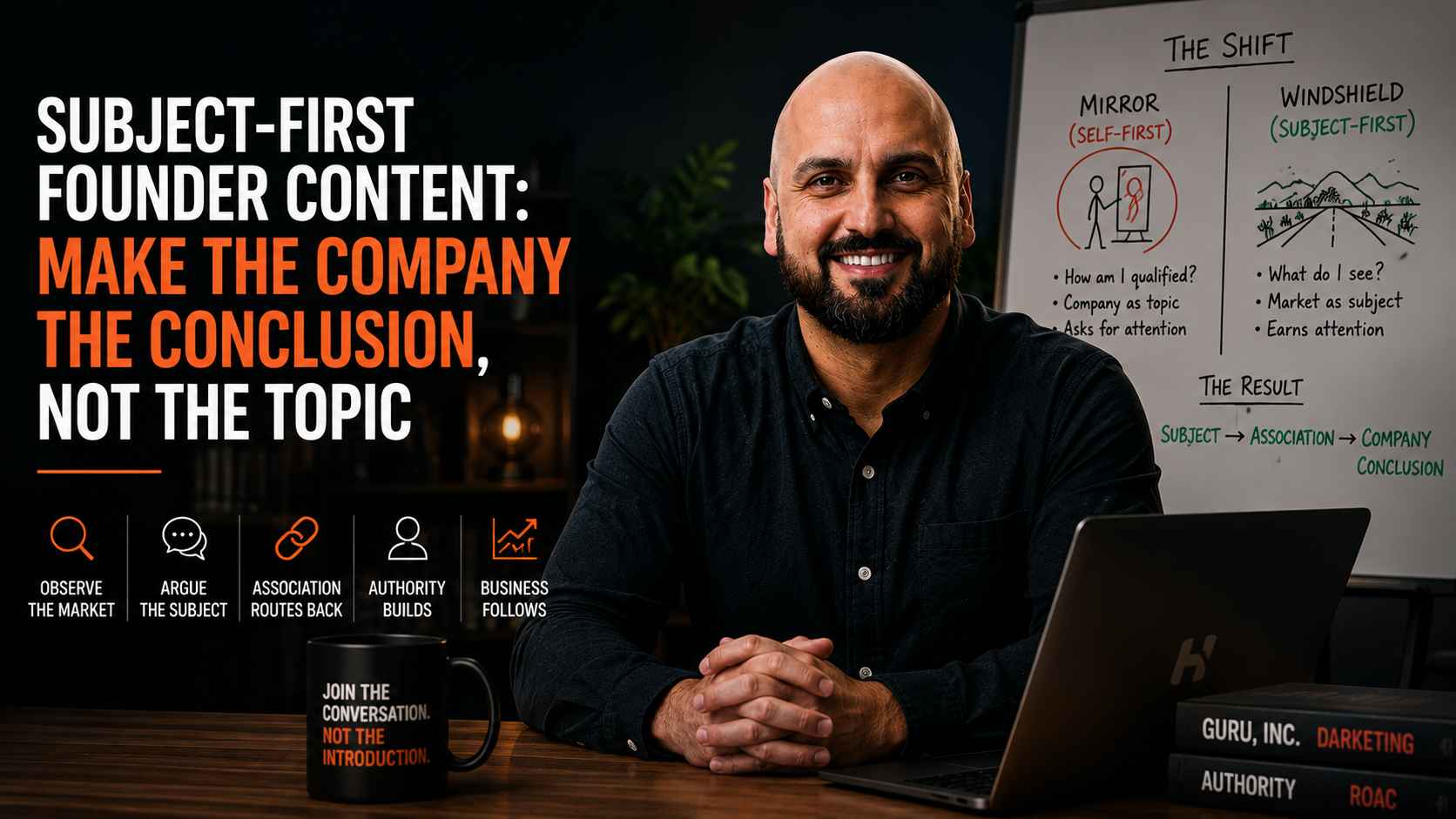
Most founder origin stories fail because they read as an autobiography. AJ Kumar argues the origin story is a mirror, not a memoir. The audience does not want to admire you.

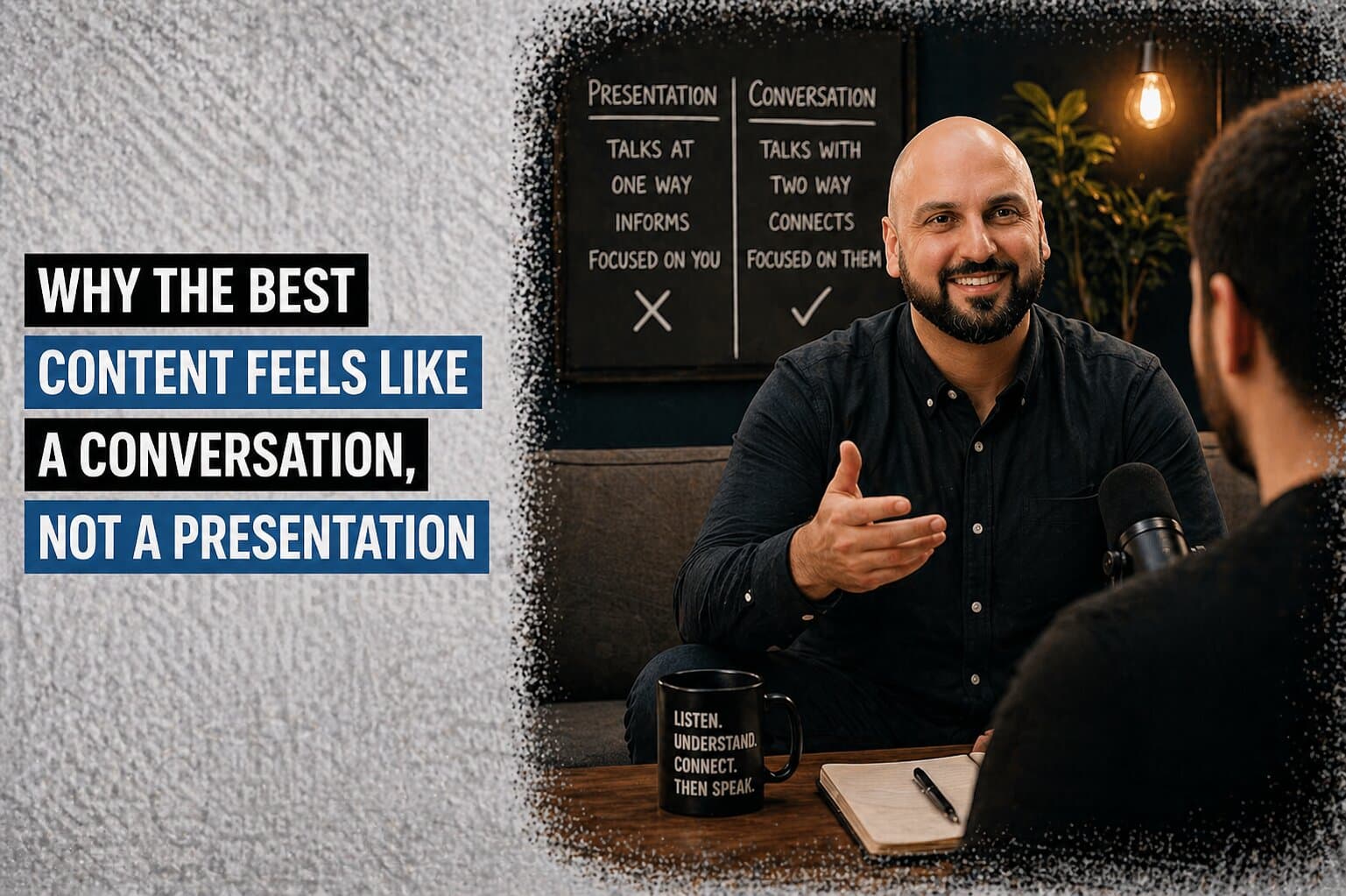
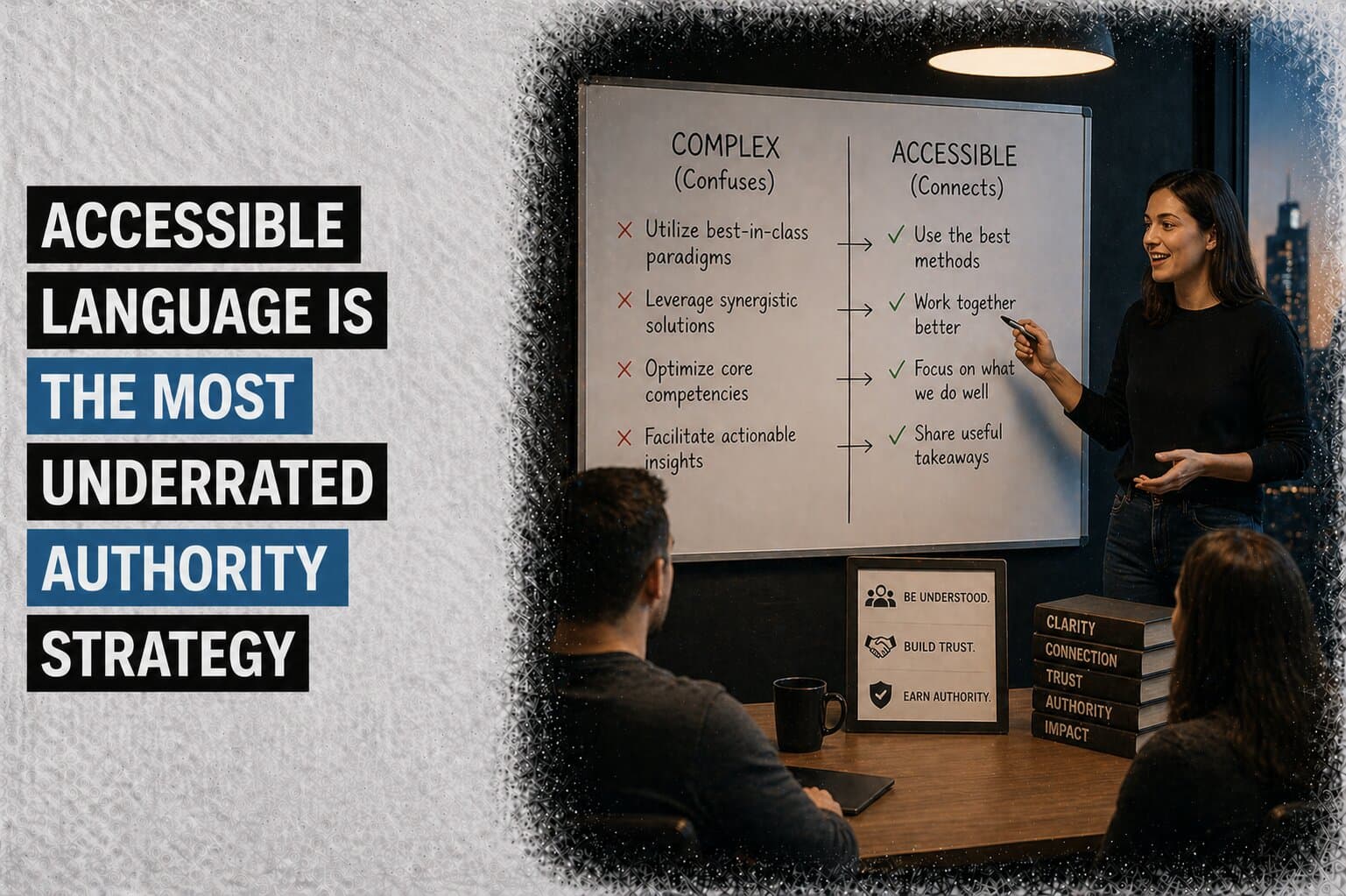
Most founder content fails because the tone treats social media like a broadcast channel. AJ Kumar argues the medium has changed: every platform is now a two-way relevance engine, not a one-way stage.

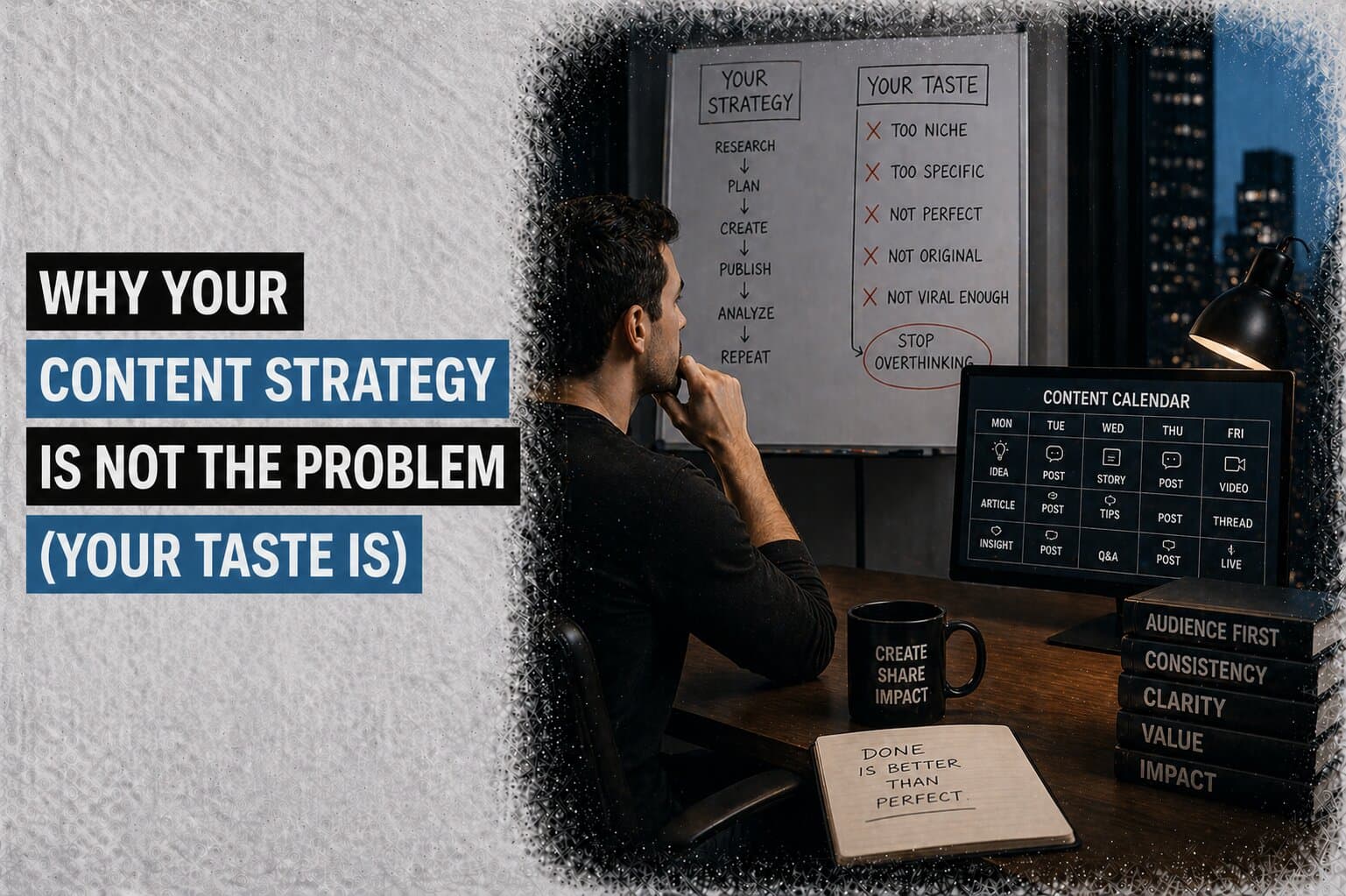
Taste is the most undervalued skill in the creator economy. AJ Kumar argues it is not a gift but a trained ability. AI produces the statistical average of the internet. Taste is the human variable AI cannot replicate.

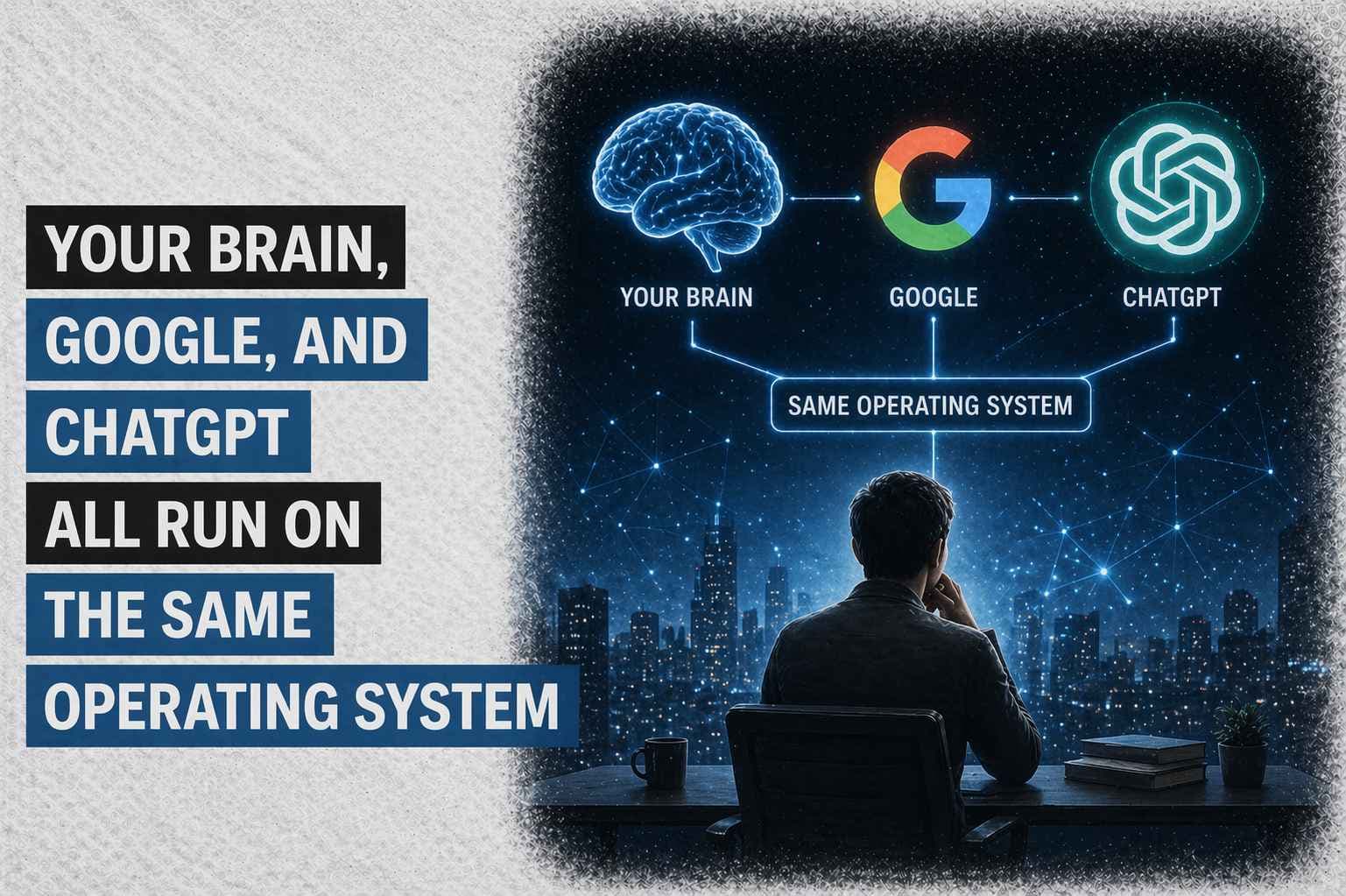
Every system that processes information runs on one principle: reduce the energy cost of retrieval. The human brain compresses experience into patterns. Google ranks structured content.

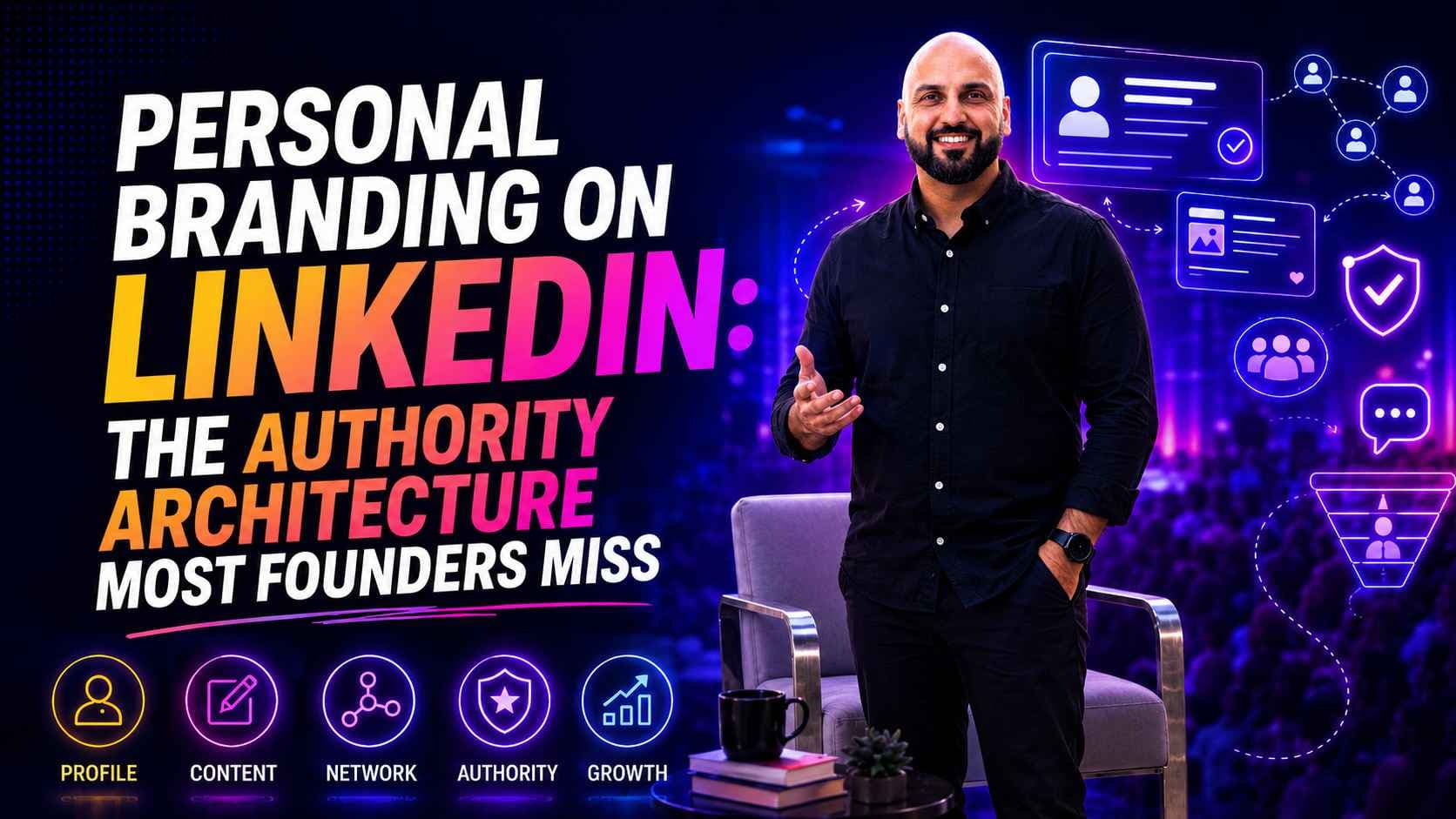
LinkedIn personal branding is not about posting daily. LinkedIn personal branding is about building an authority architecture on the platform where B2B buyers make trust decisions. 73% of B2B buyers check the founder's LinkedIn profile before purchasing (2024 Edelman Trust Barometer).

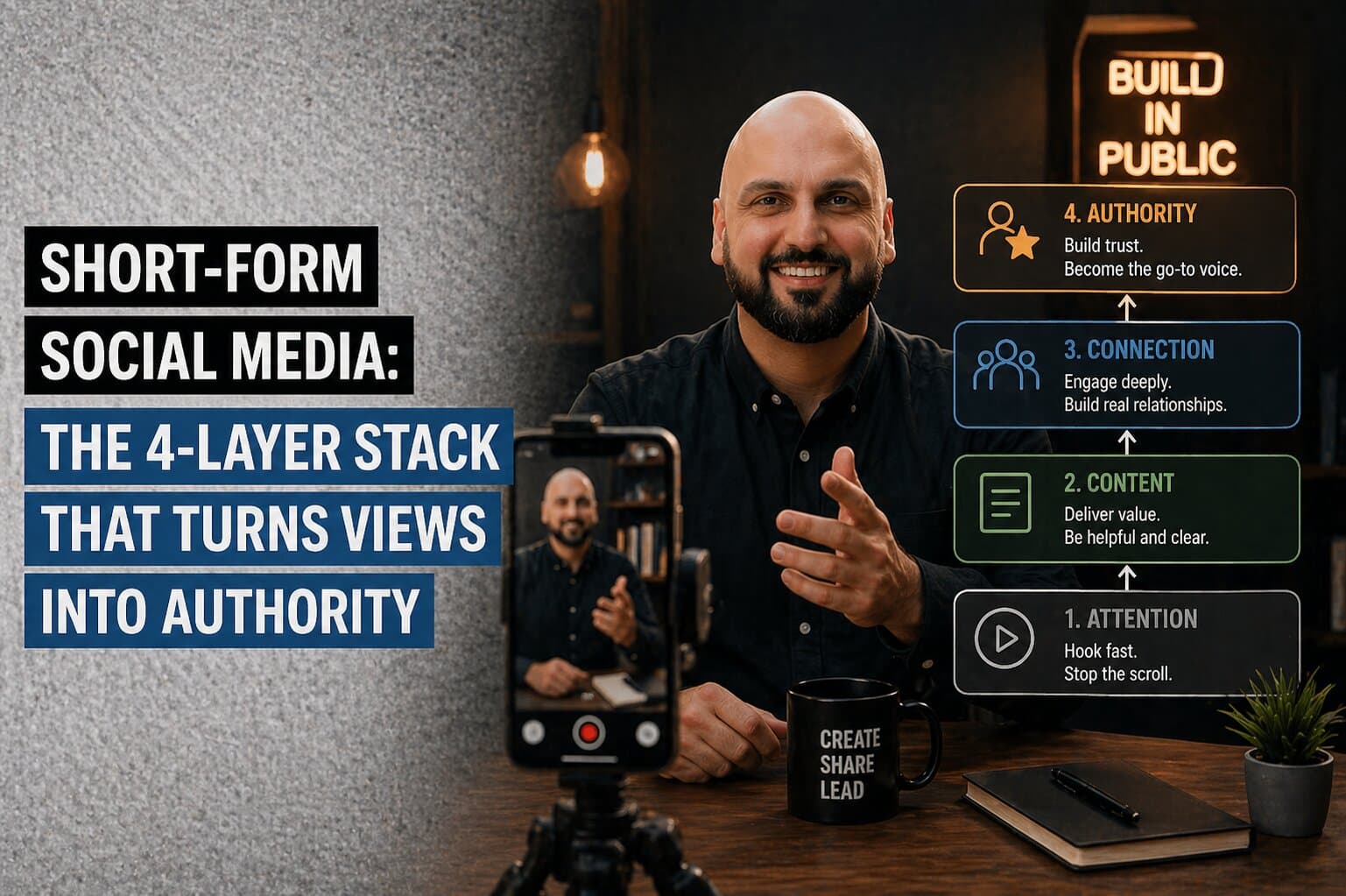
Short-form social media is engineering, not art. AJ Kumar maps every short-form video as a stack of four neurological gates. The register earns the stop. Retention earns the watch. Resonate earns the save. Reinforce earns the return.

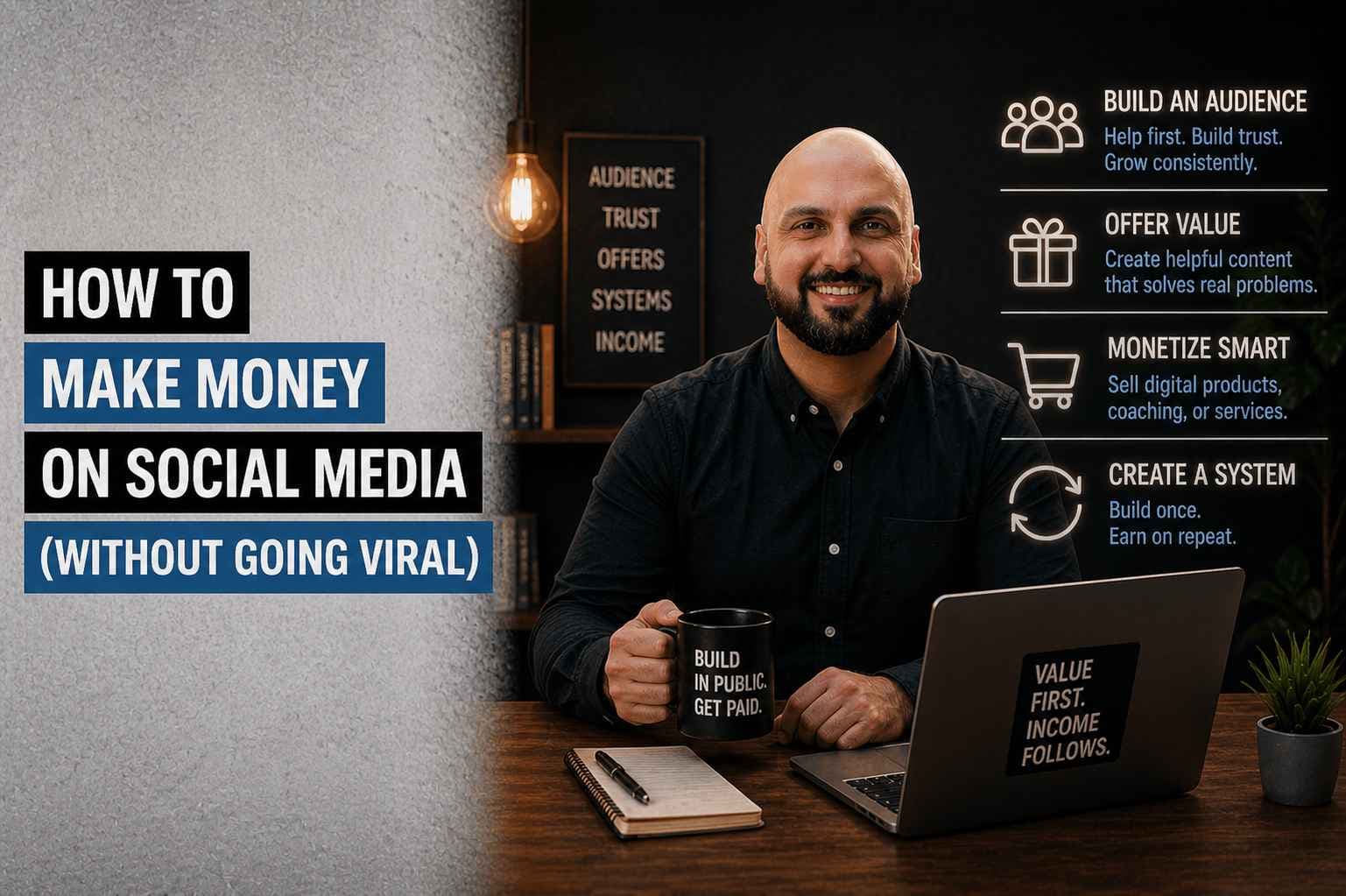
Most people are taught that going viral is the path to making money on social media. For most businesses, the opposite is true. AJ Kumar maps the five money goals on social media.

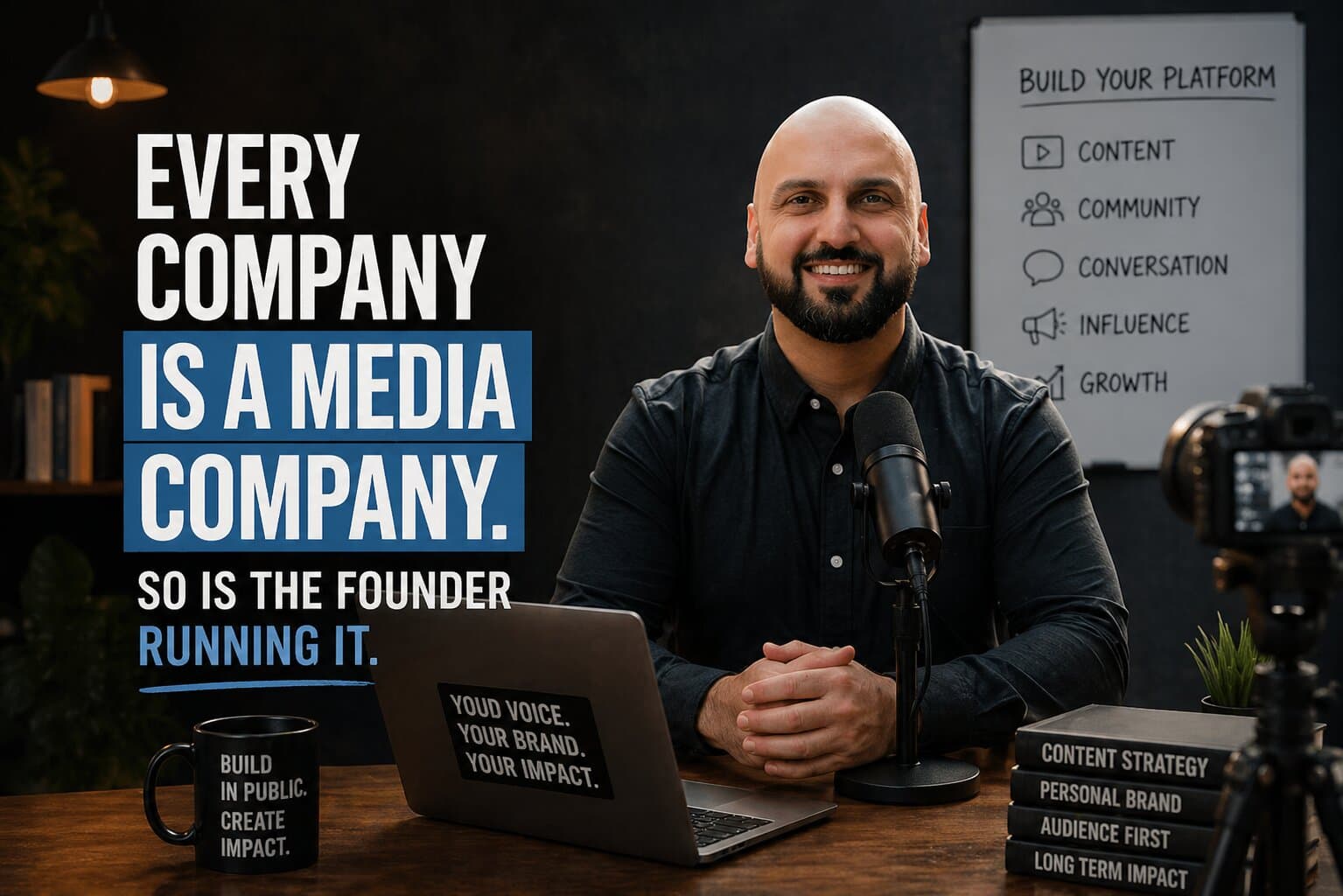
"Every company is a media company" stopped being a metaphor in 2026. The average adult now spends roughly as much waking time in front of a screen as they do sleeping. AJ Kumar argues every company now needs two media operations, not one.

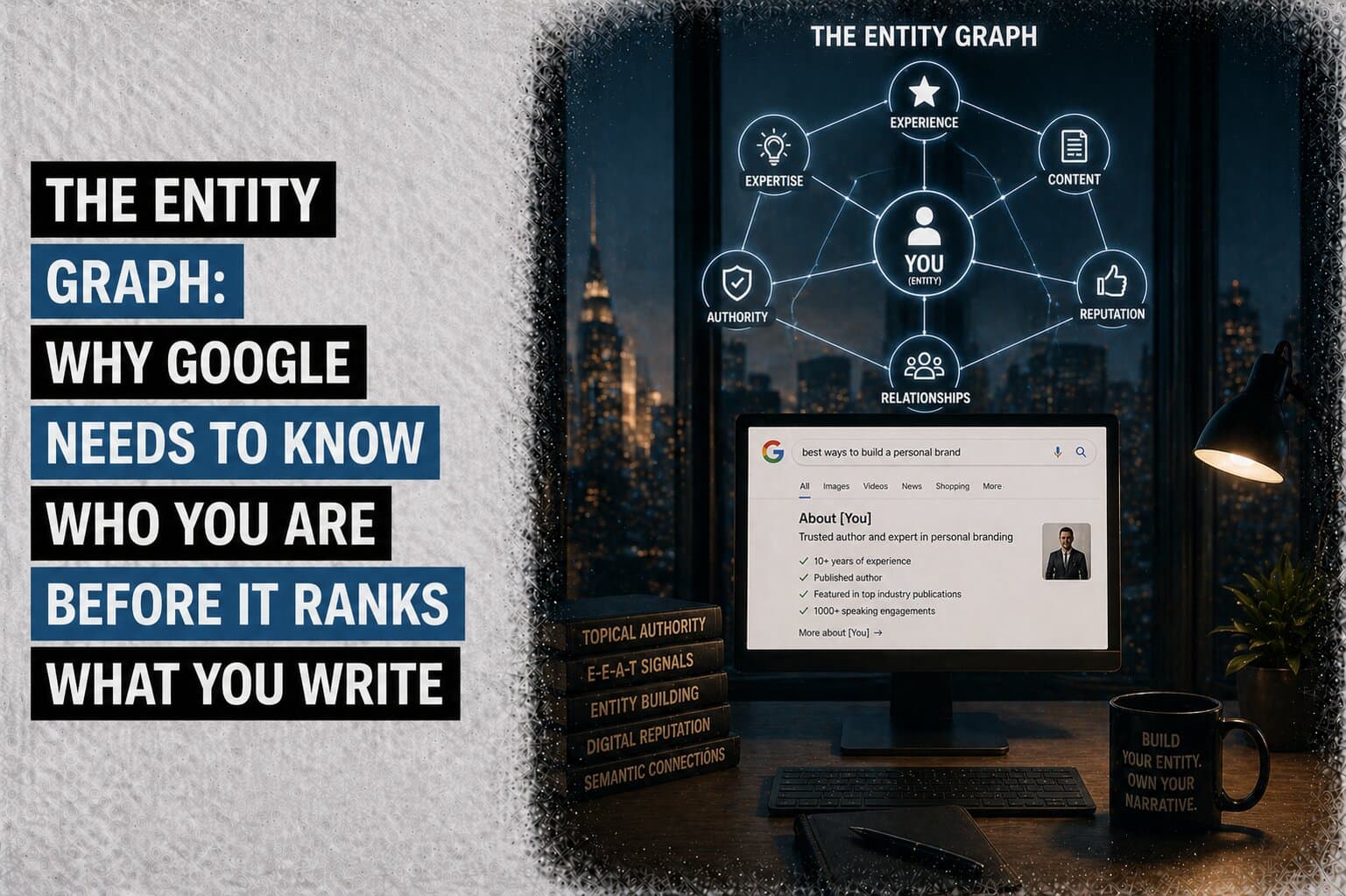
AJ Kumar explains how Google's entity graph works and why founders need to be recognized as entities before their content ranks. The post reframes entity SEO as identity work, not technical work.

The internet has never been louder. AI produces a thousand blog posts before breakfast. Every platform is flooded with content that sounds smart, reads clean, and says nothing.

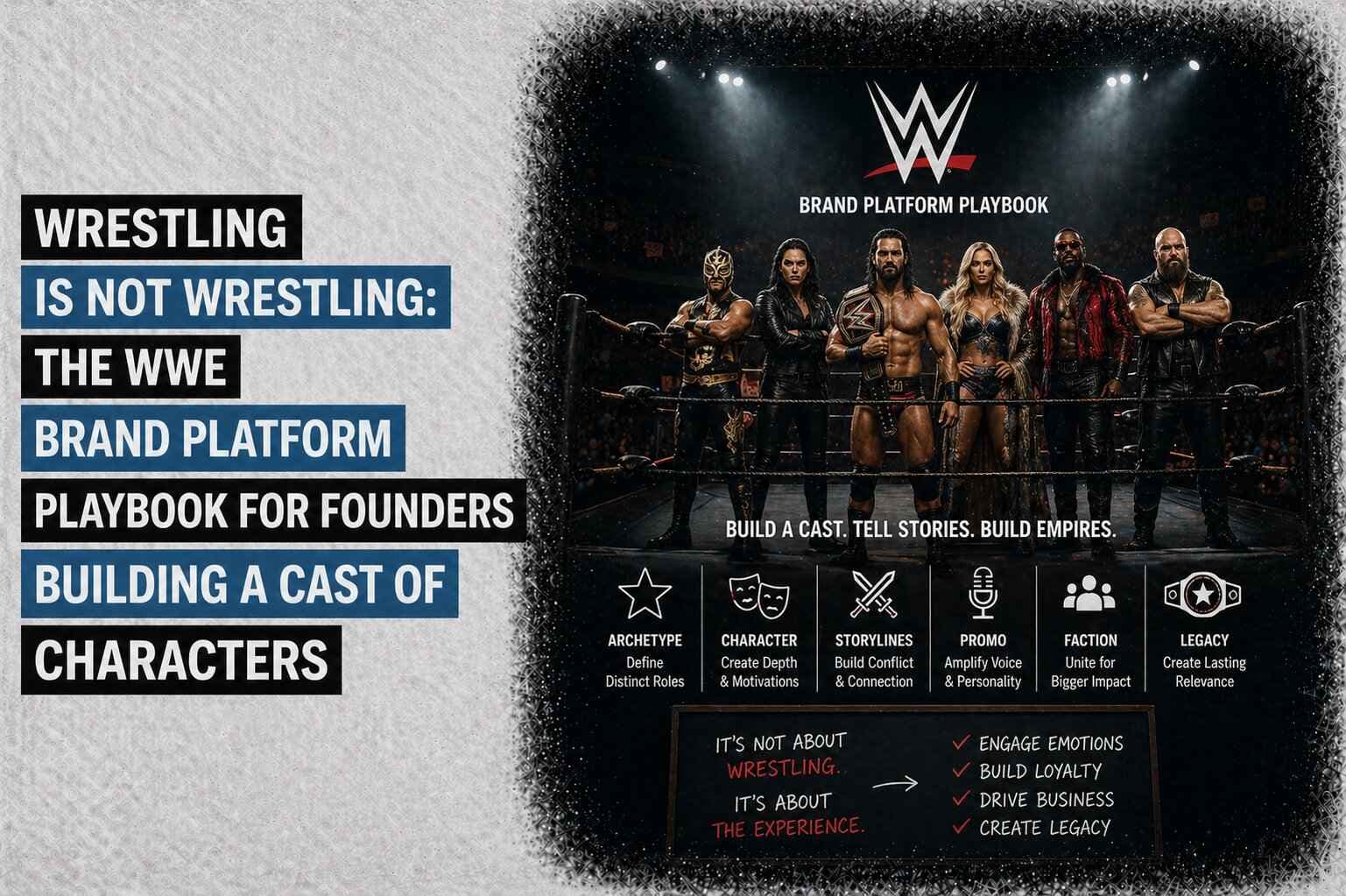
WWE is not a wrestling company. It is a brand platform that launches a cast of characters. Each character is tuned to a different audience segment. Every storyline routes attention back to one core IP.

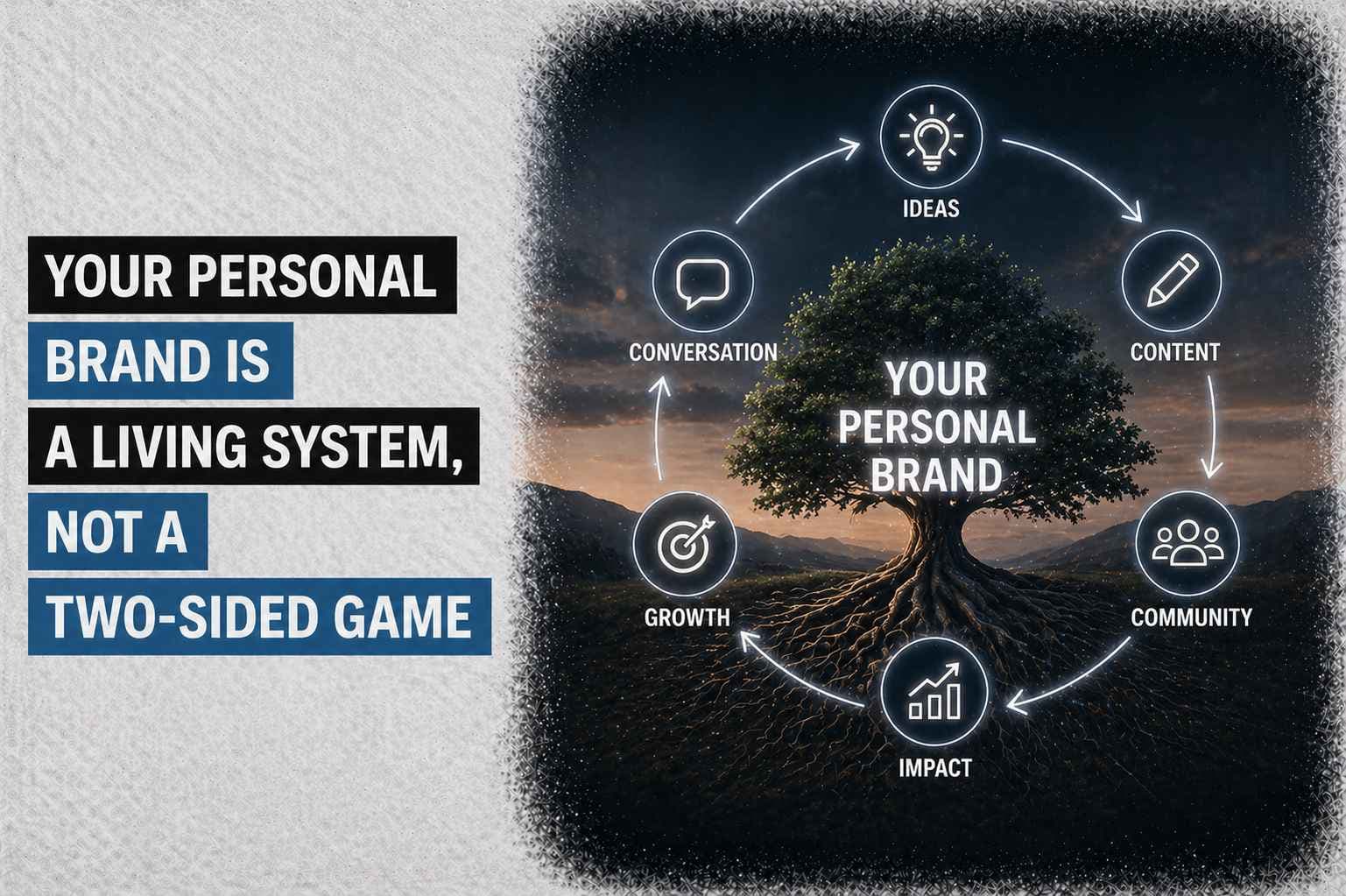
Most founders grade their personal brand the way a fan watches football. This post won. That one flopped. The mental model is the reason their content works in bursts and fades.

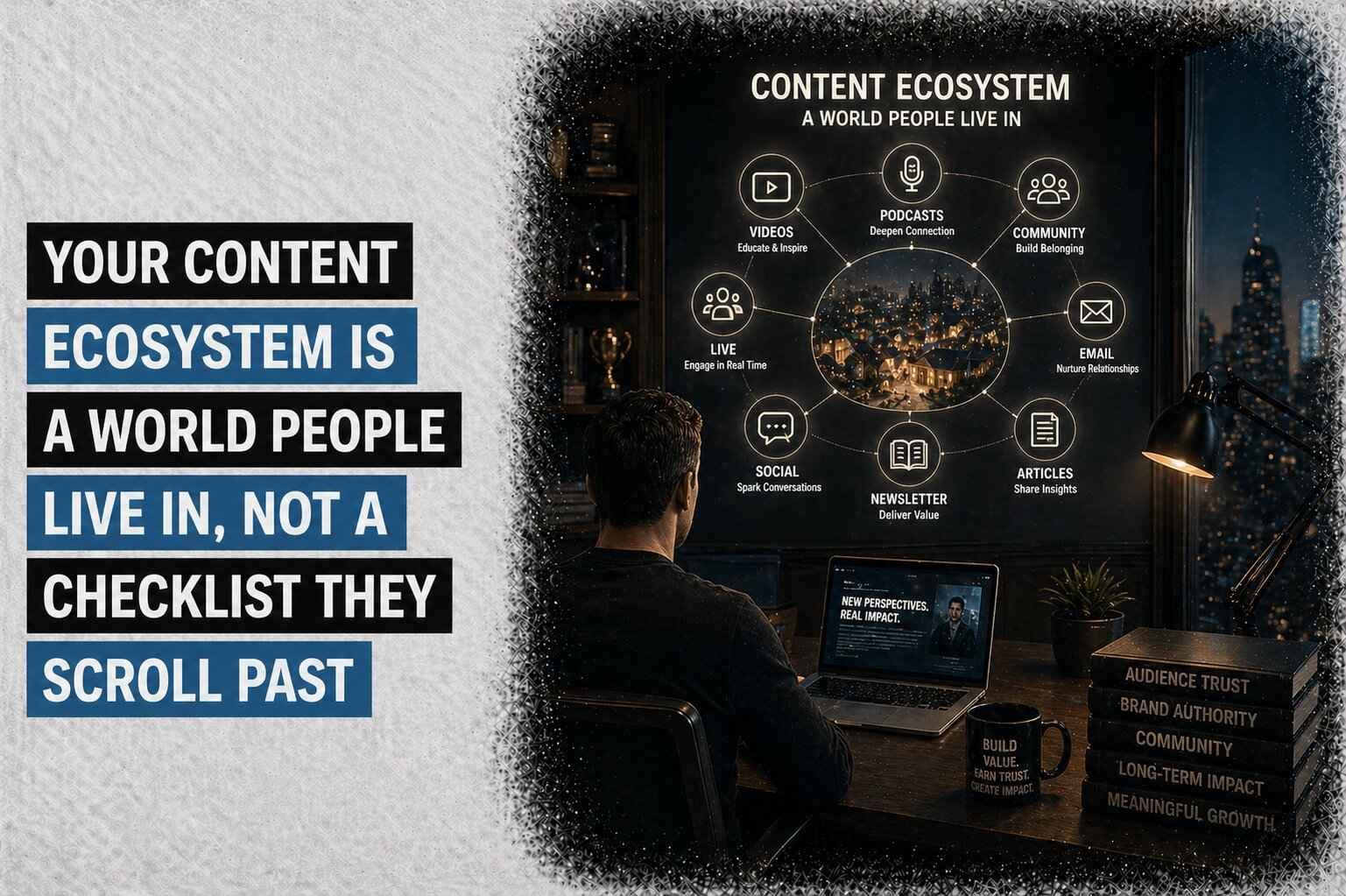
Most founders treat their content ecosystem as a to-do list. AJ Kumar argues it is a world. When every surface a founder appears on reinforces the same identity, audiences stop consuming content and start inhabiting the presence built around them.

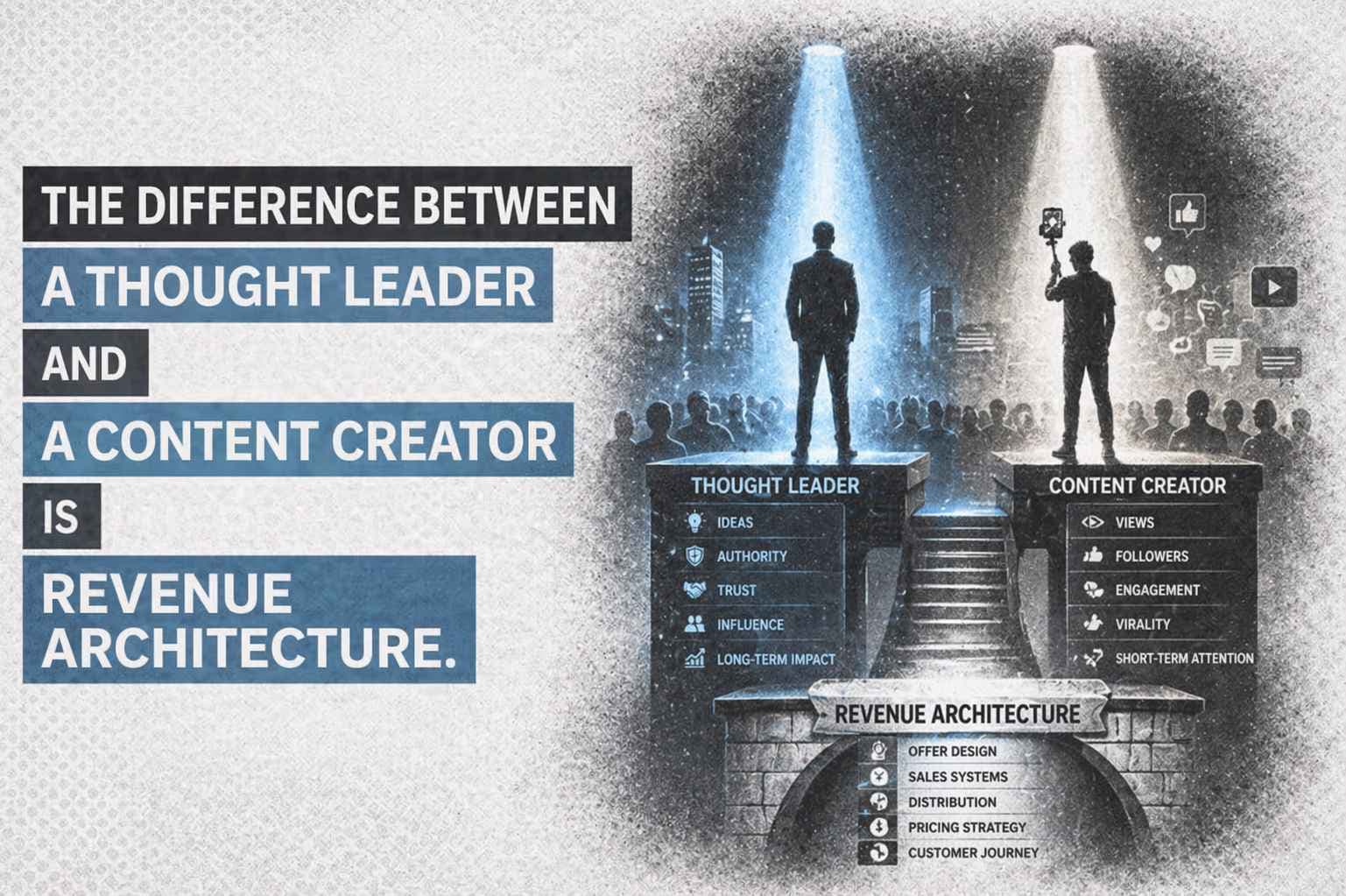
Most founders use "thought leader" and "content creator" interchangeably. That is a business mistake. The structural difference is not audience size or post frequency.

YouTube has become the single most cited domain in Google's AI Overviews, appearing in roughly 29.5% of all AI-generated answers. Across all AI platforms combined, YouTube is cited approximately 200 times more than any other video platform. Views, likes, and subscriber counts show near-zero correlation with citation frequency.

Most people think the digital world is something humans invented. A collection of platforms and algorithms assembled from scratch. But what if the digital world, like gravity and electricity, was always there, and we built instruments sensitive enough to finally see it?

Before the creator economy had a name, a real estate coach named Mike Ferry was running a $50 million personal media company built on positioning, packaged knowledge, and an almost religious level of audience loyalty.

Joel Osteen is one of the most effective personal brand operators in modern media. His weekly sermon functions as a single source asset that gets repurposed across podcast, YouTube, television, and live events with surgical precision.

In the software world, investors evaluate eight types of competitive moats: network effects, data advantages, switching costs, and ecosystem lock-in. But when you study the businesses that actually endure, they almost always start with the same one. Brand. And it is the one most founders completely ignore.

Alex Hormozi did not build one of the most influential business brands of the decade through virality or personality. He built it through brand infrastructure: frameworks that compound, content that converts, and a media strategy that turned trust into an acquisition empire.

Martha Stewart did not just build a brand. She engineered the original personal media company, a personality-driven ecosystem of interconnected channels that turned practical expertise into cultural permanence and over a billion dollars in annual product revenue.

Edutainment is content that educates and entertains simultaneously. It is the most effective content format for founders and expert creators building authority in the creator economy.

Oprah Winfrey did not become a billionaire by hosting a talk show. She became a billionaire by building a personal media company with interconnected systems that turned attention into authority and authority into an empire.

Your personal brand is a living organism governed by one biological law: it is either growing or it is dying. There is no neutral state. Neuroscience research on biological value shows that every living system exists within a homeostatic range, moving toward flourishing or toward decline.

The average person spends 6 to 8 hours a day staring at screens. That's the foundation of the most valuable economy of our time: The Attention Economy.

We're not just seeing a trend toward personal branding, we're witnessing the complete restructuring of how business gets done.

PayPal just posted a job that should make every CEO pay attention. They're building a team dedicated to CEO personal branding.

In the 1980s, Nikki Haskell hosted 'The Nikki Haskell Show,' interviewing celebrities and politicians while becoming a fixture in New York and Los Angeles high society.

We're at an inflection point. In the next 12-24 months, AI is going to fundamentally change how customers discover and choose businesses.

Consistency of format beats frequency of posting. A recognizable, repeatable 'show' makes you memorable and positions you as the go-to authority.

Most experts are playing the wrong game on YouTube. They lack a clear YouTube strategy and treat it like a dumping ground for content instead of the most powerful stage to build authority.

Most people view social media as a tool for connection and entertainment. However, from a strategic perspective, the true purpose is building scalable reputation.

In today's day and age, we live in two different worlds. There is the physical world, and the digital world where we are mentally present.

With all the advancements being made in technology today, it can be tough for up-and-coming businesses and entrepreneurs to know where best to invest their

Food blogging is one of the best ways to make money online, while leveraging something you are passionate about.

TikTok is rewriting the rules for how we create, share and discover visual content. The For You Page feed has changed the game for social networks, propelling entertainment and discovery to the forefront.

Creating an image is time-consuming but without a character your brand will suffer. This exercise will help you understand why you need a brand character and how to make it a reality.

Building brand awareness is tough. It takes a lot of time, work, and hustle to be able to pull off the ability to get people to recognize your brand.

Being in business is all about finding a balance between offering something that aligns with your skills, and meeting the needs of your potential customers

Being an entrepreneur has everything to do with what you think and how you feel. Sometimes, you feel like you're freefalling into a leap of faith.

Color is one of the fastest ways to communicate our experience with others. The color you choose for your brand will define how customers perceive you.

Gary Vee coined the phrase 'If content is king, then context is God.' The context that surrounds your content is often more important than the actual content you are creating.

Every great brand attempts to capture its own essence, or what I call its uniqueness -- that one aspect that makes a brand stand out.

Social media content creators are revolutionizing the traditional approach to work. As the workforce shifts from physical to digital, content creation introduces a new era of opportunity.

Brand authority comes from getting great quality social proof, and making people pay attention to you.

Creating and consuming great content is no different than creating and consuming a delicious, healthy meal. Like chefs, creators must understand the importance of their audience connecting with their creations.

Attention is time, and time is currency. The better you utilize your attention, the more money you can earn and the more time you have to leverage.

The world is changing.