
Monetizing a personal brand means converting authority into revenue. A founder does this differently from an influencer. The influencer monetizes attention through sponsorships, ads, and affiliate links. The founder monetizes trust through offers the authority makes possible.
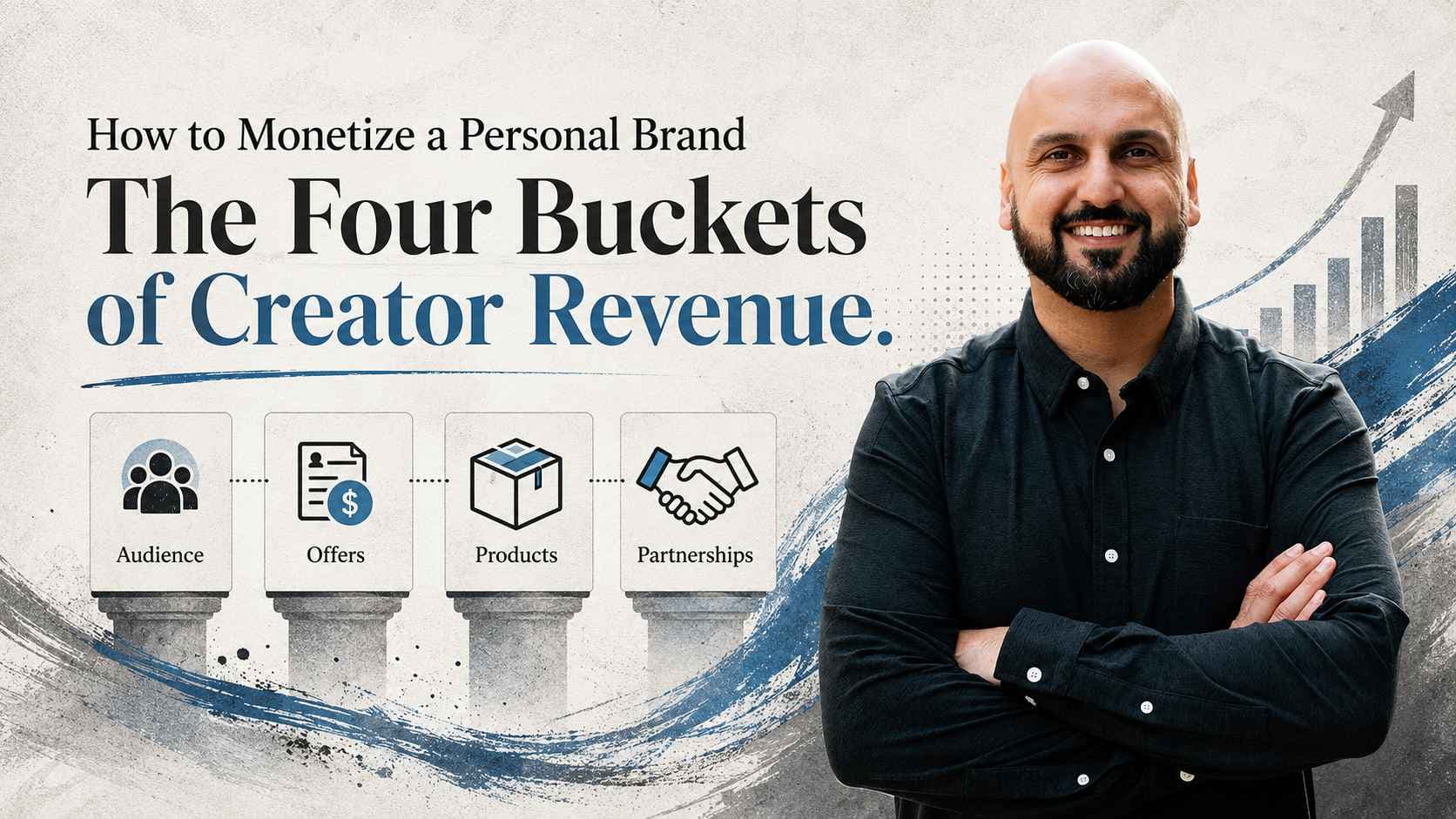
The Four Buckets of Creator Revenue organize every income source a personal brand produces. The buckets matter less than the order. A founder fills the high-value offer bucket first, because it converts authority into revenue faster than any attention-based income, and at a far smaller audience.
Key Takeaways
Monetizing a personal brand means converting authority into revenue, not attention into ads.
A founder fills the high-value offer bucket first. The influencer fills the sponsorship bucket first.
The four buckets run from high-trust and high-value to high-volume and low-trust.
The order is the strategy. Offers come first, attention-based income comes last.
A founder needs a smaller audience than the influencer playbook assumes.
Follower-count monetization optimizes reach. Founder monetization optimizes pricing power.
What It Means to Monetize a Personal Brand
Monetizing a personal brand means converting authority into revenue. For a founder, the authority already exists. The expertise is proven and the delivery is strong. The task is turning that authority into income, not building an audience from zero.
This is founder monetization, and it differs from influencer monetization. The influencer turns attention into money through sponsorships, ad revenue, and affiliate links. The founder turns trust into money through offers the authority makes possible. Same goal, opposite mechanism.
The distinction sets the entire approach. A founder who copies the influencer playbook monetizes the wrong asset. The founder's asset is trust, and trust sells offers long before it sells eyeballs.
Why Founders Monetize in a Different Order
A founder monetizes trust through offers, not attention through ads. The order is the whole strategy. The influencer fills the sponsorship bucket first, because the influencer sells access to an audience. The founder fills the offer bucket first, because the founder sells the outcome the authority produces.
The influencer needs scale before the model works. Brand deals and ad revenue pay on volume, so the influencer chases followers. The founder needs trust, not scale. A founder with a small, qualified audience monetizes faster than an influencer with a large, passive one, because the founder sells a high-value outcome to a few right people.
That is the order inversion. The influencer starts where the founder should finish.
The Four Buckets of Creator Revenue
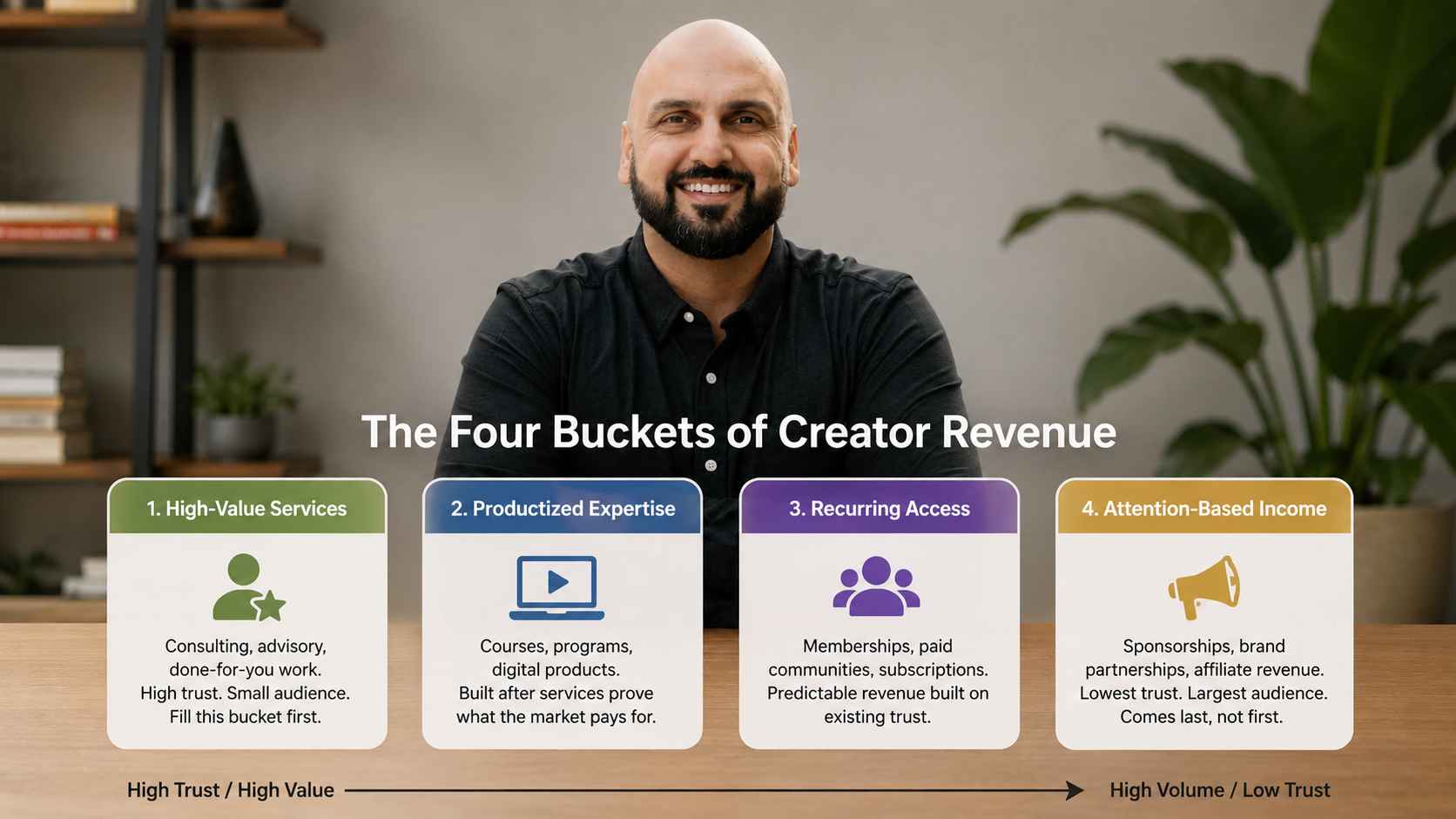
A founder monetizes across four revenue buckets. The buckets run along a spectrum, from high-trust and high-value at one end to high-volume and low-trust at the other. The four buckets are given below.
Bucket One: High-Value Services
High-value services sell the founder's expertise directly. This bucket holds consulting, advisory, and done-for-you work, priced on the outcome the authority produces. The trust required is high. The audience required is small. This is the bucket a founder fills first.
Bucket Two: Productized Expertise
Productized expertise packages the founder's knowledge into something that sells without the founder's time. This bucket holds courses, programs, and digital products. The founder builds it after the services bucket proves which problems the market pays to solve.
Bucket Three: Recurring Access
Recurring access sells ongoing proximity to the founder and the community around the authority. This bucket holds memberships, paid communities, and subscriptions. The bucket recurs, which makes the revenue predictable, and it rides on the trust the first two buckets already built.
Bucket Four: Attention-Based Income
Attention-based income monetizes the audience itself. This bucket holds sponsorships, brand partnerships, and affiliate revenue. The trust required is lowest and the audience required is largest. For a founder, this bucket comes last, not first.
The framework is documented in GURU, INC., where the buckets and their order are defined in full. The spectrum is the point. The early buckets convert a few people at high value. The later buckets convert many people at lower value.
Which Bucket a Founder Fills First
A founder fills the high-value services bucket first, because it converts authority fastest. This bucket sells the founder's expertise directly, with no product to build and no audience to scale. The trust required is high, and the founder already has it.
The services bucket does three things at once. It produces revenue immediately. It proves which problems the audience pays to solve. It funds everything built later. A founder who starts here learns what the market wants before investing in products or scale.
Most founders stall because they skip this bucket and chase the attention-based one, which needs an audience they do not yet have. The faster path runs through the offer the authority already supports, which is where clarity on the right next move begins.
How the Four Buckets Compound
A founder builds the four buckets so each one feeds the next. The order is the architecture. The services bucket proves the expertise and generates the first revenue. That revenue and that proof fund productized expertise, which scales what the services bucket validated.
Each bucket lowers the trust required and raises the volume. The early buckets convert a few people at high value. The later buckets convert many people at lower value, and they ride on the authority the early buckets already built. Foodgod shows the pattern, building from a recognized identity into licensing and partnership deals that paid because the authority came first.
A founder who builds in this order compounds. A founder who builds out of order stalls.
Why the Influencer Playbook Fails Founders
A founder who copies the influencer order monetizes attention not yet converted to trust. The influencer playbook gates everything by follower count. Under five thousand, do this. Over twenty thousand, do that. The whole model assumes the goal is reach.
The founder's goal is not reach. The founder's goal is authority that commands pricing. Follower-count monetization pays pennies per view and demands a massive audience. Offer-based monetization pays in full and demands a qualified one. A founder who measures success in followers optimizes the wrong number and earns the wrong income.
The four buckets are the structure. A few questions decide how a founder fills them.
Monetizing Trust Versus Monetizing Attention
Monetizing trust and monetizing attention are opposite models. The influencer monetizes attention directly, selling access to an audience through sponsorships and ads. The founder monetizes the trust that attention created, selling the outcome the authority produces.
Attention is the raw material. Trust is the refined product. A founder who sells attention sells the cheap version of the asset. A founder who sells trust sells the expensive one. The same content that earns an influencer a sponsorship earns a founder a high-value client, because the founder converted the attention into trust first. The model a founder chooses decides the price the market pays.
Common Personal Brand Monetization Mistakes Founders Make
Founders make four predictable monetization mistakes. The mistakes are listed below.
First, they start with sponsorships, the lowest-trust bucket, before they have the audience it needs. Second, they gate their plans by follower count, a number that does not govern offer-based revenue. Third, they chase ad income that pays on volume they do not have.
Fourth, they monetize attention before they convert it to trust, which sells the asset at its cheapest. Each mistake shares one root. The founder borrowed the influencer's order. The fix is the founder's order, services first.
How Many Revenue Streams a Founder Needs
A founder needs the four buckets, not a long list of streams. The common advice pushes seven, nine, or more income streams, which scatters effort across channels that each return little. The four buckets are the structure that organizes income, not a target to maximize.
A founder with one strong services bucket out-earns a founder with nine weak streams. The number of streams is a vanity count. The strength of the offer and the order of the buckets decide the revenue. A founder fills the buckets in sequence, masters one before adding the next, and stops chasing the stream count entirely.
How Long It Takes a Founder to Monetize a Personal Brand
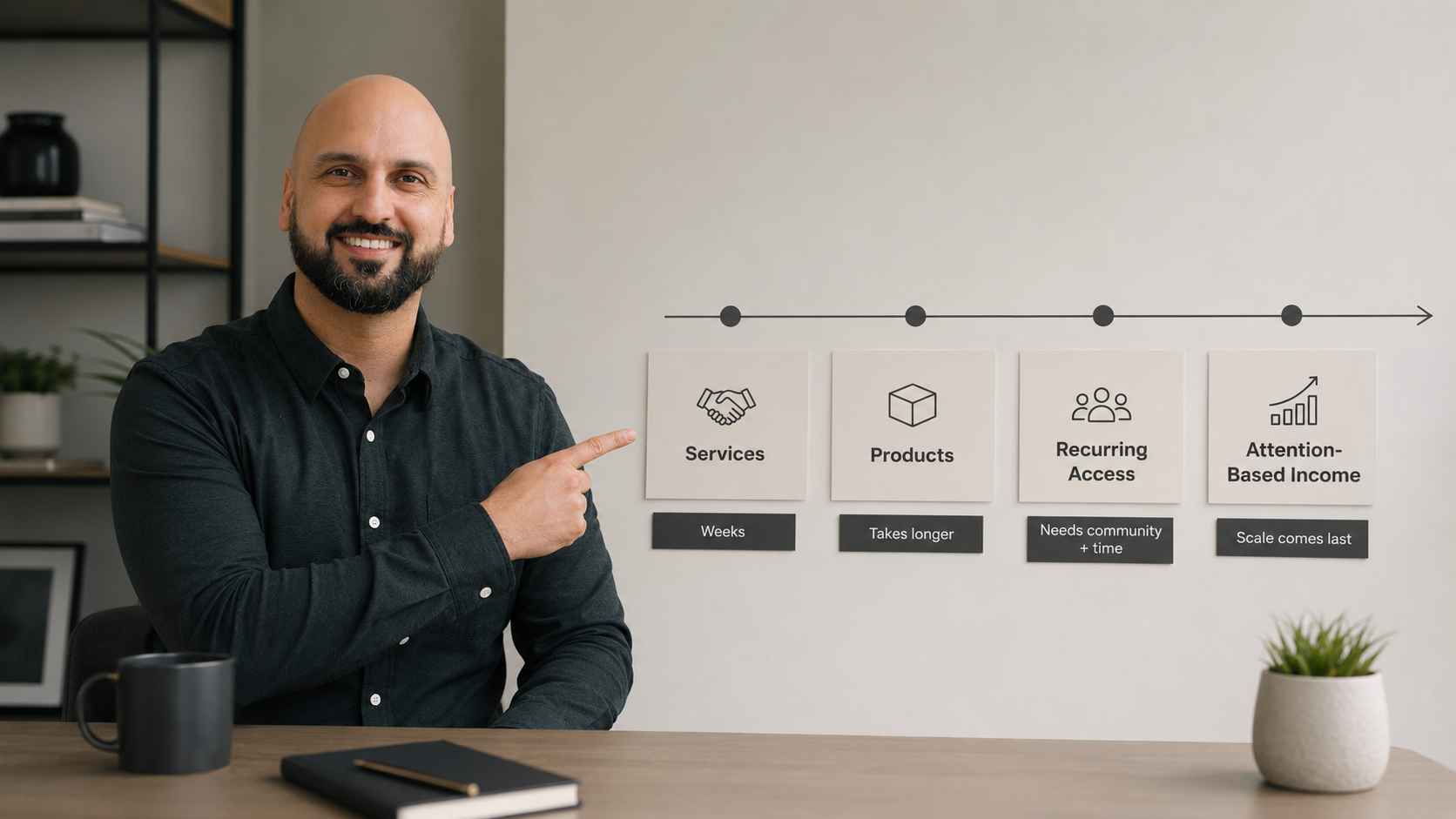
A founder with proven authority monetizes the services bucket in weeks, not years. The services bucket sells existing expertise, so it requires no audience-building runway. The founder packages the authority into an offer and takes it to the qualified audience that already trusts the work.
The later buckets take longer. Productized expertise needs the validation the services bucket provides. Recurring access needs a community that takes time to build. Attention-based income needs scale that arrives last. The timeline runs short at the high-trust end and long at the high-volume end, which is one more reason a founder starts with services.
Whether a Founder Needs a Large Audience to Monetize
A founder monetizes a personal brand without a large audience by leading with the services bucket. This bucket converts a small, qualified audience at high value. A founder with a few hundred right followers monetizes faster than an influencer with a hundred thousand passive ones.
The reason is the asset being sold. Offers convert trust, and trust does not require scale. Attention-based income requires scale, which is why the influencer chases followers. A founder who sells the outcome the authority produces needs the right audience, not the large one. Audience size governs the last bucket, not the first.