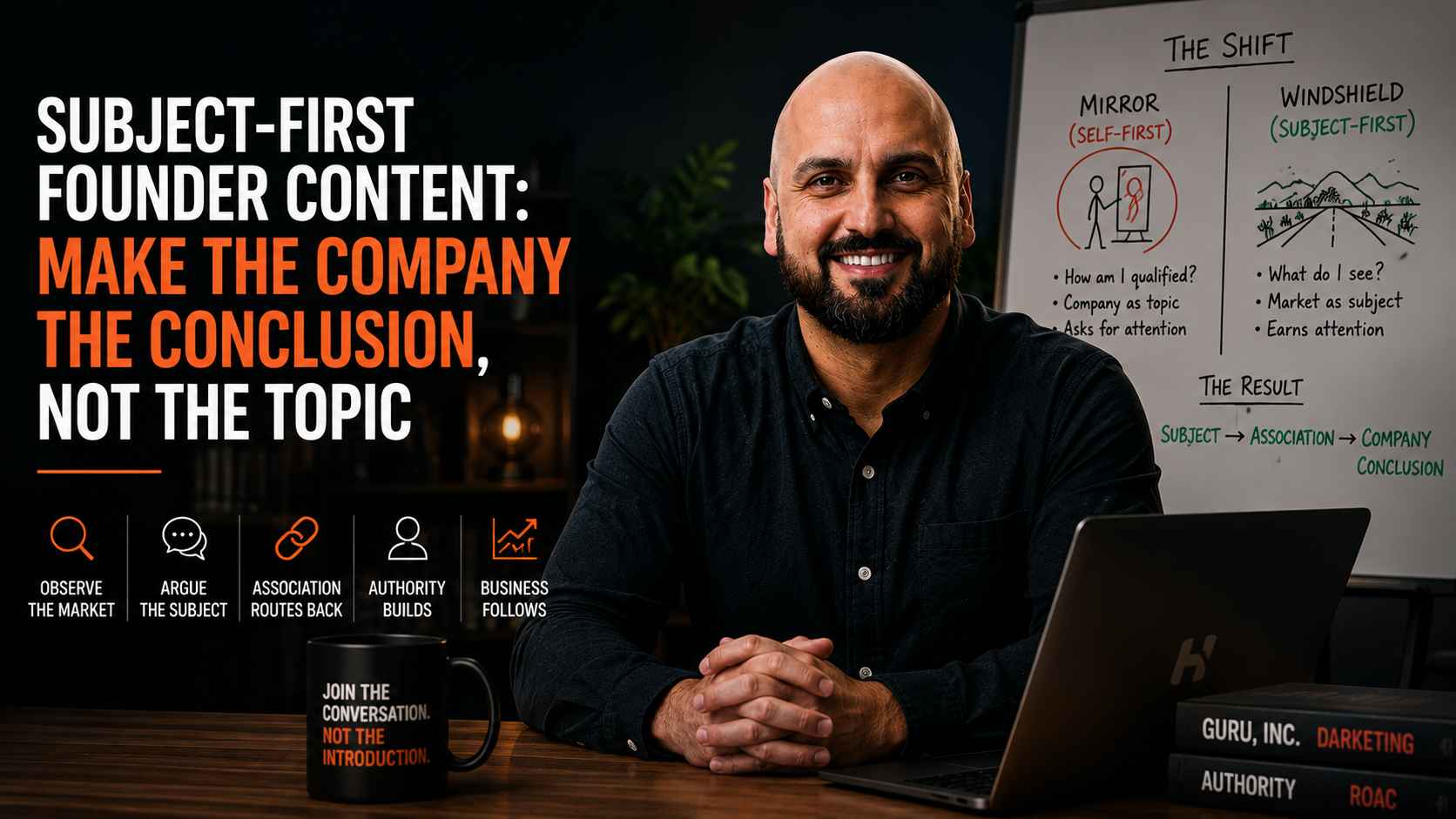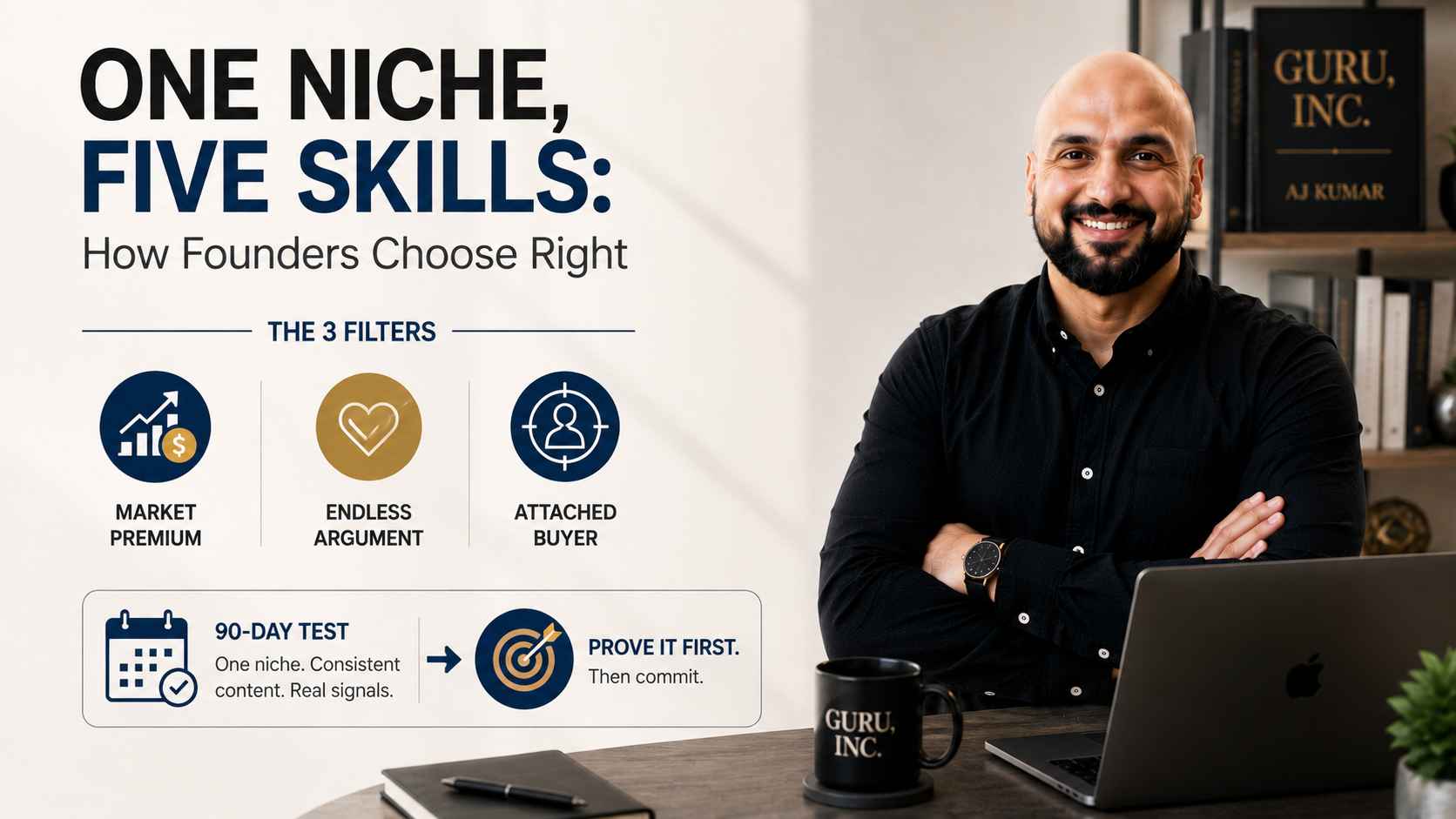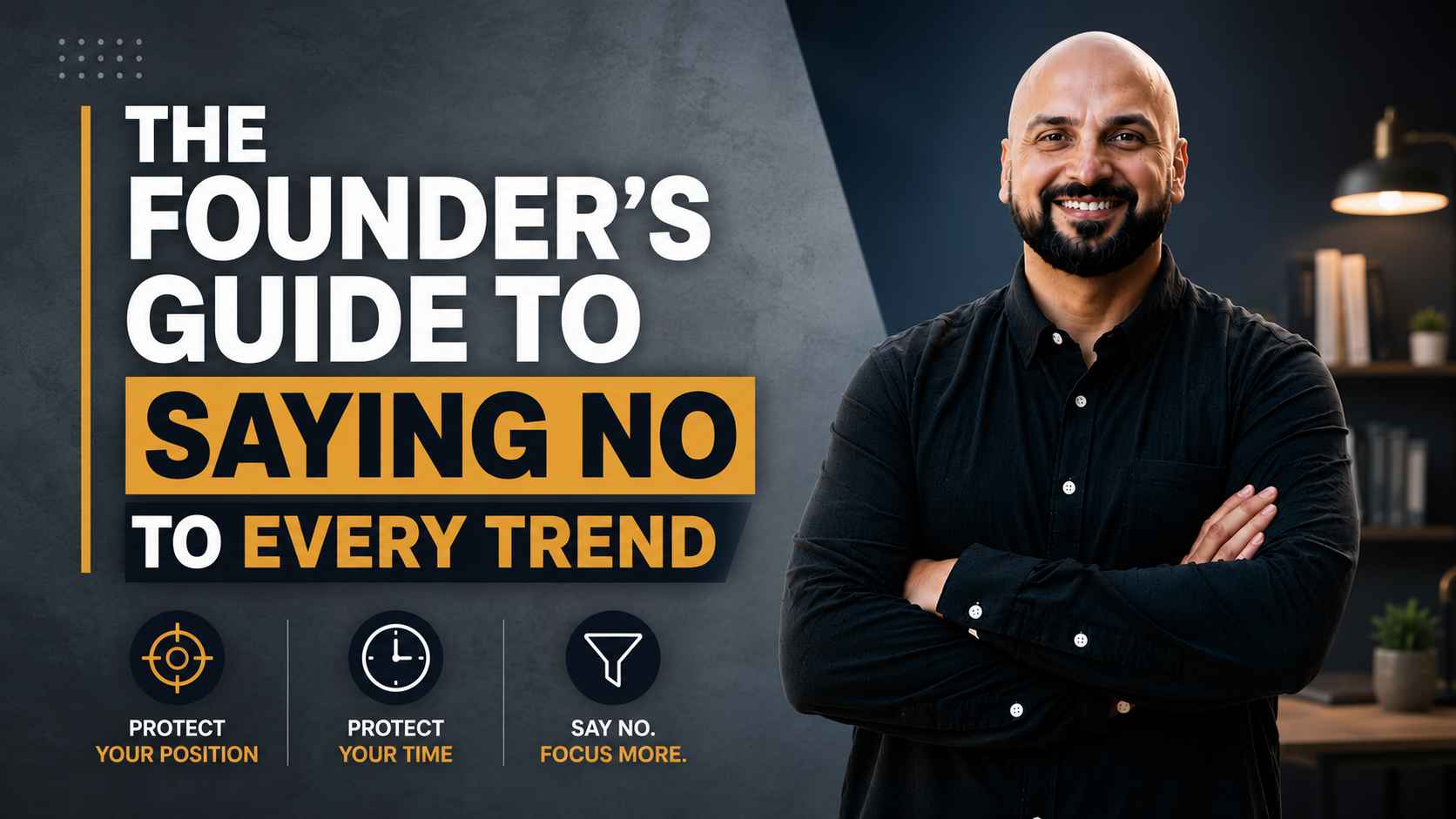

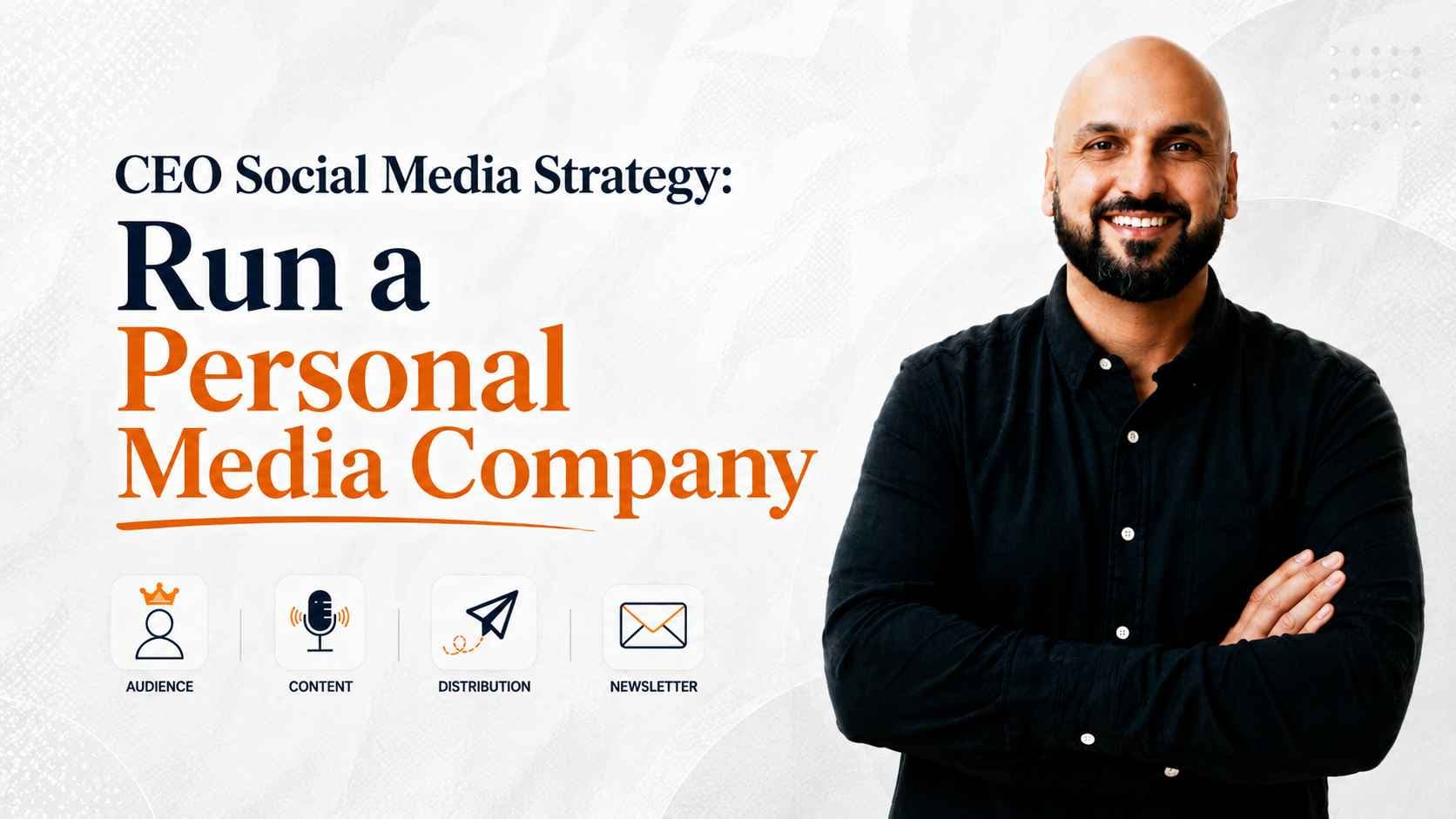
Most CEOs receive a posting schedule and call it a strategy. The schedule is the wrong artifact. Authority comes from a system, not a cadence. A CEO operates as a media company, sets positioning before posting, builds depth where authority compounds, and measures attention as trust and revenue. This article maps that system.
Key Takeaways
A posting schedule is the output of a strategy, not the strategy.
A CEO functions as a media company, not a content creator.
Positioning decides what to post, so positioning comes first.
Long-form content builds authority and feeds AI discovery.
Followers measure reach. ROAC measures trust and revenue.
A system solves the time problem better than a stopwatch.
Most CEOs Are Handed a Posting Schedule. That Is the Wrong Artifact.
A posting schedule answers the wrong question. According to McKinsey, 58 percent of CEOs rank external affairs a top priority, and only 12 percent feel equipped to handle it. That gap is expensive. Every month spent posting without a system loses positioning to a competitor who built one.
A schedule tells a CEO when to post. It never tells them what makes the posting matter. The result is motion without authority.
I have watched founders spend hundreds of thousands of dollars building content teams before their positioning was set. The teams produced volume. The market stayed unconvinced.
A CEO Is Not a Poster. A CEO Is a Media Company.
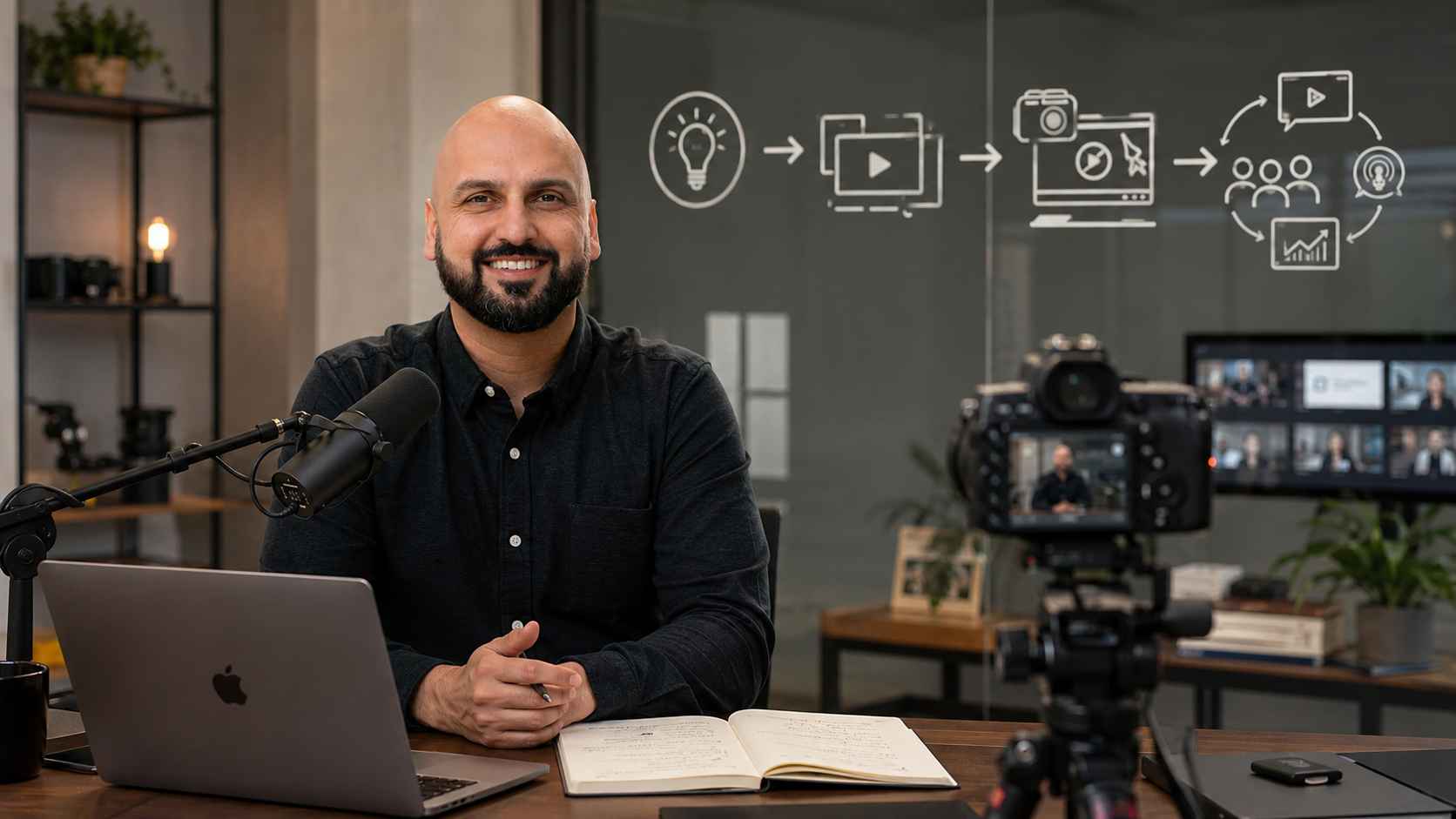
A CEO builds authority by running a media company, not by posting more often. A poster asks what to publish on Monday. A media company asks what it owns in the mind of the market.
I documented this shift in GURU, INC. as the Personal Media Company Model. It moves through four stages. Stage one is Proof of Concept, where a leader tests raw ideas with no production value. Stage two is Pilot, where two or three formats prove they repeat. Stage three is Show Development, where the winners earn production and a schedule. Stage four is Series Scaling, where the system runs without the founder in every frame.
Most leaders want to start at stage four. Nothing exists to scale yet.
Positioning Decides What a CEO Posts.
Positioning comes before the calendar. A CEO who knows the one thing they own never wonders what to post.
The clearest symptom of missing positioning is failed delegation. A team posts generic "how to be a CEO" content with no link to the company or the founder's real expertise. The voice disappears. The audience feels the gap.
The fix is not more content. The fix is deciding what the founder is the definitive authority on, then producing only against that.
Long-Form Is Where CEO Authority Compounds, and Where AI Finds You.
Depth content builds founder authority and feeds AI discovery at the same time. A founder's ecosystem has an owned hub, a depth layer, and a discovery layer. The website is the hub. Long-form video and articles are the depth layer. Short clips are discovery.
Short-form alone keeps a CEO invisible to the systems that now recommend experts. ChatGPT, Gemini, and Perplexity pull the most signal from long-form, because depth gives them the most to read. My video, The ROI of Social Media for CEOs, makes this case in full.
Neil Patel built a CEO-scale authority on long-form for the same reason. The depth compounds.
Measure Attention Converting to Trust, Not Follower Count.
A CEO measures whether attention produces trust and pipeline, not how many followers it adds. I built a framework for this called ROAC, Return on Attention Created.
ROAC has two sides. The first measures attention created: reach, attention held, return visits. The second measures what that attention produced: trust, intent, revenue. A follower count reveals neither.
Strong attention with weak return signals a conversion problem. The audience exists. The system to convert it does not.
The Time Problem Is Real. Founders Solve It With a System, Not a Stopwatch.
A CEO solves the time problem by recording once and repurposing, not by timeboxing fifteen minutes a day. The objection is fair. A CEO's hour is worth more than a posting slot.
A media company answers this through repurposing. One core asset, a recorded conversation or a keynote, becomes a month of derived assets a team produces. The founder gives expertise. The system gives reach.
The honest path forward starts with one conversation that names the gap. If the right next move is not yet clear, that clarity is the smartest place to begin.
Founder Social Media Strategy Versus CEO Social Media Strategy
A founder social media strategy and a CEO social media strategy share one predicate and differ in audience. A founder speaks to a market still forming an opinion. A CEO speaks to stakeholders who already know the company.
Both build authority through a system, not a feed. Both fail the same way, through volume without positioning. The architecture stays identical across both.
Explore the full framework on the content systems that compound founder authority pillar.
Where Founders Build Authority on LinkedIn

LinkedIn is the default platform for a CEO, and a positioning asset before it is a posting feed. A profile reads as a landing page, not a resume.
The headline names who the founder helps and how. The featured section holds proof, not announcements. Authority on LinkedIn comes from a consistent point of view repeated until the market ties it to one name.
See the deeper method for building founder authority on LinkedIn.
Why Long-Form Video Outperforms Daily Posting
Long-form video outperforms daily posting for a founder building authority. A daily post competes on volume. A long-form video competes on depth, and depth is what trust requires. One strong video demonstrates expertise that a hundred fragments do not. The video also feeds search and AI systems with extractable signal.
Read the case for long-form video as a founder authority platform.
Common CEO Social Media Mistakes That Stall Authority
Several patterns stall CEO authority despite steady posting. The first is chasing vanity metrics, where follower counts grow and revenue does not. The second is renting platforms, where one algorithm change erases years of reach.
The third is delegating before positioning, where a team produces generic content in no clear voice. The fourth is broadcasting instead of engaging. The revenue side of that gap appears in what a founder's brand actually returns.
Frequently Asked Questions
Is social media worth a CEO's time?
Social media is worth a CEO's time when it runs as an authority system that returns trust and pipeline. Treated as random posting, it drains hours and produces little. Treated as a media company with positioning and repurposing, it compounds into recognition and inbound demand.
How often should a CEO post?
Cadence follows positioning, so the right frequency is the one a documented system sustains. A founder with clear positioning and a repurposing engine publishes consistently without strain. A founder without positioning posts often says nothing. Frequency is the output, not the strategy.
Does a CEO write their own posts or delegate?
A CEO delegates execution after positioning is set, never before. A team amplifies a clear point of view well. A team inventing a point of view produces generic content that erodes trust. Positioning first, delegation second.
Which platform does a CEO start on?
A CEO starts where the buyer makes decisions, then adds a depth platform for authority. LinkedIn reaches the professional buyer. Long-form video builds depth and feeds AI discovery. One platform with a system beats five without one.
What is the difference between a personal brand and a personal media company?
A personal brand is how the market perceives a founder. A personal media company is the system that produces that perception by design. The brand is the result. The media company is the machine that creates it.