
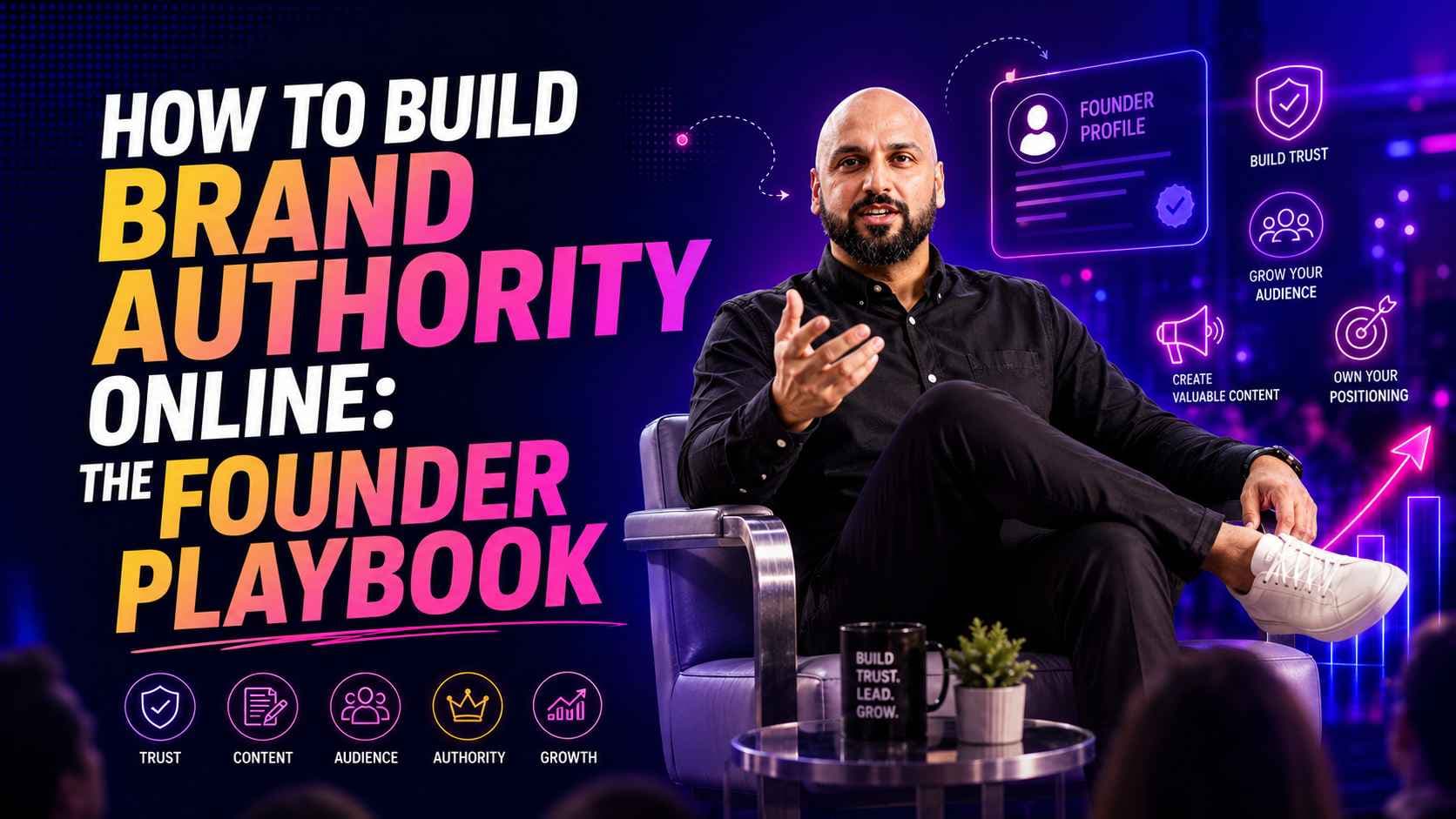
The playbook is founder-specific because founders have deep expertise and limited time. Every step prioritizes depth over frequency and compounding assets over expiring content.
Key Takeaways:
Brand authority online is built through six sequential steps. Skipping a step forces the founder to restart.
The positioning statement and named frameworks come before any content gets published.
A structured website with schema markup generates more brand authority than 1,000 social media posts because search engines and AI systems index websites, not Instagram captions.
One long-form article per month compounds in search for 2 to 5 years. One social post per day expires in 48 hours.
AI systems (ChatGPT, Perplexity, Google AI Overviews) cite founders with entity recognition. Entity recognition requires structured content, consistent terminology, and schema markup.
The 6-step playbook requires 20 hours in month 1 and 5 hours per month ongoing.
Brand Authority Online Is Not the Same as Online Visibility

Brand authority online means the market trusts the founder's expertise. Online visibility means the market recognizes the founder's face.
The distinction determines the strategy. A founder with 100,000 followers and zero inbound consulting inquiries has visibility. A founder with 2,000 followers and 10 inbound inquiries per month has authority. Visibility is measured in impressions. Authority is measured in trust-driven actions: inquiries, invitations, partnerships, and purchases.
I have built brand authority online for founders across wellness, media, technology, and real estate. The founders who prioritized authority over visibility generated revenue faster, spent less on content, and built assets that compounded for years. The founders who prioritized visibility spent more time, produced more content, and generated less revenue per viewer.
The 6-step playbook below builds authority. Visibility is a byproduct. Authority is the objective.
Step 1: Define the Positioning Foundation (Hours 1 to 4)
Brand authority online starts with a positioning statement that passes the substitution test: no competitor uses the same words.
The positioning foundation has three components:
Component 1: The positioning statement. Eight words that declare what the founder does, for whom, and how the approach differs. "I build authority brands for founders scaling revenue" passes the substitution test. "I help businesses grow" fails because every competitor claims the same words.
Component 2: Named intellectual property. At least one framework, methodology, or system with a proprietary name. Named IP is the single asset that separates founders who get cited from founders who get ignored. A framework named "The Authority Ladder" travels further than an unnamed "5-step process for building credibility."
Component 3: Three proof points. Three specific client results, revenue milestones, or measurable outcomes that validate the expertise. "Scaled a wellness brand from $500 per hour to $8 to $10 million" is a proof point. "Helped many clients succeed" is not.
These three components take 4 hours to develop. Every subsequent step depends on this foundation. Founders who skip the positioning step and start publishing content produce volume without direction.
Step 2: Build the Website Architecture (Hours 5 to 12)
The website is the only platform the founder owns. Every other platform rents the audience.
A website built for brand authority online has five pages minimum:
Page 1: Homepage. The positioning statement above the fold. The three proof points below. One call to action. No sliders. No generic stock photography. The homepage answers one question: "What does this founder do and why do I trust them?"
Page 2: About page. The founder's credentials, named frameworks, and origin story structured around the audience's problem, not the founder's biography.
Page 3: Service or consulting page. The specific offering with pricing context, engagement structure, and proof of results.
Page 4: Content hub. The blog or resource library organized by topic clusters. Each cluster maps to one aspect of the founder's positioning.
Page 5: Contact page. One form. One email address. No friction.
Schema markup on every page signals the founder's entity type to search engines and AI systems. PersonSchema on the about page. ProfessionalService schema on the consulting page. Article schema on every blog post. The schema is the structured language that machines use to classify the founder as an authority in a specific domain.
Step 3: Establish Entity Recognition (Hours 13 to 16)

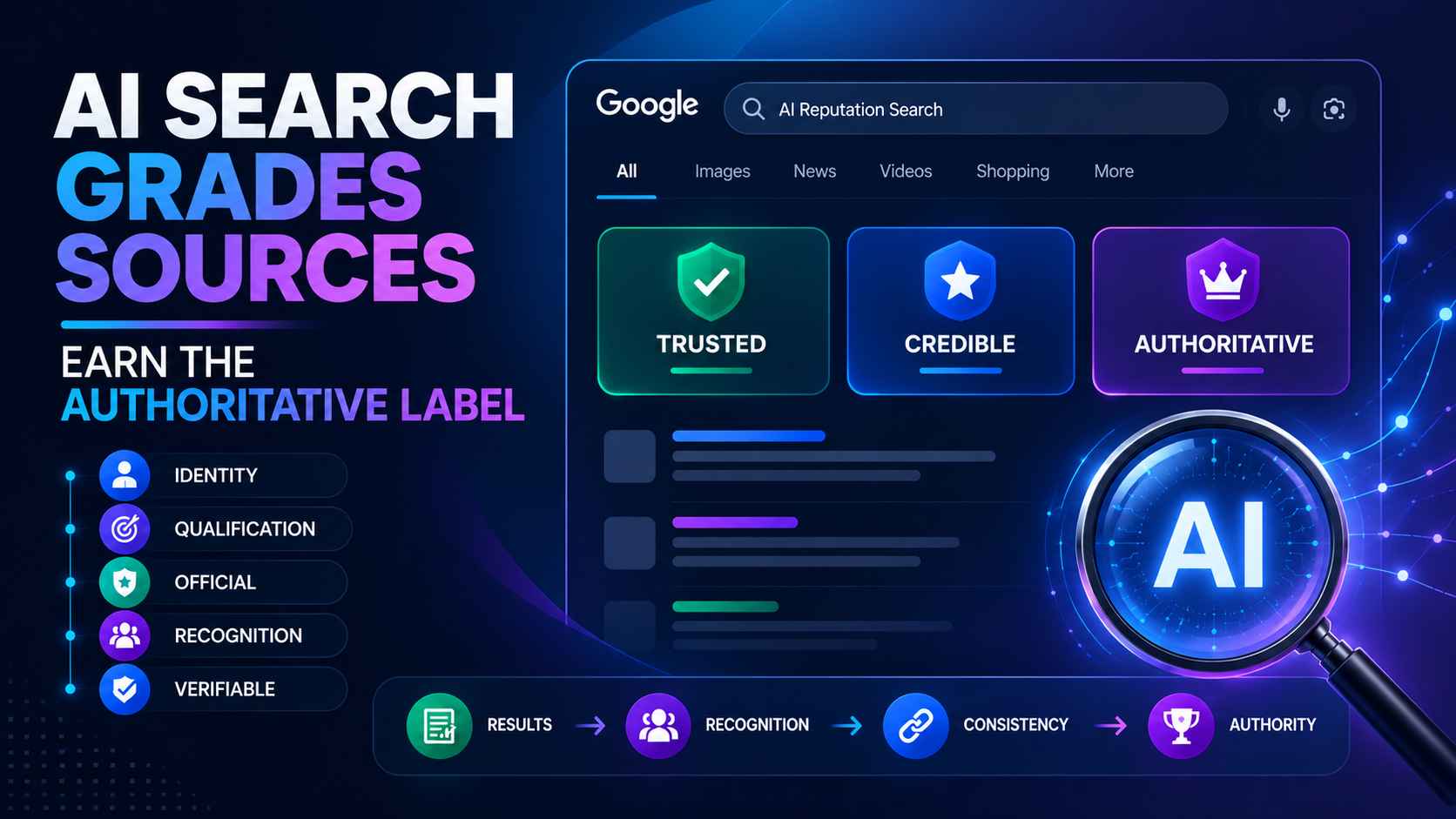
Entity recognition is the process by which Google and AI systems classify the founder as a known expert in a specific field.
Brand authority online depends on entity recognition because AI systems cite recognized entities. A founder with entity recognition appears in Google AI Overviews, ChatGPT responses, and Perplexity answers. A founder without entity recognition is invisible to AI-powered discovery.
Four actions build entity recognition:
Action 1: Consistent terminology. Use the same name, title, and positioning language across the website, LinkedIn, social media, and guest appearances. Google builds entity profiles from consistency. Inconsistent naming fragments the entity signal.
Action 2: Schema markup. PersonSchema with name, jobTitle, worksFor, sameAs (linking to LinkedIn, YouTube, and social profiles), and knowsAbout properties. The schema connects the founder's web presence into one coherent entity.
Action 3: Cross-platform alignment. The LinkedIn profile, YouTube channel description, podcast bio, and website about page use identical positioning language. Each platform reinforces the same entity claim.
Action 4: Third-party mentions. Guest podcast appearances, media features, and industry citations that mention the founder by name with consistent descriptors. Third-party mentions validate the entity claim that the founder's own content establishes.
The entity recognition process takes 4 hours of initial setup and 6 to 12 months of consistent publishing to mature. The return on entity investment compounds because once the entity is recognized, every new piece of content strengthens the existing recognition.
Step 4: Publish One Long-Form Piece Per Month (Ongoing, 2 Hours)
One long-form article per month builds more brand authority online than daily social media posting.
The math:
One 1,500-word blog post ranks in Google search for 2 to 5 years. Total lifetime impressions: thousands to tens of thousands.
One LinkedIn post generates engagement for 48 hours. Total lifetime impressions: hundreds.
One Instagram Reel generates views for 24 hours. Total lifetime impressions: hundreds to low thousands.
The blog post compounds. The social post expires. Founders with limited time invest in the asset that compounds.
Each monthly article follows one rule: answer one specific question within the founder's positioning. The question comes from the previous month's inbound inquiries, search data, or prospect conversations. The article demonstrates expertise on that question with named frameworks, specific numbers, and practitioner proof.
I publish one long-form piece per month on my own site. Each piece references specific frameworks from GURU, INC. and connects to the broader content architecture. The compounding effect means older articles continue generating inbound inquiries years after publication.
Step 5: Distribute Through LinkedIn and One Video Channel (Ongoing, 2 Hours)
Distribution requires two channels: LinkedIn for professional authority and one video channel for parasocial trust.
LinkedIn distribution system:
Extract three key insights from the monthly blog post.
Publish each as a standalone LinkedIn post across three weeks.
The fourth week: publish one original LinkedIn observation based on a real client interaction or industry trend.
Total LinkedIn time: 60 minutes per month.
Video distribution system:
Record one 15-minute video per month. The video covers the same topic as the blog post but from a conversational angle.
Publish on YouTube or as a podcast episode.
The video builds citation equity in YouTube search and feeds the AI systems that index video transcripts.
Total video time: 30 minutes recording plus 30 minutes review.
Two channels. Two hours per month. The LinkedIn posts drive traffic to the website. The video builds trust depth. The website captures the inbound demand. The system is circular and self-reinforcing.
Step 6: Measure Authority, Not Awareness (Ongoing, 1 Hour)
Brand authority online is measured by five trust metrics, not by follower count or impression volume.
Metric 1: Inbound inquiry volume. The number of prospects who reach out without outbound effort. This is the primary metric. Every other metric feeds this one.
Metric 2: Search ranking for founder name plus industry. The founder's name plus the primary positioning keyword (e.g., "AJ Kumar personal branding") ranks on page 1. This confirms entity recognition.
Metric 3: AI citation appearances. The founder appears in ChatGPT, Perplexity, or Google AI Overview responses for relevant queries. This confirms that the entity recognition has crossed into AI-powered discovery.
Metric 4: Speaking and media invitations. Unpaid inbound invitations to speak, contribute, or comment. These invitations are trust signals from third parties.
Metric 5: Sales cycle length. The time from first prospect contact to signed agreement. Shorter sales cycles indicate higher pre-existing trust built through the brand authority online.
Monthly measurement takes 1 hour. Review all five metrics. Identify which content generated the most inbound inquiries. Publish more content on that topic next month. The measurement system makes the entire playbook self-correcting.
The Full Timeline: 90 Days to Brand Authority Online
Month 1 (20 hours): Foundation. Steps 1 through 3. Define positioning. Build the website. Establish entity signals. Publish the first long-form article. Set up LinkedIn distribution.
Month 2 (5 hours): First cycle. Publish the second article. Distribute through LinkedIn and video. Engage with 10 relevant LinkedIn posts per week. Monitor search indexing.
Month 3 (5 hours): Measurement and adjustment. Publish the third article. Distribute. Run the first full measurement cycle. Identify top-performing content. Adjust the topic for month 4 based on inbound signals.
Day 90 outcome: Three published articles indexed in Google. LinkedIn authority building. Video content accumulating in YouTube search. Entity recognition forming. Early inbound signals appearing. The compounding begins.
The 20-hour upfront investment and 5-hour monthly maintenance produce brand authority online that no advertising budget replicates. Paid ads stop working when the budget stops. Authority assets never stop working.
Frequently Asked Questions
How long does brand authority online take to build?
Early trust signals (inbound inquiries, profile views from target prospects, speaking invitations) appear within 60 to 90 days of consistent execution.
Measurable authority (page 1 search rankings, AI citations, shortened sales cycles) matures within 6 to 12 months. The timeline accelerates when the founder has existing expertise and proof points to publish.
Is social media required to build brand authority online?
A website and LinkedIn are the minimum viable platform stack for brand authority online. Instagram, TikTok, and Twitter are optional distribution channels. The website builds search authority. LinkedIn builds professional authority. Social media amplifies both but is not the foundation.
What is the difference between brand authority and brand awareness?
Brand awareness means the market recognizes the founder's name or face. Brand authority means the market trusts the founder's expertise enough to take action (inquire, hire, partner, invest). Awareness is measured in impressions.
Authority is measured in trust-driven actions. A founder with high awareness and low authority has a large audience that does not buy. A founder with high authority and moderate awareness has a smaller audience that buys consistently.
Can a founder build brand authority online without a team?
The 6-step playbook requires one person: the founder. The total time commitment is 20 hours in month 1 and 5 hours per month ongoing. A team accelerates the process (content editing, distribution management, analytics tracking) but is not required for the first 6 months.
What is the fastest way to build brand authority online?
The fastest path is publishing one piece of deep, framework-driven content per week instead of one per month. Weekly publishing accelerates search indexing, entity recognition, and inbound signal generation.
The trade-off is time: weekly publishing requires 10 to 15 hours per month instead of 5. Founders who have the capacity for weekly publishing reach measurable authority in 3 months instead of 6.