
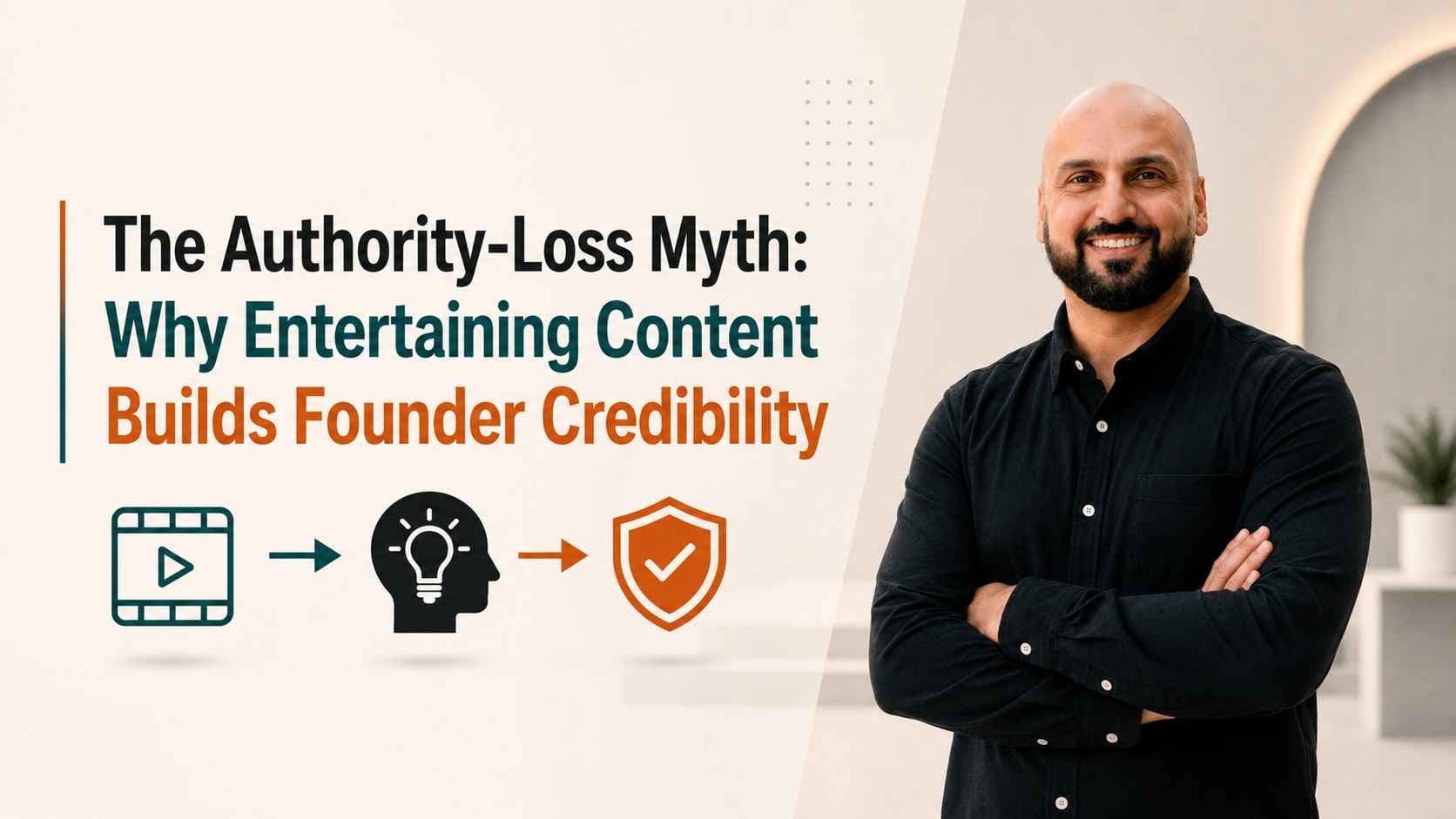
The real credibility risk is being forgettable, not being enjoyable. One rule decides the outcome, and I have seen it play out across every founder brand I have built: the entertainment either carries the expertise or replaces it.
Key Takeaways
The authority-loss myth holds that entertaining delivery erodes professional credibility, and the research contradicts it.
Trust follows memory. Emotionally engaging content is retained longer, so the entertaining expert is the remembered expert.
Instructional humor research draws the real line: humor related to the expertise increases learning, and unrelated humor does nothing.
Analysis of B2B advertising found the vast majority of ads scored at the lowest emotional level, making dryness the market norm and the market failure.
Crack Editing is the emotion-first editing methodology that engineers feeling into expert content deliberately.
The credibility question is never how funny a founder is. The question is what the entertainment carries.
The Authority-Loss Myth Confuses Being Enjoyable With Being Unserious
The authority-loss myth is the belief that entertaining delivery signals unseriousness and costs an expert professional respect. Founders repeat the myth in nearly identical words: humor looks unprofessional, stories waste the buyer's time, and polish equals credibility.
The fear is understandable. A founder's name is the asset, and nobody wants the asset associated with cringe. The myth survives on a false pairing.
Founders picture entertainment as dancing trends and forced jokes, then correctly reject that picture. The rejected picture is volume-first content, and the rejection is right. Entertaining delivery of a real position is a different act entirely.
The edutainment content strategy for founders rests on that separation: entertainment is the delivery system, and authority is the payload. The myth attacks the delivery system and mistakes it for the payload.
Trust Follows Memory, and Memory Follows Emotion

Credibility is not awarded to the most serious expert in a market. Credibility is awarded to the remembered one. Trust versus awareness is the doctrine here, and memory is the bridge between them. A buyer trusts the founder whose argument they finish, retain, and repeat to a colleague. Retention is therefore a credibility event, not a vanity event.
The memory research is direct. Experiments by Cahill and McGaugh demonstrated that emotionally arousing material was remembered significantly better than identical material presented neutrally, and follow-up work located the mechanism in how emotion consolidates memory.
A dry founder and an emotionally engaging founder deliver the same insight, and one insight survives the week. The surviving insight builds the reputation. Forgettable expertise functions exactly like absent expertise, and I have watched brilliant founders lose deals to louder mediocrity for twenty years because of that equation.
The Humor Research Draws the Real Credibility Line
Instructional humor research separates the humor that builds credibility from the humor that wastes it. Wanzer, Frymier, and Irwin's instructional humor processing theory, published in Communication Education in 2010, found humor related to the content increased student learning, while unrelated or inappropriate humor produced no learning gain. Relevance is the entire game.
The finding converts the founder's vague fear into a precise rule. The rule reads simply. Humor about the market's absurdities, the buyer's painful patterns, and the founder's own expensive mistakes deepens the teaching.
Humor imported for its own sake, trend audio, random skits, and borrowed memes, teaches nothing and reads as reaching. Related entertainment signals mastery, since only a genuine expert finds the funny inside the technical.
The joke is the proof. Unrelated entertainment signals hunger for attention. Audiences smell the difference in seconds, and the smell decides the credibility outcome.
Dry Content Is the Market Norm, and the Market Norm Fails
Dryness is not the safe choice founders believe it is, because dryness is what everyone already produces. Research from the LinkedIn B2B Institute with System1 examined 1,600 B2B advertisements and found roughly three quarters scored at the lowest level on emotional response, with none reaching the top score.
Professional markets are saturated with content engineered to feel safe, and the saturation is why safe content earns nothing.
The finding reframes the risk calculation. A founder who sounds like the category disappears into the category. A founder who makes the audience feel something owns the only scarce resource in the feed: a completed watch. Blending in is the actual gamble. Standing out through feeling is the conservative play dressed as the bold one.
Crack Editing Engineers Emotion Into Expert Content
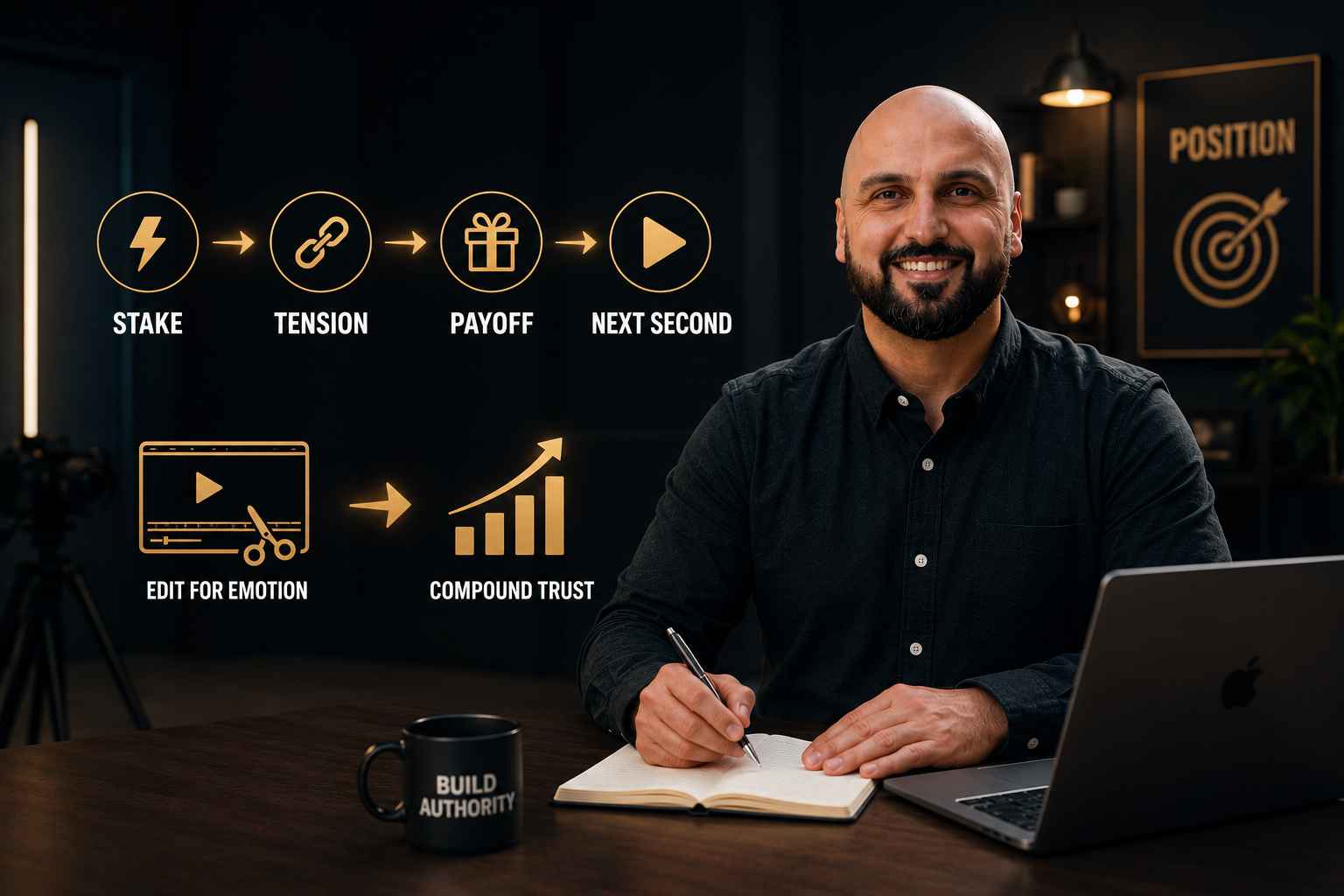
Crack Editing is the emotion-first editing methodology: every cut, caption, and beat is chosen for the feeling it produces, not the information it displays. The method treats emotion as the primary edit criterion. Stakes open the piece.
Tension holds the middle. The payoff releases at the end, and every second between them earns the next second. Information rides the emotional structure the way cargo rides a ship.
The methodology answers the founder's practical question: how does a serious expert become watchable without becoming a performer. The answer is engineering, not personality. A founder with no comedic gift edits for curiosity, stakes, and rhythm and outperforms a naturally funny founder with shapeless delivery.
Emotion is a production decision. Credibility compounds when the decision serves the position, which is the standard personal brand consulting for founders builds into a founder's entire content system: the position first, the emotional delivery engineered around it, and the trust measured on the way out.
Entertaining content builds founder credibility because trust follows memory and memory follows emotion. The authority-loss myth protects founders from a risk smaller than the one it creates: being forgotten. Related entertainment signals mastery. Dryness signals nothing at all.
Does Humor Work in B2B Content for Founders
Humor works in B2B founder content when the humor comes from inside the expertise: buyer patterns, market absurdities, and expensive lessons. Professional audiences reward relevant wit and punish imported comedy. The relevance rule holds across every platform and format.
What Is Crack Editing in Founder Content
Crack Editing is an emotion-first editing methodology from GURU, INC. by AJ Kumar. Every cut, caption, and pacing decision is selected for the feeling it produces. Information rides the emotional structure, which raises retention and the credibility retention creates.
Do Buyers Take Entertaining Founders Less Seriously
Buyers take forgettable founders less seriously, since absent memory means absent trust. Entertaining founders whose delivery carries a real position earn attention, retention, and repetition. Seriousness lives in the substance of the argument, never in the dryness of the delivery.
What Separates Entertaining Content From Clout-Chasing
Connection to the expertise separates the two. Entertaining content teaches through story, humor, and stakes drawn from the founder's domain. Clout-chasing borrows trends, audio, and formats with no position underneath. The first compounds authority. The second spends it.