
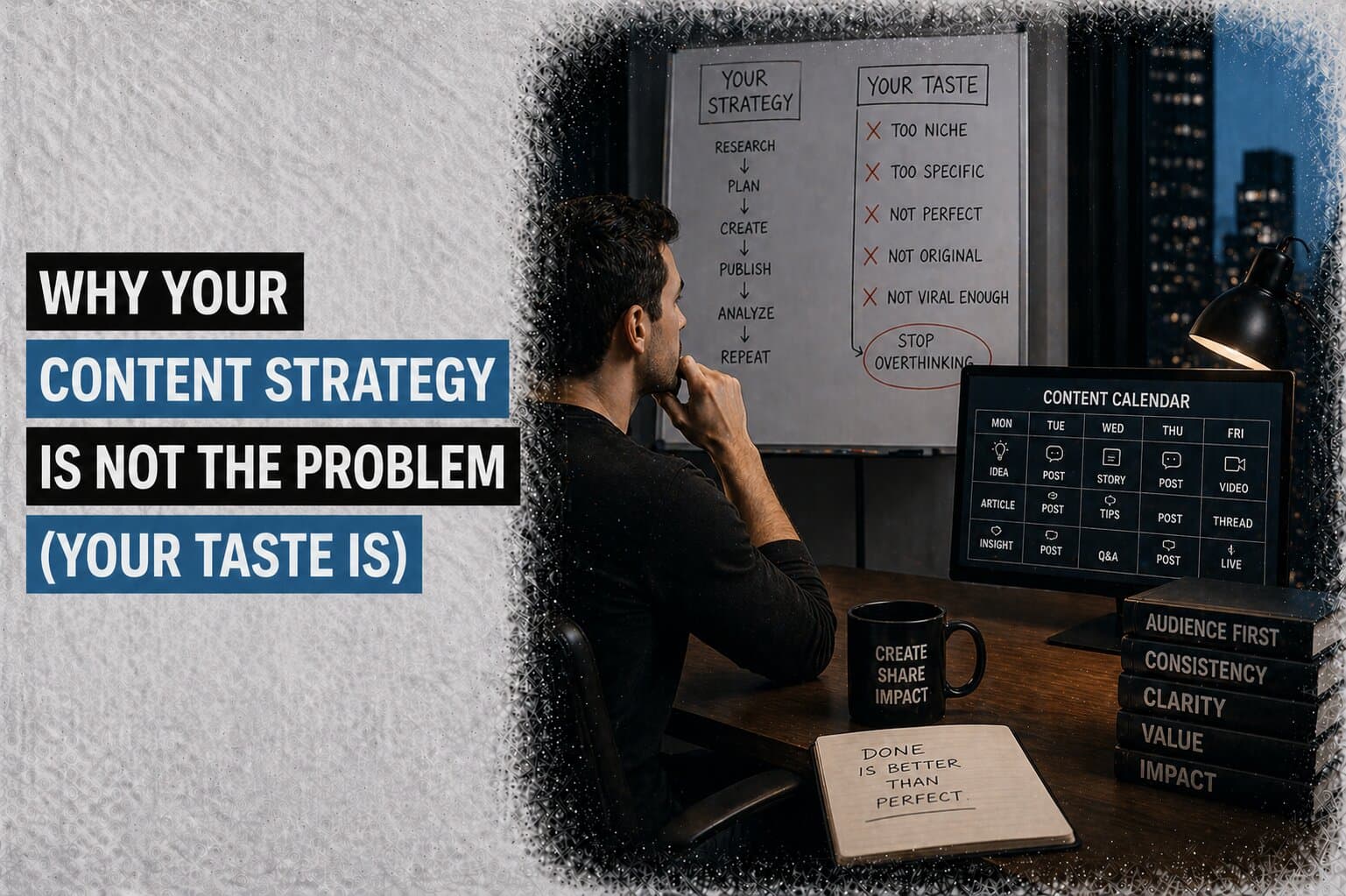
Coca-Cola's AI Christmas ads proved it. For founders and expert creators, taste is the difference between content that generates impressions and content that generates authority.
Key Takeaways
Taste is a trained skill, not a personality trait. It is shaped by accumulated exposure to environments most people skip past.
AI produces the statistical average of the internet. By design, it goes to the mean. Taste is the variable AI cannot replicate.
Coca-Cola's 2024 AI Christmas ad scored 22 out of 100 against all YouTube ads. The 2025 retry with animated animals failed similarly.
Restraint signals more than spectacle. The choice of what to leave out carries more brand weight than what is added.
Best practices expire. With AI accelerating format saturation, the cycle from fresh to generic now takes weeks instead of months.
Taste is business strategy, not decoration. Without it, content generates impressions. With it, content generates authority.
Coca-Cola Spent Real Money to Prove a Taste Failure, Not a Technology Failure

Coca-Cola took one of the most beloved Christmas ads of all time and remade it with AI. Twice.
In late 2024 they partnered with three AI studios to recreate their "Holidays Are Coming" campaign, a cultural staple since 1995. The result hit every visual note and missed everything that made it work. One Alpha.one analysis scored the AI version 22 out of 100 against all YouTube ads.
The internet called it soulless. A marketing professor told NBC News the backlash hit hard because Christmas represents connection, a value at odds with AI-generated content. In 2025 they tried again with animated animals. Same backlash.
Coca-Cola has one of the sharpest marketing departments on the planet and nearly $100 billion in brand value. What they lacked in that moment was taste. Something precise: the trained ability to recognize what feels right and reject what feels obvious. The ability to know that the option to do something does not mean you should. That gap is the entire game right now.
AI Produces the Statistical Average of the Internet
Ben Affleck explained this on The Joe Rogan Experience. Generative AI by its nature goes to the mean because it is trained on massive datasets and predicts the most statistically likely output. He was describing the architecture of the tools everyone is rushing to adopt.
AI does not create originality. It creates the statistical average of the internet. It can generate something that looks like, sounds like, and structurally resembles great content. It cannot make the judgment calls that separate content people remember from content they scroll past.
The judgment calls are taste. Taste lives outside the dataset. It lives in what you choose not to include. In the restraint you exercise when everyone else is adding more. In the instinct to feel when a format has peaked. None of that can be predicted by a model trained on what already exists.
Most People Treat Taste as a Gift. It Is a Trained Skill.
Pierre Bourdieu spent his career studying exactly this. He showed that taste is shaped by what you have been exposed to and what you have trained yourself to notice. He called it your habitus, the internalized system of perception that develops over time.
The key word is accumulated. Your eye is not formed in a weekend workshop. It is formed by years of deliberate immersion. Watching how the best creators make choices. Noticing what is restrained as much as what is present.
Philosophers have debated this for centuries. David Hume in 1757 argued that beauty exists in the mind that perceives it. Hans-Georg Gadamer framed taste as understanding developed through exposure. Hannah Arendt described it as judgment shaped through dialogue. The throughline is consistent. Taste is cultivated, not innate.
People who take that cultivation seriously have a structural advantage over everyone who does not. At some point you stop consuming content for entertainment and start consuming it for structure. You see framing, pacing, restraint, subtext. That shift is where taste lives.
Restraint Signals More Than Spectacle
Founders and experts default to more. More text on the graphic. More points in the video. More features on the website. They confuse thoroughness with quality. The highest-level creators remove.
Apple is the obvious case. Their cultural power was built by having the confidence to take things away. Minimalism was a positioning strategy, not an aesthetic choice. The absence was the signal. When you choose restraint over excess, you communicate something powerful: I do not need to try that hard. That quiet confidence is more magnetic than overproduced content.
The founder who posts a clean, focused insight with sharp framing outperforms the one posting a wall of text with seventeen hashtags. Not because the first person knows more. Because their taste signals a sophistication the audience trusts instinctively.
This is the problem with AI-generated content at scale. These tools are designed to be thorough. They are not designed to leave things out. Restraint requires judgment. Judgment requires taste.
Best Practices Expire. AI Compresses the Cycle.

The moment a style or format becomes widely adopted, it loses its power. Bourdieu described it as a cycle where trends gain value through scarcity and lose value through popularity. By the time everyone is doing it, the people who set the trend are already somewhere else.
The carousel format that crushed two years ago feels generic now. The hook structure that worked last quarter is being copied across your niche. With AI making it trivial to replicate any format at scale, the cycle has compressed from months to weeks.
Creators with taste do not only follow what is working. They sense when something is peaking and evolve before it becomes wallpaper. When everyone has access to the same tools producing the same average outputs, the flood of sameness becomes deafening.
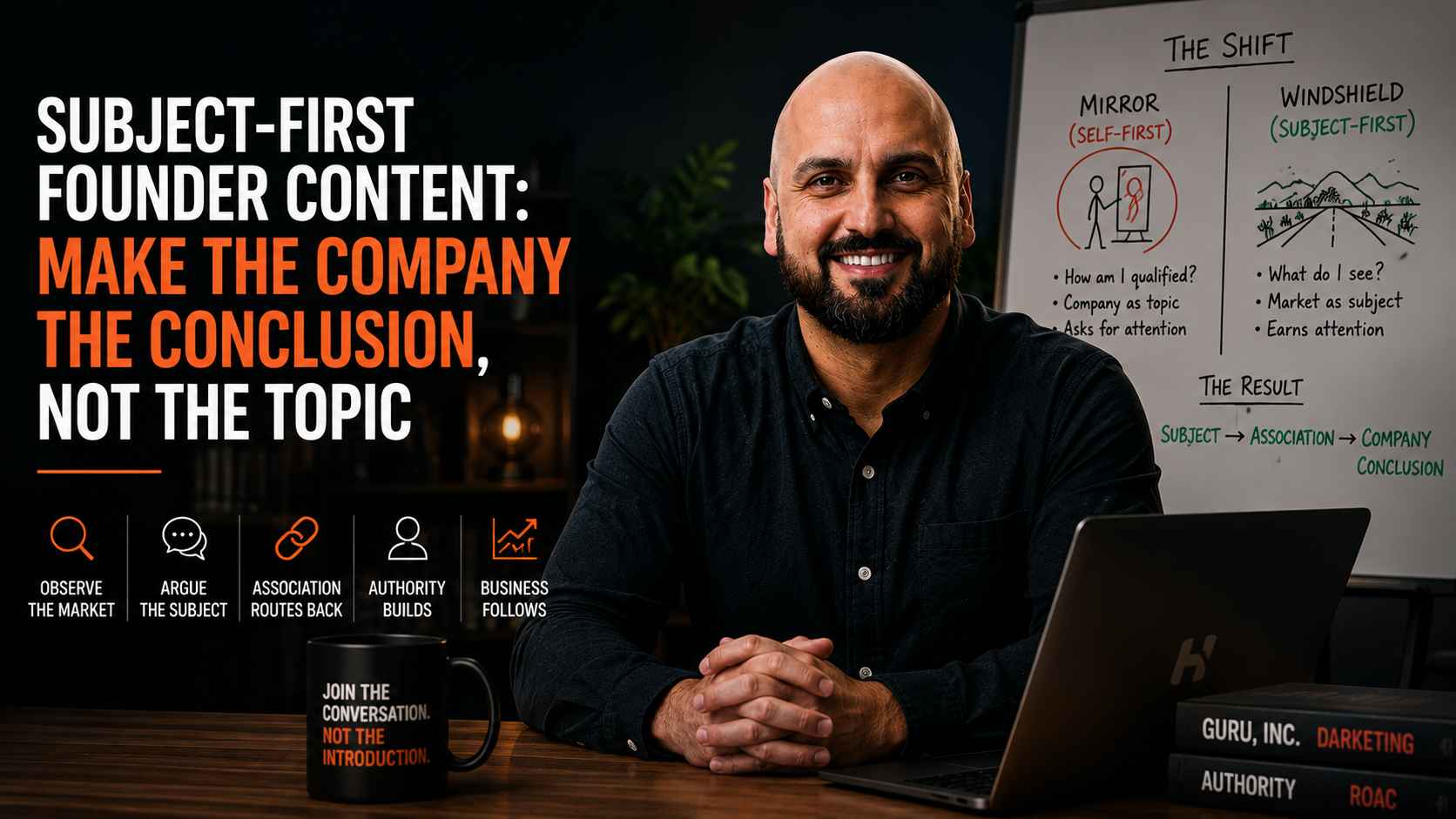
The creators who stand out are the ones whose taste lets them use AI intentionally, or know when not to use it at all. This is why I treat social media as a strategic game, not a content factory.
How I Developed My Eye
I would not claim I have taste in fashion or interior design. I do have a taste for people who have taste. I can recognize when someone works in a way that is forward-thinking, precise, and intentional. That ability is how I have built teams of exceptional marketers, editors, designers, and creatives.
That did not come from reading about creativity. It came from exposure. I have been inside homes most people will never see, from billionaires' residences to estates designed with a level of intentionality that changes how you think about space.
When I traveled to Singapore and saw architecture blended with living foliage, I did not rush past it. I slowed down. I let the environment reshape my frame of reference.
To this day I bring my team to client meetings. I take my creative director to elevated environments so he can see what taste looks like in person. Taste does not transfer through a Google Doc. It transfers through exposure. The same principle applies digitally. Studying how the best creators structure experiences, how culture moves before it is labeled a trend, how respected brands make choices that feel inevitable. If you do not know how to see, you can stare at great work and miss what makes it great. David Lee, CCO of Squarespace, said good taste is the currency of the future. The reason is that it cannot be mass-produced.
Taste Is Business Strategy, Not Decoration
I once worked with a thirty-year-old commercial real estate developer entering an industry dominated by old-school thinking. Instead of mimicking the incumbents, he redesigned the entire experience. The buildings, the environments, the way people felt in his spaces. His travels and cultural exposure showed up in every decision. He was not decorating. He was differentiating.
That is what taste does in the creator economy. It is the reason one consultant's LinkedIn presence feels authoritative while another's feels like noise. Same credentials. Same industry. Different perception. The difference is curation: the choices about what to include, leave out, and how to frame what remains. This is where personal brand authority is built.
The Coca-Cola case is instructive beyond advertising. The issue was never that AI was involved. The issue was that no one exercised the judgment to say: this campaign, tied to this emotion, for this audience, is not the right place for this tool. Anyone can make content.
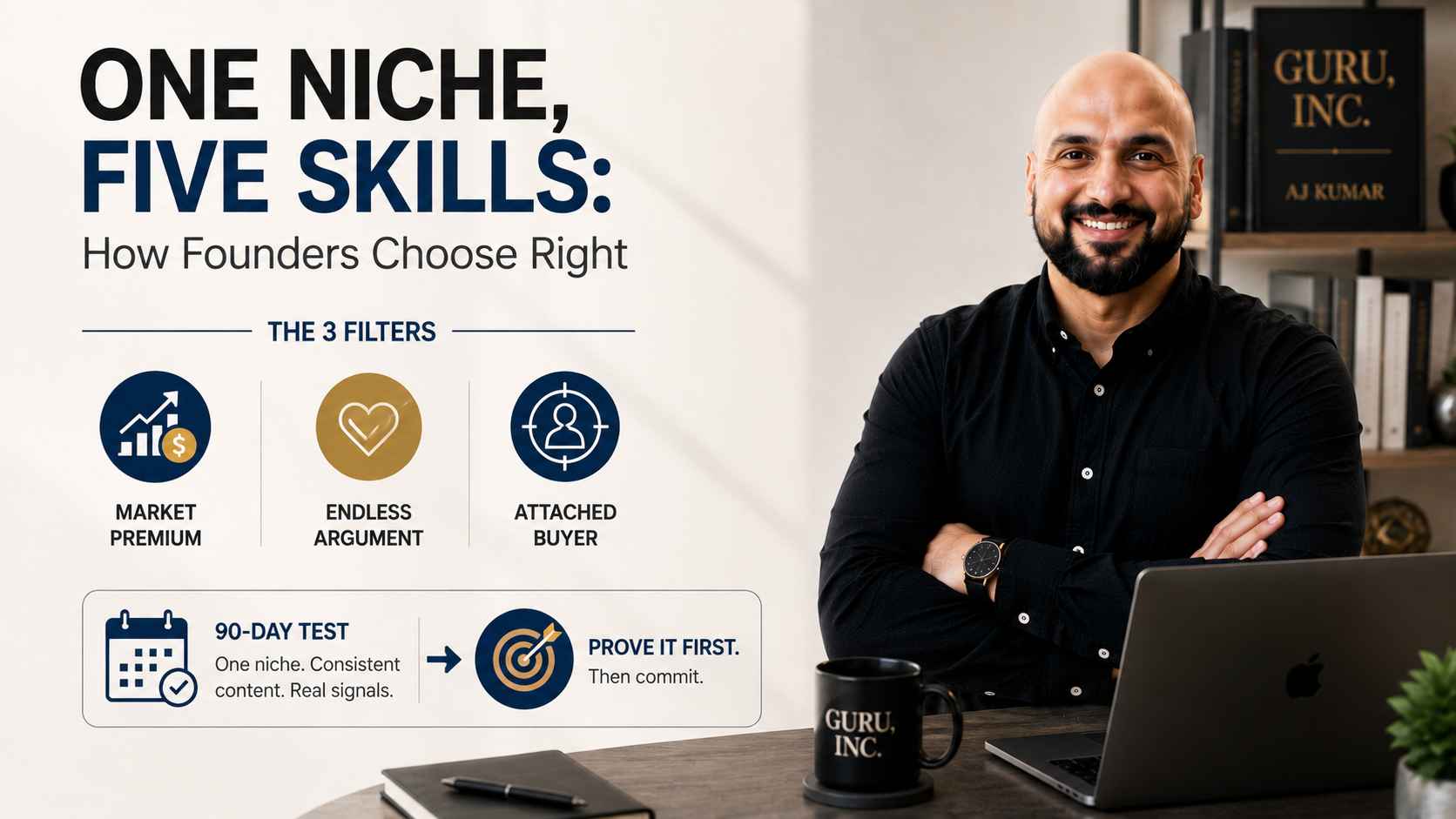
Very few can build a brand with a genuine point of view. I developed the ROAC framework in GURU, INC. to measure when content produces business value. Taste is the variable that most directly affects how attention converts into trust. Content without taste generates impressions. Content with taste generates authority.
The Human Advantage in an AI-Saturated Market

Humans are still the best pattern recognizers. We do not only spot trends. We shape them. We question them. We challenge them.
The strongest creators use taste to move into unfamiliar territory. They take risks that feel odd at first and explore what those choices mean over time. AI cannot do this. AI responds to what already exists. It can remix, recombine, and reproduce patterns from the past. It cannot decide that right now, something with no precedent in the training data is needed.
That is the human advantage. Not reacting. Guiding. Not making things, but knowing which things are worth making. The creators who win the attention economy are not the ones with the largest output. They are the ones with the sharpest filter.
Your Action Step This Week
Pick three creators outside your industry whose work you find compelling. Not popular. Compelling.
Spend twenty minutes studying their last ten posts. Do not look at metrics. Look at choices. What did each creator choose not to include? What feels intentional versus formulaic? Could you identify their work without seeing the name? Write down three observations.
Once your eye develops, every decision you make, from content strategy to hiring to brand positioning, gets sharper. The same logic shows up in edutainment content where structure carries the entertainment.
Taste is the infrastructure underneath every brand that feels like it belongs in the room. The ability to discern which AI outputs carry weight is the skill that separates signal from noise. Train your eye. Everything else follows.
Frequently Asked Questions
What is taste in the context of content creation?
Taste is the trained ability to recognize what feels right and reject what feels obvious or derivative. It determines what to include, what to leave out, and how to frame what remains.
Can taste be learned or is it something you are born with?
Taste is a skill, not a gift. Bourdieu showed that taste is shaped by accumulated exposure and the environments you have inhabited. Anyone can develop it with intentional effort over years.
Why does AI-generated content often lack taste?
Generative AI predicts the most statistically likely output, which trends toward the average. Taste lives in the judgment calls that exist outside the training data: what to exclude, when to exercise restraint, when a format has peaked.
What happened with Coca-Cola's AI Christmas ads?
Coca-Cola recreated its "Holidays Are Coming" campaign using AI in 2024 and 2025. The 2024 version scored 22 out of 100 against all YouTube ads. The 2025 retry with animated animals faced similar backlash. The disconnect between AI content and themes of human connection drove the response.
How does taste function as a business strategy?
Taste is differentiation, not decoration. It determines why one founder's brand feels authoritative while another's feels like noise. Taste directly affects how attention converts into trust, which is what the ROAC framework measures.
Why do content best practices expire?
Trends gain value through scarcity and lose value through popularity. With AI making it easy to replicate any format at scale, the cycle has compressed from months to weeks.