
This article introduces the APC Alignment Framework (Authenticity, Power, Clarity), developed by entrepreneur Jesse Elder. Three real-world founder stories show how each misalignment shows up and how to correct it.
Key Takeaways
Imposter syndrome is real, but it is one of three founder visibility patterns, not a blanket condition.
The APC Alignment Framework (Authenticity, Power, Clarity) names the three forces behind every public moment.
An Authenticity gap shrinks under pressure and disguises itself as polish, costing trust before revenue.
A Clarity gap turns founder conviction into noise, slowing teams and diluting audience retention.
A Power gap quietly bleeds revenue when expertise is real but ownership of value is not yet claimed.
Each gap has a different fix: trust your voice, structure your message, or hold your price without flinching.
Imposter syndrome is one of three patterns founders face under visibility.
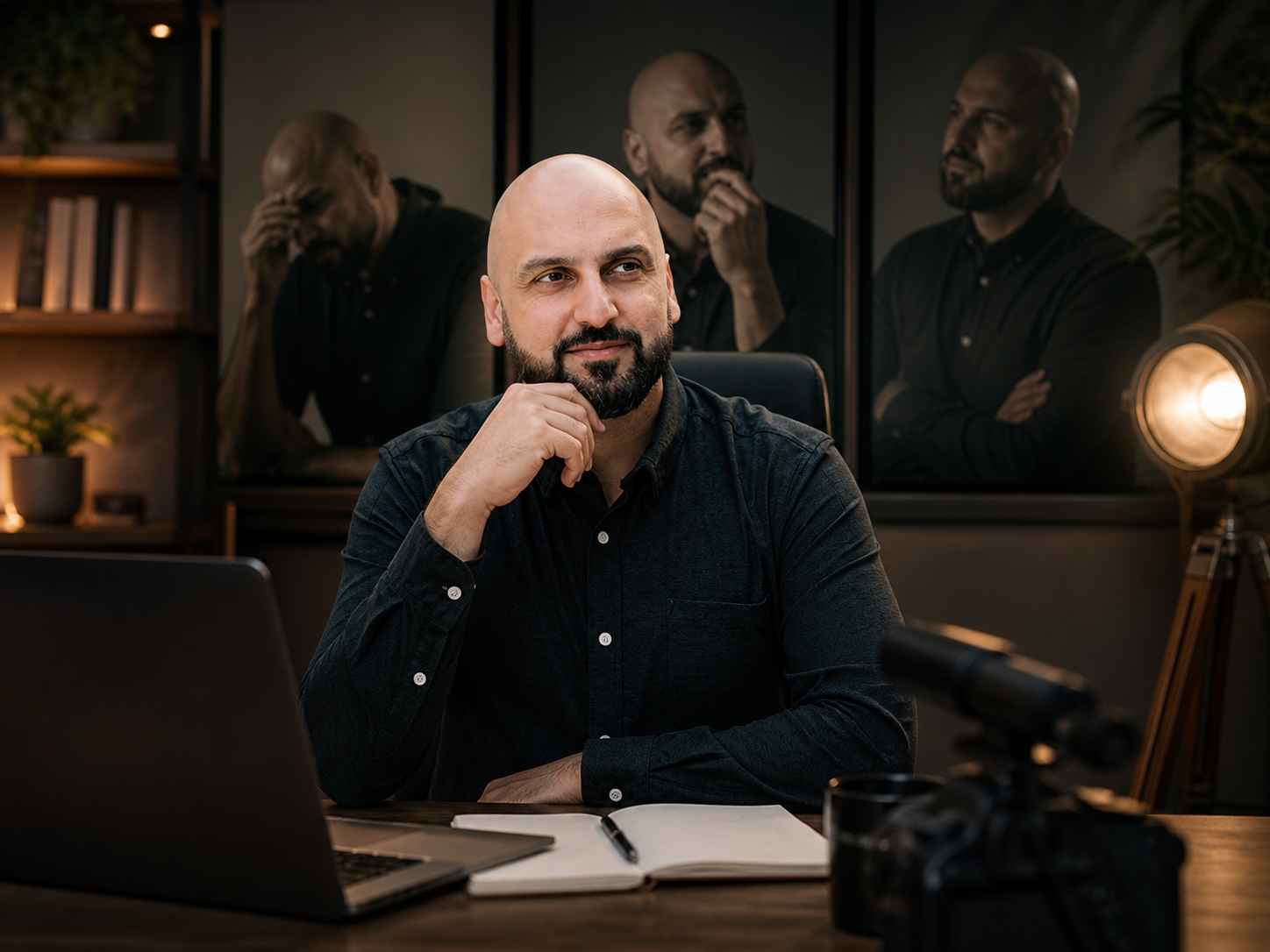
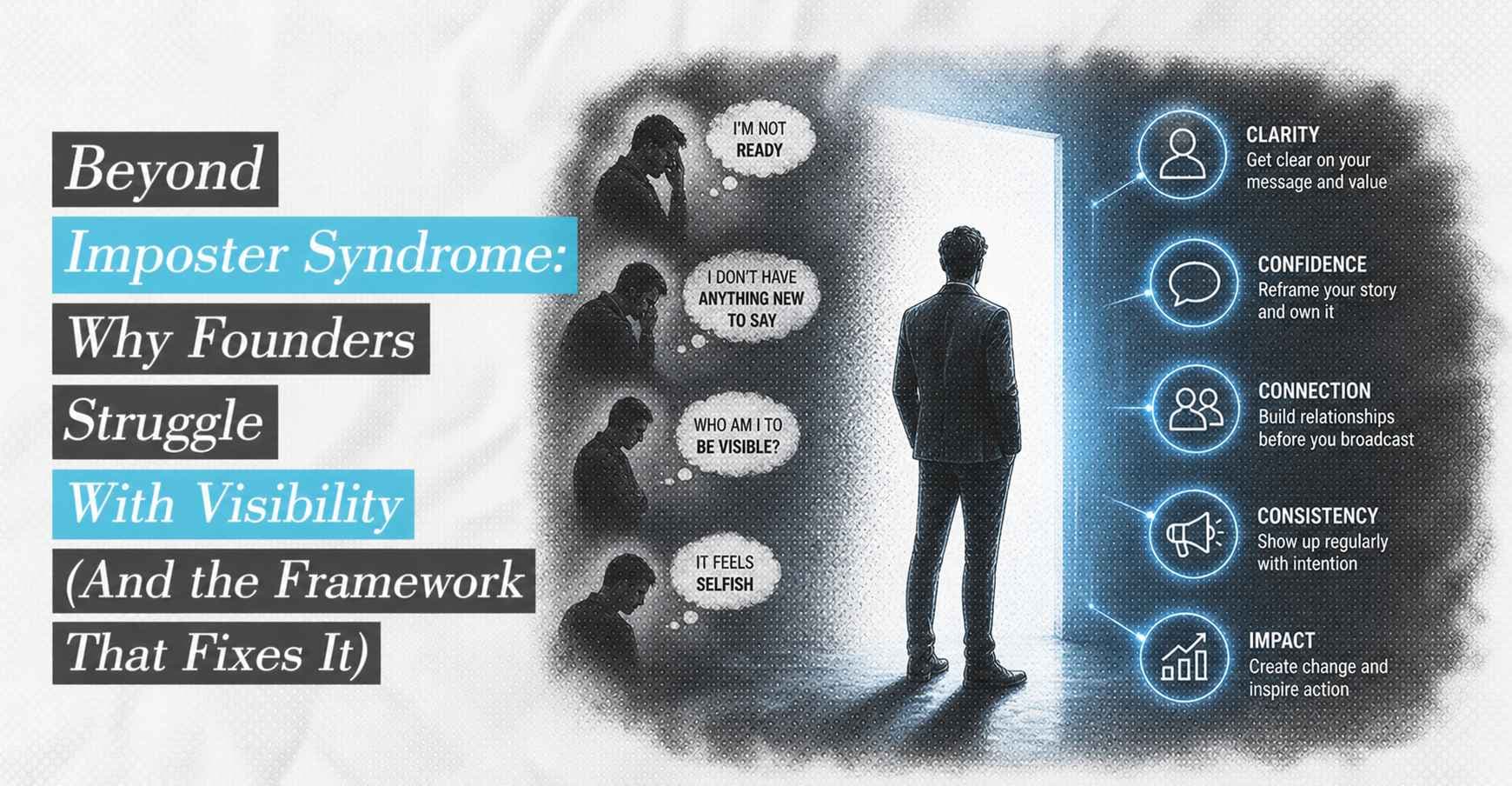
Nearly every founder has felt it. That moment right before you hit publish or step on stage. Something whispers: who am I to say this?
The internet calls it imposter syndrome. It has become the catch-all diagnosis for any founder who feels a gap between expertise and confidence. It is a rite of passage in the creator economy.
The feelings are real. The label is incomplete. Imposter syndrome is one of three patterns that show up when founders step into public visibility. The other two are equally destructive and harder to name.
Calling every visibility struggle imposter syndrome is like calling every stomach pain food poisoning. Sometimes it is. Often it is something else that requires a different fix.
Three forces drive every founder's public presence.
Years ago, I was introduced to the work of Jesse Elder, an entrepreneur and mentor who has trained creators for decades on the mechanics of influence and identity. Jesse comes from human performance and self-authorship.
He developed a framework he calls the APC Formula. After more than 20 years working with founders, this lens explains more about visibility than any posting schedule.
APC names three forces. Authenticity is being the version of yourself you know you should be, on camera and on stage. Power is the full expression of your creative energy through thought, word, feeling, and action. Clarity is knowing your purpose, path, and plan deeply enough that you do not second-guess yourself.
When all three align, content becomes magnetic. Trust builds fast. Revenue follows. When even one drops, a specific pattern of self-sabotage takes hold.
This is what most content advice misses. Coaches tell you to show up authentically. Strategists tell you to post with more clarity. Motivational content tells you to be bolder. None of it works unless you know which force is misaligned.
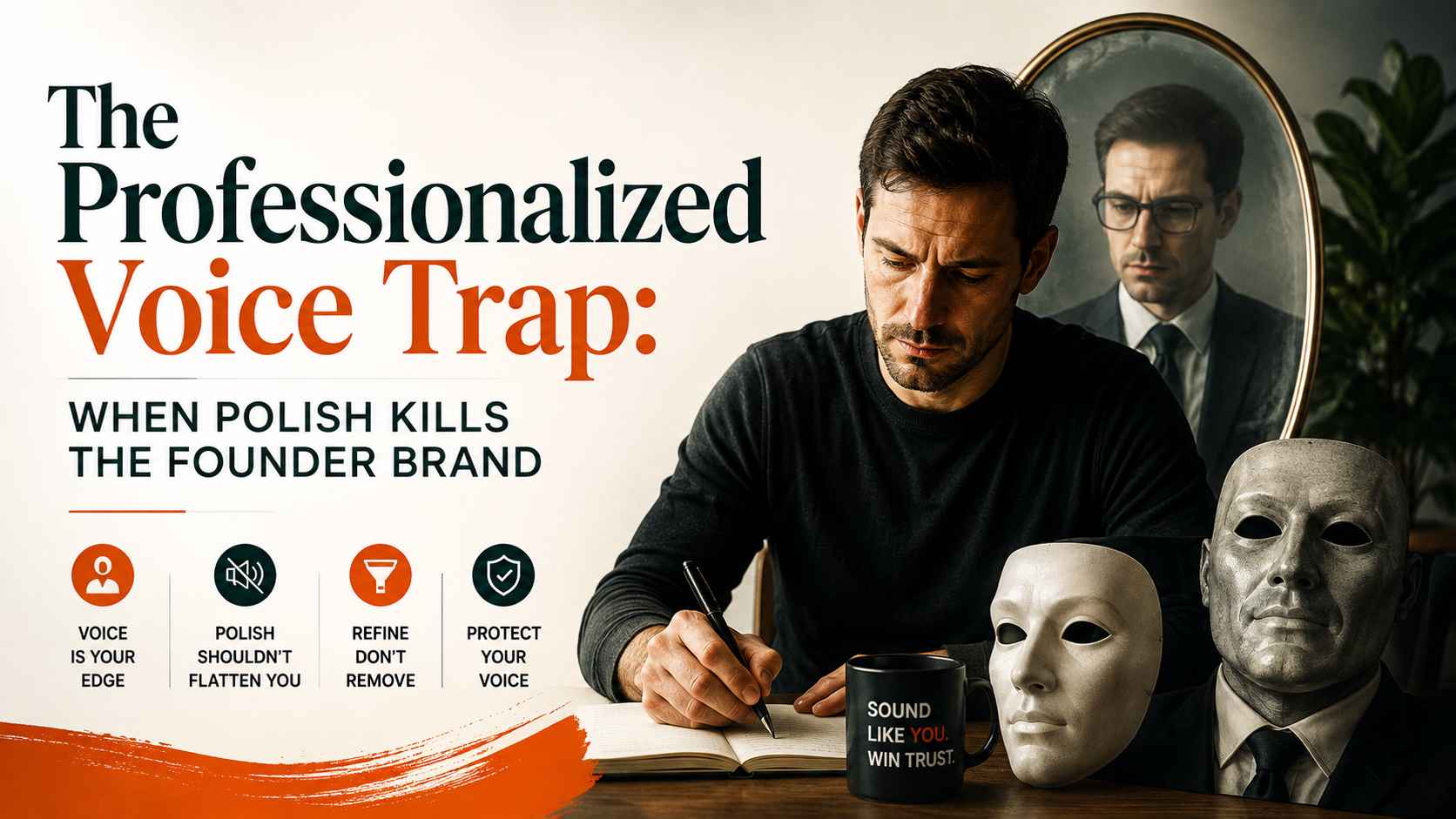
The Authenticity gap shrinks you under high visibility.

Start with the pattern that brought you here.
I worked with a celebrity nutritionist who, by every external measure, had it figured out. Bestselling books. A devoted audience. Documented client results. In low-pressure rooms, she was magnetic. In high-visibility moments, something shifted.
The clearest example was a segment on The Ellen Show alongside Drew Barrymore. Ellen and Drew were loose, playful, having fun. The nutritionist, who in her own world is as warm as anyone on that couch, came across as strict. Tightly wound. Her information was solid. The delivery had shifted into a more "professional" version of herself, and the audience could feel the difference.
Through the APC lens, her Power was intact and her Clarity was strong. Under pressure, her Authenticity dipped. Some part of her brain was running an old program: I need more credentials to belong in this room.
That internal friction did not look like panic. It looked like polish. That is what makes the Authenticity gap so insidious. It disguises itself as professionalism.
This is imposter syndrome as a diagnosable misalignment. Power and Clarity intact. Authenticity drops under stakes. When the brain perceives social judgment as a threat, the amygdala overrides the prefrontal cortex. The part responsible for authentic expression gets suppressed. I cover this mechanism deeper in the biology of brand building.
Imposter syndrome is not a sign that you do not know enough. It is a sign that you do not fully trust yourself when it matters most.
The Clarity gap turns founder conviction into noise.
The second pattern is equally common, and it looks nothing like imposter syndrome.
I worked closely with a health and wellness founder scaling past 50 million views per month. Founder, operator, on-camera talent. Authentic to his core. Producing at a volume that would exhaust a team of ten.
In meetings, he walked in with ten ideas stacked on top of each other, layering thoughts faster than the room could process. Conversations got bulldozed. His brain was three steps ahead, and he was not slowing down to bridge the gap. His audience experienced the same thing: presence undeniable, message inconsistent.
His Authenticity was rock solid. His Power was off the charts. Clarity was not keeping pace with his speed.
Jesse Elder calls this the Bull in a China Shop. Not reckless. Unrefined force. Under urgency, cortisol amplifies your drive to produce but degrades the precision of your communication. The audience receives volume instead of signal.
The cost is loss of leverage at scale. When your team interprets instead of executes, everything takes twice as long. When your audience decodes instead of absorbs, the personal brand authority that should be compounding gets diluted.
The Power gap quietly bleeds creator revenue.
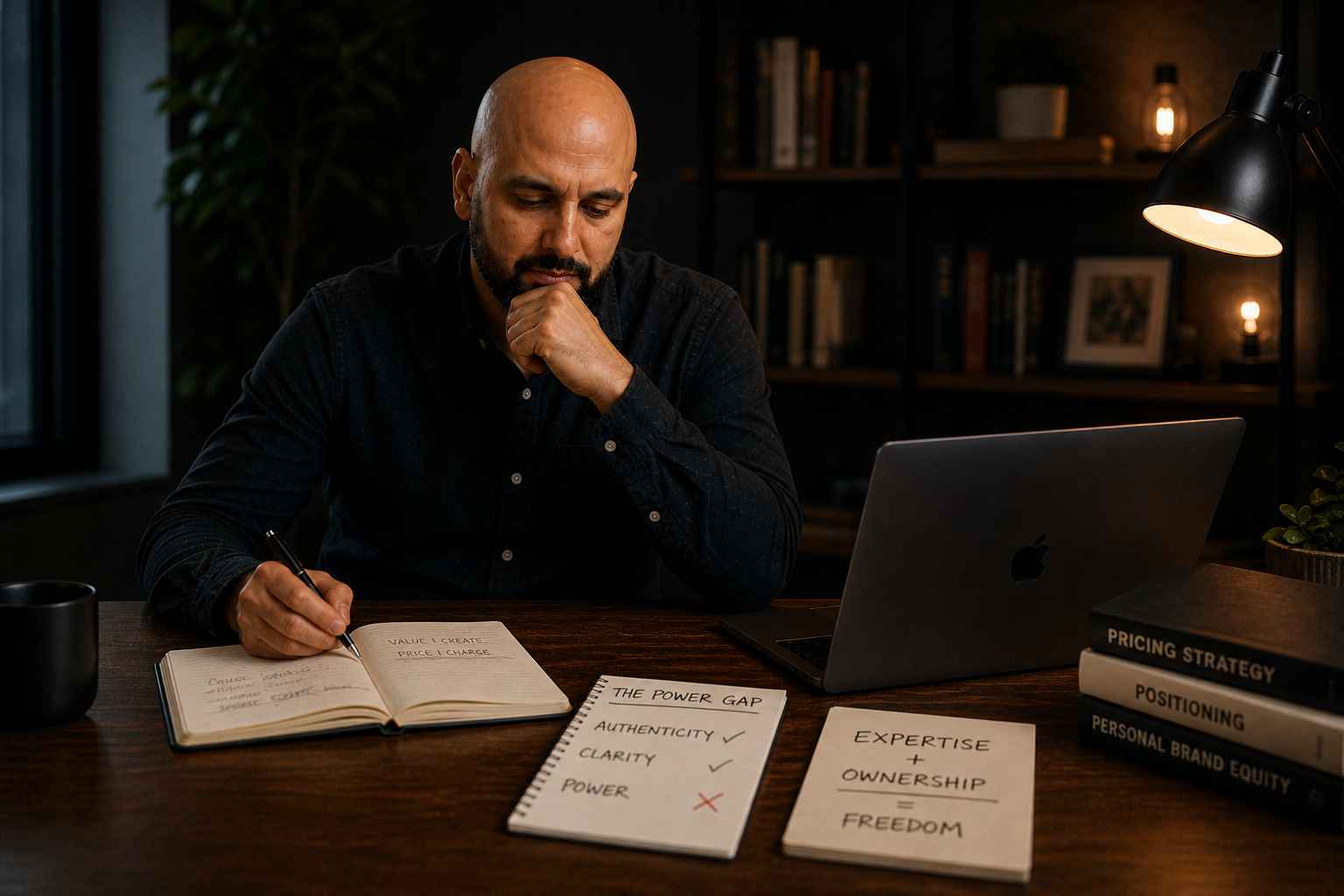
Then there is the third pattern. The one I lived with for nearly a decade.
I could see strategy clearly. I created real value for the founders I worked with. When it came to claiming that value for myself, I held back.
For years, I over-delivered and undercharged. I stayed in creator mode when I should have been operating in authority mode. I produced outcomes worth multiples of what I charged, and some part of me accepted that as normal. Not because I did not want more. Because something inside had not decided I was allowed to have it.
This is the Power gap. The full outward expression of claiming the value you create. Authenticity solid. Clarity sharp. Power missing.
Jesse Elder calls this the Starving Artist. The quietest of the three, and the most expensive. The Imposter shrinks visibly. The Bull's chaos announces itself. The Starving Artist looks like they are doing everything right while the bank account tells a different story than the impact they create.
I tried to fix it from the outside first. Driving through central California, I saw people falling out of the sky in parachutes. On impulse, I pulled over, found the drop zone, and signed up. Thirteen thousand feet. Tandem jump. The freefall worked for 48 hours. Then the adrenaline faded and the patterns came back.
You can not skydive your way out of a Power gap. The real turning point was quieter. Inner work. Clearing the stories I had internalized about what I was allowed to charge and who I was allowed to be. Once the resistance cleared, everything shifted. The expertise had always been there. What was missing was the unapologetic ownership of it.
The Starving Artist does not lack talent. They have not decided to fully be paid for it.
APC works as a diagnostic, not a label.
Run this diagnostic on yourself right now.
If you shrink under visibility, becoming more careful and less yourself when stakes go up, you are dealing with an Authenticity gap. The deeper fix is building trust with your own voice in low-stakes environments until that trust holds under pressure.
If your energy overwhelms your message and your audience works to follow you, you are dealing with a Clarity gap. Meetings feel chaotic. Execution lags despite relentless effort. This is structural, not emotional.
If you create massive value but do not fully claim it, you are dealing with a Power gap. This is not about new tactics. It is about clearing the internal resistance that keeps you from stepping into ownership.
You rotate between these states. A founder aligned in solo content can become The Imposter on a bigger stage. A creator with clarity alone can become The Bull leading a team. These are states, not identities. Founders who build a lasting personal brand moat name the pattern they are in and correct it.
Each gap requires a different prescription.
The fix depends entirely on the diagnosis.
For the Authenticity gap, practice unfiltered delivery in low-stakes environments. Record yourself talking about your expertise with no script and no second takes. The version of you that shows up when nobody is watching is the version your audience wants to follow. Repetition builds the pathways that let that version show up under pressure.
For the Clarity gap, build structure before speed. Before any meeting or video, distill your thinking to one core idea, one outcome, and one next action. Energy through a narrow channel moves people instead of overwhelming them.
For the Power gap, set a price that makes you slightly uncomfortable and hold the line. Do not discount it. Do not over-explain it. The first time someone pays what your work is worth and you receive it without flinching, something shifts that no affirmation can replicate.
Alignment produces stronger content. Stronger content builds deeper trust. Deeper trust creates higher-value relationships. Those relationships generate revenue that matches the impact you create. I write about this compounding chain in GURU, INC.. The chain stalls the moment any of the three forces falls out.
Imposter syndrome names a symptom, not the source.
Imposter syndrome is real. It is not the only thing happening when founders struggle with visibility. For many of you, it is not even the pattern costing you the most.
The next time you feel that resistance, do not default to "I have imposter syndrome." Stop. Ask which force is misaligned. Am I shrinking? Am I bulldozing? Am I holding back?
The attention economy is getting louder every quarter. The founders who cut through will not be the ones who post the most. They will be the ones aligned when they show up.
That is not a content strategy. That is an identity decision.
Frequently Asked Questions
Is imposter syndrome a real psychological condition?
Imposter syndrome is a recognized pattern in psychology research, originally described by Pauline Clance and Suzanne Imes in 1978. It is not a clinical diagnosis but a documented experience of self-doubt despite evidence of competence.
Who created the APC framework?
The APC Formula (Authenticity, Power, Clarity) was developed by Jesse Elder, an entrepreneur and mentor who teaches creators the mechanics of influence and self-authorship. I apply it as a diagnostic lens for founder visibility.
Can a founder have more than one APC gap at once?
Yes. Founders rotate between gaps depending on context, audience, and stage. Solo content might fire on all three forces while a stage appearance triggers Authenticity and a team meeting triggers Clarity.
How long does it take to fix a Power gap?
The internal shift can happen within weeks once the underlying resistance clears. The slow part is the inner work of confronting the stories you have internalized about what you are allowed to charge.
What is the difference between confidence and Power in APC?
Confidence is internal certainty. Power is the full outward expression of that certainty into pricing, positioning, and ownership of impact. A founder can feel confident privately and still hold back publicly.
Should founders try to fix all three gaps simultaneously?
No. Diagnose the dominant gap first and correct it before moving to the next. Working on the wrong gap wastes effort and rarely shifts the pattern costing the most.