
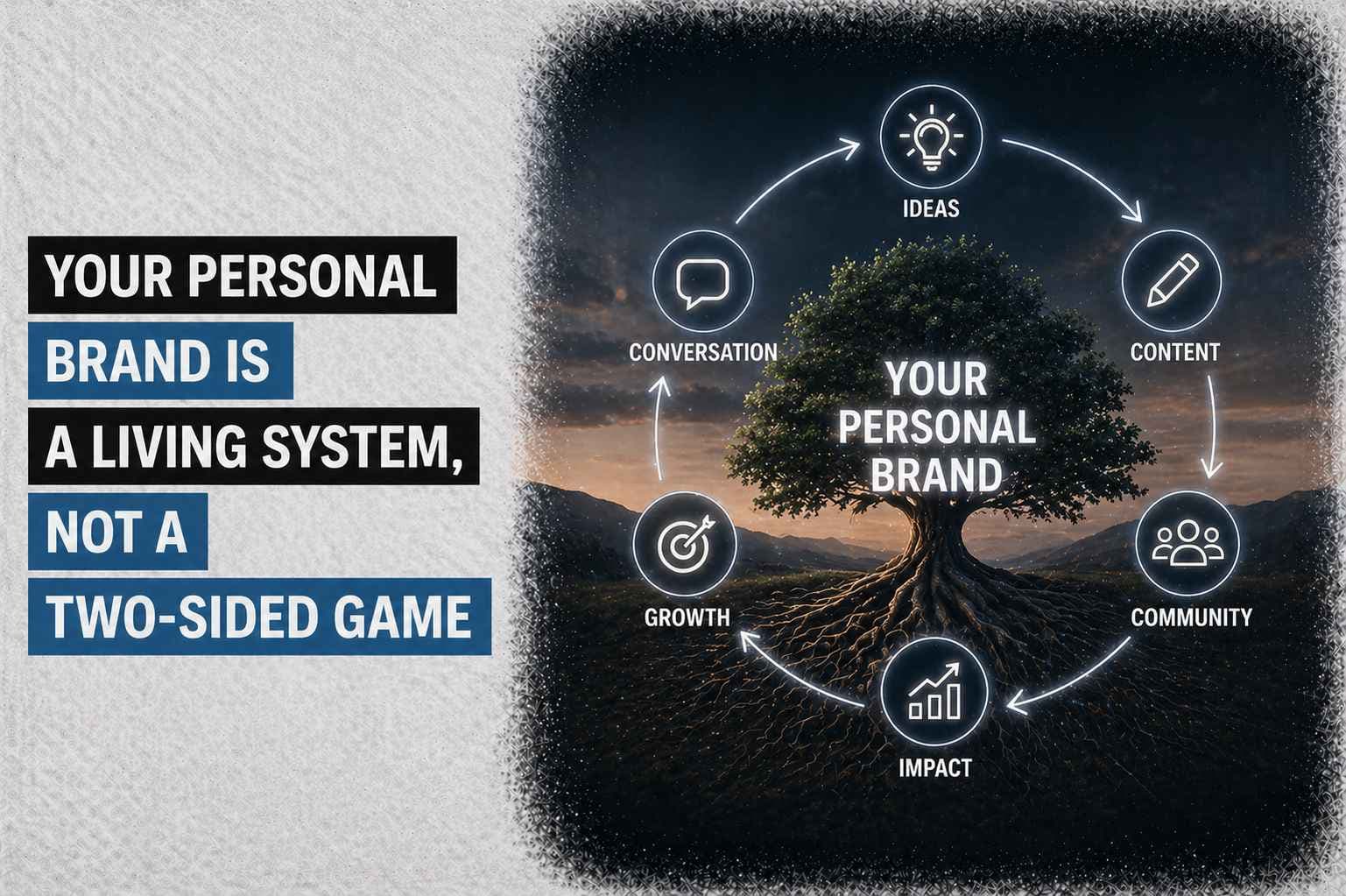
A personal brand is not a contest between posts or channels. It is a living system of interdependent signals. The sport that mirrors how it behaves is not football. It is Formula One.
Key Takeaways
Most founders grade their brand post by post, as if each output were a match with a winner and a loser.
The brain picks two-sided thinking because one winner and one loser cost less cognitive effort than a system.
Operators get trained out of duels at work, then carry the habit right back into their own brand.
Formula One is the only mainstream sport that rewards the same interdependent thinking operators already use every day.
A personal brand behaves like the paddock, not the scoreboard, where one signal repositions every other signal downstream.
A personal media company is the operating layer that keeps the system compounding without the founder posting more.
Why Most Founders Grade Their Personal Brand Like a Sports Fan
Most founders grade their personal brand the way a fan watches a football match. A founder closes the quarter and opens the dashboard. Which post landed. Which one flopped. Which channel is winning. The ritual feels productive. It is also why most founder brands never compound.
Grading a brand post by post quietly smuggles in a mental model. Each post is a match. Each match has a winner and a loser. Channel versus channel. LinkedIn versus Twitter. Video versus writing. One side takes the week. The other side loses.
That frame is how football gets watched. It is not how a brand behaves. The post that underperforms in week one gets quoted by a reporter in week nine. The framework that barely engaged anyone shows up in a board deck a year later. None of it fits on a win-loss scoreboard.
The founder who keeps grading match by match walks away convinced a personal brand does not move the business. The mental model never let the business see what the brand was doing.
Why the Brain Reaches for the Wrong Model of a Personal Brand
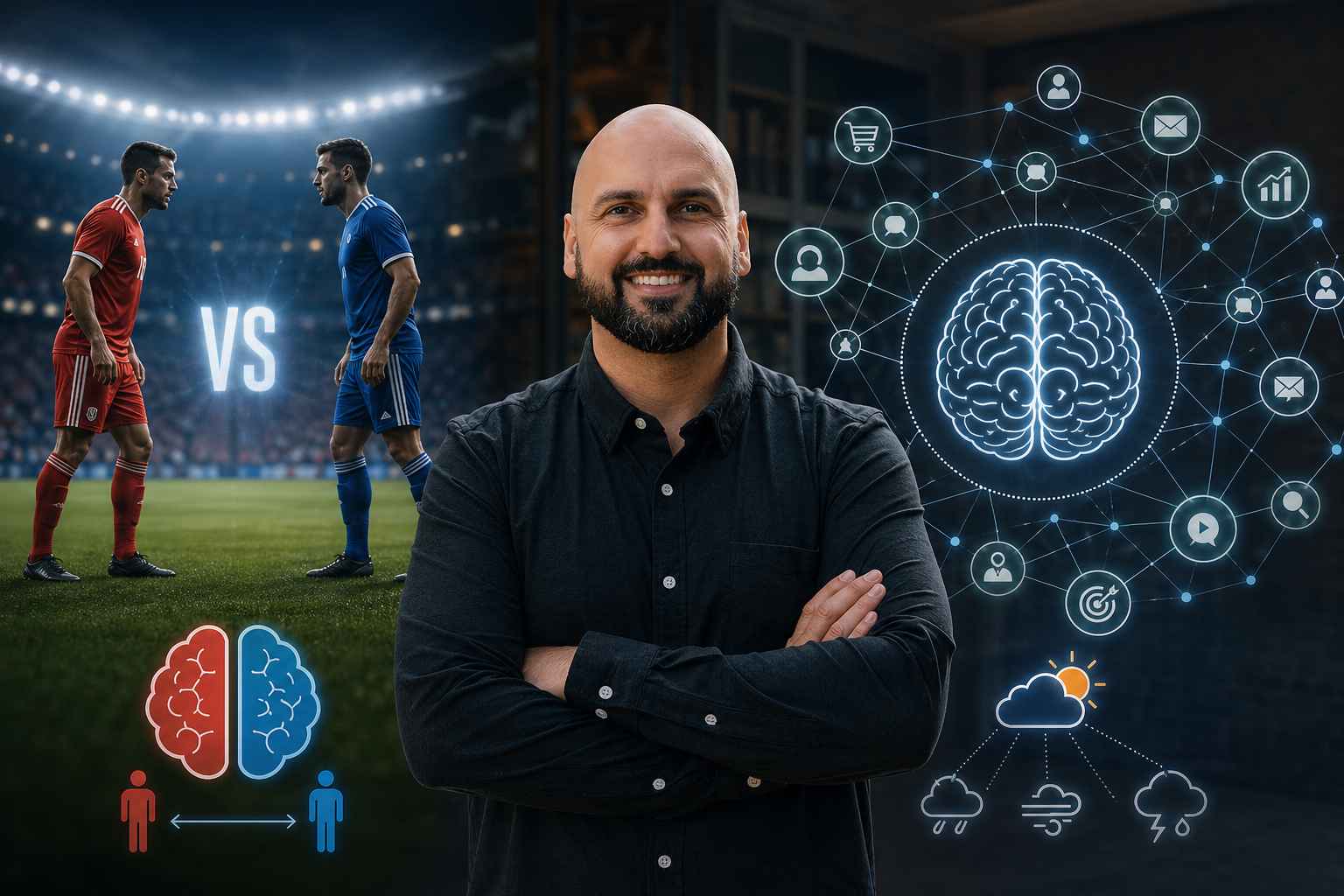
The brain likes clean stories. Two opponents, one winner, one loser, settled by the final whistle. Low effort, fast payoff, satisfying to track.
Systems with twenty moving parts feel uncomfortable. There is no clean moment of resolution. The mind has to hold too many variables at once to reach a verdict. Given a choice between a two-sided frame and a system frame, most people quietly pick the lighter one. The preference is not a flaw. It is how attention works when energy is limited.
The strange part is that founders get trained out of this reflex everywhere except their own brand. Running a company is a sprawling interdependency. Cash flow shapes hiring, which shapes velocity, which shapes churn, which shapes marketing. Nothing is a duel. An operator who thinks in duels does not last a year.
The same operator walks into their content strategy and reverts to the duel. Post against post. Channel against channel. The brand gets treated like two teams on a field, not a weather system with a hundred variables. The job trained them for the real game. They have not carried the lesson across the fence.
Why Formula One Mirrors How a Personal Brand Really Works
Formula One is the only mainstream sport built on the same interdependent logic as a personal brand. Twenty cars. Ten teams. Two pit windows per race. Tire compounds that behave differently as the track evolves. Weather that flips strategy mid-lap. A safety car that repositions every car behind it in a single sweep. No move is independent. No lap is the same as the one before it. The brain watching a Grand Prix does not run a contest. It runs a simulation.
That is why the paddock keeps filling with founders and fund managers at thousands of dollars a ticket. The price is not exclusivity. It is cognitive fit. A few hours of watching a game that thinks the way the buyer already thinks.
The reflex a founder uses in the paddock is the one they need when they look at their own brand. Stop scanning for who is winning the week. Start tracking which pieces of the system are influencing which others. The same simulation brain that earns the paddock ticket is the one that finally reads the founder's brand correctly.
How a Personal Brand Behaves as a Living System

A personal brand is a network of signals that shape how stakeholders perceive a founder over time. Every signal modifies the interpretation of every other signal. The scoreboard hides it. The paddock view shows it.
A podcast appearance introduces a framework. The framework lands in a board deck six months later. A board member repeats it to a fund partner. The fund partner quotes it in a write-up. A journalist picks up the quote. A senior candidate decides the founder is worth leaving a safer job for. None of those moves were made by the founder. The podcast was. The system did the rest.
This is the difference between a channel strategy and a living system. A channel strategy produces one output per input. A living system produces cascades that can not be traced to any single post.
The founder who sees this stops grading individual posts. The scoreboard moves to a different question. Are stakeholders repeating the founder's language back without prompting. Are opportunities arriving without a request. Are rooms the founder has never been in deciding in the founder's favor. Those are the paddock signals.
How One Signal Rewrites Every Other Signal in the System
A safety car at lap 30 rewrites the pit strategy of every car behind it. None of the drivers made that decision. The system repriced everything in a single move.
A founder brand runs on the same physics. One long-form essay resets how the founder is described for a year. One keynote clip lands on the desk of an acquirer who was never on the distribution list. One interview quote becomes the headline attached to the founder's name in search results. None of those were planned. They are second-order effects of a system operating as a system.
AJ maps this compounding mechanism in Guru, Inc. Every strong signal lowers the cost of the next signal landing. Every citation gets easier to earn. Every introduction arrives warmer. This is how a personal brand moat accrues. The system starts to run partially on its own inertia. A race opens up for a driver who catches the right undercut at the right lap. A brand opens up the same way.
This is also why follower counts miss the asset. They score a two-sided game. Living systems are measured by the shape and frequency of downstream cascades. That is what the return on attention created framework is built to capture.
Why a Personal Media Company Runs the Living System

A brand behaves like a living system only when a personal media company is operating underneath it. Without that operating layer, the signals do not connect. Posts happen. Cascades do not.
The personal media company owns four layers a founder can not improvise post by post. Creation covers frameworks, stories, hooks, and formats. Distribution covers owned and earned surfaces, from email to podcasts to press. Monetization covers products, speaking, licensing, and equity deals.
Community covers relationships on owned infrastructure, not a rented feed. When all four move as one entity, the founder stops racing as a lone driver. The brand starts running with a paddock crew.
Most founders try to get the cascades without building the entity. Their content works in bursts and fades. The PMC is the reason a brand keeps compounding when the founder skips a week of posting. A good race team keeps pace when the driver has a bad lap. A PMC does the same for a brand.
This is also why a PMC is structurally different from a marketing department. Marketing sells the product. A personal media company compounds the founder. Same hours. Different asset. Different scoreboard.
How Capital Allocators Read Founder Brands Like a Race
Capital allocators read founder brands the way they read a race. The founders paying for paddock access often raise capital from other paddock-ticket holders. The reason is a shared diagnostic habit. Allocators scan for second-order moves.
An investor does not score a founder by counting LinkedIn posts. The investor watches coverage, cadence, and language adoption. The calibre of journalists quoting the founder. The speaker lineup at the conference the founder anchored. Each one is a pit decision on someone else's strategy board. The investor is reading the paddock, not the highlight reel.
This is how a founder brand starts to move valuation. The system produces confidence in stakeholders who route billions for a living. That confidence earns a narrative multiple pure metrics can not produce. The multiple gets priced into the next round, the next hire, the next partnership, and the next acquisition conversation.
A founder reading their brand through the scoreboard will never see this coming. A founder reading it through the paddock sees the multiple accumulating months before it lands on a cap table.
What Founders Build When They Stop Watching the Scoreboard
A founder who drops the match-by-match view reorganizes around three questions the scoreboard can not answer. Which two or three pieces of output per quarter reset how the founder is described for twelve months.
Which distribution chain carries those pieces through second-order surfaces without asking the founder to show up more. Which small group of stakeholders will shift how the market reads the business, once they adopt the founder's language.
Those questions build the system. The system produces the cascades. The cascades move valuation, hiring, partnerships, and press at the same time. None of that shows up as a win in any single match. All of it shows up in one place: the founder's standing across the rooms they are not in.
The paddock is not a rich person's hobby. It is a live simulation of how complex games behave once they get past two sides. A personal brand is one of those games. The founders who stop watching it like a fan start running it like a team principal. They build a position in personal brand authority that the post-by-post grading system can not touch.
FAQ
How long does it take for a founder brand to start producing cascades?
Most founder brands start producing observable second-order signals between six and eighteen months of consistent output. Cascades depend on third parties repeating and citing the founder's ideas, which takes its own time to accumulate.
What is the minimum content cadence for a founder running a personal media company?
A founder does not need daily output to compound a brand. One substantial long-form piece per month, paired with short-form distribution, is a workable floor. A year of that cadence produces observable second-order signals.
How is a personal media company different from a marketing department?
A marketing department sells the product. A personal media company compounds the founder, with different outputs, different stakeholders, and a different scoreboard. The two can operate inside the same business without overlap.
Do introverted founders need to build a personal brand?
Introverted founders can build powerful brands because the living system runs on signal quality, not volume. A small number of precise outputs produce the same cascades as a high-frequency presence.
Which platforms matter most for a founder's personal brand?
The platforms that matter are the ones where the founder's stakeholders already spend attention. For most operator-facing founders, long-form writing, podcasts, and LinkedIn create more durable cascades than short-form video platforms.
What is the difference between a personal brand and a founder brand?
A personal brand belongs to any individual building audience and authority. A founder brand is attached to an operator running a business. That changes what the brand optimizes for and who it signals to.