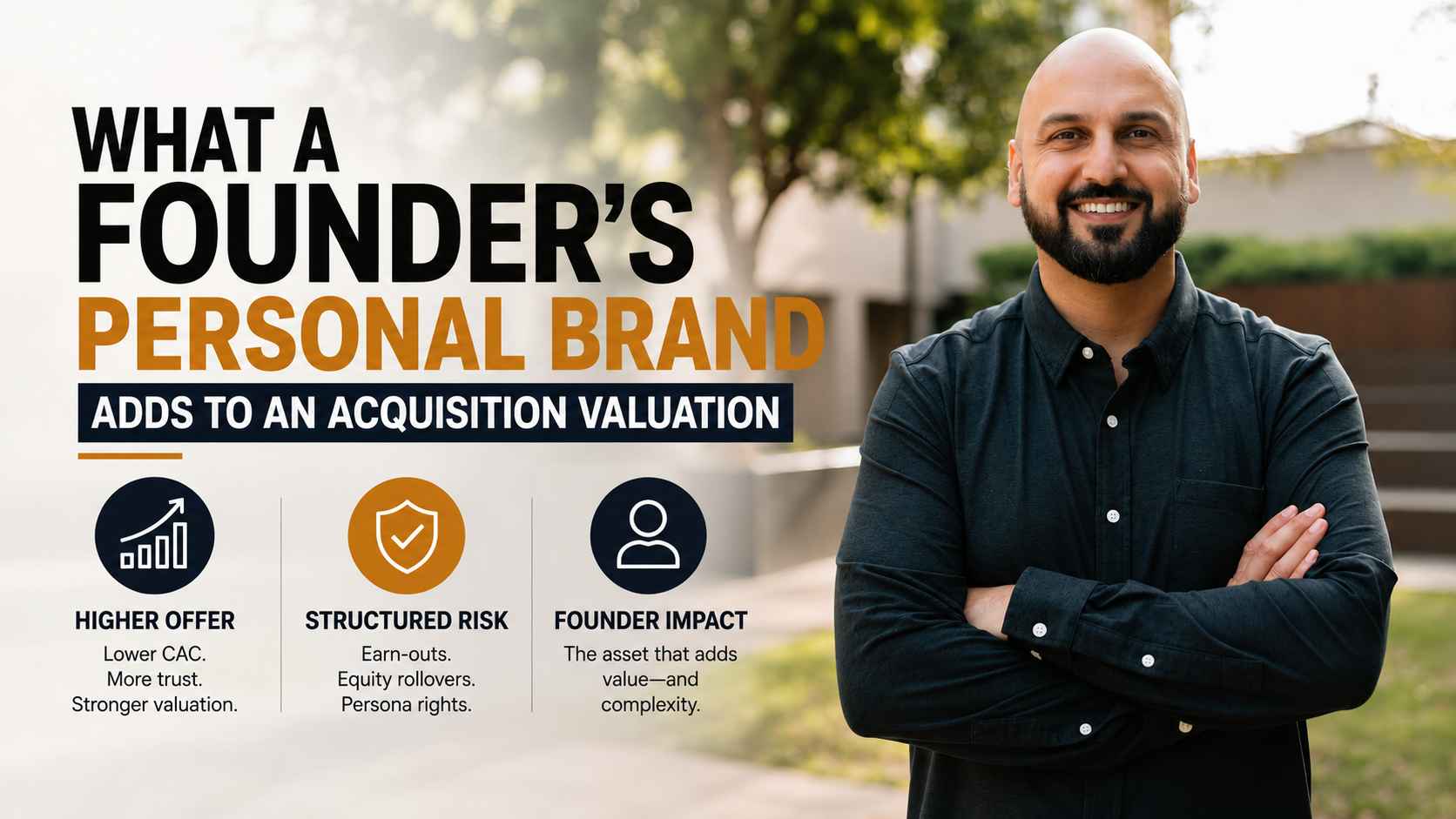


The creator economy business model rewards attention. Attention is rented from a platform, and it expires when the founder stops posting. Enterprise value is different. Enterprise value is the owned asset a personal brand becomes when a founder runs it as a company.
The asset compounds over time. The asset holds worth when the founder steps back. A creator builds income that stops at the source. A founder builds enterprise value that outlasts the daily feed. The arc from attention to enterprise value is the whole shift.
Key Takeaways
Enterprise value is the owned asset a personal brand becomes, not a creator's income.
Attention is rented and expires. Enterprise value is owned and compounds.
A founder converts attention into an asset by running the brand as a company.
Owned assets hold worth when the founder steps back. Creator income stops at the source.
The creator-economy income model caps a founder at the level of the attention.
Enterprise value comes from ownership and durability, not from reach or follower count.
What Enterprise Value Means for a Personal Brand
Enterprise value, for a personal brand, is the worth of the brand as an owned business asset. The brand operates as a company, holds value on its own, and does not depend on the founder posting every day.
Enterprise value here is not the finance metric a buyer assigns at an exit. The point is ownership and durability, not a valuation formula or a sale.
Enterprise value is also not creator income. Income is the money attention produces this month. Enterprise value is the asset that produces worth across years. AJ Kumar builds the asset, not the monthly number.
Why Attention Alone Is Not Enterprise Value
Attention alone is not enterprise value, because attention is rented. A platform lends a founder reach, and the platform sets the terms. The reach expires the moment the founder stops feeding it.
The creator economy business model runs on this rented attention. A creator captures it, monetizes it through sponsorships and brand deals, and starts over the next day. The income tracks the attention exactly. When the attention drops, the income drops.
Enterprise value sits outside that loop. Enterprise value is owned, not rented, and it holds when the feed goes quiet. A founder transcends the attention model by building an asset the platform does not control.
How a Founder Converts Attention Into an Owned Asset

A founder converts attention into an owned asset by running the personal brand as a company from the first day. Attention becomes the raw material. The owned asset becomes the product.
The conversion happens in the direction of ownership. A creator spends attention on the next sponsorship. A founder routes attention into owned audiences, owned relationships, and owned intellectual property the brand keeps.
Each piece of owned ground compounds into enterprise value. The brand stops being a content habit and starts being a business asset. The authority-to-asset build is documented in GURU, INC., where AJ Kumar frames the brand as a company, not a channel.
Why Owned Assets Compound and Attention Expires
Owned assets compound because the founder keeps them. An owned audience, an owned relationship, and owned IP carry forward and build on each other. Attention expires because the platform lends it and reclaims it.
Owned distribution is the foundation of this. A founder who owns the direct line to the audience holds the ground reach is built on. Enterprise value sits one level above that foundation.
Enterprise value is the whole brand as an owned asset, not only the owned audience. The audience is one component. The asset is the company the founder builds on top of it, and the company is what compounds into worth that lasts.
What Makes the Asset Survive the Founder
A personal brand carries enterprise value when the asset survives the founder. The asset operates as a company and holds worth even when the founder reduces daily output.
The creator economy frames the founder as the point of failure. The business dies the day the person leaves. AJ Kumar inverts that frame. A founder builds systems, owned audiences, and IP so the asset runs beyond any single day of attention.
Survival is the test of enterprise value. An asset that dies when the founder rests was never an asset. An asset that holds is enterprise value, and building one is where clarity on the right next move begins for a founder.
Why the Creator-Economy Income Model Caps a Founder
The creator-economy income model caps a founder at the level of the attention. Income tracks reach, so the founder runs faster to hold the same number. The ceiling is the attention itself.
Enterprise value removes the ceiling. The asset compounds past the daily attention, because owned ground keeps building while the founder sleeps. Income measures this month. Enterprise value measures the years.
This is the difference between a creator and a company. A creator monetizes attention and stops when it stops. A founder builds enterprise value and owns something when the attention moves on. Income versus equity. Creator versus company.
Enterprise value is the asset. A few questions decide whether a founder is building one.
How a Founder Knows the Brand Has Enterprise Value
A founder reads enterprise value from three signals. The signals are given below.
First, the brand owns its audience, with a direct line the platform does not control. Second, the relationship recurs, so buyers return without a fresh burst of attention. Third, the brand holds worth when the founder is not posting, because systems and owned IP carry the load.
A brand with all three operates as an asset. A brand missing them operates as a content habit. The signals separate a company from a creator account, and they mark the point where attention has become enterprise value.
Common Mistakes Founders Make Building Enterprise Value
Founders make four predictable mistakes building enterprise value. The mistakes are listed below.
First, they chase attention metrics and mistake reach for worth. Second, they build the whole brand on rented land a platform controls. Third, they stay the single point of failure, so the asset dies the day they rest. Fourth, they confuse income with equity, and optimize the monthly number instead of the owned asset.
Each mistake keeps the brand a creator account. Enterprise value starts where the founder builds owned, durable ground instead.
Does Enterprise Value Require Selling the Personal Brand

Enterprise value does not require selling the personal brand. The term carries an exit association from finance, and the association misleads founders here.
Enterprise value means the asset holds worth and could transfer, not that a founder lists it for sale. A founder builds the asset for ownership and durability first. The worth is real whether or not a sale ever happens.
A founder who owns a durable, compounding brand holds enterprise value today. The option to transfer it later is a consequence of ownership, not the reason to build. The point is the owned asset, not the deal.
Is Enterprise Value the Same as a Creator's Net Worth?
No. Enterprise value is the worth of the owned brand asset itself. A creator's net worth is personal wealth. The asset carries value as a company, separate from the founder's bank balance or holdings.
Can a Personal Brand Have Enterprise Value Without a Large Audience?
Yes. A small, high-trust, owned audience produces a durable asset. Enterprise value comes from ownership and durability, not from reach. A founder with a focused audience builds real worth without a large following.