
The first is corporate, occupying the digital plane where customers live. The second is the founder, building narrative infrastructure for the stakeholders who decide the company's future. The smartest founders are crossing the hump.
Key Takeaways
"Every company is a media company" became literal in 2026 because customer attention permanently moved from physical to digital reality
US adults spend roughly seven hours per day on internet-connected screens, equal to the average time they spend sleeping
ChatGPT crossed 100 million monthly users within two months of launch, the fastest consumer technology adoption in history
Companies now need two distinct media operations: a corporate layer that occupies the digital plane and a founder layer that builds narrative infrastructure
The founder layer is not a virality play, it compounds influence across investors, talent, acquirers, partners, and customers simultaneously
The hump most founders fail to cross is psychological, and the market is going to reprice the founders who get over it
"Every Company Is a Media Company" Stopped Being a Metaphor in 2026
Gary Vaynerchuk popularized the line in 2009 as marketing advice. He meant it as a metaphor. The advice was directional, not anthropological. He was telling brands to act like media. He was not telling them they were already living inside one.
In 2026 the metaphor collapsed. The change was in where human attention now lives. Customers, employees, partners, investors, and acquirers spend the majority of their conscious lives inside internet-connected screens. The plane on which decisions get made is digital.
A company without a presence in that plane is not behind on marketing. It is operating from an empty storefront on a street nobody walks anymore.
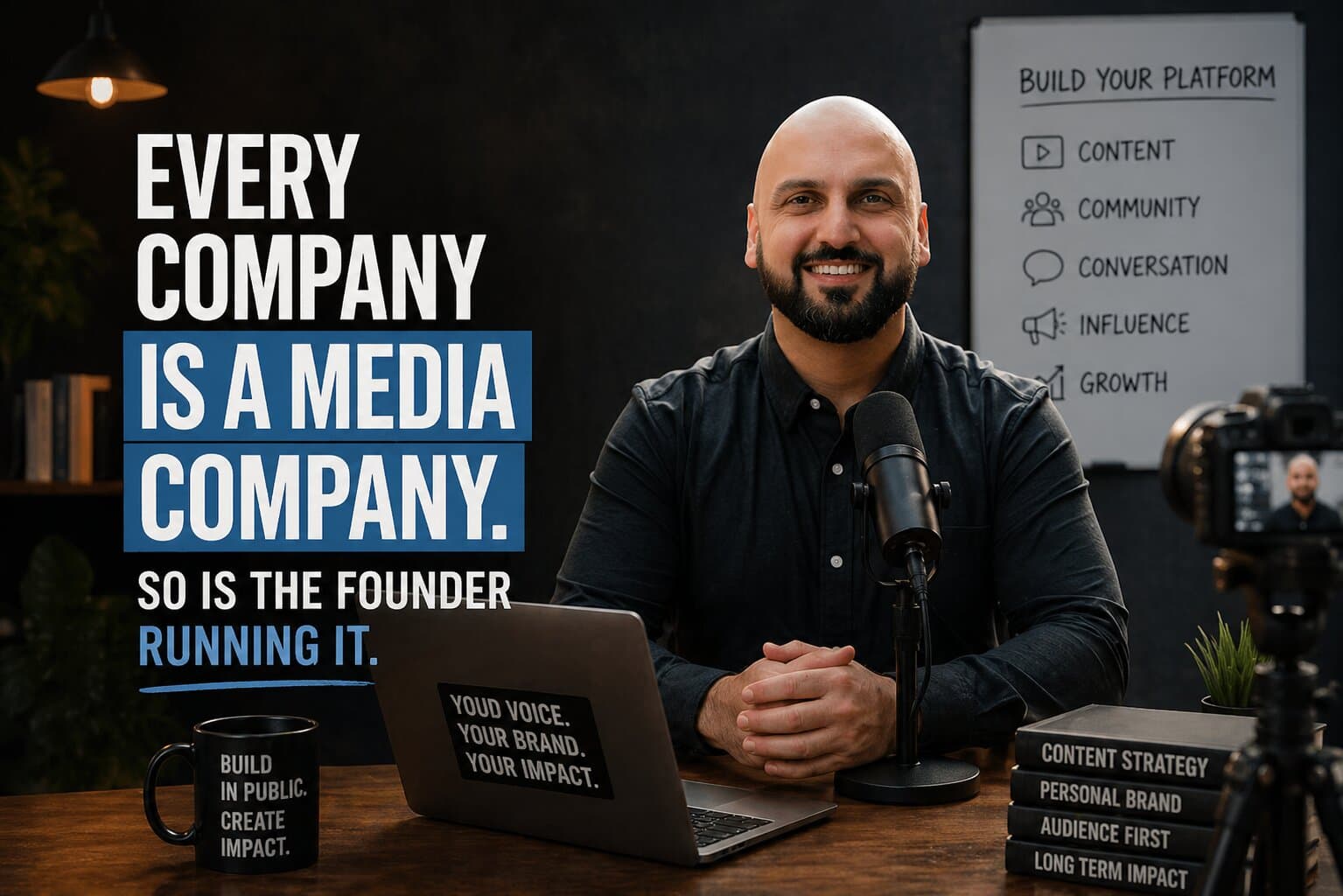
This piece argues for the literal reading. Every company is a media company because reality changed addresses. That move is half of what is happening. The other half is the founder. The two layers run in parallel, and most companies are running neither.
The Average Adult Spends as Much Time in a Screen as They Do Sleeping

US adults spend roughly seven hours a day inside internet-connected screens. That is the same amount of time the average adult spends sleeping. The remaining hours are not unmediated. The phone is in the pocket. The notifications are in the periphery. The thought of what to look up next is in the foreground.
Five years ago "touch grass" did not exist as a phrase anyone needed to say. We did not invent reminders to drink water or see daylight, because hydration and sun were not optional. We had to invent a reminder to acknowledge physical reality.
That is the most underrated piece of evidence in any conversation about the attention economy. The default state of being human flipped. Digital is the baseline now. Physical is the exception worth naming.
The CEO consumes content during her run. The acquirer reads Substack on his commute. The senior candidate watches your YouTube clips before he opens your offer letter. They all live in the same plane your customers do. A company with no presence there is not winning quietly. It is being skipped quietly.
AI Is Pulling People Deeper Into the Digital Plane, Not Out of It
ChatGPT crossed 100 million monthly users within two months of launch. That is the fastest consumer technology adoption ever recorded. UBS analysts called it without precedent. Every prediction about AI freeing people from their screens has reversed. AI made the screen more useful, more entertaining, more sticky.
Most adults under 45 now use AI tools weekly, many of them daily. The conversation no longer happens between a person and a search engine. It happens between a person and a system that talks back. That system is also the one shaping how authority gets recognized.
When stakeholders ask AI about your category, the AI cites whoever showed up consistently in the digital plane. Founders without a presence are not invisible. They are absent from the index that decides credibility.
The compounding here is brutal. Time spent inside the digital plane is increasing every quarter. The customer base is migrating deeper, not pulling back. A silent founder in 2026 is being lapped by an AI system that does not know they exist.
Foot Traffic Moved. Most Companies Did Not.
Companies built around physical foot traffic are operating on a map of a country that no longer exists. The customer who used to walk past a billboard now walks past a feed. The buyer who flipped through a trade magazine now types a query. The senior candidate who would have heard about you through a recruiter sizes up your founder on a podcast first.
I co-founded the digital marketing agency Single Grain in 2011. I sold my shares two years later but kept working with founders ever since. By 2024 the founders with public presences had buyers showing up already convinced. The silent ones started every conversation cold. The gap was never in the product. It was where their customers had moved.
Every consequential decision around a founder is, structurally, a confidence vote. Customers vote when they choose a competitor. Buyers vote by asking for a discount. Talent votes by accepting somewhere else. Acquirers vote with smaller premiums on weaker stories. Partners vote by withholding the warm intro.
The silent founder collects no-confidence signals every quarter without ever seeing them on a spreadsheet.
"Every Company Is a Media Company" Is Only Half the Move
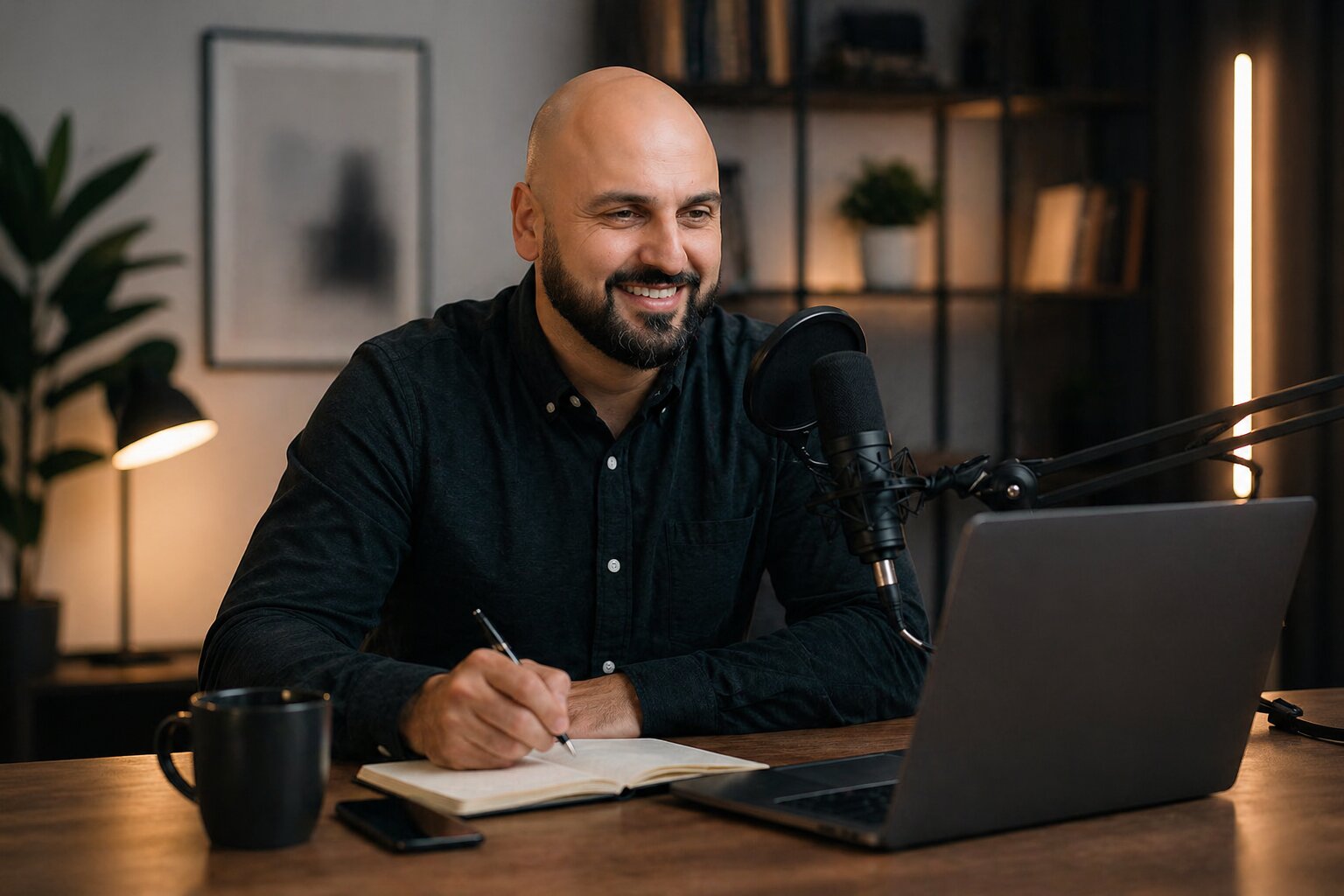
The sentence "every company is a media company" describes one thing. The founder running a personal media operation is a different thing. People conflate them. They are not the same architecture. The company that builds only one is leaving the larger return on the table.
The corporate media operation is the company showing up where customer attention lives. Stripe Press does it. Andreessen Horowitz built a launch service for portfolio companies for the same reason. Deloitte and KPMG run dozens of podcasts because they figured out the customer is no longer in the magazine.
The mechanism is occupation. The company shows up where the customer base spends most of its waking life. Doing the corporate layer well is necessary. It is not enough.
The personal media operation is something else entirely. It is a founder building narrative infrastructure for the people who decide the company's future. The audience is not the customer base. The audience is the small group of stakeholders whose confidence in the founder determines what the company is worth.
The Founder Layer Is Where the Compounding Happens
A founder building a personal media operation is doing different work from a company producing content. The founder is engineering narrative for the stakeholders deciding the company's future. Investors. Acquirers. Senior talent. Customers paying a premium. Partners offering the warm intro.
Each is a separate audience, all of them buying a story about the founder before they buy anything else.
A 2025 Journal of Management Studies analysis covered 320 S&P 1500 CEOs. Posting volume from the CEO predicted social media authority more than any other variable. Not company tenure. Not industry. Not content uniqueness. Volume from the named human at the top. Audiences do not form parasocial relationships with trademarks. They form them with humans.
I have watched this play out with founders I work with directly. Warren Phillips runs NonToxicDad. His hook is "this product is canceled." He grew the account to over 1 million followers and 30 million monthly views. He built it by occupying the plane where his audience already lived. The product business grew underneath.
The mechanism is not magic. I co-created ROAC (Return on Attention Created) to map how attention turns into business outcomes. Four gates: Register (they notice you), Retention (they stick around), Resonate (they care about what you said), Reinforce (they build a lasting relationship).
The fourth gate is where repeated exposure to a founder shifts a stakeholder's brain. Active evaluation gives way to default trust. That shift is the asset. It compresses sales cycles and raises the premiums a founder commands. It does not happen for a logo. It happens for a face.
Founders Are Realizing This Is Narrative Infrastructure, Not Virality
The founders crossing into personal media in 2026 are not chasing fame. They figured out their visibility shapes how every consequential decision around the company gets made. Sam Altman did not buy TBPN to become a celebrity. He bought a format that lets him transmit a worldview. Alex Hormozi sells $0.99 books that sold 2.9 million copies in 24 hours. The book is not the product. The trust is.
A company sells a product. A founder sells a vision. The vision does not get told once. It gets transmitted continuously, across formats, by the human at the top, on purpose. That is what narrative infrastructure means. Not a viral thread. Not a podcast that fills a calendar.
A coherent, repeating signal across every place the people deciding the company's future are listening. I describe this architecture in GURU, INC. as the personal media company, built around the founder as the central node.
Founders crossing into this are not building a personal brand for the sake of one. They are building personal brand authority, the infrastructure that compounds their influence over the organization.
The Hump Most Founders Have to Get Over
The hard part is psychological, not strategic. Most founders intellectually understand the case for personal media. They resist anyway. Some call it humility. Some call it being too busy. Some say public visibility is beneath the work. None of those is the real reason. The real reason is fear of being seen, looking foolish, or saying something they cannot take back.
I named this pattern V.O.L.T, the Virus of Limited Thinking. It frames silence as safety. In the old reality, silence was safety. In the new one, silence is the cost.
Crossing the hump is the entire reason this is a good thing for the people who do it. Most founders running real businesses, with real expertise, on real revenue, will never cross. The market is going to reprice the ones who do. The hump is real. The gain on the other side is exponential. The founders who cross will compound. The ones who do not will keep wondering, in five years, where the leverage went.
FAQ
What is the difference between corporate media and a founder's personal media?
Corporate media is the company occupying the digital plane where customers, talent, and partners spend their attention. Founder personal media is the human at the top building narrative for the stakeholders deciding the company's future. The two layers serve different audiences and run in parallel, not in sequence.
Does my company really need to start a podcast?
The format does not matter. The two layers do. The company needs to occupy the digital plane where customer attention lives. The founder needs to transmit a worldview directly to the stakeholders deciding the company's future. A podcast can serve either layer, both, or neither.
How is AI changing the way customers find businesses?
AI retrieval systems like ChatGPT and Perplexity now sit between customers and the open web. They cite founders who built structured presence in the digital plane. Companies absent from that index lose visibility in a layer most marketing teams never measured.
What is a personal media company?
A personal media company is a vertically integrated content, distribution, and monetization system. It is built around a named individual, not a corporate brand. I describe the full five-component architecture in GURU, INC.
What is the hump founders have to get over?
The hump is psychological, not strategic. Founders intellectually understand the case for personal media. They resist out of fear of being seen, looking foolish, or saying something they cannot take back. I name this pattern V.O.L.T. The founders who cross compound their influence. The ones who do not pay for silence on every transaction