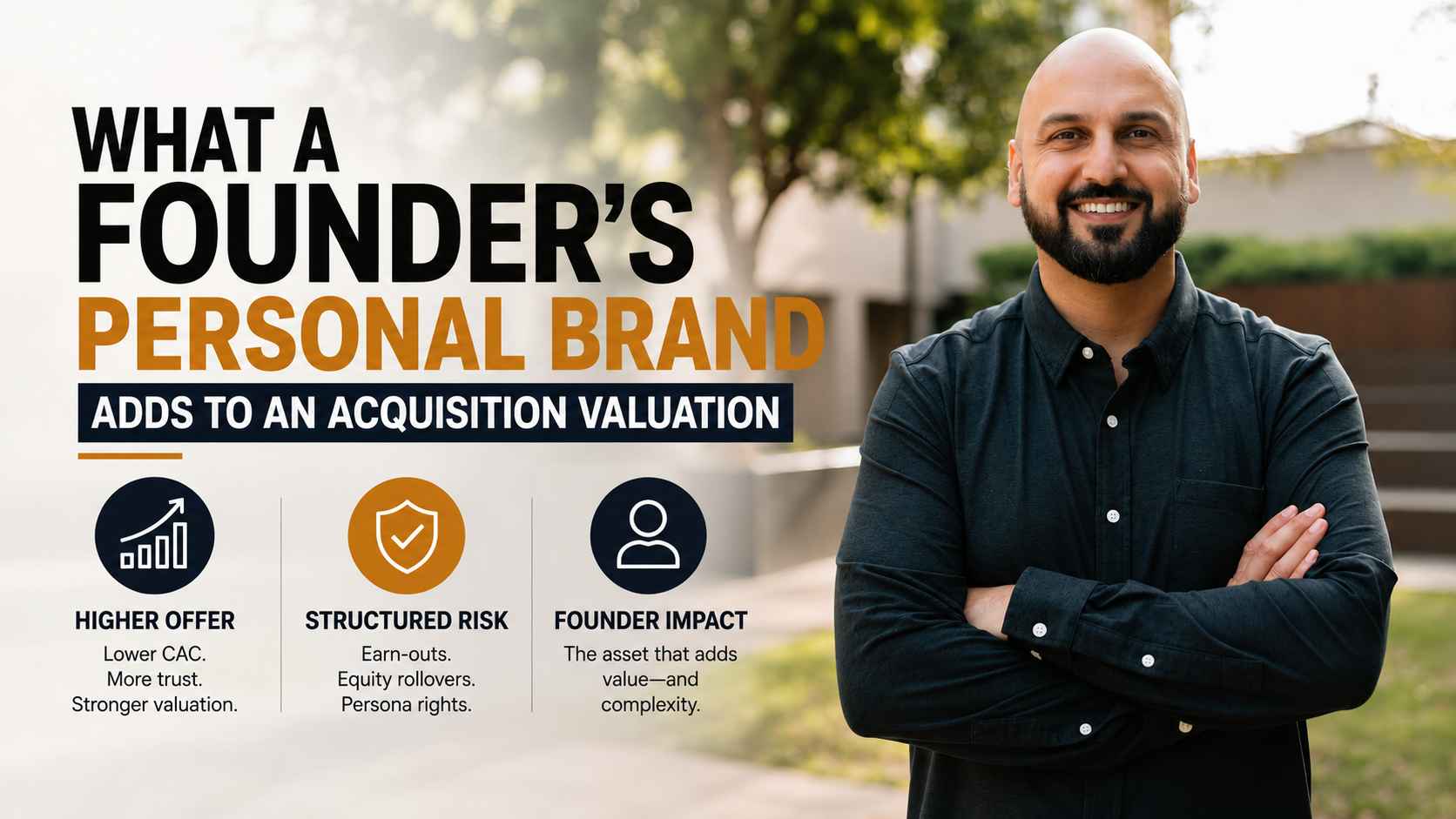

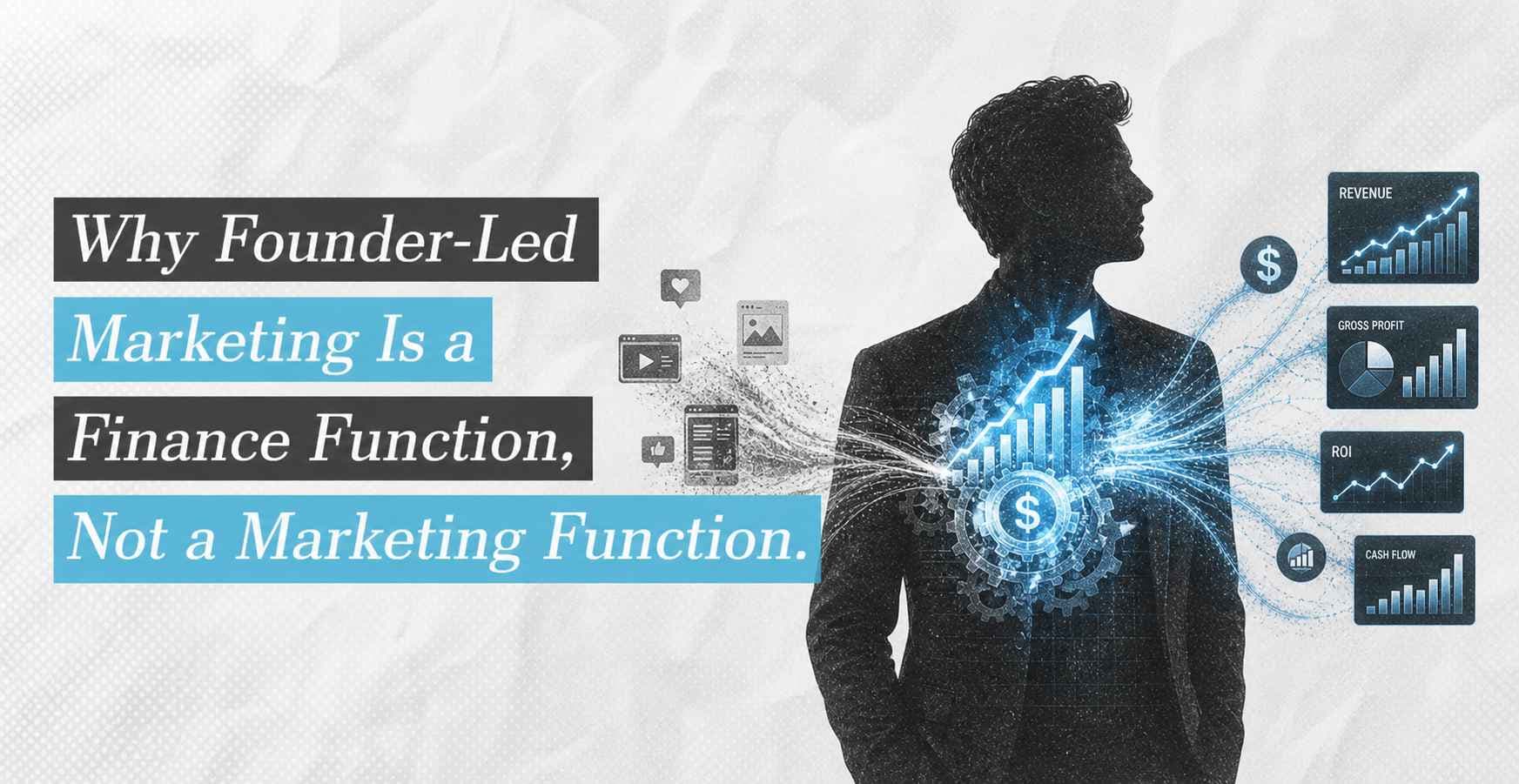
Bain tracked 3.1x outperformance for founder-led firms over 15 years. AJ Kumar argues founder visibility changes access to capital, talent, and exits. It belongs in the financial model, not the content calendar.
Key Takeaways
Bain research found Fortune 500 founder-led companies outperformed peers by 3.1 times over 15 years through business insurgency and owner mindset
A 2023 Oxford study of 21,000 founder-led companies found founder personality predicted startup success five times more than industry sector
A PNAS study predicted founder Big Five personality traits from tweets with 82.5 percent accuracy across 21,000 US tech founders
Conscientious founders raised approximately $170,000 more in first round funding but were 15 percent less likely to exit
A single LinkedIn video from co-founder Jake Karls generated a $10 million venture round for Mid-Day Squares from Siddhi Capital
Founder visibility produces returns across four stakeholder groups: funding, hiring, enterprise trust, and valuation narrative
What Boards Already Sense About Founder Visibility

Boards have started pushing founders toward public visibility. Most do it without naming the asset. The board member who says "you need a brand" is sensing something the marketing dashboard cannot show. Stakeholders price the company partially on the founder long before any spreadsheet arrives.
The instinct is correct. The classification is wrong. Treating founder content as a marketing line item misreads what it produces. Marketing produces leads. Founder visibility produces capital, talent, and deal terms. That is not a content function. That is a finance function.
This post starts where boards already sense the gap and walks into the math behind it. The data is unambiguous. The conclusion has been hiding inside the wrong department.
Founder-Led Companies Outperform 3.1x for a Reason
Bain and Company tracked all public companies in global stock markets over 25 years. Founder-led companies in the Fortune 500 outperformed peers by 3.1 times over 15 years. Chris Zook at Bain identified three traits behind the gap: business insurgency, front line obsession, and an owner mindset.
These traits also produce visibility. The founders who maintain insurgent positioning broadcast it through every public surface. Chris Walker at Passetto built a multi-million dollar business through LinkedIn content and podcast distribution. Adam Robinson scaled to $4 million in ARR through LinkedIn posts in 40 weeks. The visibility was not the marketing strategy. It was the financial byproduct of how these founders think and communicate.
I have watched this play out for more than 20 years across the founders I have worked with. The ones who built public presence raised faster. They closed bigger deals. They hired better talent. The silent ones did not. The visibility was not what created the financial outcome. The conviction visibility revealed was what created it.
The Four Financial Outcomes a Marketing Dashboard Cannot Capture
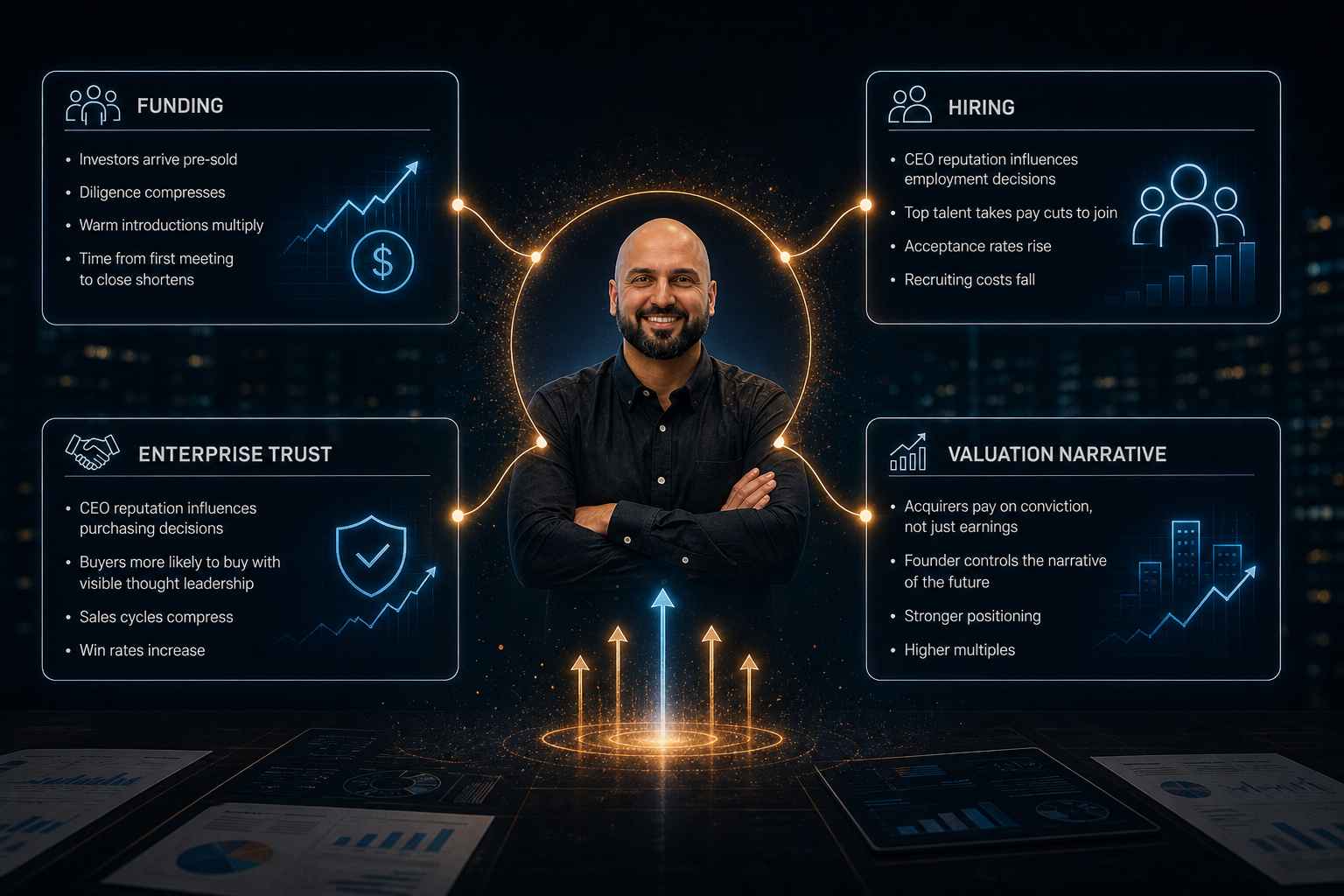
Founder visibility produces returns across four distinct stakeholder groups. Each operates on its own timeline. None show up cleanly in marketing analytics. All of them show up on the balance sheet.
Funding. Investors who have followed a founder's thinking for months arrive at the term sheet pre-sold. Diligence compresses. Warm introductions multiply. Time from first meeting to close shortens.
Hiring. APCO Worldwide's 2026 survey of over 1,000 Americans found 74 percent say CEO reputation influences their employment decisions. Senior talent who have read the founder for a year takes a pay cut to join. Acceptance rates rise. Recruiting costs fall.
Enterprise trust. APCO found 79 percent of Americans say CEO reputation influences purchasing decisions. In B2B, 80 percent of decision makers are more likely to buy when executives demonstrate visible thought leadership. Sales cycles compress when the buyer already trusts the founder.
Valuation narrative. Acquirers and public markets pay multiples on conviction, not only earnings. The founder whose thesis is publicly documented controls how the future of the company gets framed.
A marketing dashboard tracks none of these directly. Each shows up under a different leader, on a different timeline, in a different report. The pattern is invisible until you treat the founder's public presence as the upstream variable.
Why Personality Predicts Funding 5x More Than Industry
A 2023 study published in Nature Scientific Reports analyzed over 21,000 founders across 215 countries. Founder personality predicted startup success five times more than the industry the company operated in. It also predicted success two times more than the age of the company.
A separate 2023 study in PNAS analyzed 12 million tweets from 10,541 US tech founders. Researchers predicted Big Five personality traits from content with 82.5 percent accuracy. Higher openness to experience correlated with better outcomes across every measure. Higher neuroticism correlated with worse outcomes across the same measures.
The variable that mattered most was not what the company built. It was the behavioral signature of the person building it. Content broadcasts personality. Stakeholders read the signal and price the company accordingly. The peer-reviewed evidence makes a quiet point loudly. When you publish, you are not promoting the company. You are revealing how you think. And how you think is what gets priced as authority.
The Conscientiousness Paradox
The same PNAS study revealed a counterintuitive finding inside the data. Conscientious founders raised approximately $170,000 more in first round funding. The same trait correlated with 15 percent lower likelihood of an exit. Founders higher in neuroticism raised approximately $90,000 less and had 16 percent lower odds of an IPO or acquisition.
The discipline that gets a founder funded does not create the conditions that get a founder free. The conscientious operator runs a clean process, hits the metrics, and reports cleanly. None of that produces the emotional momentum acquirers and public markets pay multiples for.
This is the gap boards sense when they push founders toward visibility. The founder runs a strong business. The financials look healthy. The exit narrative refuses to form because the founder is not building one publicly. Storytelling and operating draw on different muscles. Founders who learn to do both build a personal media company on top of a real one.
How Mid-Day Squares Generated $10 Million From One Video
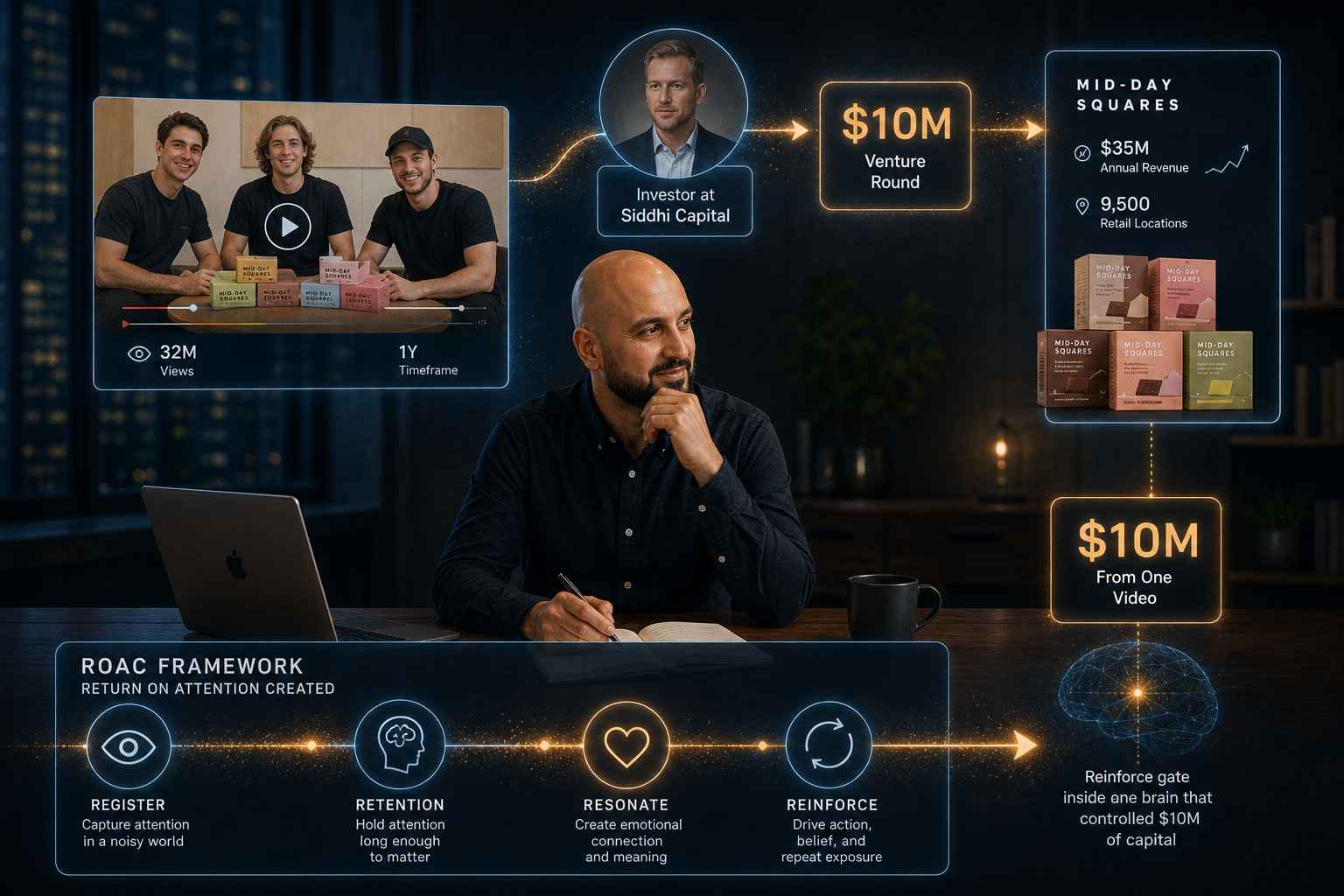
Mid-Day Squares grew to $35 million in annual revenue across 9,500 retail locations. The three co-founders built the business through behind-the-scenes content across social platforms. They generated 32 million views in a single year while running a real food brand.
A member of Siddhi Capital saw a LinkedIn video posted by co-founder Jake Karls. That single video led to a $10 million venture round. One piece of content. One investor. Eight figures of capital.
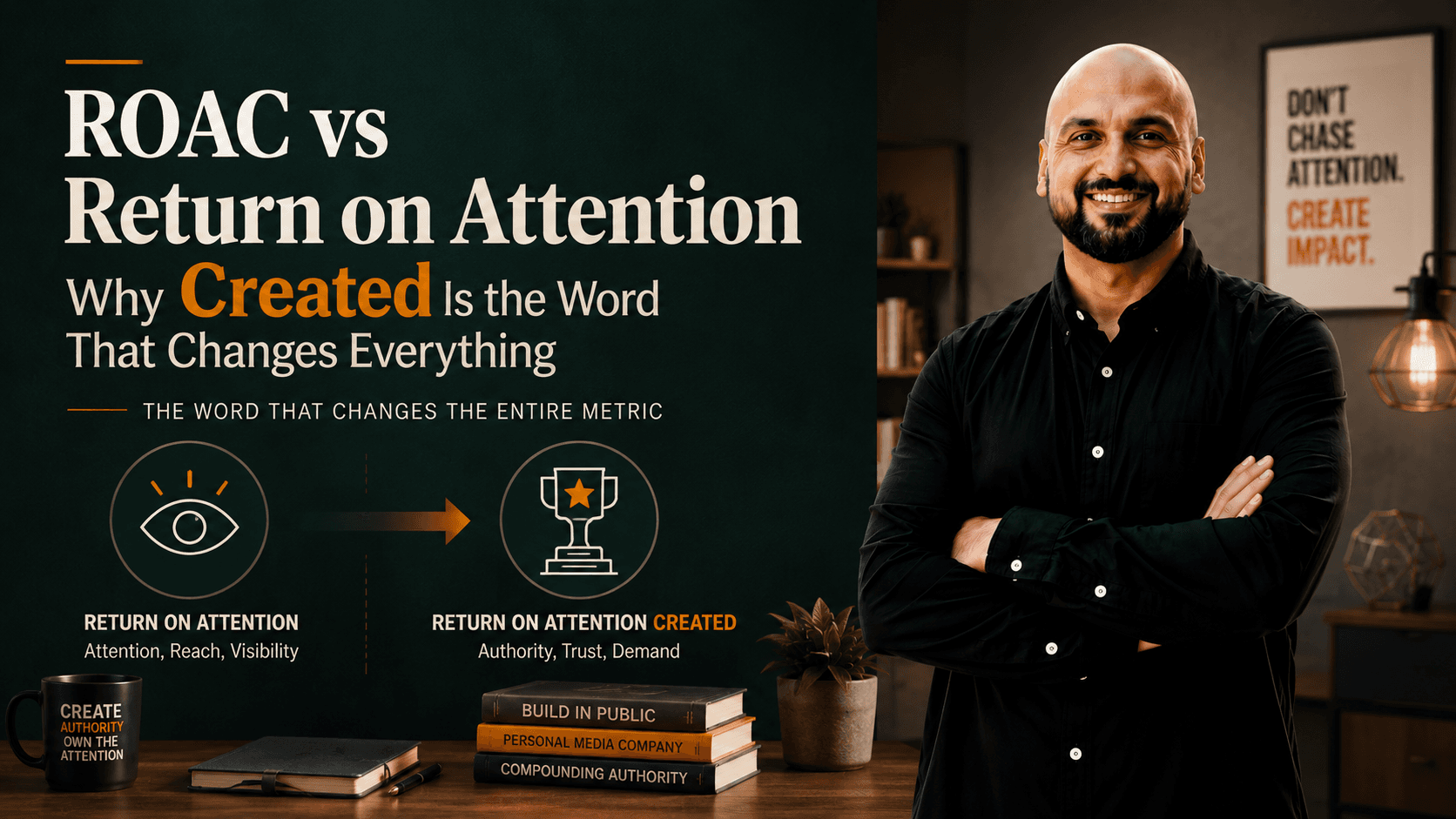
This is not a one-off anomaly. It is the mechanism the personality research predicts. Years ago I co-created a framework called ROAC, or Return on Attention Created. It maps how attention moves through four neurological gates: Register, Retention, Resonate, and Reinforce.
The Mid-Day Squares video did not trend in the creator-economy sense. It went all the way through the Reinforce gate inside the one brain that controlled $10 million of capital. That is the return model boards keep missing when they classify founder content as marketing.
Why Silence Is the Most Expensive Line in Your Model
Silence is not neutral. The absence of a public presence is a signal stakeholders interpret in the absence of better data. When a fundraise begins, the silent founder forces investors to construct the narrative themselves. When a senior candidate evaluates an offer, the silent founder loses. The visible founder is already familiar. When a crisis arrives, the silent founder has no trust reservoir to draw from.
I see one belief pattern across founders who underrate visibility. I call it V.O.L.T., or the Virus of Limited Thinking. It is the belief that putting yourself out there is somehow beneath the work. The founders running real businesses with real revenue often hold this belief most strongly. It feels like humility. It is a liability on the balance sheet. The PNAS research links the same psychological signal to lower funding, fewer investors, and lower exit odds.
The cost of silence does not show up as an expense line. It shows up as the deal you did not get. The talent you could not hire. The multiple you could not justify. They sit invisibly until you compare two founders with identical companies. Then one outperforms the other on every dimension that matters.
Treat Founder Visibility Like a Capital Allocation Decision
Founder-led marketing is a finance function because founder visibility is a finance variable. It moves the same numbers a CFO already tracks. Cost of capital. Cost of talent. Cost of acquiring the next enterprise customer. Multiple at exit. None of those line items are downstream of a content calendar. All of them are downstream of how the founder shows up in public.
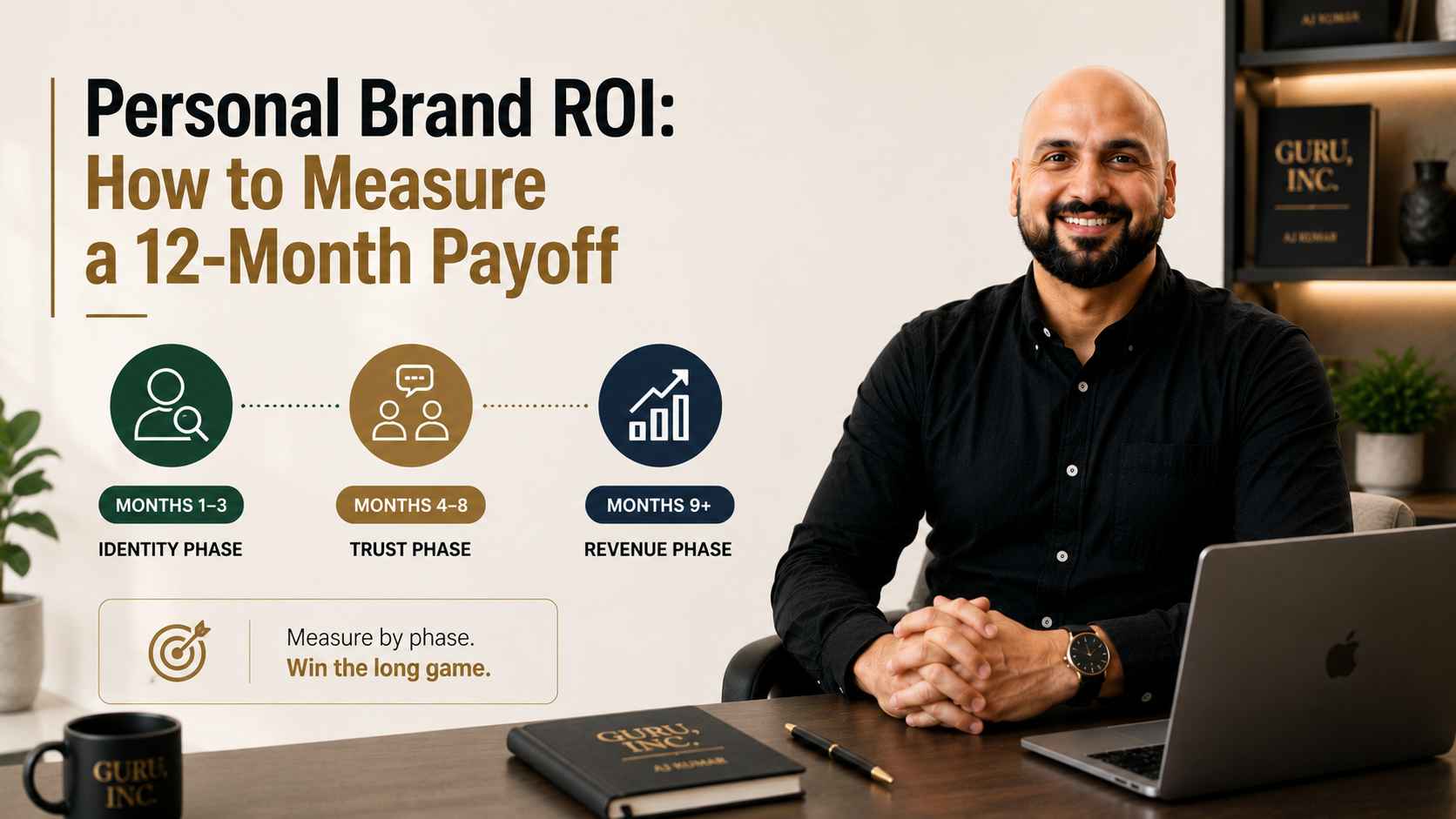
Treating it as a finance function changes what gets measured. Time from first investor meeting to close. Offer acceptance rate at the senior level. Sales cycle length when the buyer has consumed the founder's thinking. Branded search trajectory over rolling 90-day periods. These are the metrics that connect to the line items boards already care about.
The mechanism is not a media strategy. It is a capital allocation decision about who controls the company's creator economics. The founder produces the asset by showing up. The board protects the asset by treating it that way. Every founder who is silent is funding a competitor's narrative by default.
Frequently Asked Questions
Is founder-led marketing the same as personal branding?
Founder-led marketing and personal branding overlap on the surface but have different return models. Personal branding builds the individual. Founder-led marketing builds the company through the founder, with returns flowing through funding, hiring, enterprise trust, and valuation.
How much time does effective founder-led marketing require?
Most founders running a real business produce useful content with five to ten hours per month when systematized. Volume matters more than polish. A founder who publishes consistently outperforms one who crafts a single perfect post per quarter.
Does founder-led marketing work for B2B companies?
Yes. B2B environments produce the strongest results because purchase decisions involve multiple stakeholders and long evaluation cycles. APCO's 2026 survey found 79 percent of Americans say CEO reputation influences purchasing decisions. The B2B effect tends to be stronger.
Can introverted founders succeed at founder-led marketing?
Yes. The Oxford research found openness to experience predicted success more consistently than extraversion. Introverts who share original thinking through long-form formats build authority without performing extroversion. The data does not reward volume of personality. It rewards volume of presence.
What platforms work best for founder-led marketing?
LinkedIn dominates B2B because senior buyers and investors evaluate leadership presence there. X serves founders targeting tech, AI, and venture capital audiences. Podcasts function as long-form trust builders. The right platform depends on where the highest-value stakeholders spend attention.
How should boards measure founder visibility ROI?
Boards should measure across four outcomes: funding velocity, hiring efficiency, enterprise deal acceleration, and valuation narrative strength. Track branded search growth, inbound deal quality, offer acceptance rates, and pipeline velocity for warm versus cold leads. These connect founder visibility to financial line items.