
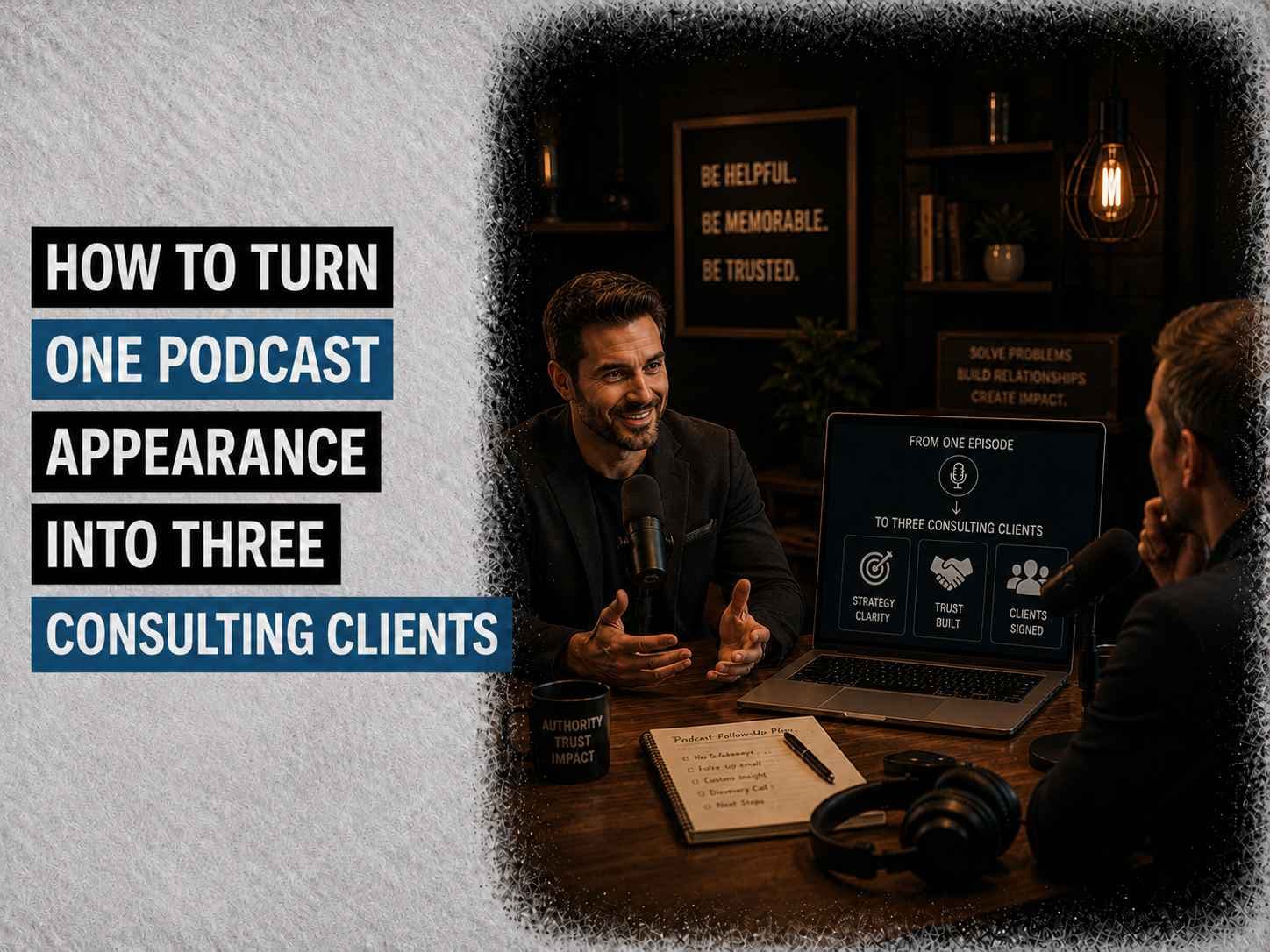
The post applies Joel Osteen's one-show production model to a guest appearance, names the three pathways most consultants miss (live listener, evergreen searcher, host as buyer), and explains why the multiplier is built before the recording starts, not after. Most founders blame the channel when only one of three mechanisms ever fires.
Key Takeaways
B2B decision-makers consume podcasts at high rates: 75% listen, 51% daily, 83% of senior executives weekly (Content Allies, 2026).
Podcast leads convert 45% better than other content channels and shorten sales cycles by 18% (Content Allies industry research, 2026).
One appearance produces three different clients: the live listener, the evergreen searcher, and the host.
The right call to action is a named framework that travels with the listener, not a generic lead magnet.
The episode keeps converting for 18 months minimum if titled, transcribed, and clipped correctly.
80% of B2B podcasts get abandoned within 12 months because the multiplier mechanism was never built (B2B podcasting industry analysis, 2026).
One Podcast Appearance Is Not One Marketing Asset
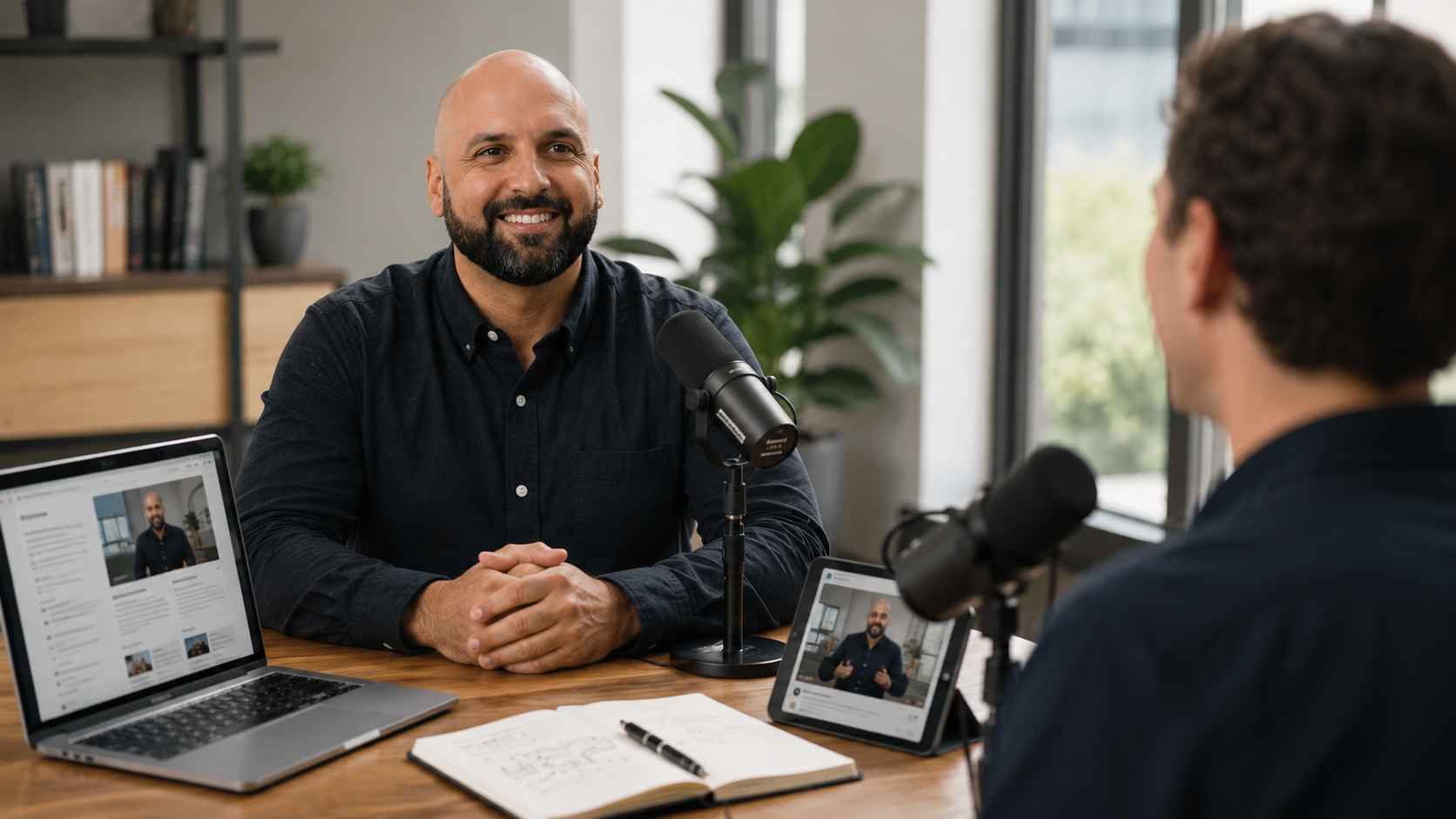
Most founders treat a guest spot the way they treat a tweet. One shot, one publish, one audience, one hope it lands. They prep for forty-five minutes the morning of. They show up. They speak. They thank the host. They wait for clients.
Nothing comes. The episode goes live. They check the download number. They check their inbox. The inbox is empty. They conclude that podcasts do not work, or that the show was too small, or that podcasting is a fad. None of that is the problem. The problem is that they treated a multiplier event like a single broadcast.
One appearance is intellectual property. It can run in three different rooms simultaneously for the next eighteen months. The recording itself is only the first room. The other two are larger, slower, and more compounding than the first one. Founders who only get clients from the live broadcast are leaving the other two empty.
Joel Osteen Performs One Show. Treat Your Appearance the Same Way.
Osteen delivers a single 30-minute sermon to a 45,000-person venue. He rehearses for five days before he steps onto the stage. He performs once. After that performance ends, the sermon multiplies. It becomes a televised broadcast. It becomes a podcast.
It becomes a YouTube video. It becomes Sunday clips, Monday quote graphics, Wednesday devotionals, Friday social posts. The result is what I call Joel Osteen's one-show content system: one performance, one rehearsal cycle, indefinite multiplication.
You are not making a guest appearance. You are performing a one-show system. The forty-five minutes of recording is the performance. The five days of preparation are what separate the founders who get clients from the founders who get exposure.
Most founders skip the rehearsal because they assume the conversation will carry them. It will not. A loose conversation produces loose content. A rehearsed conversation produces clippable, quotable, transcribable, citable content. The first kind decays. The second kind compounds.
One Appearance Produces Three Different Clients
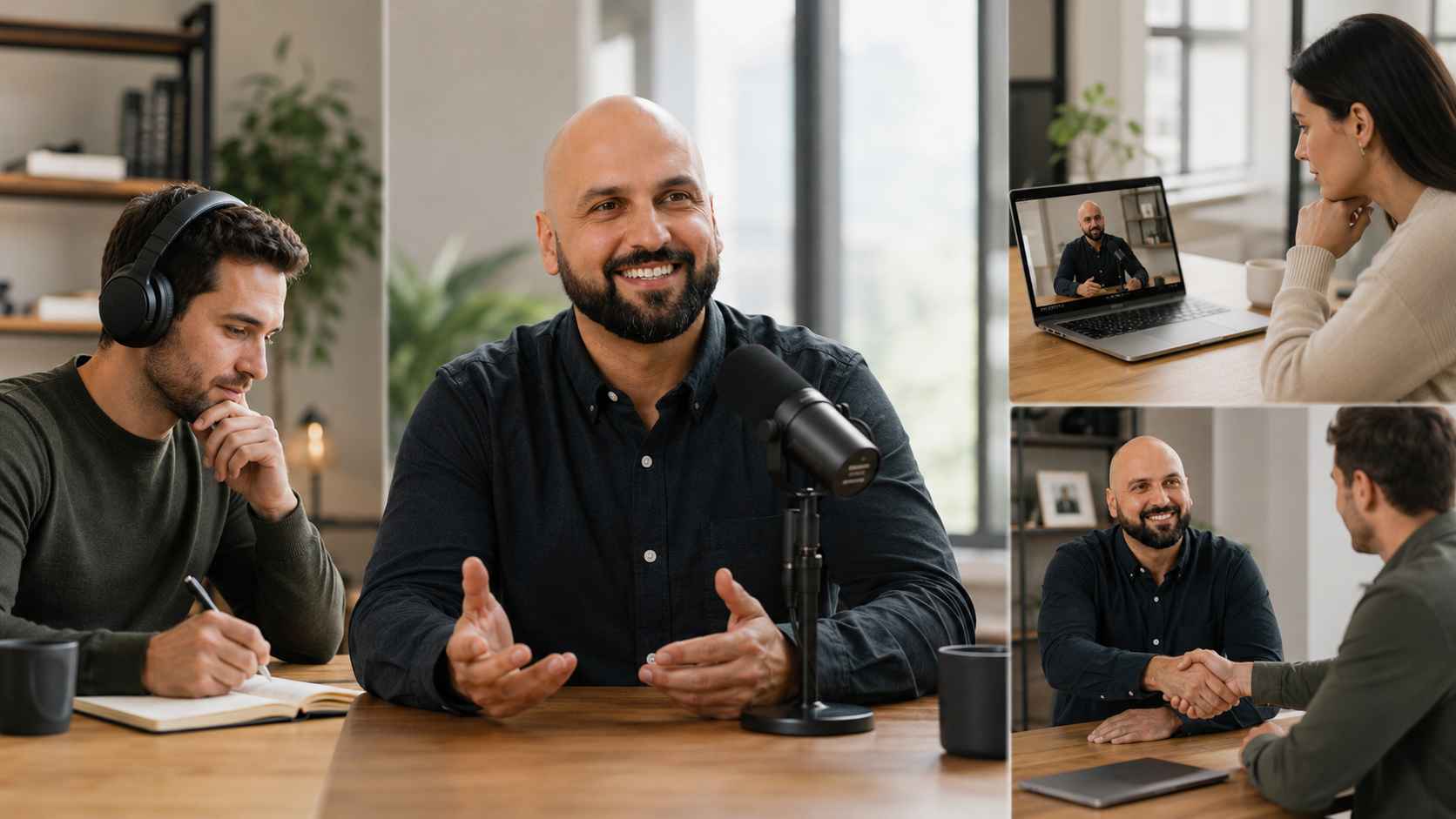
This is what most podcast guesting advice misses. The standard playbook treats every listener as the same prospect, moving through the same funnel, on the same timeline. That model is wrong. One appearance sits in front of three completely different people, each one converting through a completely different mechanism. The mechanics are not interchangeable. You either build for all three or you collect from one and lose the other two.
The first is the live listener, the person hearing the episode within the first thirty days of release. They convert because something you said gave them a tool they did not have an hour earlier. The second is the evergreen searcher. They find the episode six, twelve, or eighteen months later through search, YouTube, or AI citation.
They convert because your name kept appearing when they investigated their problem. The third is the host, or someone in the host's network. They watch you perform in real time. They conclude you are the person to hire for the next problem they have. Three different rooms. Three different mechanisms. GURU, INC. is built around multiplication math like this.
The Live Listener Wants a Named Framework, Not a Lead Magnet
Most consulting marketers will tell you to end with a free template, a download link, or a discovery call. That advice is wrong for the live listener. Templates land in inboxes. They sit unread. They get filed under "I will look at this later" and never reopened. A named framework is different.
A named framework is a portable piece of intellectual property. The listener carries it away in their head. They refer to it in conversations. They bring it up the next time they hire for the problem you solve. A named framework travels with the listener. A lead magnet sits in their inbox unread.
Content Allies' B2B podcast research puts the lift at 45 percent over other content channels. The same dataset shows prospects who consumed podcast content close 18 percent faster. The audience is not getting cleaner data. They are getting a named mental model that earns trust the way templates never can.
The Evergreen Searcher Finds You After You Have Forgotten the Episode
A podcast episode is not a tweet. It does not expire when the algorithm moves on. The audio file lives on Apple, Spotify, YouTube, and the host's website. The transcript indexes in Google. The YouTube video gets surfaced by the YouTube recommendation engine.
AI systems like ChatGPT and Perplexity pull from the transcript when someone asks a question your episode answered. Edison Research projects the global podcast audience will reach 619.2 million listeners in 2026. That is the size of the room your episode keeps walking back into.
The episode keeps selling after you have forgotten you recorded it. A founder who titles the episode with the wrong words gets cut off from this pathway. So does the one who lets the host write a generic description. So does the one who never publishes the transcript or produces clips for YouTube.
They get the live listener and nothing else. The founders who set the episode up correctly get the authority signals that compound across Google, YouTube, and AI for years.
The Host Is the Third Client Hiding in Plain Sight
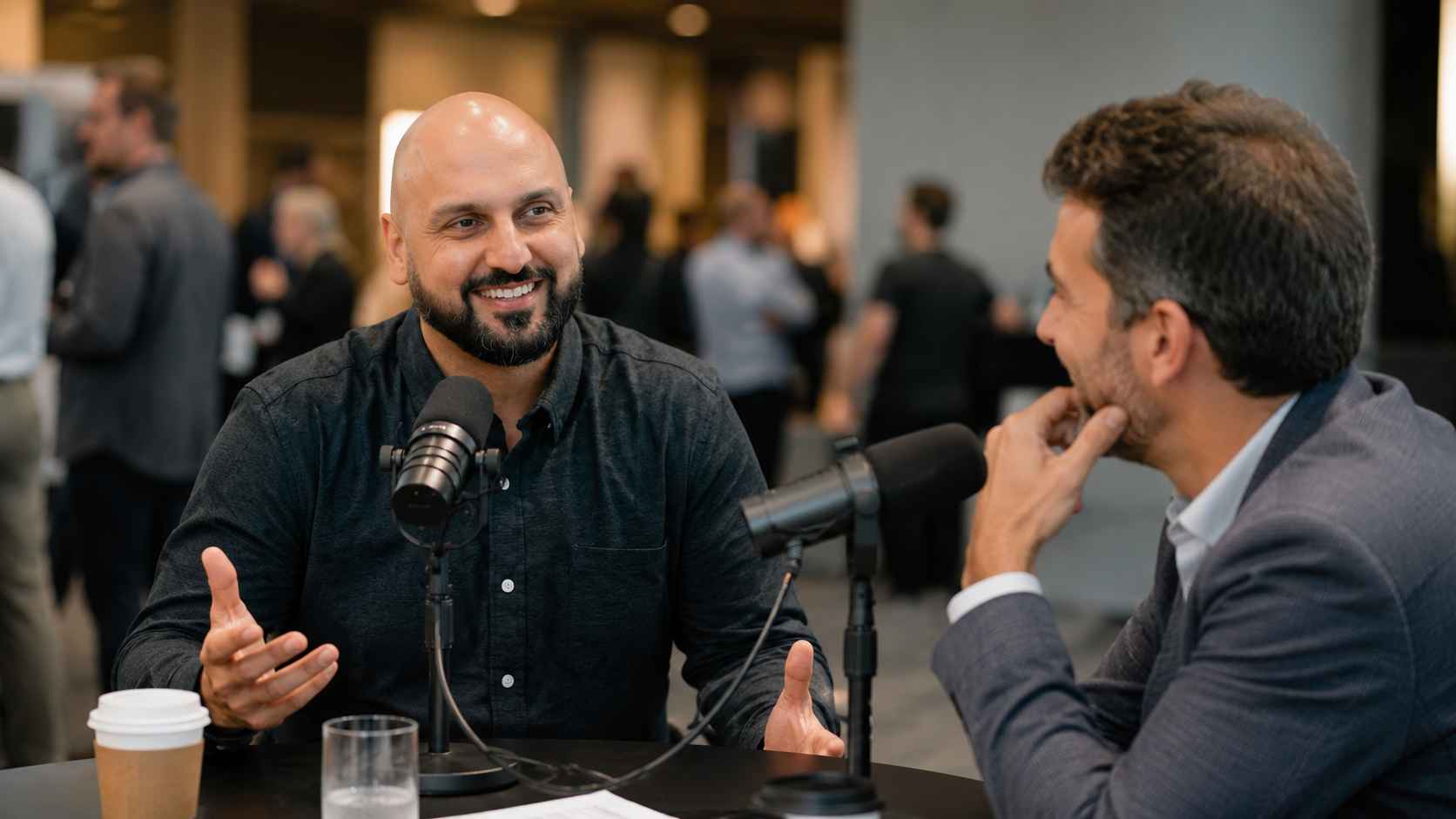
Most guests treat the host as the gatekeeper to the audience. The host is the gateway. The audience is the prize. That ranking is upside down. The host is the only person in the room watching you perform live, in close range, with full attention. For forty-five minutes.
The host is also a founder, an operator, a buyer, and a connector with their own network of decision-makers. The host is the highest-leverage relationship in the entire appearance. Most guests waste it by treating the host like a prop.
I learned this watching what happened when I helped Non-Toxic Dad launch his podcast. Warren had 1 million followers and 30 million monthly views. We brought a portable studio to health and wellness events and recorded 20 to 40 conversations across a few days.
The clips traveled, the audience grew, and the authority compounded. What looked like a podcast was a personal media company producing dozens of trust deposits per event.
The host is not a step toward the buyer. Sometimes the host is the buyer.
Most Founders Get Zero Clients Because They Skip the Multiplier
The data is brutal here. Industry research on B2B podcasting shows 80 percent get abandoned within twelve months. They never produced measurable ROI. That number is not a comment on the channel. It is a comment on the operators. Founders who treat one appearance as one asset get the live listener and nothing else.
They never set up the episode for the evergreen searcher. They never invest in the host as a peer prospect. They never build the system that turns each appearance into a compounding asset in the larger game.
Three failure modes account for almost all of it. Failure one: no named framework, so the live listener walks away with nothing portable. Failure two: a generic episode title and no transcript, so the evergreen searcher never finds it. Failure three: a forgettable host relationship, so the third client never materializes. Skip any one of the three and you cut your conversion by a third. Skip all three and you join the 80 percent.
The Multiplier Is Built Before You Hit Record
Three things must exist before the recording starts. First, a named framework, the portable piece of IP the live listener carries away. Not a tip. Not a checklist. A specific named idea with a clear shape. Second, a destination, the page where the framework lives in full.
The evergreen searcher who lands there months from now should not bounce off a dead end. Third, a plan for the host. List the specific value moments you intend to deliver to them inside the conversation, not only to the audience.
Those three exist or the appearance fails. They cost you a week of preparation. That week is the rehearsal cycle that turns a guest spot into a one-show system. The founders who run the creator economics math realize that one prepared appearance beats ten unprepared ones. The conversations that route into the kind of consulting work that arrives pre-trusted are built before the microphone turns on.
Frequently Asked Questions
How many podcast appearances should a founder do per month?
Most established consultants who get serious results book between 4 and 10 appearances per month. The right number depends on how strong your multiplier system is. One well-built appearance with full multiplication beats five rushed ones with none.
How long does it take to get a client from a podcast appearance?
The live listener client tends to surface within 30 days of the episode dropping. The evergreen searcher arrives 6 to 18 months later. The host relationship can produce a client at any point, sometimes within a week, sometimes after a second appearance.
What is the best call to action for a podcast guest?
Direct the listener to a named framework on a specific page, not a generic discovery call or lead magnet. Frameworks travel with the listener in their head. Discovery call links sit untouched.
Should I start my own podcast or guest on others?
Guesting builds authority faster and costs less than hosting. Your own show makes sense once you have ten guest appearances under your belt. By then you know what conversations move the needle.
How do I track which appearances are working?
Add a unique destination URL or framework reference per appearance. Watch which ones produce direct traffic, organic search visits, and inbound conversations. The three pathways have three different signals, so track all three rather than only first-touch attribution.