
AJ Kumar maps the system in this analysis, drawing from more than 20 years building authority brands at The Limitless Company and the thesis behind GURU, INC. The audience feels free. The system shapes what they see.
Key Takeaways
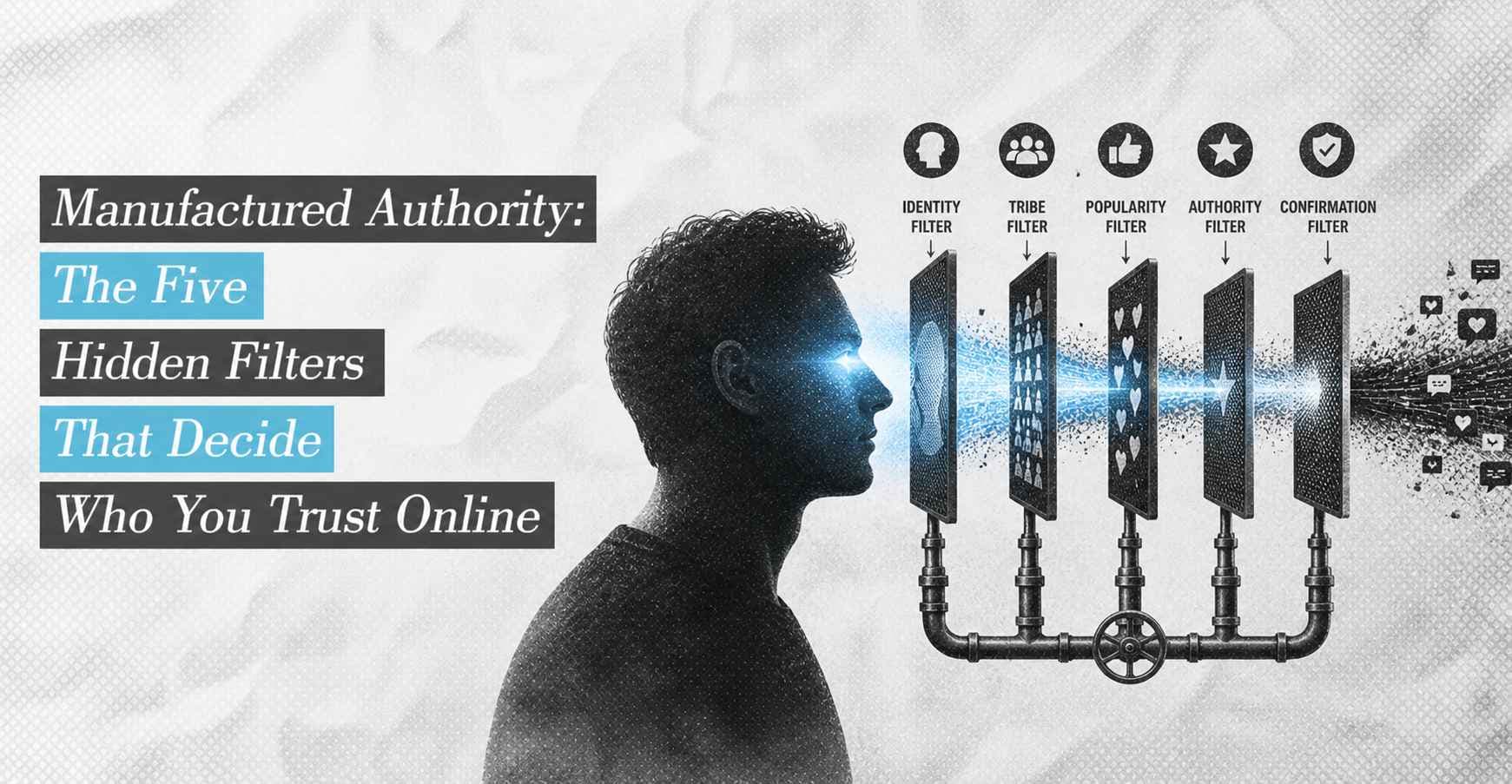
Trust online is built through five filters, not earned through expertise: the algorithm, the aesthetic, the parasocial proxy, the mob, and the tribe.
The algorithm replaced corporate ownership as the gatekeeper. Meta, ByteDance, and Google decide who gets seen before merit enters the room.
Production polish became the new licensing authority. Founders without aesthetic polish read as fake before opening their mouths.
Familiarity replaced expertise as the trust signal. The audience trusts who they recognize, not who is right.
Coordinated reporting, demonetization, and brigading make telling the truth expensive. The cost is the discipline.
Personal media company ownership beats every filter. Build the system instead of renting it.
Trust Stopped Requiring Time
Trust used to be earned through years of repeated work. Skin in the game. Mistakes survived. Promises kept. People watched you do the thing for long enough to believe you could do it.
Now trust gets extended in seconds. Audiences scroll past hundreds of creators a day. They believe the ones they recognize. The ones who look polished. The ones who say what their tribe agrees with. The trust feels real. The audience feels free. They are picking who to follow, who to learn from, who to send money to.
That feeling is the trick.
I have spent more than 20 years building authority brands for founders. I watched the same pattern repeat across hundreds of clients. Real experts who could not get seen. Polished operators with thin substance who became reference points.
The market was not picking the best work. It was picking what the system surfaced. The system runs on five filters. Most founders never name them, so they spend years trying to win a game whose rules they cannot see.
The Algorithm Decides Who You Ever Meet
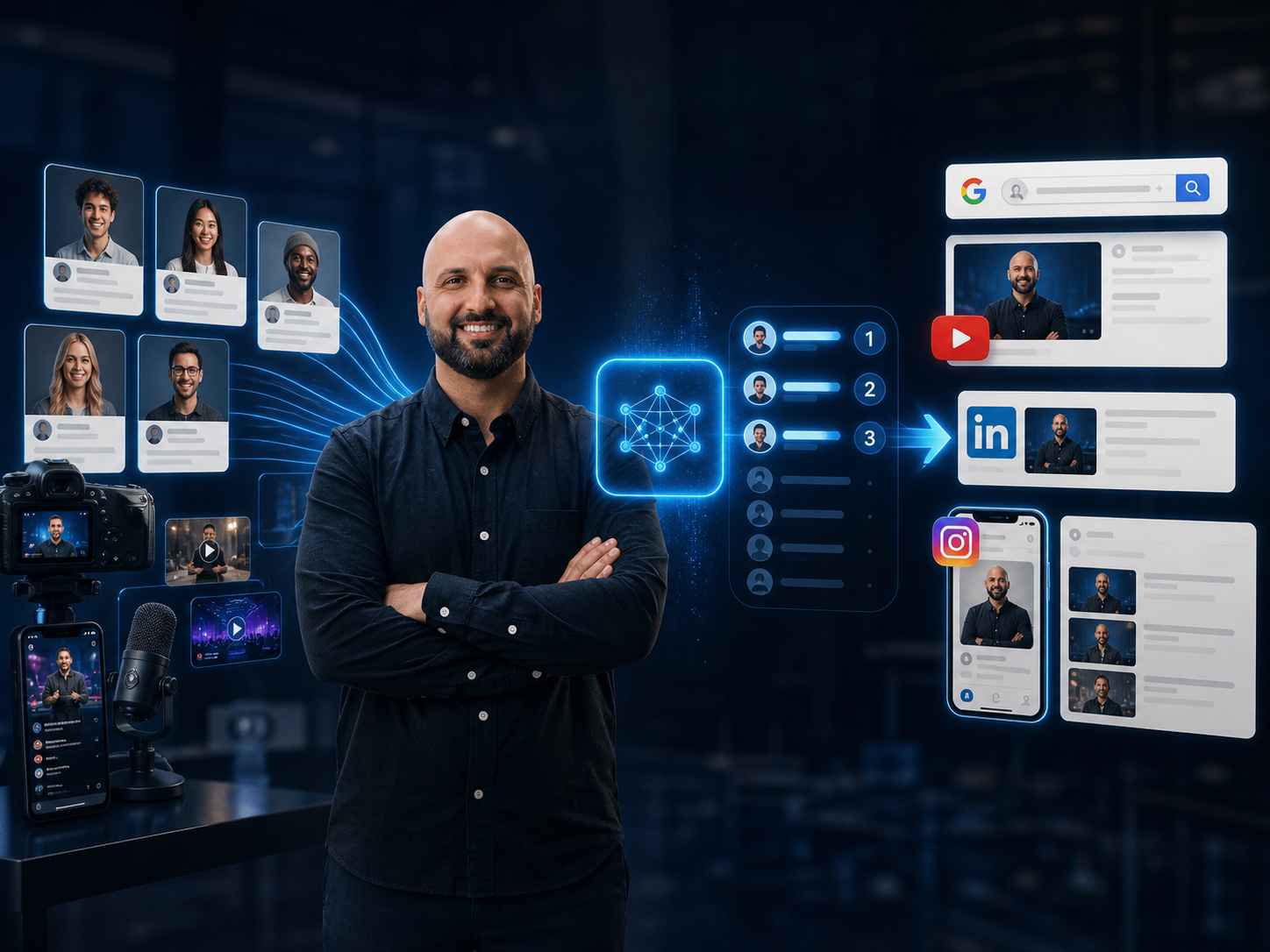
The first filter is no longer corporate ownership of TV networks. It is the recommendation engine.
Meta, ByteDance, and Google decide which creators are even eligible to enter your awareness. Their algorithms reward specific signals: watch time, completion rate, comment density, share velocity. Creators who optimize for those signals survive. Creators who do not, vanish, no matter how strong their work is.
This is not a content quality filter. It is an engagement filter. A creator with deeper expertise but lower watch-time loses to a creator with shallower work and stronger pacing. The algorithm is not neutral. It is the editor of every feed. Its editorial standard is "what keeps people scrolling," not "what is true."
That standard creates a structural distortion. The operators who design content for the surface beat the operators who design content for the audience. I write about this across social media as a strategic game. Founders who think they are competing on substance are competing on signal compatibility.
The algorithm is not against you. It is optimized for retention, and your work passes through it before anyone evaluates the substance.
Aesthetic Polish Became the New Licensing Authority
Production quality replaced the printing press as the cost barrier.
Before the internet, you needed millions of dollars to start a national newspaper. The capital cost filtered out dissident voices. That cost dropped to zero. A new cost emerged: the visual production standard required to be taken seriously.
Camera quality, set design, b-roll, captions, color grading, thumbnails. The audience reads polish as proof. If you do not look like the other successful creators, you read as suspicious before you open your mouth.
Alex Hormozi understood this filter early. He sold $100M Money Models for $0.99 and moved 2.9 million copies in 24 hours, setting a Guinness World Record. The pricing was the polish. A $30 book priced under a dollar reframed Hormozi as someone who did not need the money. That is the highest aesthetic signal an authority can send.
That is the second filter at work. Polish became the new printing press: the cost of looking credible is what separates the surfaced from the buried. Founders without that polish are not unheard because their work is bad. They are unheard because they fail the visual licensing test before substance enters the conversation.
I cover this in the biology of brand building, because the brain processes aesthetic signals faster than verbal ones.
Familiarity Replaced Expertise as the Trust Signal
The audience trusts who they recognize, not who is right.
This is the most counterintuitive filter. Most founders refuse to accept it. The expert with twenty years of work and no platform has less authority than a recognizable five-year creator. Familiarity compounds in the brain deeper than expertise. Repeated exposure registers as trust.
Joel Osteen runs the cleanest version of this system I have studied. He delivers thirty-minute sermons to a 45,000-person venue after five days of rehearsal. That single piece of weekly content gets distributed across television, radio, podcasts, and social.
The audience sees Osteen everywhere. Familiarity compounds. The trust people extend to him is not the result of theological expertise. It is the result of his face being the most recognizable in his category.
The third filter rewards parasocial proximity over professional credibility. I map this in the difference between credentialed authority and recognized authority. Google and AI systems now use the same proxy: they cite who is cited often, not who is right.
The Mob Makes the Truth Too Expensive to Tell
Cancellation campaigns are the modern version of advertiser pressure.
In the old system, a corporation that disliked a story could pull ads, threaten lawsuits, or fund attack think tanks. That cost-imposition machine still exists. It has democratized. Coordinated mass reporting can demonetize a creator overnight.
A small group of antagonists can flood comments, brigade an account, or launch a campaign that costs months of recovery. The point is never to win the argument. The point is to make the truth expensive to keep telling.
I cover this across the darketing analysis, because the mob is not always wrong. Sometimes it catches a real fraud. But the mechanism does not distinguish between fraud and dissent. It only distinguishes between safe and costly.
The fourth filter is a discipline mechanism that quietly polices what gets said. Most creators internalize it before they feel it from outside. They self-censor. They round off the sharpest edges of their thinking. The audience never sees the filtered-out version. They see only the surviving one and call it the conversation.
Tribal Identity Decides Which Side You Stand On
Identity tribalism replaced anticommunism as the consensus enemy.
In 1988, the Cold War provided a single mobilizing ideology that unified what got marginalized as crazy. That structure fragmented. The replacement is not one consensus enemy but many. Whichever tribe you align with amplifies you inside that tribe.
Whichever tribe you refuse to pick treats you as suspicious. Founders who try to operate outside identity politics get attacked from every side, because every side reads neutrality as betrayal.
The fifth filter rewards tribal signaling over independent thought. The system extends amplification only to creators who carry tribal markers their tribe recognizes. Real expertise that does not signal tribe gets ignored. Performative tribal alignment that has no expertise gets boosted.
Audiences pick creators based on identity match. Then they retroactively assume the creator is smart, because the creator is on the right side.
I built the Personal Media Company Model partly as a response to this filter. The model has five components: programming, distribution, monetization, operations, and measurement. A founder who owns those five components stops needing tribal amplification to be heard. They generate their own. They are not trying to be cited inside someone else's tribe. They are running their own platform.
Build the System Instead of Renting It
The escape from the five filters is ownership.
Every filter operates because someone else owns the gate. The algorithm is owned by the platform. The aesthetic standard is set by the dominant creators inside the platform. The familiarity comes from the platform surface. The mob organizes there.
The tribe forms there. A founder who builds on rented platforms is subject to all five filters forever. A founder who builds owned distribution gets to define their own.
Owned distribution means email lists, paid communities, podcast audiences with direct download relationships, and product customers. These are channels the platform cannot touch. When a founder owns the channel, they replace each of the five filters with a system they control.
This is the structural argument behind the personal brand moat. A moat is not a marketing concept. It is the set of distribution channels a competitor cannot reach. The five filters operate in rented space. The moat operates in owned space. The founder who understands the difference stops trying to win the rented game and starts compounding inside the owned one.
Authority You Build Is the Only Authority That Lasts
Manufactured authority always collapses.
The five filters can put a creator on top in months. They can also remove them in days. The creator who rose because the algorithm picked them gets buried when the algorithm shifts. The creator who built recognition on aesthetic polish loses it when polish becomes table stakes. The creator who borrowed authority from a tribe loses it when the tribe moves on.
Real authority compounds because it lives outside the filters. It is built on demonstrated work, owned distribution, and a body of evidence that does not require permission to exist. The founders who win the next decade stop trying to be selected by the system. They start building the system themselves.
The question is not if the filters are real. They are. The question is if you keep renting them or finally build your own.
Frequently Asked Questions
What is manufactured authority?
Manufactured authority is the trust audiences extend to creators based on hidden filtering systems instead of demonstrated expertise. The five filters (algorithm, aesthetic, parasocial proxy, mob, and tribe) decide who gets surfaced and trusted online before any merit-based evaluation happens.
Why has trust in experts collapsed online?
Trust did not collapse uniformly. It moved from credentialed experts to recognizable creators because familiarity compounds faster in the brain than expertise. The audience now extends trust to who they recognize, not to who has the deepest body of work.
How does the algorithm decide who you trust?
Algorithms reward engagement signals like watch time, completion rate, and share velocity, not accuracy or expertise. Creators who optimize for those signals get surfaced. Creators who optimize for substance without surface-compatible packaging get buried regardless of quality.
Can a founder build authority without playing the algorithm game?
Yes, but it requires building owned distribution channels the platform cannot control. Email lists, paid communities, podcast audiences with direct relationships, and product customers all create distribution that operates outside the five filters.
How is this different from the traditional propaganda model?
The traditional propaganda model described how mass media filtered news through ownership, advertising, sourcing, flak, and ideology. The five filters operate on the same logic at the creator-economy scale, with platforms replacing corporate owners and engagement replacing political consent.
What role does aesthetic polish play in trust online?
Production polish replaced the cost of starting a printing press as the modern licensing barrier. Founders without polished visual production read as less credible regardless of substance, which means aesthetic signaling now operates as a trust certificate the audience reads in seconds.
How do you escape the five filters?
You build a personal media company instead of renting attention from platforms. Owning your distribution, defining your own aesthetic, building your own audience familiarity, and operating outside tribal identity politics replaces every filter with a system you control.