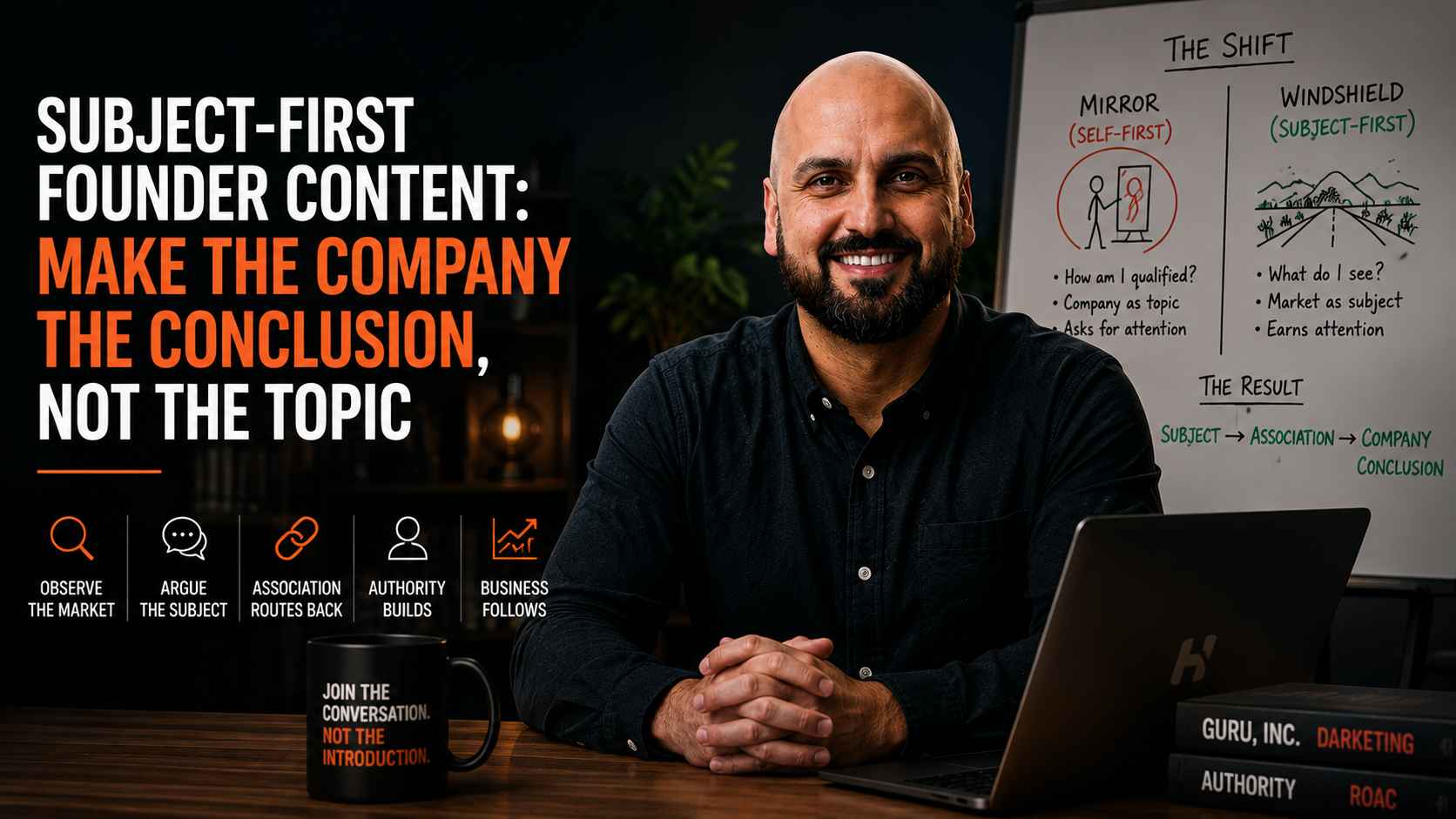


What predicts citation is structure, specificity, and extractability. The videos getting cited are not the ones that went viral. They are the ones who clearly answered a specific question with structured depth. For founders and expert creators, the implication is direct: YouTube is no longer a social media channel. It is a citation infrastructure.
Key Takeaways:
YouTube accounts for 39.2% of all AI citations across platforms. Reddit dropped from 44.2% to 20.3%. YouTube is now the dominant citation source.
Subscriber count has near-zero correlation with citation frequency (r = -0.03). 40.83% of AI-cited videos had fewer than 1,000 views.
Among timestamped videos cited by AI, 78% were cited more than once across 2-5 distinct chapters. Only 31% of cited videos currently have timestamps. Massive optimization gap.
Gemini 3 (January 2026) displaced 42.4% of previously cited domains. Citations consolidated around authoritative, structured sources.
Long-form video accounts for 94% of AI citations. Shorts account for 5.7%. The 10-20 minute range is the citation sweet spot.
Your first move is not creating new content. It is auditing and optimizing your existing video library.
YouTube Is No Longer a Social Platform. It Is a Citation Domain.
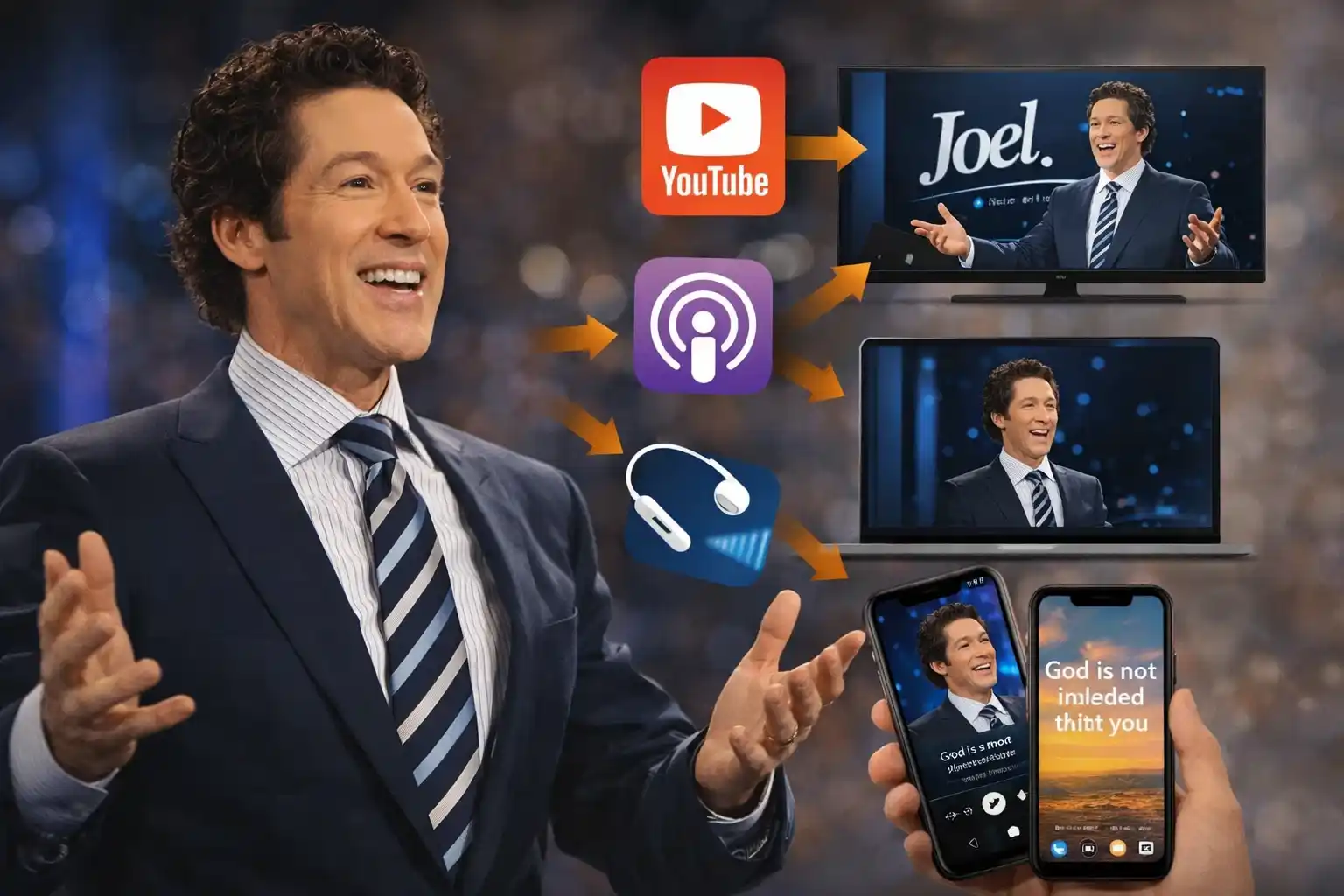
A client of ours discovered something that stopped them mid-meeting. A YouTube video published over two years ago was being cited by Google's AI Overview as the authoritative answer to a question their customers ask every day. Not their website. Not their blog. A video they had nearly forgotten about.
They are not alone. Across industries, companies are finding that YouTube videos created years ago now surface inside AI-generated answers on Google, Perplexity, and ChatGPT. Not as recommendations. As citations. AI is treating these videos the way it treats Wikipedia or Mayo Clinic: as reference material worth quoting.
The numbers:
YouTube is the number one most-cited domain in Google's AI Overviews, with roughly 29.5% of all citations
Mayo Clinic sits at about 12.5%. YouTube outpaces it by more than double.
Across all AI platforms, YouTube commands about 39.2% citation share, up from 18.9%
Every other video platform (TikTok, Vimeo, Twitch, Dailymotion) collectively accounts for approximately 0.1% each
YouTube is cited roughly 200 times more than any other video platform
Even ChatGPT and Perplexity, platforms with zero obligation to favor Google-owned properties, overwhelmingly cite YouTube. The trust is platform-agnostic.
The Gemini 3 Shift Changed the Citation Landscape
On January 27, 2026, Google made Gemini 3 the default model powering AI Overviews globally.
The impact was structural:
Sources per AI Overview increased by 32%
But 42.4% of the previously cited domains no longer appear
51.7% of citations now come from newly introduced domains
Citations consolidated around authoritative, well-structured sources
YouTube and Reddit gained. Smaller niche websites lost ground.
This was not a temporary fluctuation. This was an architectural decision by the largest AI search player in the world. The window to establish content inside that trusted citation set is narrowing.
Reddit's decline tells the story from the other side. Reddit dropped from 44.2% citation share to 20.3%: a 54% decline. YouTube is now cited 40% more than Reddit across all AI platforms. Structured, single-source video content is replacing fragmented, multi-opinion discussion threads.
The Metrics Everyone Obsesses Over Do Not Matter Here
This requires the biggest mental shift. And it is the part most founders will resist.
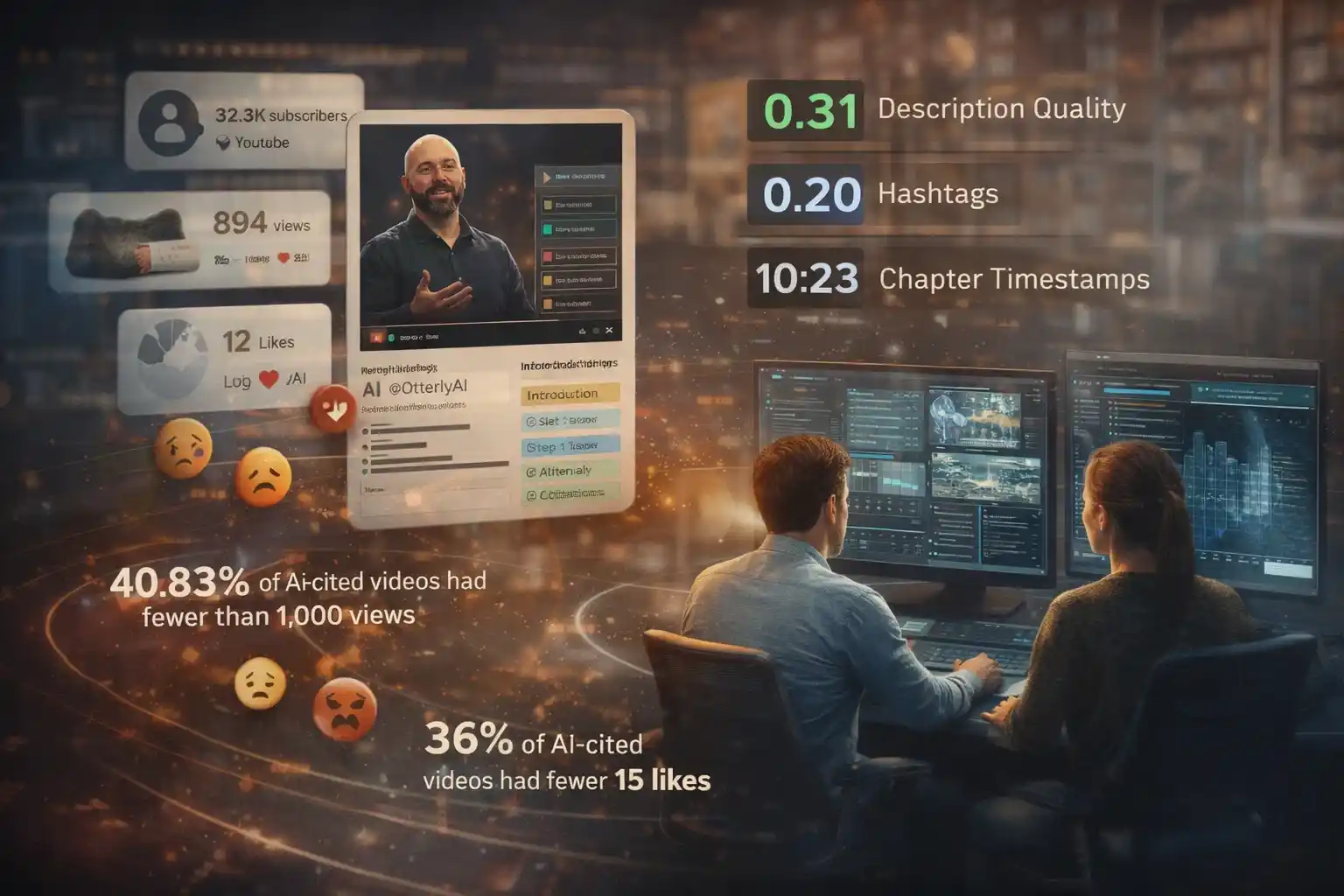
The OtterlyAI study, the first large-scale analysis of 100 million AI citations across six platforms, found something that contradicts everything most creators believe about YouTube success:
Subscriber count correlation with citation frequency: r = -0.03 (near zero)
40.83% of AI-cited videos had fewer than 1,000 views
36% of cited videos had fewer than 15 likes
Views, likes, and subscriber counts have almost no relationship to AI citation behavior.
What does correlate:
Video description quality: r = 0.31 (strongest measured signal)
Hashtag presence: r = 0.20
Chapter timestamps
Transcript accuracy
Topic specificity (one question per video)
AI citation behavior looks more like a research librarian selecting references than an algorithm deciding what is entertaining. The videos that get cited answer one clear question, are structured so a machine can parse them into segments, and sit in the 10-20 minute range where depth meets digestibility. That range accounts for 32.1% of all AI citations.
This is a fundamentally different design philosophy than what most creators optimize for. It is the same principle behind how authority signals work across brains, search engines, and AI: the system that reduces retrieval cost wins.
Chapters Are the New H2 Tags
If one tactical insight separates creators who get cited from those who do not, it is this: timestamped chapters are a citation multiplier.
The data:
Among timestamped videos cited by Google's AI platforms, 78% were cited more than once, typically across 2-5 distinct chapters
A single 15-minute tutorial with well-labeled chapters can generate more citation surfaces than five separate short videos
Only 31% of cited videos currently contain a chapter-style structure
That is the clearest optimization gap in the entire corpus. Nearly 70% of videos getting cited by AI have no timestamps. The ones that do get cited repeatedly.
In traditional SEO, H2 headers let Google understand and index each section independently. Chapters do the same thing for video. They convert a single asset into a structured document that AI systems decompose and reference at the segment level. Same structural logic. Different format.
Your Old Videos Are the Real Untapped Asset

This is perhaps the most important strategic insight in this piece.
Videos published months or years ago are being discovered and cited by AI right now. Approximately 10% of tracked AI citations come from YouTube content published long before anyone was thinking about AI search. Not from new content. From existing library assets that happened to be well-structured.
We see this pattern with our own clients. Content created for a human audience, optimized for traditional YouTube search, then largely forgotten, is suddenly surfacing as source material in AI-generated answers.
Your first move is not creating new content. Your first move is auditing what you already have:
Add timestamped chapters to every video that does not have them
Make each chapter label clearly describe the specific question that the segment answers
Upload clean, corrected transcripts (auto-captions are error-prone and reduce extractability)
Rewrite descriptions as metadata: clear topic declarations in the first two lines, 500+ words for maximum AI signal
Use question-based titles in natural language ("How to build a lead form without code," not "Heyflow Product Demo 2025")
These are not cosmetic changes. They are citation infrastructure upgrades.
NP Digital tracked this trend and found that YouTube citations in AI Overviews surged by 414% overall. How-to video citations jumped by 651%. The brands benefiting most are the ones with existing educational video libraries. They did not build those libraries for AI. AI found them because the content was structured, specific, and genuinely useful.
That is the compounding power of building content correctly. Create it for humans. YouTube search surfaces it for months. AI citation picks it up as reference material for the answers millions of people receive every day. This is an edutainment content architecture working across all three layers simultaneously.
The Three-Layer Value No Other Platform Offers
Every YouTube video now operates across three layers:
Layer 1: Human viewership. Subscribers, recommendations, connected TV. YouTube commands about 13% of all U.S. TV viewing time. More than Netflix. Your video is living-room content.
Layer 2: YouTube search. The second largest search engine. Content compounds over months and years instead of dying in 24 hours. Videos posted six months ago regularly outperform recent uploads in cumulative views. The opposite of every other social platform.
Layer 3: AI citation. Your video becomes source material for AI-generated answers across Google, Perplexity, ChatGPT, and Gemini.
No other platform delivers all three. TikTok gives you Layer 1 only. Instagram gives you Layer 1 only. LinkedIn gives you Layer 1 and occasionally Layer 3. YouTube gives you all three, with the AI citation layer accelerating as Gemini grows.
That is the structural argument for treating YouTube as infrastructure, not a channel. It is the same reason I advise every founder building a personal media company to anchor their content ecosystem on YouTube rather than platforms where content depreciates within hours.
Where YouTube Shorts Fit
Long-form accounts for 94% of YouTube AI citations. Shorts account for 5.7%. That is not the main event for citation.
But Shorts generate transcripts and metadata within YouTube's AI-trusted ecosystem. A Short on YouTube lives inside infrastructure AI systems' trust. A Reel on Instagram does not. Same content. Completely different downstream value.
The architecture:
Shorts are the marketing department (discovery, platform distribution, topic signaling)
Long-form is the library (citation inventory, depth, authority building)
YouTube now lets you link a long-form video directly from a Short, creating a discovery-to-depth pipeline
The citation inventory is currently long-form. The creators building that library now will be positioned when the Shorts citation grows.
Why This Matters for Every Founder Building Authority
The attention economy is shifting from who gets the most views to who gets cited as the source. YouTube is where that shift is happening fastest.
Ask yourself one question before publishing any video: if someone typed this question into Google's AI Mode, would this video be a credible answer?
If yes, you are building an asset that works across all three layers simultaneously. Human attention. Search compounding. AI citation.
That is not content marketing. That is citation infrastructure. And it is measured through Return on Attention Created (ROAC): not how many views you captured, but how much of that attention converted into trust, authority, and business leverage that compounds.
The companies that understand this will own the next era. The ones that do not will keep optimizing for views while their competitors quietly become the default answer AI points to.
Frequently Asked Questions
Why is YouTube the most cited platform in AI search?
YouTube generates transcripts, metadata, and structured descriptions that AI models can parse and reference. It accounts for 39.2% of all AI citations across platforms. Even non-Google AI systems like ChatGPT (35% YouTube citation share) and Perplexity (32%) overwhelmingly cite YouTube because of depth, structure, and established trust.
Do views and subscribers affect AI citations?
No. Subscriber count correlation with citation frequency is r = -0.03 (near zero). 40.83% of AI-cited videos had fewer than 1,000 views. What matters is description quality (r = 0.31), chapter timestamps, transcript accuracy, and topic specificity.
How do timestamped chapters affect AI citations?
Chapters function as citation multipliers. Among timestamped videos cited by AI, 78% were cited more than once across 2-5 chapters. Only 31% of currently cited videos have timestamps. A single chaptered tutorial generates more citation surfaces than five separate short videos.
Can old YouTube videos get cited by AI?
Yes. Approximately 10% of tracked AI citations come from YouTube content published before anyone considered AI search. Adding timestamps, corrected transcripts, and restructured descriptions to existing videos unlocks citation value without creating new content.
What is the difference between Shorts and long-form for AI citations?
Long-form accounts for 94% of YouTube AI citations. Shorts account for 5.7%. Shorts function as discovery and distribution. Long-form functions as the citation library. YouTube now links Shorts directly to long-form, creating a discovery-to-depth pipeline.
How did Gemini 3 change YouTube citations?
Gemini 3 (January 2026) increased sources per AI Overview by 32% but displaced 42.4% of previously cited domains. Citations consolidated around structured, authoritative sources. YouTube became the top cited domain at 29.5%. As Gemini grows, this preference compounds.