
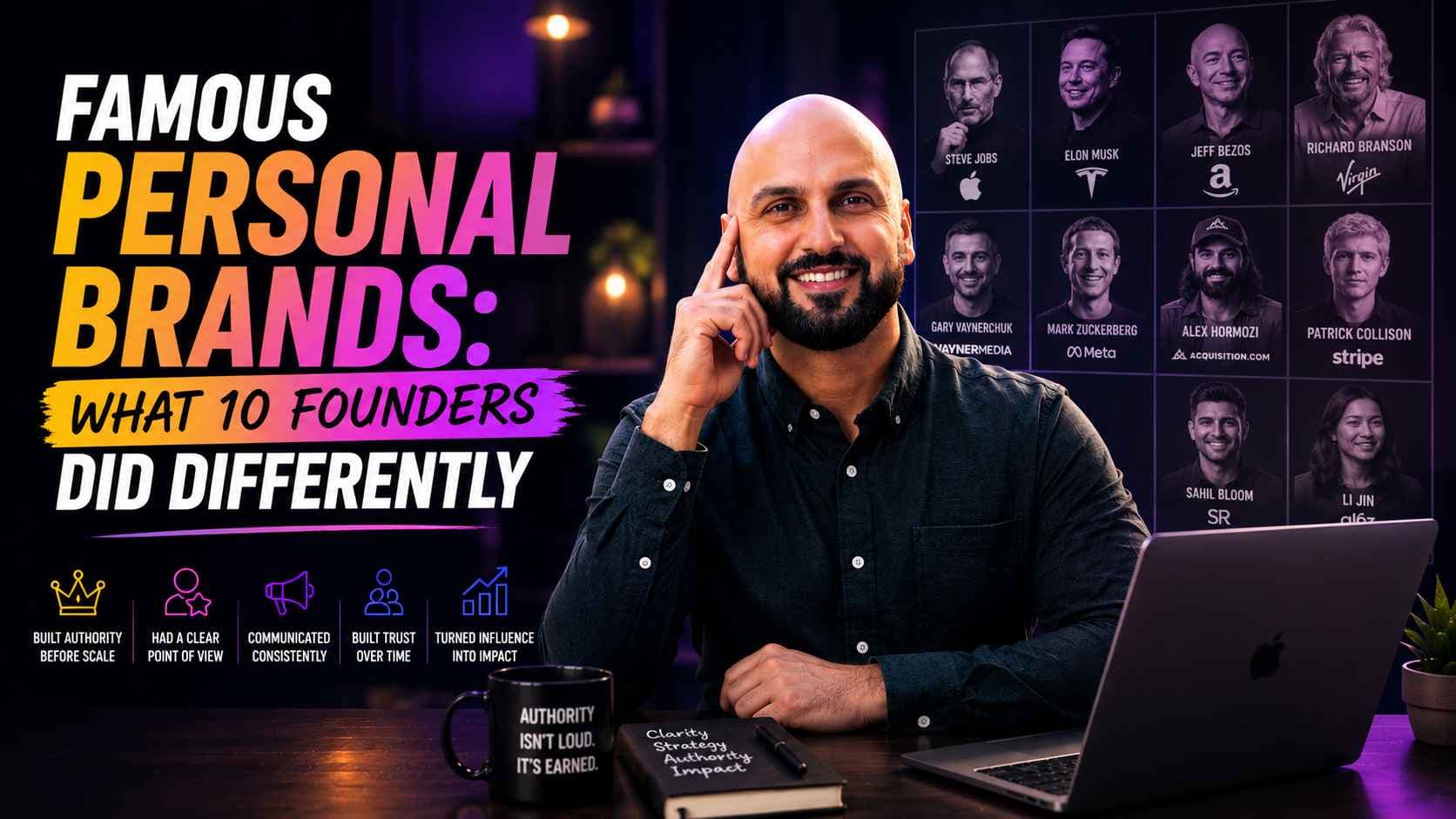
Every founder on this list made one structural decision that separated them from equally talented competitors. The difference is never talent. The difference is architecture.
Key Takeaways:
Oprah Winfrey built a personal media company that generated $6 million per week from a single show format.
Martha Stewart survived federal prison and rebuilt a billion-dollar personal brand because the brand architecture outlasted the crisis.
Alex Hormozi gave away 2.9 million copies of his book in 24 hours. The book replaced the sales team.
Mike Ferry built a $50 million coaching empire from live seminars, not social media content.
Joel Osteen reaches millions weekly through one 30-minute format rehearsed for five days.
The common thread across all 10 founders: the personal brand is not a marketing strategy. The personal brand is the business model.
What Makes a Personal Brand Famous
A famous personal brand creates a mental association so strong that the market cannot think about a category without thinking about the person.
Celebrity creates recognition. Authority creates trust. The founders on this list built trust, not fame. The distinction matters because recognition fades without reinforcement. Trust compounds without additional effort.
I studied each of these founders through direct experience, client work, or published analysis. The patterns are consistent. Every famous founder personal brand is built on one of three foundations:
Owned intellectual property. A named framework, book, or methodology that the market references by name.
A content system that compounds. A publishing architecture where every piece of content strengthens every other piece.
Proof through specific results. Named clients, dollar amounts, and measurable outcomes that make the authority claim verifiable.
The 10 founders below each demonstrate one or more of these foundations at an extreme level.
Oprah Winfrey: The Personal Media Company Model
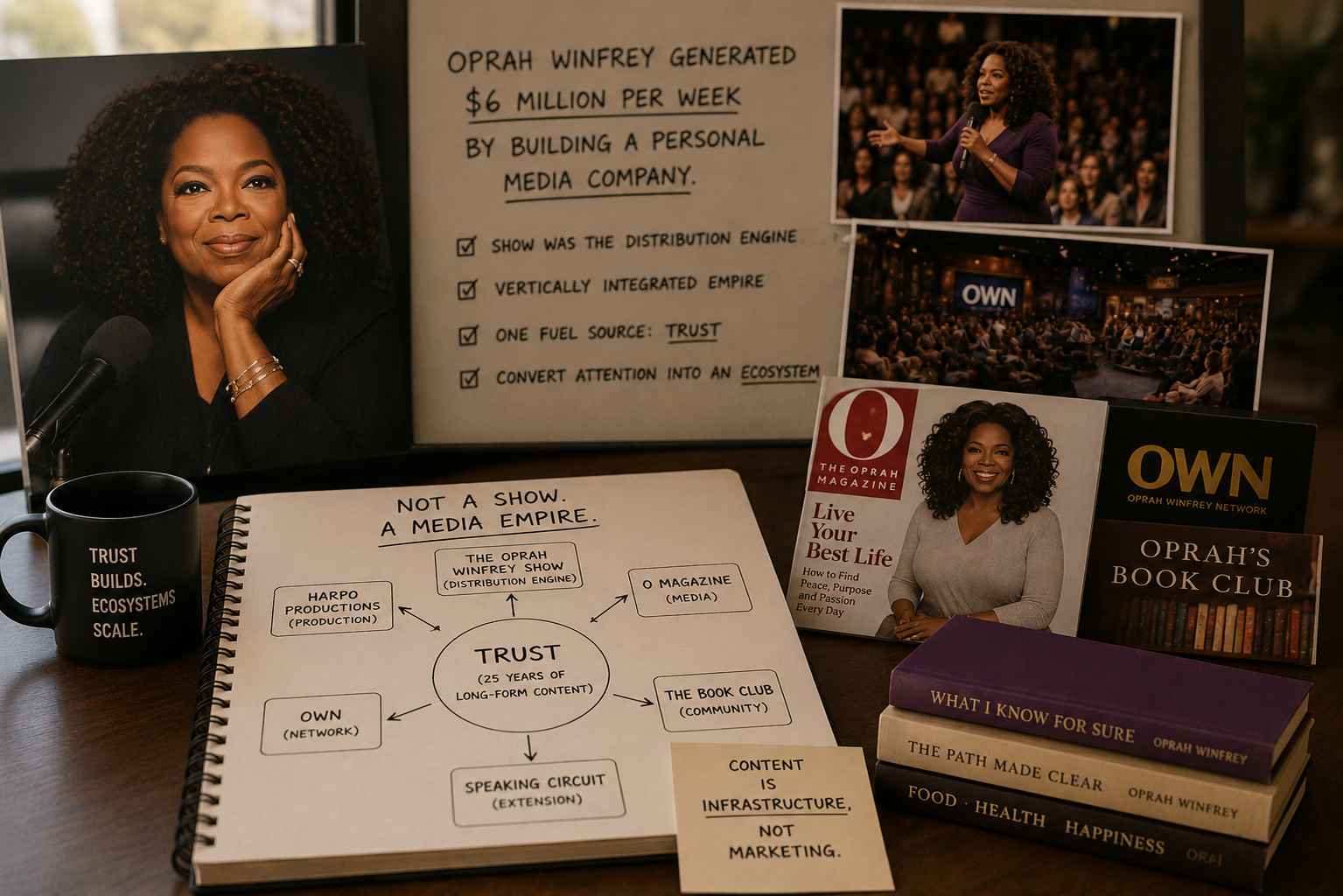
Oprah Winfrey generated $6 million per week from The Oprah Winfrey Show by building a personal media company, not a television program.
The show was never the product. The show was the distribution engine for a vertically integrated media empire. Harpo Productions, O Magazine, OWN, the Book Club, and the speaking circuit all ran on one fuel source: the trust Oprah built through 25 years of consistent long-form content.
The principle: a famous personal brand treats content as infrastructure, not marketing. Oprah's media company is the blueprint for every founder who wants to convert attention into an ecosystem.
Martha Stewart: The Brand That Survived Crisis
Martha Stewart rebuilt a billion-dollar personal brand after federal prison because the brand architecture was stronger than the controversy.
Kmart sold $1 billion per year in Martha Stewart products before the conviction. After prison, the brand returned. The audience returned. The revenue returned. The architecture survived because the brand was built on expertise and systems, not on personality alone.
The principle: a famous personal brand built on intellectual property and product ecosystems survives crises that destroy brands built on personality.
Alex Hormozi: Generosity as a Business Model
Alex Hormozi distributed 2.9 million copies of his $100M books in 24 hours, set a Guinness World Record, and used the book as the acquisition funnel for Acquisition.com.
The books cost $0.99 each. The information inside replaced the sales team. Founders who read the books arrive at Acquisition.com with trust already established. The sales cycle compresses from months to days.
The principle: a famous personal brand gives away the best intellectual property for free. The generosity builds trust at scale. The trust converts into deal flow that no advertising budget replicates.
Mike Ferry: Live Events as the Original Long-Form Content
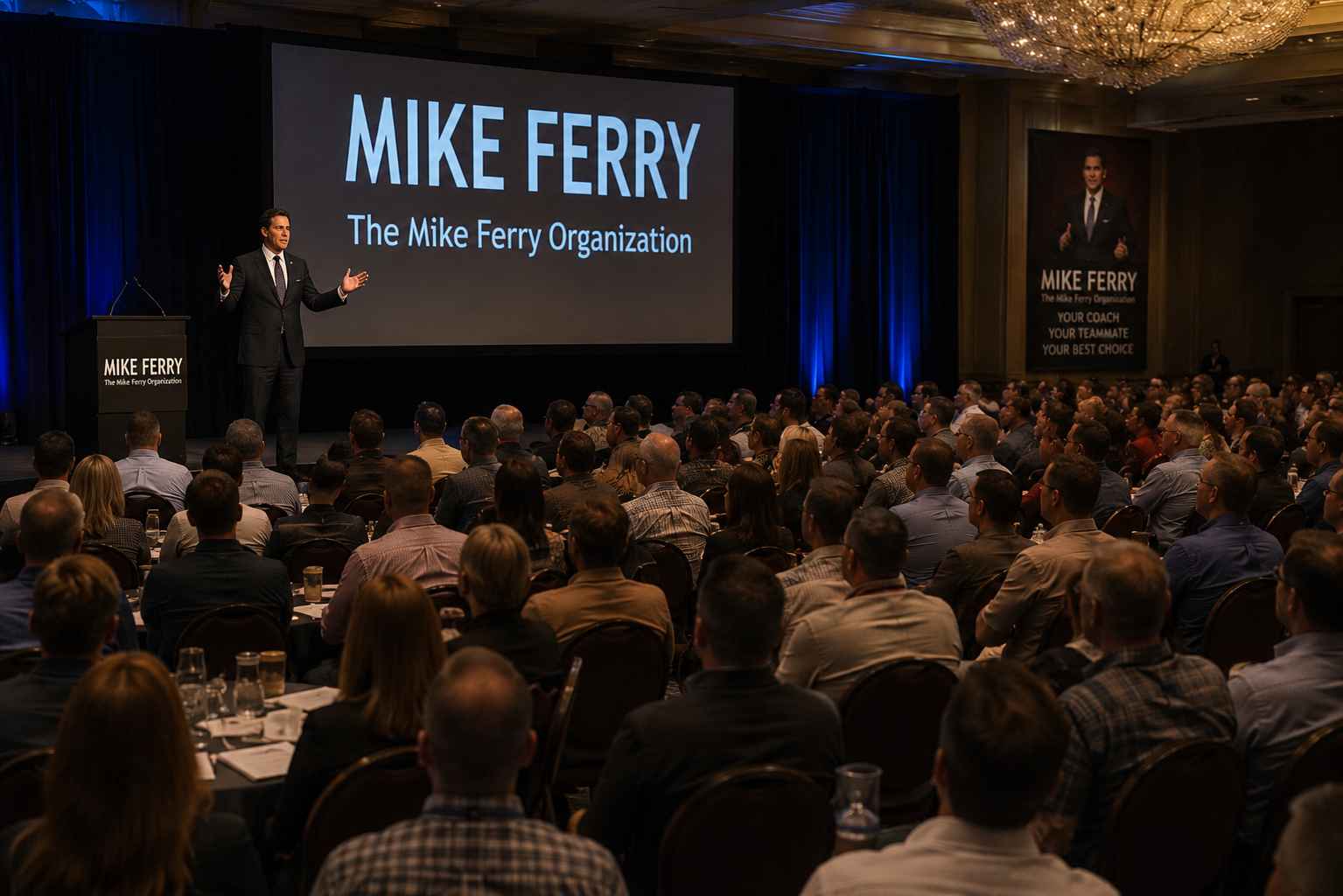
Mike Ferry built a $50 million annual coaching empire from multi-hour live seminars where real estate agents watched him think through problems in real time.
No social media strategy. No viral content. No algorithm optimization. Mike Ferry filled rooms with thousands of agents who paid premium prices to sit in a chair and listen for hours. The depth of the format created the depth of the trust.
I watched this firsthand as a teenager working at the Mike Ferry Organization. Nobody flew across the country for a soundbite. They flew for demonstrated judgment delivered at length.
The principle: a famous personal brand is built on depth, not reach. Long-form content builds deeper trust than short-form content. The format is the trust signal.
Joel Osteen: One Show, Six Platforms, 30 Minutes
Joel Osteen reaches millions of viewers every week through one 30-minute sermon rehearsed for five days and distributed across six platforms.
One format. One performance. Maximum distribution. The 30-minute sermon is recorded once, then repurposed into podcast episodes, YouTube videos, social clips, broadcast segments, and live event recordings. The content system is the most efficient authority-building architecture in media.
The principle: a famous personal brand does not create more content. A famous personal brand creates one excellent piece and distributes it everywhere.
Neil Patel: Authority Through Free Tools
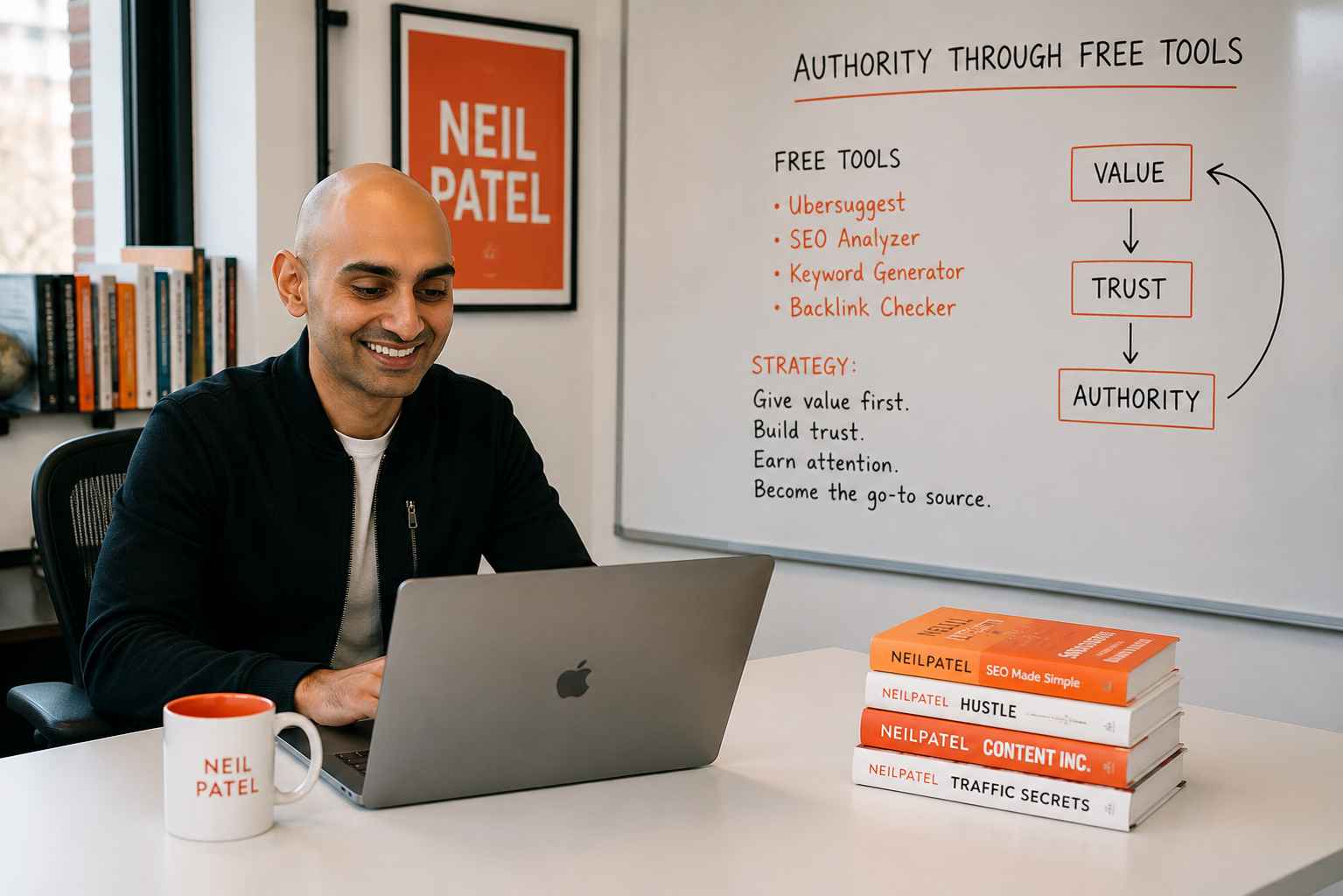
Neil Patel built NP Digital into a 1,000+ employee agency by giving away SEO tools and educational content that competitors charged thousands for.
The free tools (Ubersuggest, AnswerThePublic) generate millions of monthly users. A percentage of those users convert into agency clients. The tools are the trust engine. The agency is the revenue engine. The personal brand connects both.
I learned this principle directly from Neil during our years working together. The value of free intellectual property is not the revenue it generates directly. The value is the trust it creates at a scale that paid advertising cannot match.
The principle: a famous personal brand makes the expertise accessible. The accessibility builds the audience. The audience funds the premium services.
Nikki Haskell: Building Authority at 84
Nikki Haskell grew to over 1 million social media followers at age 84 through authenticity that younger creators cannot manufacture.
Nikki had been a TV host, Wall Street trader, and celebrity figure for decades. The personal brand reinvention translated six decades of life experience into content that a 25-year-old creator structurally cannot produce. The audience trusted her because the depth of experience was visible in every piece of content.
I led the brand reinvention strategy for Nikki. The lesson was clear: authority is not about age, platform mastery, or production quality. Authority is about the depth of experience behind the content. Nikki had more depth than anyone on the platform. The audience recognized it immediately.
The principle: a famous personal brand is built on experience that cannot be replicated. The less replicable the experience, the stronger the brand.
Kimberly Snyder: From Celebrity Kitchens to Eight Figures
Kimberly Snyder scaled from $500 per hour in celebrity kitchens to an $8 to $10 million personal brand across digital products, books, and a 22,000-member online community.
Three New York Times bestselling books. 16 million unique visitors. 150,000 email subscribers. A co-authored book with Deepak Chopra. Every revenue stream traced back to the personal brand authority built through published intellectual property.
I worked with Kimberly on scaling the brand from expert-for-hire to authority-driven ecosystem. The transition from trading time for money to selling frameworks at scale is the economic model that every famous founder personal brand eventually adopts.
The principle: a famous personal brand converts expertise into intellectual property, then scales the intellectual property across multiple revenue streams.
Tony Robbins: The Stage as a Revenue Engine
Tony Robbins generates over $600 million in annual revenue across coaching, events, books, and investments, all powered by a personal brand built on live events.
The events are not the marketing. The events are the product. Unleash the Power Within runs at $1,000 to $3,000 per ticket. Thousands attend every event. The personal brand makes the premium pricing possible because the authority was built through decades of published books, media appearances, and documented client results.
The principle: a famous personal brand uses events as revenue, not marketing expenses. The authority built through content makes the audience willing to pay premium pricing for proximity.
Gary Vaynerchuk: Volume Backed by Business Proof
Gary Vaynerchuk publishes over 100 pieces of content per week and backs every claim with specific business results from VaynerMedia, VaynerX, and his investment portfolio.
The volume strategy works for Gary because the volume sits on top of verifiable business proof. VaynerMedia generates over $300 million in annual revenue. The investment portfolio includes early positions in Facebook, Twitter, and Uber. The content volume without the business proof would be noise. The business proof without the content volume would be invisible.
The principle: a famous personal brand matches content volume to business proof. Volume without proof is noise. Proof without volume is invisible. The founders who scale into famous personal brands maintain both.
The Pattern Across All 10
Every famous personal brand on this list made one decision that separated them from equally talented competitors: they treated the personal brand as the business model, not a marketing channel.
Oprah did not market a TV show. Oprah built a media company. Martha Stewart did not promote homemaking. Martha Stewart built a product ecosystem. Hormozi did not advertise Acquisition.com. Hormozi gave away the books that built the trust that filled the pipeline.
The pattern has three layers:
Layer 1: Intellectual property. Every famous personal brand has named, structured, documented IP. Books, frameworks, methodologies, or proprietary systems.
Layer 2: A content system that compounds. Every famous personal brand has a publishing architecture where old content strengthens new content and new content drives traffic to old content.
Layer 3: A revenue model attached to the authority. Every famous personal brand converts trust into revenue through consulting, products, events, licensing, or equity.
Famous personal brands are not accidents. Famous personal brands are architectures. The architecture is learnable. The execution is what separates the founders who build them from the founders who admire them.
Frequently Asked Questions
What do all famous personal brands have in common?
Every famous personal brand is built on named intellectual property, a content system that compounds over time, and a revenue model attached to the authority. The common thread is architecture, not charisma. The founders who build famous personal brands treat the brand as the business model, not as a marketing channel.
Who has the strongest personal brand among founders?
Oprah Winfrey built the strongest founder personal brand measured by revenue generated directly from the brand ($6 million per week from one show at peak).
Alex Hormozi built the fastest-growing founder personal brand measured by audience growth and book distribution (2.9 million copies in 24 hours). The strongest personal brand depends on the metric: revenue, reach, longevity, or trust depth.
Can a founder build a famous personal brand without being on social media?
Mike Ferry built a $50 million personal brand empire without social media. The brand was built entirely through live events, word of mouth, and demonstrated expertise.
Social media accelerates distribution but is not a requirement for building a famous personal brand. Depth of expertise and named intellectual property are requirements.
How long does a famous personal brand take to build?
Oprah built her personal media company over 25 years. Hormozi built mainstream recognition in approximately 3 years through aggressive content publishing and a free book strategy. The timeline depends on the depth of existing expertise, the clarity of positioning, and the consistency of content publishing.
The fastest path is naming proprietary intellectual property and publishing consistently around a single positioning thesis.
What is the first step to building a personal brand like the founders on this list?
The first step is naming one framework, methodology, or system that captures the founder's unique approach. Every famous personal brand on this list has named IP. The name makes the expertise citable, memorable, and distributable. General expertise gets forgotten. Named frameworks get referenced.