
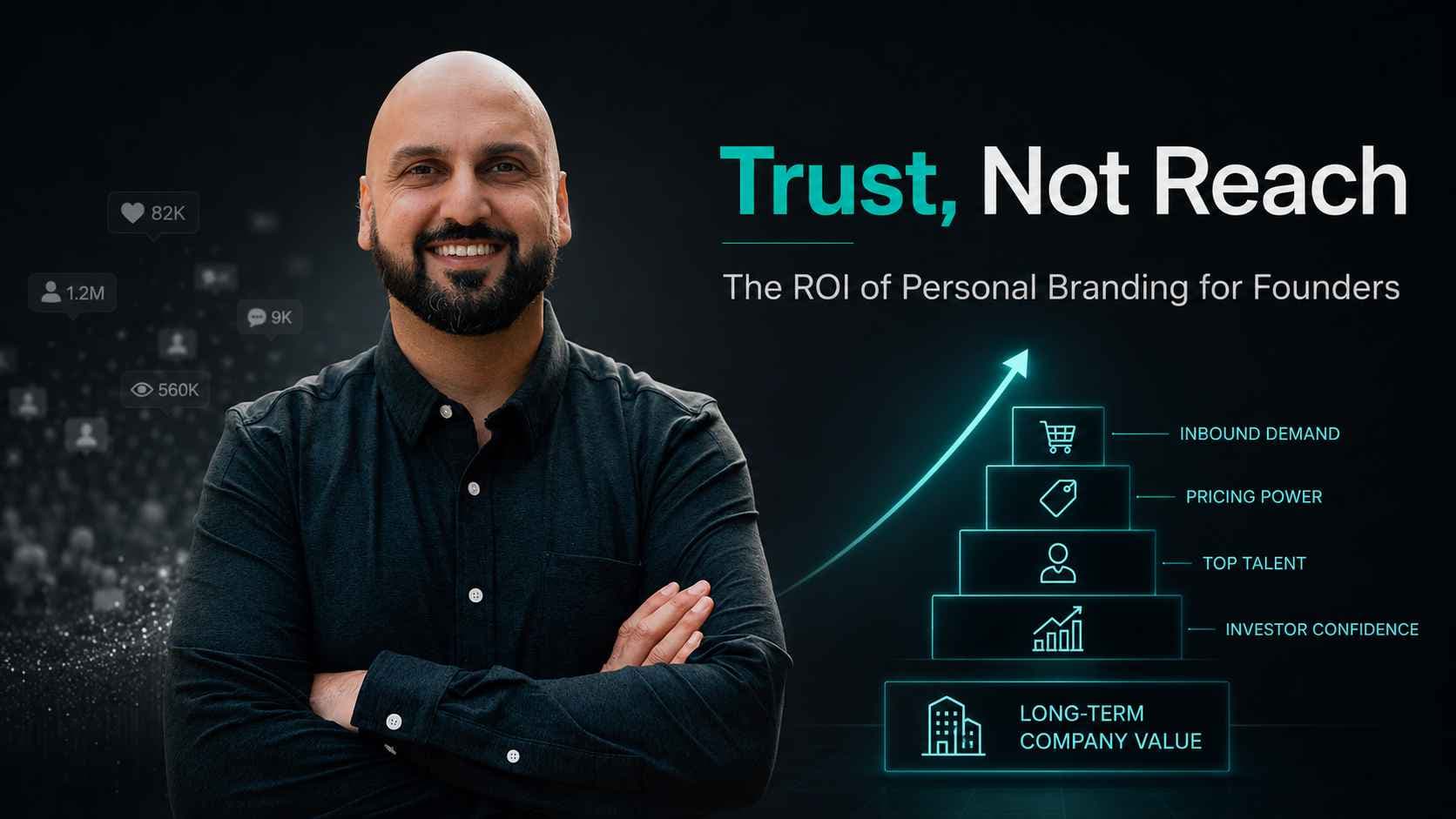
The ROI of personal branding for founders is a return, not a metric. The return is what the founder's authority produces for the company: demand, pricing power, talent, and investor confidence. The size of the return tracks the quality of the trust the brand earns, not the size of the audience.
A founder measures the return by what the attention converts to, trust and revenue, not by followers or impressions. Visibility without trust produces cost, not return. Trust quality governs the ROI of a founder's personal brand.
Key Takeaways
The ROI of a founder's personal brand is the return authority produces for the company.
The return flows to the company: demand, pricing power, talent, investor confidence.
Trust quality governs the return. Visibility volume does not.
A founder measures the return by what attention converts to, not by vanity metrics.
The return compounds. Each unit of earned trust lowers the cost of the next sale.
A founder with reach and no trust holds cost, not return.
What the ROI of a Founder's Personal Brand Is
The ROI of a founder's personal brand is the return the founder's authority produces for the company. The return arrives as inbound demand, pricing power, easier hiring, and investor confidence. The founder's authority drives all of it.
This return is not a marketing metric. A marketing metric counts clicks, impressions, or cost per lead against a campaign. The ROI of a founder's personal brand counts company outcomes against earned authority.
The return is also not a posting output. A post count measures activity. The ROI of a founder's personal brand measures what the authority converts into for the business. AJ Kumar treats the return as a company outcome, not a content statistic.
Why the Return Flows to the Company, Not Only the Founder

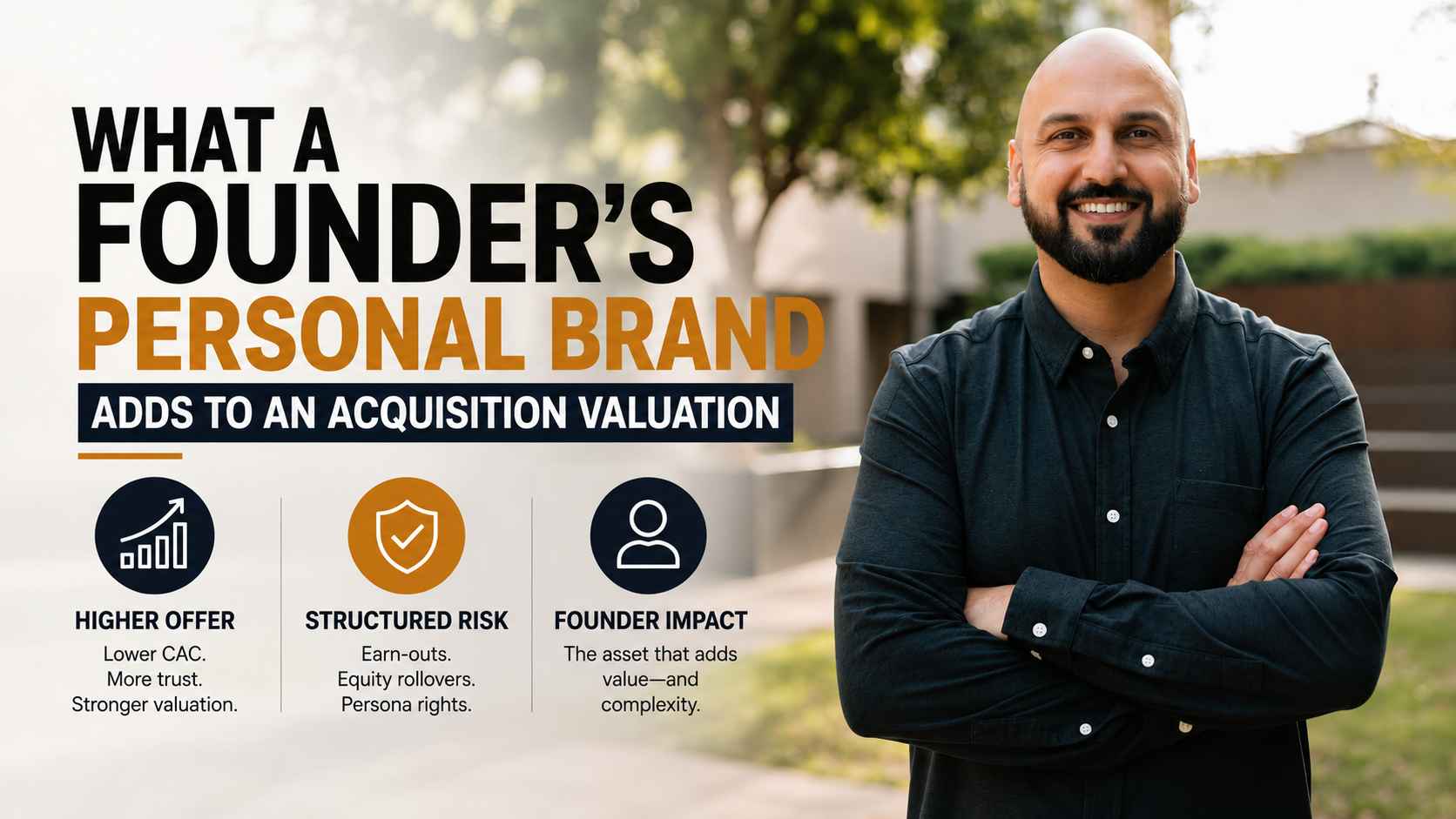
A founder's personal brand returns its value to the company, not only to the founder. The authority the founder earns lowers customer acquisition cost, shortens sales cycles, and brings buyers who arrive pre-sold.
This is what separates a founder's ROI from an employee's. An employee's personal brand returns career options to the person. A founder's personal brand returns demand, talent, and investor confidence to the business the founder owns.
The company inherits the trust. A founder known and trusted in the market raises money faster, recruits better people, and closes deals at a premium. The ROI of a founder's personal brand is a company asset, earned through one person.
Why Trust Quality Governs the Return
Trust quality governs the return on a founder's personal brand. The depth of the trust the brand earns sets the size of the return. The size of the audience does not.
A founder with a small, deeply trusting audience out-earns a founder with a large, shallow one. Visibility without trust produces no return. A crowd that does not believe the founder converts nothing.
The return scales with belief, not reach. A founder who earns real authority in a market commands premium pricing and inbound demand from it. The trust-to-return logic is documented in GURU, INC., where AJ Kumar frames trust as the source of the return.
How a Founder Measures the Return Without Vanity Metrics
A founder measures the return by what the attention converts to, not by the attention itself. The question is not how many people watched. The question is how much of that attention became trust and revenue.
Vanity metrics measure the wrong layer. Followers, impressions, and engagement count the attention. They do not count the conversion. A founder reads the conversion, because the conversion is the return.
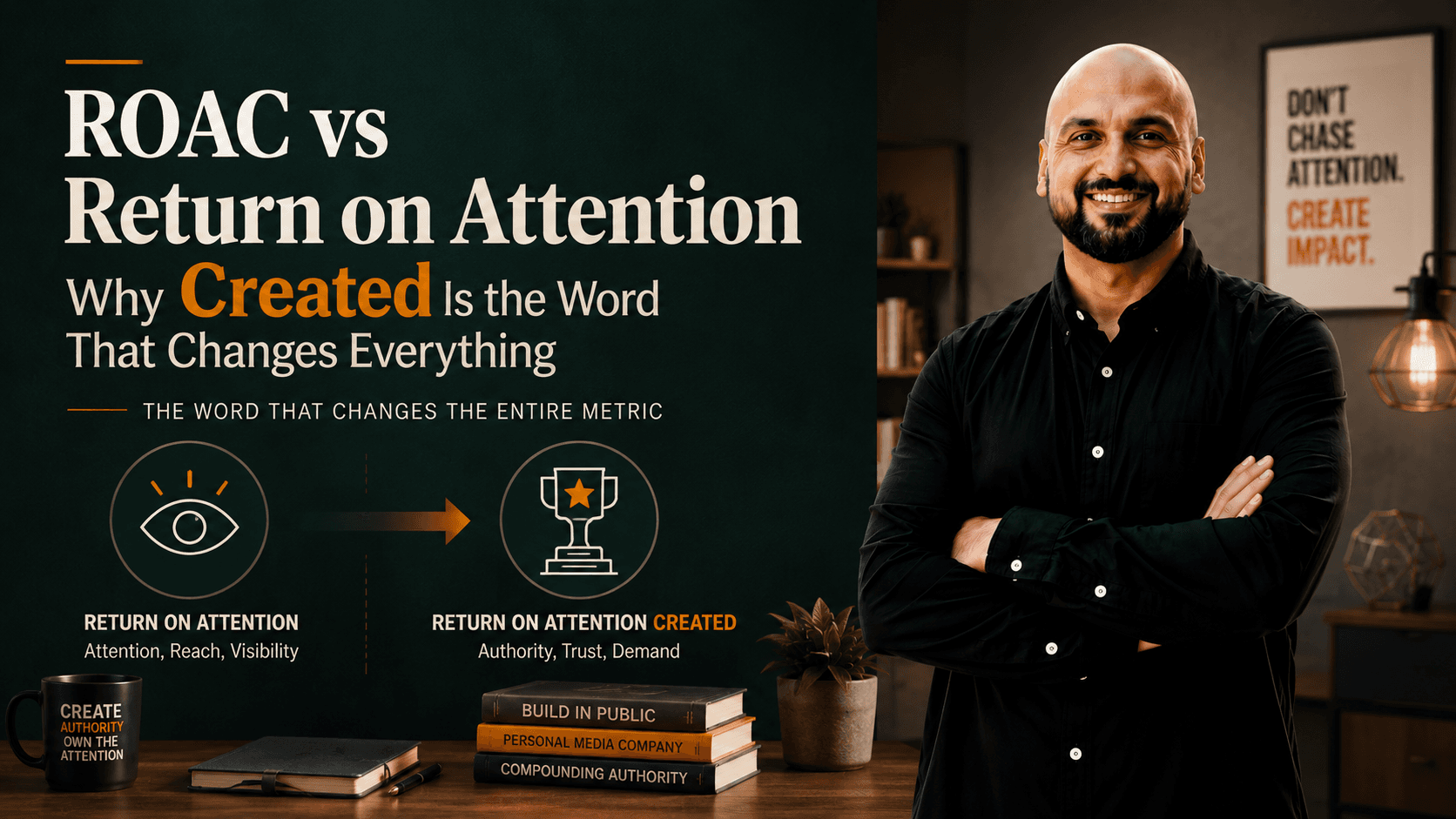
AJ Kumar measures this with ROAC, Return on Attention Created, the instrument that tracks whether attention produces trust and revenue rather than vanity numbers. ROAC moves the measurement from how much attention a founder collects to what that attention becomes.
What Returns Compound Over Time
The return on a founder's personal brand compounds. The return is not a single campaign payoff that ends when the spend stops. Each unit of earned trust carries forward and lowers the cost of the next outcome.
Compounding shows up across the business. Earned authority makes the next sale cheaper, the next hire easier, and the next raise faster. The trust built this year reduces the effort required next year.
A founder reads this as an asset, not an expense. The return grows while the founder builds, and building it is the strategic question behind clarity on the right next move. Authority compounds where a campaign expires.
Why Visibility Without Trust Produces No Return

Visibility without trust produces no return on a founder's personal brand. A founder with reach and no belief behind it holds cost, not return. The audience watches and does not convert.
The vanity-metric model rewards motion. It counts views, follows, and impressions, and it mistakes activity for return. A large number with no trust under it moves nothing through the business.
The return measures conversion, not motion. A founder earns the return when attention becomes trust and trust becomes revenue. Reach is the input a founder pays for. Trust is the asset that pays the founder back.
The return is real. A few questions decide whether a founder is earning it.
How Long Before a Founder's Personal Brand Returns
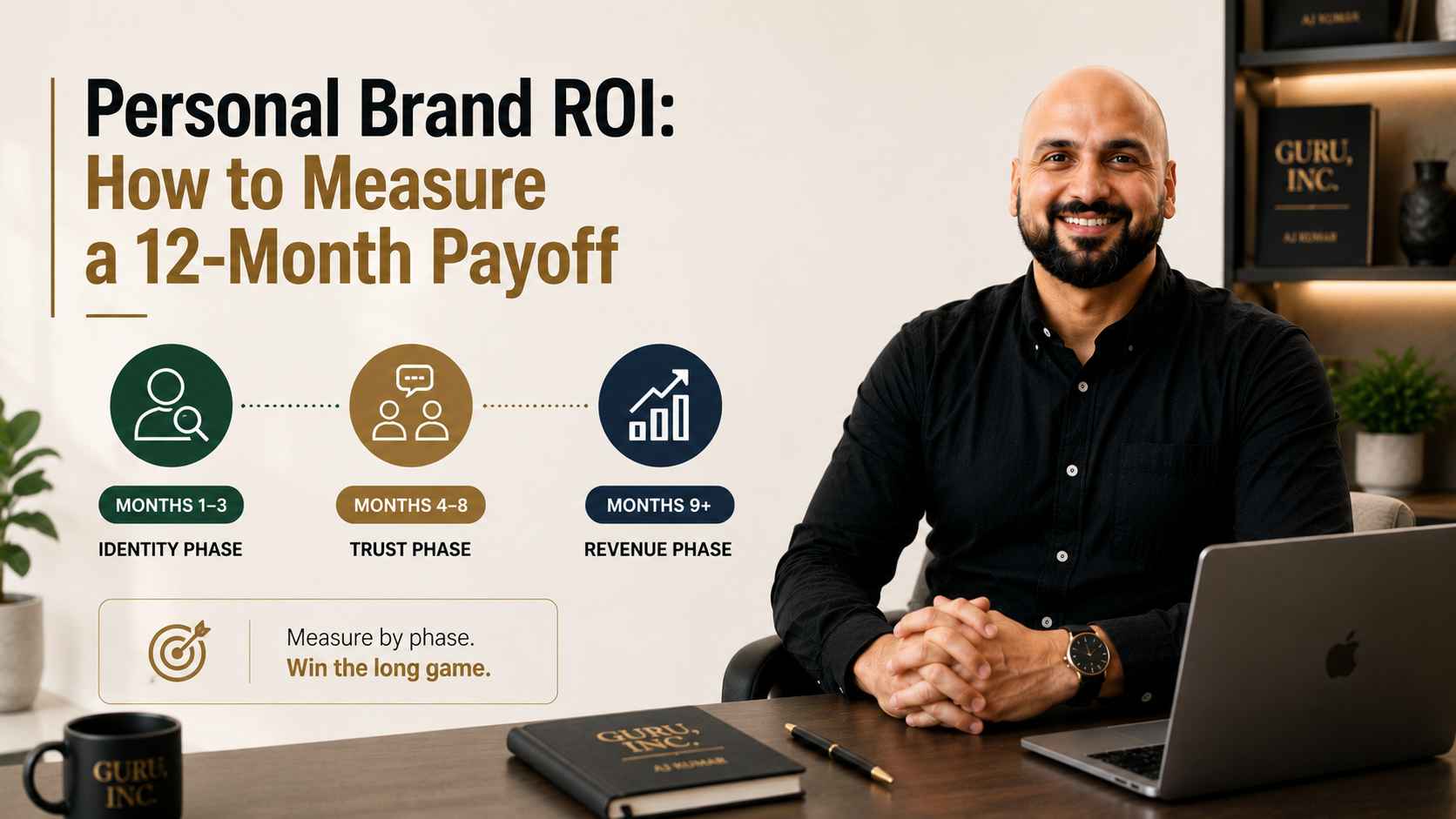
A founder's personal brand returns when the trust converts, not on a fixed clock. The common answer of three to six months measures the wrong thing, because the return tracks belief, not time elapsed.
The first return often arrives quietly. A prospect opens a call already convinced, a hire reaches out first, or an investor mentions the founder's work. The return starts the moment earned trust changes how someone enters the business. A founder who earns trust faster sees the return faster, regardless of the calendar.
How a Founder Knows the Personal Brand Is Returning
A founder reads the return from four signals. The signals are given below.
First, prospects arrive pre-sold and reference the founder's work in the first conversation. Second, sales cycles shorten, because the trust is already in place. Third, inbound replaces cold outreach as the main source of pipeline. Fourth, strong talent and investors approach the founder first. A brand showing these signals is returning. A brand generating reach without them is not.
Is Personal Branding Worth It for a Founder
Personal branding is worth it for a founder whose business needs trust before people buy. The worth is set by the trust requirement of the sale, not by the cost of posting.
A founder selling a high-trust offer, consulting, advisory, or a considered purchase, earns a large return, because the brand removes the trust barrier ahead of the sale. A founder selling a pure commodity earns less from it. The deciding question is simple: does the buyer trust a person before they buy. Where the answer is yes, the return justifies the effort.
Is the ROI of a Founder's Personal Brand the Same as Marketing ROI?
No. Marketing ROI tracks campaign spend against direct conversions. The ROI of a founder's personal brand tracks earned authority against company outcomes the founder owns, including demand, talent, and investor confidence. The return is broader and it compounds.
Can a Founder Get ROI From a Personal Brand Without Posting Daily?
Yes. The return comes from the trust the brand earns, not the posting cadence. A founder who earns deep trust across a few strong touches produces more return than a founder who posts daily and earns none.