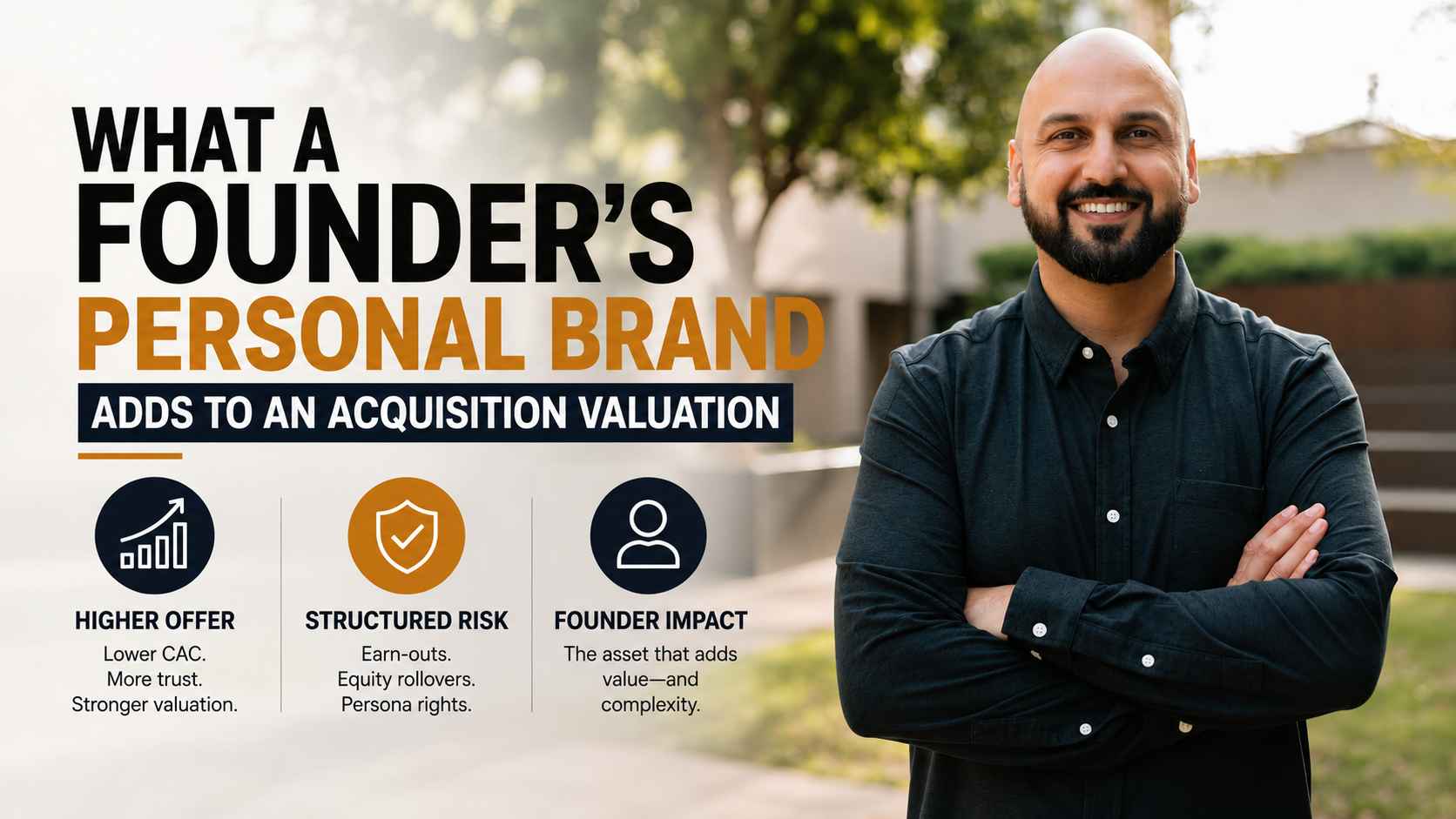


The plan below assigns every phase its own evidence, so the founder always knows whether the build is working long before the revenue says so.
Key Takeaways
Personal brand returns arrive near month 12 across my engagements, and the pattern holds because trust compounds slower than spend.
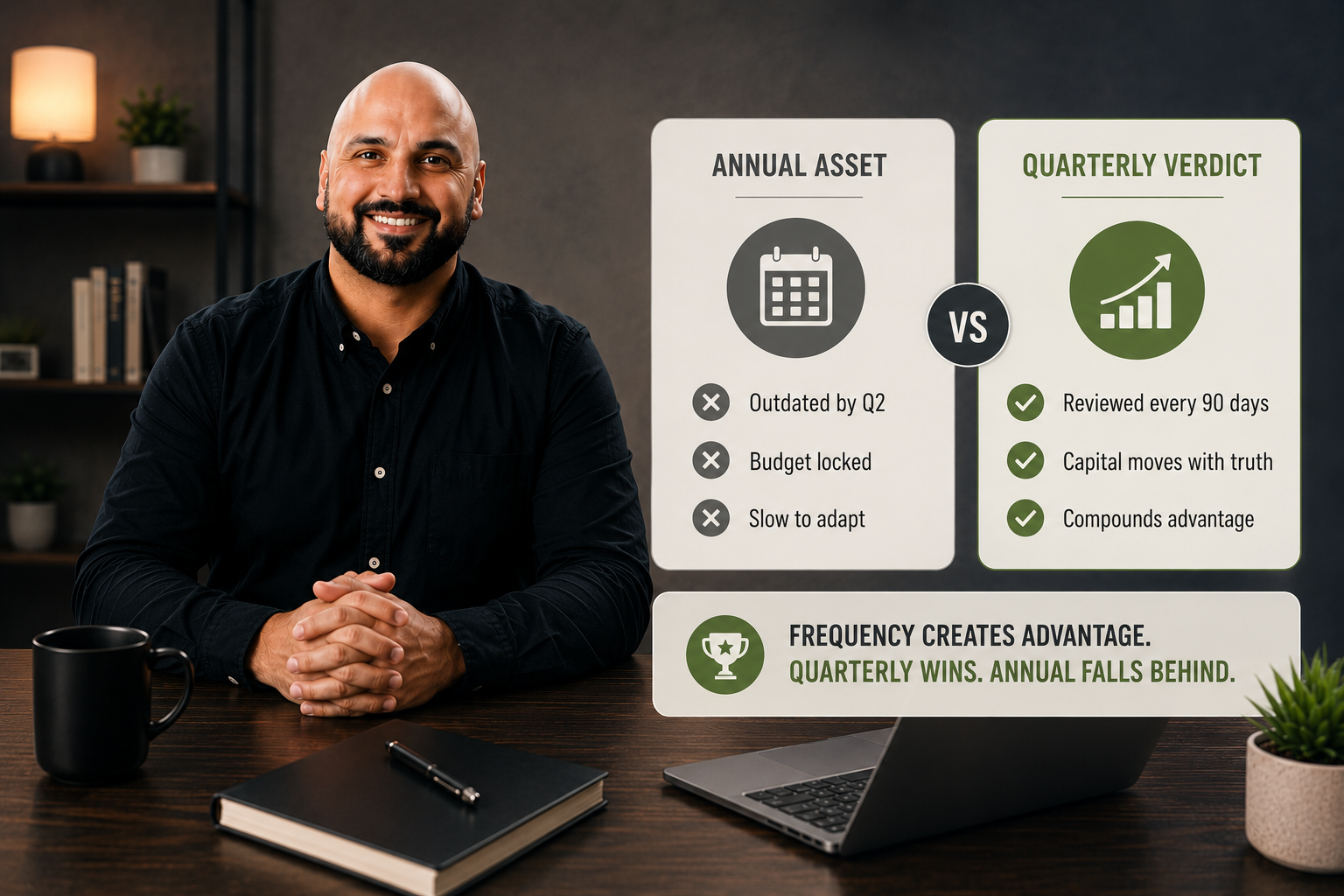
The quarterly verdict is the killer: an annual asset judged on a 90-day clock always reads as failure.
Three phases carry the measurement: identity signals at months 1 to 3, trust signals at months 4 to 8, revenue at months 9 and beyond.
Each phase has a named failure and a named repair, so silence is a diagnosis, never a mystery.
Attribution across the lag runs on first-touch capture in sales conversations, not on analytics software.
Do not judge the year in month three. Measure the phase you are in.
The Quarterly Verdict Kills the Annual Asset
The most expensive sentence in founder branding arrives in month three:
"What has the personal brand returned so far?" The question is fair and the clock is wrong. Companies review quarterly, so the brand investment faces a 90-day verdict while its payoff mechanics run on an annual cycle. The mismatch produces a predictable execution: the build gets cancelled at precisely the moment the compounding begins.
The instant-ROI expectation belongs to ad spend, where money and revenue share a window. A personal brand is a compounding asset, and the business case for building one lives in the ROI of personal branding for founders. This page handles the harder operational question: how a founder measures the build honestly while the payoff is still in transit.
Why the Payoff Sits Near Month 12
The lag is three delays stacked, and each one is structural. Trust builds through repeated exposure, so a buyer needs months of contact before belief forms. Belief converts to action on the buyer's schedule, when the problem becomes urgent, not when the content publishes.
The sales cycle then adds its own months on top. Exposure, decision, cycle: the stack lands the first attributable revenue near month 12, and my engagements have repeated that pattern for years.
The number is a pattern, never a law. Founders selling six-figure engagements to enterprises sit past it. Founders selling to an audience they already own sit inside it. The stack compresses or stretches, and the phases below hold either way, because the sequence never changes even when the calendar does.
The Three Measurement Phases
Each phase owns its own evidence, and the evidence arrives in a fixed order. The three phases are given below:
Months 1 to 3: the identity phase. Branded search trends upward, audience members start repeating the position, and introductions get more accurate. Revenue evidence is absent by design. Absent identity movement by month three signals a position problem, and the repair is repositioning before more production.
Months 4 to 8: the trust phase. Inbound conversations with intent begin, the owned list grows and acts, and sales calls start mentioning the content unprompted. Identity signals continuing without any trust signals point to a delivery or offer problem, not a volume problem.
Months 9 to 12 and beyond: the revenue phase. Content-attributed pipeline appears, deals close citing the founder's material, and inquiries arrive from months-old pieces. This is verdict territory, and only now does an ROI number mean anything.
The full instrument for reading each phase, nine signals across the three values, lives in personal brand KPIs. The phases supply the schedule the scorecard runs on.
Attribution Across the Lag Runs on Conversations, Not Software

Analytics cannot connect month-12 revenue to month-2 content, so the attribution method is human. The buyer's path runs through private research: watching without engaging, reading without clicking, deciding without a trace. Software sees the last touch. The founder captures the first one by asking every inbound buyer one question and logging the answer verbatim: "Where did you first come across my work?"
The answers accumulate into the only honest attribution record a personal brand produces. Read through ROAC, Return on Attention Created, the framework from GURU, INC. by AJ Kumar, the record shows which attention created the trust that became the deal. A founder who starts the logging discipline in month one owns twelve months of attribution evidence exactly when the verdict conversation arrives.
Calling the Verdict at Month 12
A passing build shows all three phases having fired in order. Identity moved first, trust followed, and attributed pipeline arrived carrying the first-touch record that proves the chain. The ROI calculation at that point is real arithmetic: attributed revenue against the year's production cost, with the compounding still accelerating underneath it.
A failing build names its own failure by phase. No identity by month three means the position never landed. Identity without trust by month eight means the delivery or the offer misfires.
Trust without revenue by month twelve usually means the capture is broken, not the brand: no owned list, no clear next step, no offer connected to the authority.
Running this phase review, and repairing the named failure instead of restarting the whole build, is standing work inside personal brand consulting for founders.
Personal brand ROI gets measured in phases across a 12-month lag: identity signals first, trust signals second, attributed revenue third. Each phase carries named evidence and a named repair. Do not judge the year in month three. Measure the phase you are in.
Why Does Personal Brand ROI Take 12 Months
Three delays stack. Trust requires months of repeated exposure before belief forms. Buyers act on their own urgency, not the publishing calendar. The sales cycle then adds its own duration. The stacked sequence lands first attributable revenue near month 12.
What Signals Show Brand ROI Before Revenue Arrives
Leading signals arrive in order: rising branded search, audience members repeating the position, then inbound conversations citing content and an owned list that acts. Each one predicts the revenue phase months before pipeline appears in a report.
Does the 12-Month Timeline Apply to Every Founder
The sequence applies universally. The calendar stretches with deal size and sales cycle length, and compresses when a founder starts with an owned audience. Enterprise founders read the same phases across a longer clock. The order never changes.
What Happens When Month Six Shows No Trust Signals
Month six with identity signals but no trust signals points to delivery or offer, never volume: the market knows the position and declines to act on it. Identity absent too means the repair sits earlier, at positioning. The phase locates the fix.