
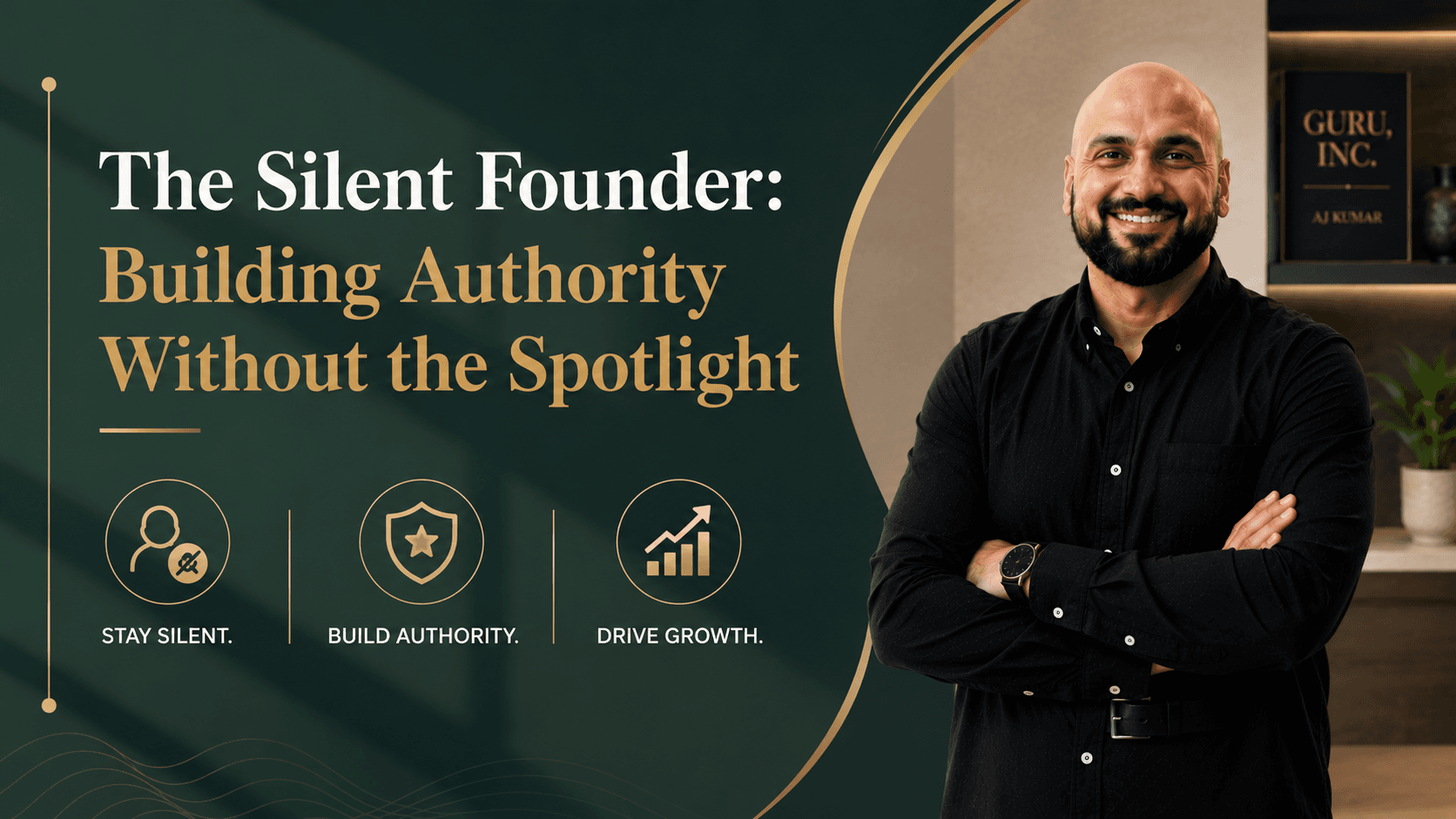
This is not the founder who lacks time, hates writing, or never built visibility. This is the founder who looked at the spotlight and declined it on principle. My answer never changes. The decision is legitimate. The consequences are not optional, and the company still needs authority from somewhere.
Key Takeaways
The silent founder refuses visibility by conviction, a different situation from lacking the time, skill, or awareness to build it.
Three legitimate reasons drive the refusal: privacy, company-first principle, and temperament.
The cost is structural: markets trust people before firms, so a faceless company fights uphill for demand, talent, and deals.
The one real payoff arrives at exit, where low founder dependency reads as transferable value.
Three models build authority without the founder's face: delegated voices, named IP, and the institution brand.
The founder can stay silent. The authority cannot.
Why Founders Refuse the Face Role
The refusal usually stands on one of three convictions, and each one deserves a straight answer instead of a lecture. Privacy: some founders value a life the market cannot see.
Company-first principle: the belief that a business built around one face is fragile, and the brand deserves to outlive its founder. Temperament: some operators are builders, not broadcasters, and forcing the role produces content with a pulse and no conviction.
None of these reasons is wrong, and I refuse to pretend otherwise to win an engagement. The mistake is treating the refusal as the end of the authority question. Declining the spotlight answers who does not carry the authority. It leaves open who does.
What the Silence Costs
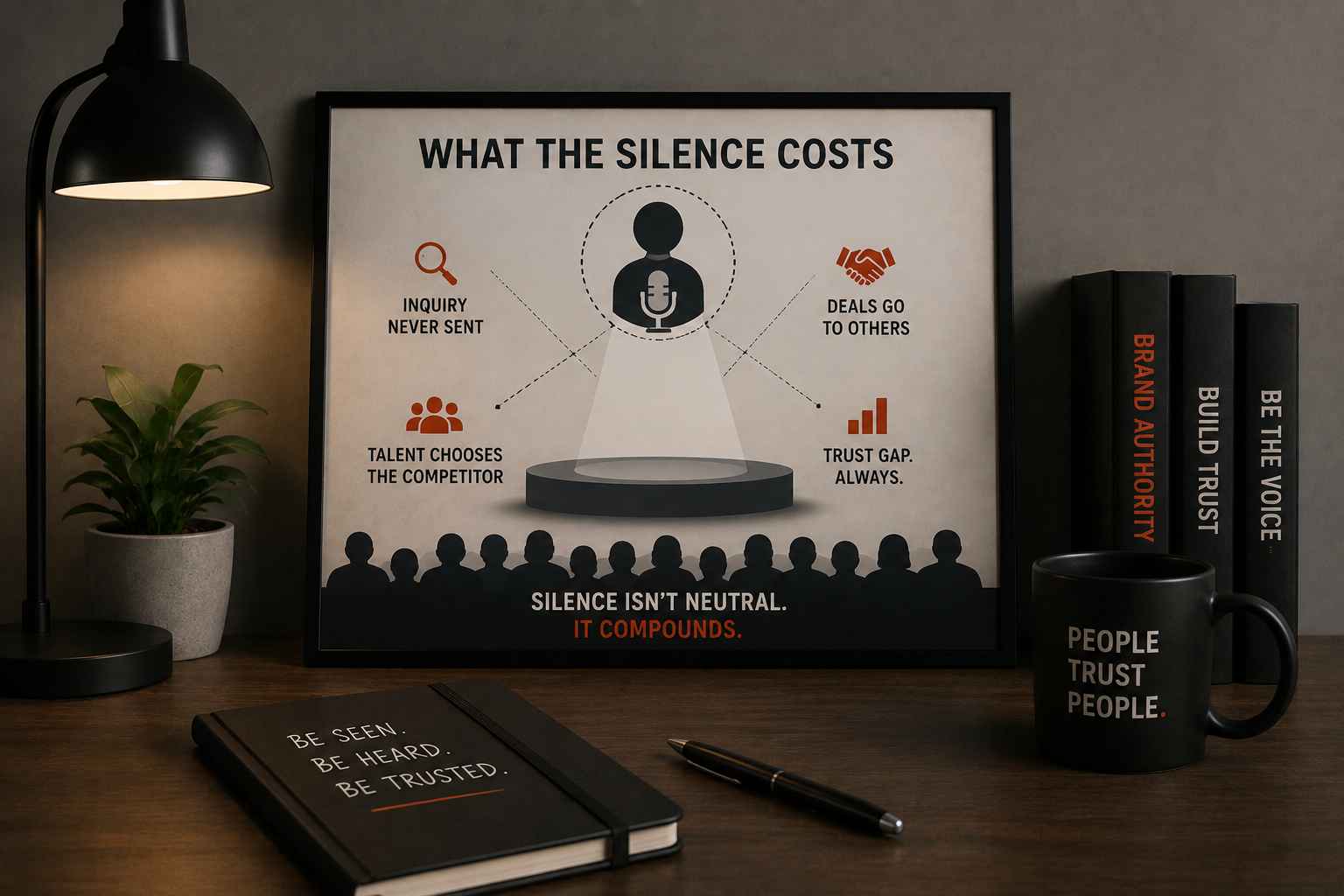
Markets trust people before they trust firms, and the silent founder swims against that current every day. A company with no visible human authority is a stage with the lights on and nobody at the microphone. The audience does not wait.
The audience leaves. Buyers researching a purchase look for a human judgment to believe. Talent deciding between offers looks for a leader to follow. Investors and partners look for conviction on record.
The corporate brand alone carries less trust than it used to, so the faceless company enters every one of those decisions at a disadvantage. I have watched these costs stay invisible for years. The inquiry never sent.
The candidate who chose the competitor with the visible founder. The deal that went to the firm whose judgment the buyer had already sampled in public. Nothing shows up in a report, and the pattern compounds quietly.
The One Place Silence Pays
Founder silence has one genuine payoff, and it arrives at exit. A company whose demand, trust, and pipeline never depended on one person's presence carries less key-person risk, and buyers price founder dependency directly into acquisition structure: earn-outs, persona licenses, extended lock-ins.
The silent founder who built authority into systems instead of a face walks into diligence with the cleanest answer to the buyer's hardest question.
The trade is real, and I state it plainly to every founder across my table. Visibility buys demand now and complicates the exit. Silence costs demand now and simplifies it. Neither side is free, and pretending otherwise is where most advice on this topic fails.
Three Models That Build Authority Without the Founder's Face
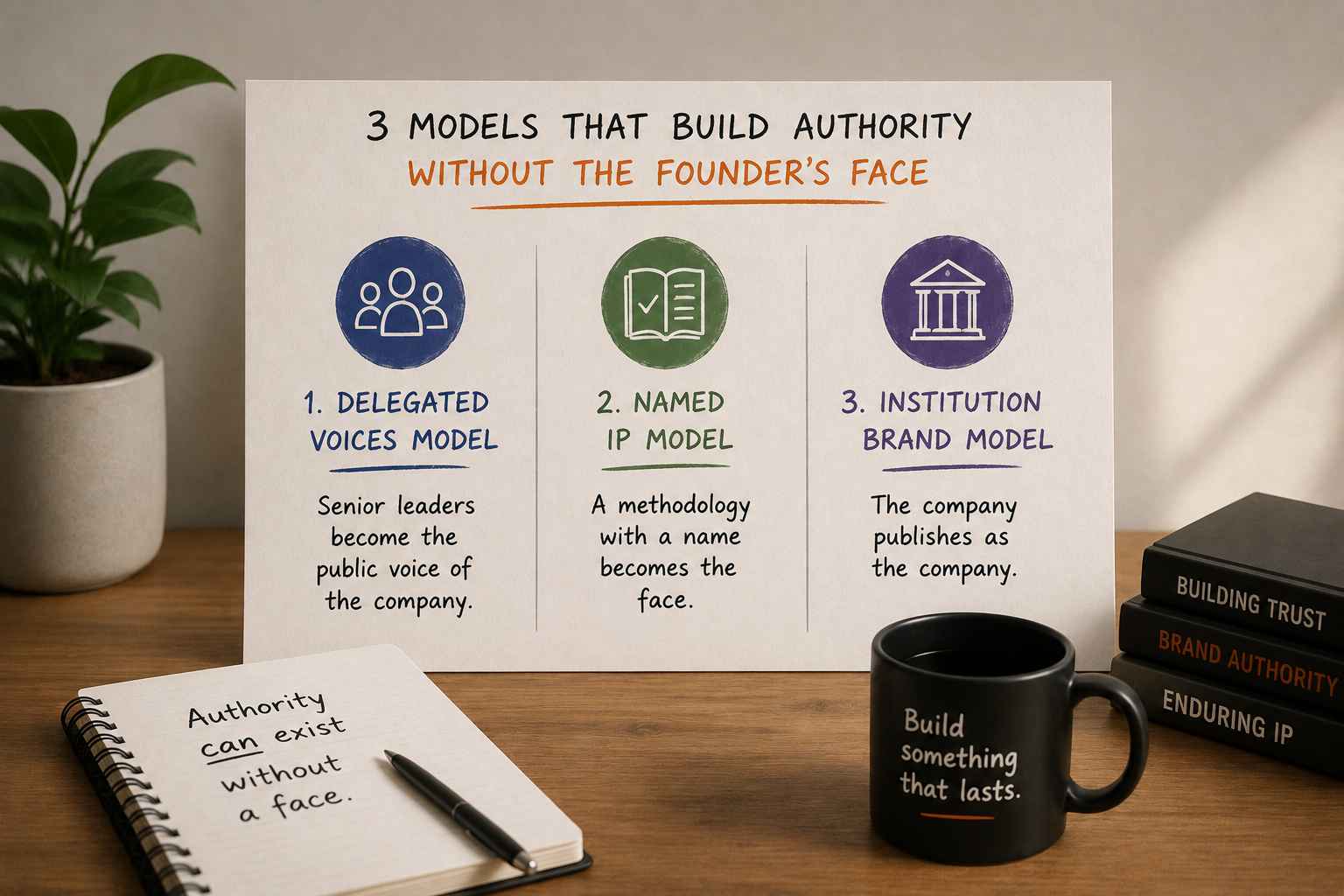
The refusal only works when something else carries the authority, and I build one of three models with silent founders. So the question becomes: if not your face, then whose voice? The three models are given below:
The Delegated Voices Model
Senior operators become the public judgment of the firm. The head of product argues the product philosophy. The head of delivery publishes the results thinking.
The company gets human trust without the founder's face, and the authority distributes across people who chose the role instead of one who refused it.
The Named IP Model
A methodology with a name carries authority without any person attached. The word authority has author inside it for a reason: the firm that writes the method owns the method. A firm known for its framework gets shortlisted for the framework, cited for the framework, and hired for the framework.
The IP becomes the face. This is the most durable of the three models, because named IP survives every departure, including the founder's.
The Institution Brand Model
The company publishes as the company: research, data, positions, under the firm's name. This is the slowest path and the hardest, since institutional voices earn trust over years, not quarters. It suits firms with genuine proprietary data or research output, and it fails firms that use it as a hiding place for having no point of view at all.
The Minimum Floor Even a Silent Founder Keeps
Zero presence is not an available option, and the silent founder who tries it pays for the vacuum. Buyers, candidates, and acquirers run the search regardless of the founder's preferences. They find either a minimal, accurate record or an empty space the market fills with guesses.
The floor I hold every silent founder to is small: an accurate profile, one position on record, and a clear pointer toward where the company's authority lives. Silence about daily life is a choice. Silence about who is behind the company reads as evasion.
Full Face, Silent With a System, Silent With Nothing
Attribute | Founder as face | Silent with a system | Silent with nothing |
Demand engine | Founder's authority | Delegated voices or named IP | Paid acquisition only |
Trust source | A visible person | Distributed people or IP | None the market can sample |
Key-person risk at exit | High, priced into the deal | Low | Low, with less to sell |
Failure mode | Everything depends on one person | Slower to build, needs real investment | The vacuum fills with guesses |
Choosing which model replaces the founder's face, and building it deliberately instead of defaulting into the third column, is exactly the positioning work my consulting practice covers, including for founders whose answer to the spotlight is a firm no.
The silent founder is running a legitimate strategy with a real bill attached. The refusal works when delegated voices, named IP, or an institutional brand carries what the founder declined to. The founder can stay silent. The authority cannot.
Can a Company Build Authority Without a Visible Founder
Yes, through three models: senior operators as public voices, named IP that carries the firm's judgment, or an institutional brand publishing real research. Each one demands deliberate investment. Authority never appears by default when the founder declines the role.
What Happens When a CEO Has No Public Presence at All
The market runs the search anyway and finds a vacuum, which it fills with guesses. Buyers hesitate, candidates choose visible leadership elsewhere, and diligence takes longer. A minimal accurate record costs little and prevents most of it.
Who Becomes the Voice When the Founder Declines
The senior operators closest to the judgment buyers care about: product leadership for product philosophy, delivery leadership for results thinking. The voices work when the people chose the role and argue one consistent company position, not personal brands pulling in different directions.
Does Founder Silence Help or Hurt an Acquisition
Both, at different stages. Silence costs demand during the years of building, since markets trust visible people. Silence pays at exit, where low founder dependency removes the earn-outs and persona licensing buyers attach to face-driven firms.