
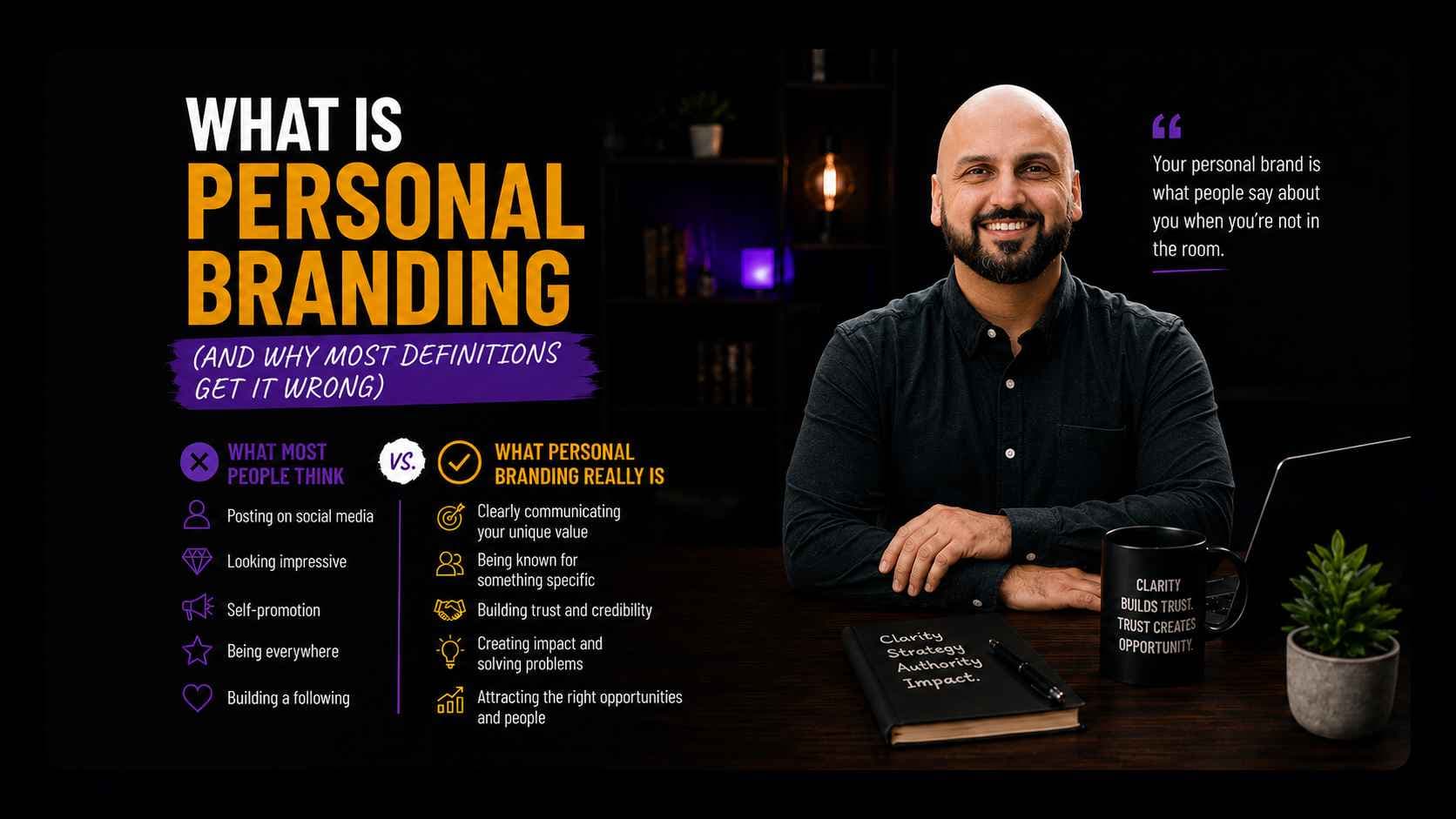
Personal branding is the active construction of positioning, intellectual property, content systems, and trust signals that generate inbound demand without paid advertising. The distinction matters because perception management is defensive. Authority architecture is generative. One protects what exists. The other builds what does not exist yet.
Key Takeaways:
Personal branding is authority architecture, not perception management. The standard definition focuses on controlling impressions. The correct definition focuses on building trust infrastructure.
Personal branding has five components: positioning, intellectual property, content architecture, entity recognition, and trust measurement.
73% of B2B buyers research the founder online before purchasing from the company (2024 Edelman Trust Barometer). Personal branding determines what the buyer finds.
The founders who build personal brands generate 3x higher inbound inquiry rates than founders without personal brands (2024 LinkedIn B2B Institute).
Personal branding in 2026 requires structured content that search engines and AI systems index, cite, and recommend. Social media alone is insufficient.
The term "personal branding" was first used by Tom Peters in a 1997 Fast Company article titled "The Brand Called You." The concept has evolved from self-promotion to authority engineering.
The Standard Definition of Personal Branding (And Why It Falls Short)

The standard definition says personal branding is "the practice of managing and optimizing how you are perceived by others."
Harvard Business School, Forbes, Wikipedia, and dozens of marketing platforms use this definition or a variation of the definition. The definition is not wrong. The definition is incomplete.
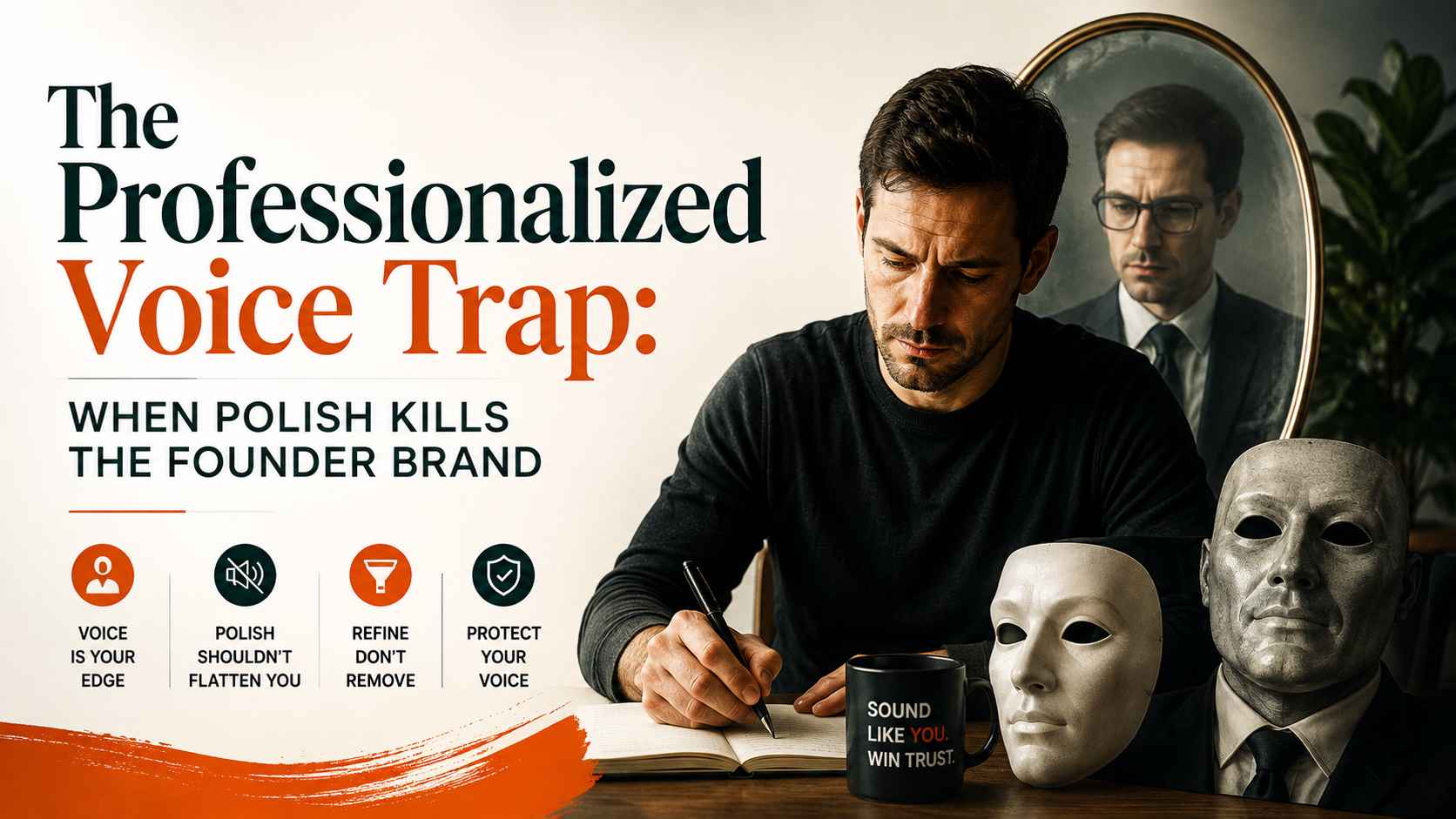
The problem: "managing perception" is a defensive posture. The founder who manages perception reacts to how the market sees them. The founder who builds authority architecture creates the conditions that determine how the market sees them. Managing perception is adjusting the mirror. Building authority is constructing the building the mirror reflects.
I spent more than 20 years building personal brands for founders, and the founders who failed were the founders who focused on perception. They polished the LinkedIn profile. They hired a photographer. They crafted the elevator pitch. The perception was managed. The inbound demand was zero.
The founders who succeeded built something different. They named frameworks. They published structured content. They created entity recognition in search systems. They engineered trust signals that compounded over time. The perception followed the architecture. Not the other way around.
What Personal Branding Actually Is
Personal branding is the process of building the authority architecture that makes expertise visible, trusted, and monetizable.
Three words in this definition carry the weight:
Visible. The market discovers the founder through search engines, AI-powered answers, LinkedIn, podcasts, and speaking events. Visibility is the result of structured content, entity recognition, and consistent positioning across platforms.
Trusted. The market believes the founder's expertise is credible, proven, and relevant. Trust is the result of named intellectual property, published proof, third-party validation, and consistency over time.
Monetizable. The trust converts into business outcomes: consulting inquiries, speaking fees, partnership opportunities, book sales, course revenue, or acquisition interest. Monetization is the result of an authority architecture that routes trust into revenue through clear offers and structured funnels.
The founder who achieves all three (visible, trusted, monetizable) has a personal brand. The founder who achieves visibility without trust has an audience. The founder who achieves trust without visibility has a reputation. The founder who achieves neither has expertise that nobody knows about.
I published these distinctions in GURU, INC. because the confusion between audience, reputation, and personal brand costs founders years of misdirected effort.
The Five Components of Personal Branding
Personal branding has five components. Each one builds on the previous. Skipping a component weakens the entire architecture.
Component 1: Positioning
Positioning answers one question: what does the market associate with the founder's name? The positioning statement declares a specific audience, a specific outcome, and a specific methodology.
"I build authority brands for founders scaling revenue" is a position. "I help businesses grow" is a commodity description. The personal brand starts with the positioning statement that separates the founder from every other provider in the market.
Component 2: Intellectual Property
Named frameworks, methodologies, and systems transform general expertise into citable authority. The founder who has a named framework gets referenced by name. The founder who has general knowledge gets forgotten.
Intellectual property is the compounding asset in personal branding. Every piece of content references the framework. Every client conversation introduces the framework. Every speaking engagement features the framework. The name travels further than the person.
Component 3: Content Architecture
Content architecture defines which platforms serve which function, how content flows between them, and how each piece reinforces the positioning. A personal brand without content architecture is a collection of unrelated posts. A personal brand with content architecture is a compounding system.
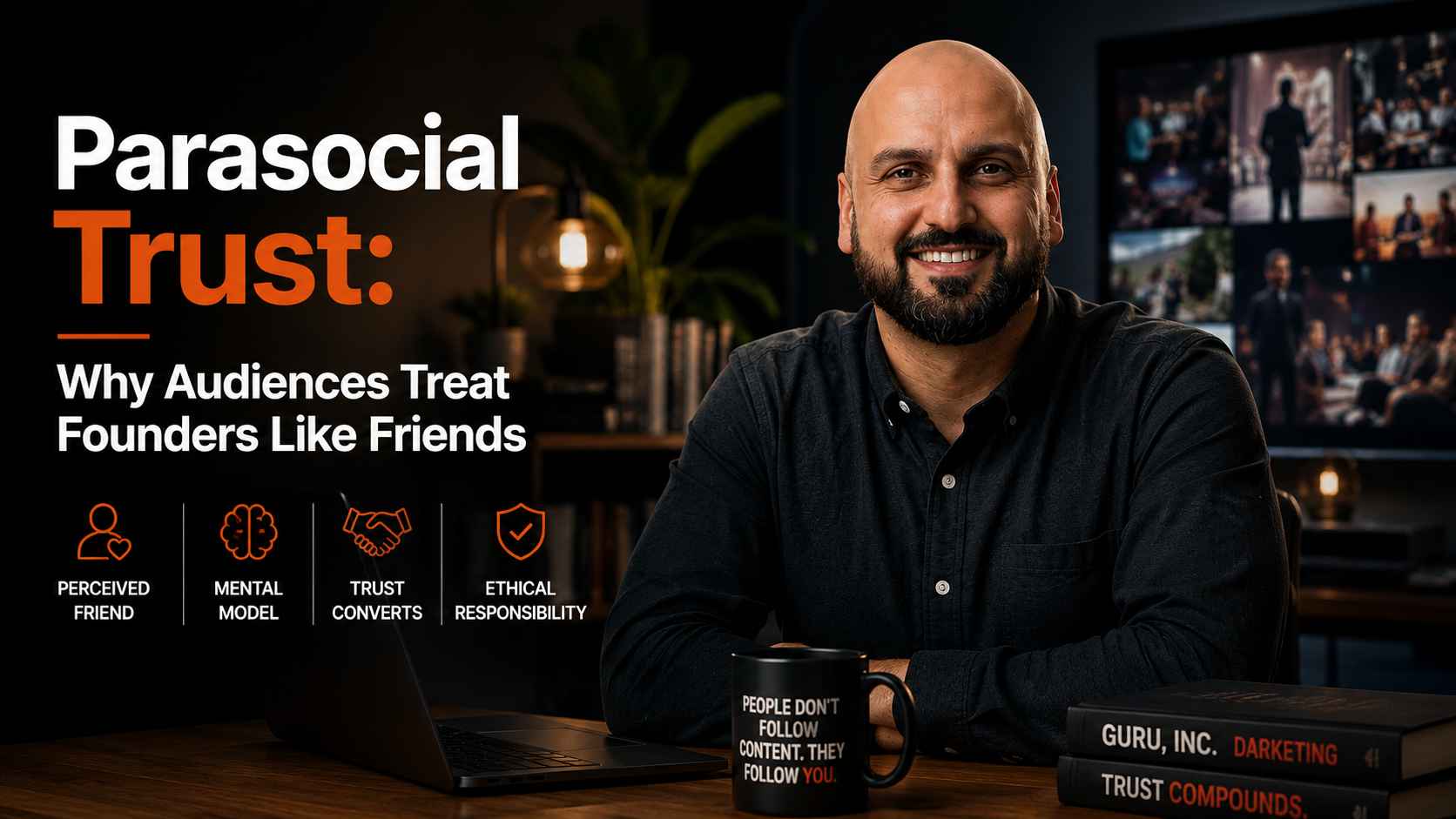
The content architecture for founders prioritizes three platforms: a website for search authority, LinkedIn for professional authority, and one video channel for parasocial trust.
Component 4: Entity Recognition
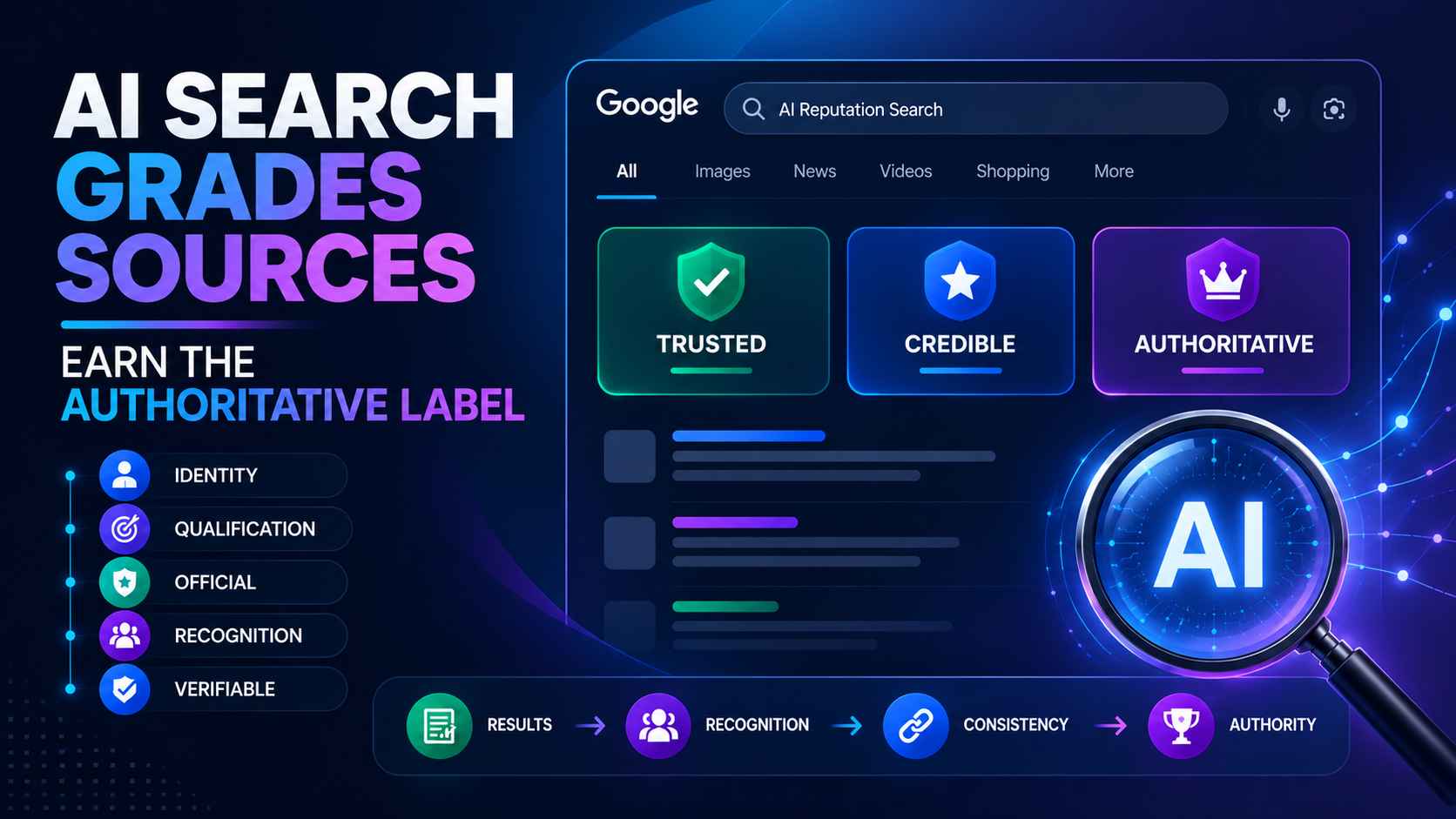
Entity recognition is the process by which search engines and AI systems classify the founder as a known expert in a specific field. Google builds entity profiles from structured content, schema markup, and cross-platform consistency. AI systems (ChatGPT, Perplexity, Google AI Overviews) cite founders with established entity recognition.
Entity recognition is the component of personal branding that most definitions ignore entirely. In 2026, a personal brand that exists only on social media and not in search or AI systems is invisible to the fastest-growing discovery channels.
Component 5: Trust Measurement
Trust measurement tracks the business outcomes of personal branding: inbound inquiry volume, speaking invitation frequency, media mention count, AI citation appearances, and sales cycle length.
Follower count and engagement rate are awareness metrics. Trust metrics measure the personal brand's conversion rate from attention to action.
What Personal Branding Is Not
Personal branding is confused with five related but distinct concepts.
Personal branding is not self-promotion. Self-promotion broadcasts accomplishments. Personal branding builds systems that generate recognition without broadcasting.
The founder who promotes accomplishments on LinkedIn performs self-promotion. The founder who publishes frameworks that the market cites performs personal branding.
Personal branding is not social media marketing. Social media is one distribution channel for a personal brand. The personal brand includes the website, search presence, AI citations, speaking authority, published IP, and entity recognition. Social media is a component. Personal branding is the system.
Personal branding is not reputation management. Reputation management protects an existing reputation from negative information. Personal branding builds the authority architecture that generates the reputation. Reputation management is defensive. Personal branding is generative.
Personal branding is not a logo, color scheme, or visual identity. Visual branding expresses the positioning through design. The positioning precedes the design. A founder who invests in visual branding before defining the positioning produces attractive design with no strategic foundation.
Personal branding is not business branding. A personal brand is built on the founder's expertise, judgment, and point of view. A business brand is built on the company's products, processes, and team. Both are required. The personal brand comes first because buyers evaluate the founder before evaluating the company.
Why Personal Branding Matters More in 2026 Than Any Previous Year

Three market forces make personal branding non-optional for founders in 2026.
Force 1: AI systems surface recognized experts. ChatGPT, Perplexity, and Google AI Overviews generate answers by citing recognized entities. A founder with structured content and entity recognition appears in AI-generated answers.
A founder without a personal brand is invisible to the discovery channel growing fastest. The 2025 BrightEdge study found that 42% of domains lost visibility after AI Overview algorithm updates. Founders with strong personal brands retained citation share.
Force 2: Trust erosion from AI-generated content. The volume of AI-generated content online has increased 300% since 2023 (Originality.ai 2025 Report). Audiences cannot distinguish human expertise from machine-generated information.
Personal branding built on named IP, practitioner proof, and first-person experience becomes the trust filter that audiences use to separate signal from noise.
Force 3: Buyers research the person before the product. 73% of B2B buyers research the founder or CEO online before making a purchasing decision (2024 Edelman Trust Barometer). 75% of job candidates research company leadership before applying (2024 LinkedIn Global Talent Trends). The personal brand is the first impression for both buyers and talent.
Founders who delay personal branding lose 2 to 3 years of compounding authority to competitors who start now. Famous personal brands were built by founders who invested early, not founders who waited for the right moment.
How Personal Branding Has Changed Since 1997
Tom Peters published "The Brand Called You" in Fast Company in 1997. The concept has evolved through three eras.
Era 1: Self-Promotion (1997 to 2010). Personal branding meant crafting an elevator pitch, printing business cards, and networking at conferences. The tools were offline. The audience was local. The personal brand existed in the room where the founder stood.
Era 2: Social Media (2010 to 2022). Personal branding moved online. LinkedIn profiles, Twitter threads, Instagram posts, and YouTube channels became the tools. The audience expanded globally. The personal brand existed on whichever platform the founder published on. The limitation: the platform owned the distribution.
Era 3: Authority Architecture (2022 to present). Personal branding now requires structured content that search engines and AI systems index, cite, and recommend. The tools include schema markup, entity recognition, topical authority, and cross-platform consistency.
The personal brand exists in the knowledge graphs and language models that increasingly determine what the market discovers. The founders who adapted to Era 3 built authority that compounds across every discovery channel simultaneously.
The founder who practices Era 2 personal branding (social media only) in an Era 3 world misses the fastest-growing discovery channels: AI-powered search, voice assistants, and citation-based recommendations.
Where to Start With Personal Branding
Personal branding starts with three actions. The three actions take one afternoon.
Action 1: Write the positioning statement. Eight words that declare what the founder does, for whom, and through which approach. The personal brand statement formula provides the structure: action verb plus outcome plus audience plus differentiator.
Action 2: Name one framework. Take the process the founder uses with every client or in every project. Give the process a name. Document the steps. The named framework becomes the differentiating asset that makes the personal brand citable and memorable.
Action 3: Publish one piece of content. Write one 1,500-word article or record one 15-minute video that demonstrates the framework in action. Publish on the founder's website. The first piece of content begins the compounding process.
Three actions. One afternoon. The personal brand foundation is built.
Everything after this foundation (content architecture, LinkedIn strategy, video distribution, entity recognition, AI citation optimization) is amplification of the foundation. The personal branding books listed on this site provide the frameworks for each amplification layer.
Founders who need strategic guidance beyond the starting point benefit from working with a personal branding consultant who builds the full authority architecture alongside the founder.
Frequently Asked Questions
What is a personal brand in simple terms?
A personal brand is the authority architecture that makes a founder's expertise visible, trusted, and monetizable. In simple terms: a personal brand is what the market thinks of when the founder's name comes up. A strong personal brand generates inbound demand.
A weak personal brand generates nothing. No personal brand means the market does not think of the founder at all.
What is the difference between personal branding and marketing?
Personal branding builds the trust infrastructure around the founder's expertise. Marketing promotes products or services to an audience. Personal branding determines what gets marketed and why the audience trusts the message. Marketing distributes the message. Personal branding precedes marketing because trust precedes purchase.
Who needs personal branding?
Every founder, executive, consultant, and creator whose revenue depends on trust benefits from personal branding. Founders at the $100K to $10M revenue stage benefit most because the expertise is proven and the visibility gap is largest. Executives benefit because 73% of buyers research leadership before purchasing.
Founders with limited time benefit because the authority-first approach requires 3 to 5 hours per month, not 20 hours per week.
Is personal branding the same as being an influencer?
Personal branding and influencer marketing serve different goals. Personal branding builds trust that generates business outcomes (inbound leads, premium pricing, partnerships). Influencer marketing builds audience reach that generates sponsorship revenue.
The metrics, platforms, and strategies differ fundamentally. A founder with a strong personal brand is not an influencer. A founder with a strong personal brand is a trusted authority.
How long does personal branding take?
The foundation (positioning statement, named framework, first published content piece) takes one afternoon. Early trust signals (inbound inquiries, profile views from prospects) appear within 60 to 90 days.
Measurable authority (search rankings, AI citations, shortened sales cycles) matures within 6 to 12 months of consistent execution.