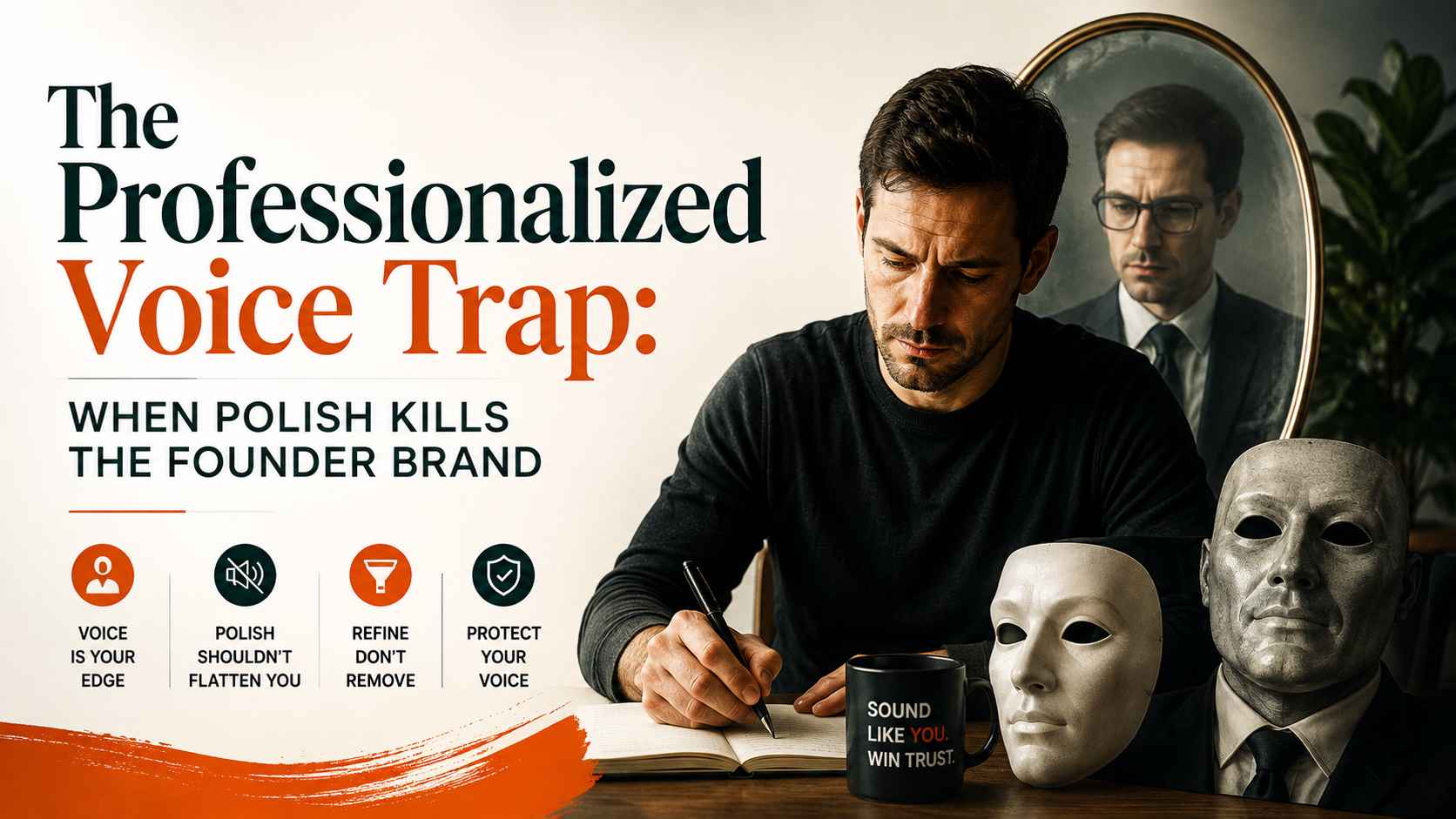


The line is sourcing: humor and stories drawn from the founder's own domain read as mastery, and everything imported reads as reaching. Sourcing is a decision, not a gift, which means any expert makes it correctly on purpose.
Key Takeaways
Credible humor comes from inside the expertise: buyer patterns, market absurdities, and expensive mistakes.
Storytelling converts expertise into memory, and the most studied edutainment program in history produced measurable learning outcomes.
Three story structures belong to every expert: the expensive mistake, the pattern story, and the conviction story.
Business educators like Alex Hormozi and Sahil Bloom demonstrate entertaining delivery attached to real substance at scale.
Delivery rules protect the credibility: aim humor at problems and past selves, never at competence or people.
Humor density stays low and relevance stays high. Seasoning, never structure.
Credible Humor Comes From Inside the Expertise
The humor that builds expert credibility is domain humor: the absurdities only an insider sees. A founder who jokes about the buyer pattern everyone recognizes, the vendor promise everyone has heard break, or their own five-figure mistake demonstrates fluency no outsider fakes.
The audience laughs and updates their assessment upward, since spotting the funny inside the technical requires the technical. Imported humor runs the opposite direction. Trend audio, borrowed memes, and jokes about nothing signal hunger for attention, and professional audiences read the signal in seconds.
The instructional humor research behind this line is covered in why entertaining content builds founder credibility: relevant humor deepens learning, and unrelated humor adds nothing. Sourcing is the entire rule. A founder never asks how funny to be. A founder asks where the funny comes from.
Storytelling Converts Expertise Into Memory
A story is the container that moves expertise from heard to remembered. Facts arrive naked and leave quickly. A story wraps the same fact in stakes, a person, and a change, and the wrapping is what memory grips.
The most studied edutainment program in history proved the principle at population scale: research by Kearney and Levine, published through the National Bureau of Economic Research, found children with greater early access to Sesame Street were measurably less likely to fall behind in school.
Entertaining delivery taught, and the outcomes held up under economists. Founders hold richer story inventory than any television writer. Every engagement, failure, and market shift in twenty years of operating is a stakes-and-change structure waiting for assembly. The expert who claims to have no stories has stories filed under the wrong label: experience.
Three Story Structures Every Expert Owns
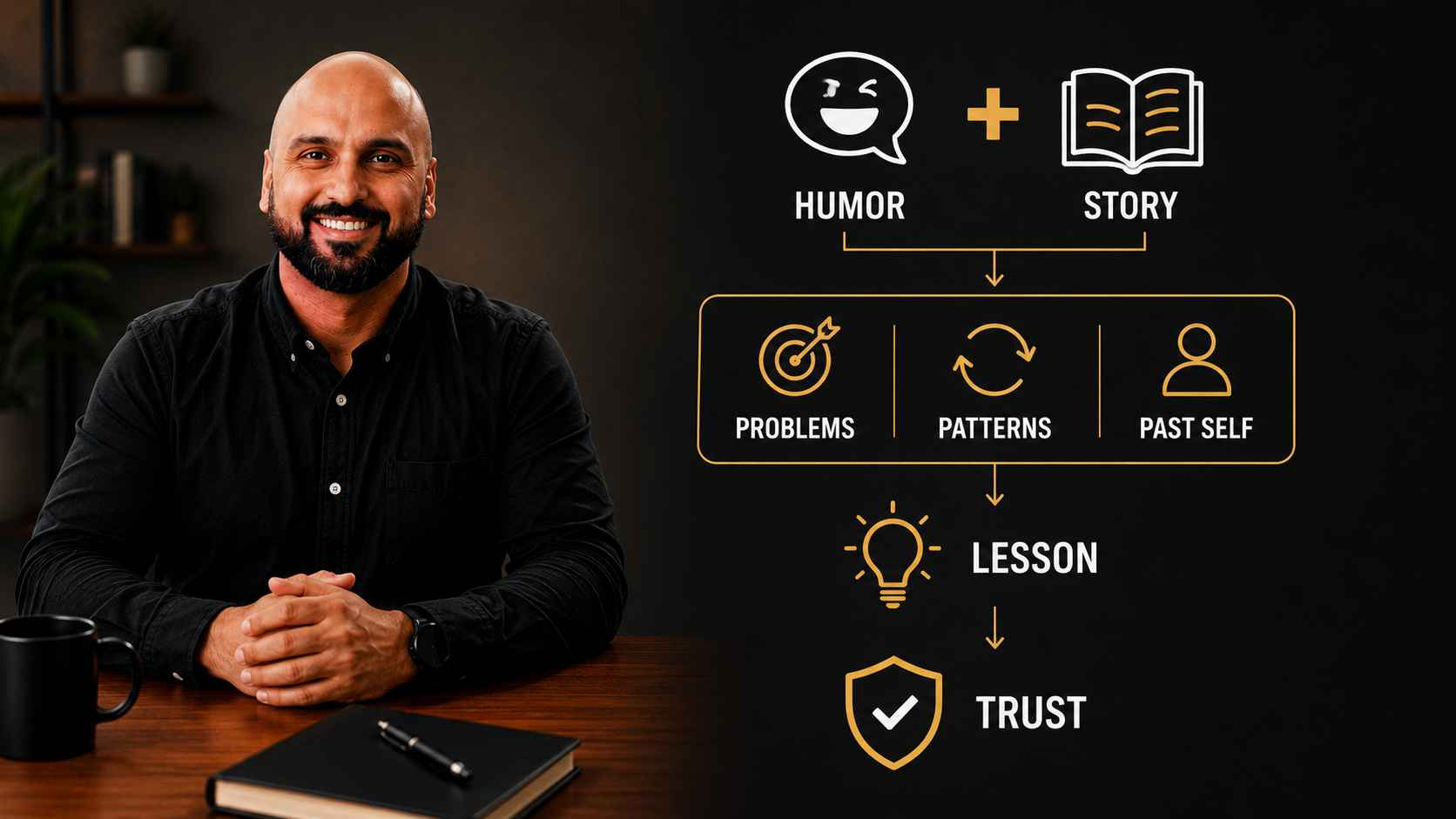
Three story structures cover nearly every authority-building situation an expert faces. The three structures are given below:
The expensive mistake. The founder's own costly error, what it revealed, and the rule it produced. Self-cost buys the highest trust per minute, since the storyteller pays the tuition and the audience keeps the lesson.
The pattern story. The recurring situation the founder has watched dozens of times: the same buyer stall, the same scaling trap. Patterns anonymize naturally, protect confidentiality, and prove volume of experience.
The conviction story. The moment the founder's market position formed: what they saw that changed their operating judgment. Every story of this type deposits directly into the position the brand argues.
Each structure opens best as a gap, and the mechanics of that opening live in hooks and open loops for expert content. The story is the loop's body. The lesson is its close.
Business Educators Who Entertain Without Clowning
Public examples prove the method at scale, and none of the founders here are clients; each documents the results openly. Alex Hormozi delivers dense business education through energetic whiteboard delivery and bold captions, and publicly documented a 30-day experiment posting only business content that reported higher comment rates and stronger subscriber conversion despite fewer views. Depth beat breadth on his own numbers.
Sahil Bloom built The Curiosity Chronicle newsletter past 800,000 subscribers on story-driven frameworks: personal narratives carrying transferable structures.
Neither educator performs comedy. Both entertain through pace, stakes, and story while the substance does the positioning, which is the exact division of labor the sourcing rule predicts.
Delivery Rules That Protect the Credibility

Five delivery rules keep humor and story on the credible side of the line. The five rules are given below:
Aim humor at problems, patterns, and your past self. Never at people, clients, or competence.
Run one story per piece. Two stories split the lesson and halve the retention.
Keep humor as seasoning. Relevance stays high, density stays low, and the lesson stays the spine.
Land the lesson explicitly. A story without a stated rule entertains and builds nothing.
Tell only what is true. Composite characters and invented stakes eventually surface, and surfacing costs everything.
The rules turn entertaining delivery into a system rather than a personality trait, the same standard GURU, INC. teaches founders to hold. Wiring that system into a founder's positioning and content engine is the work of personal brand consulting for founders, and the edutainment content strategy for founders is the frame the whole cluster serves.
Experts keep credibility while using humor and storytelling by sourcing both from inside the expertise. Domain humor signals mastery. Stories with stakes and stated lessons convert knowledge into memory.
The strongest story leads with what the expertise cost, never with what the expert knows. Imported entertainment spends authority, and sourced entertainment compounds it.
Is Self-Deprecating Humor Safe for Founders
Self-deprecation aimed at past mistakes builds trust, since the founder pays the joke's cost and keeps the lesson. Self-deprecation aimed at current competence erodes authority. The target decides the outcome: yesterday's error is safe, and today's ability is not.
How Do Introverted Founders Use Storytelling
Introverted founders use structure in place of performance. The three story structures run on written preparation, not stage energy: a documented mistake, a recognized pattern, a formed conviction. Delivery follows the founder's natural register, and the stakes do the projecting.
Do Client Stories Risk Confidentiality
Pattern stories remove the risk. The founder tells the recurring situation, never the specific client: the stall every buyer hits, the trap every scaling company meets. Patterns prove experience volume while protecting every name involved. Specific client stories require explicit permission.
How Often Does Expert Content Use Humor
Humor works as seasoning at low density: one earned laugh inside a serious argument outperforms constant joking. Frequency matters less than sourcing. A single domain joke per piece signals fluency, while wall-to-wall comedy signals a performer without a position.