How Does a Content System Build Founder Authority?
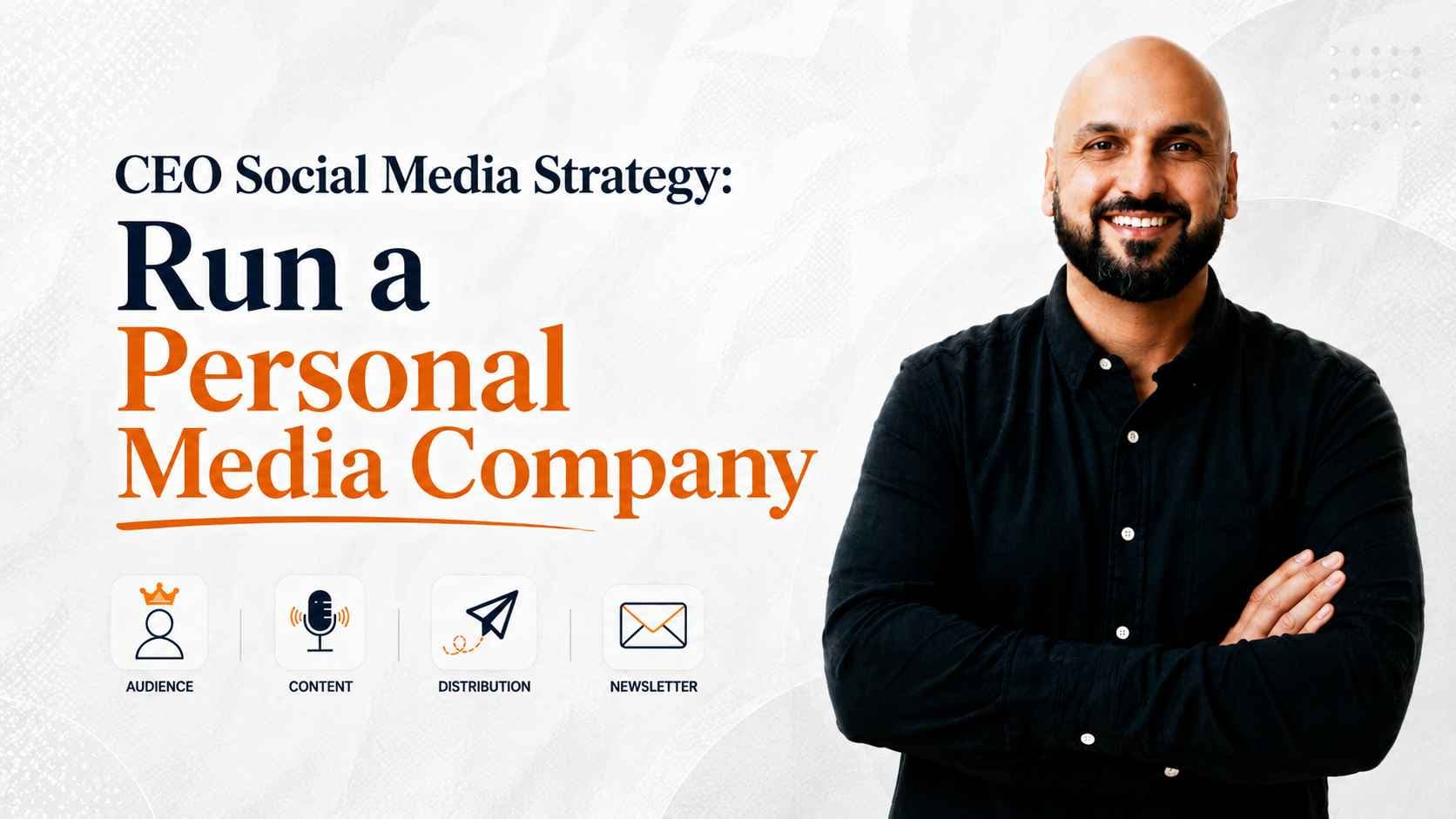
A content system builds founder authority by making every piece of content reinforce one positioning signal instead of starting from zero. Founders fail at content because they post without a system, not because they lack knowledge. The Personal Media Company Model, mapped in GURU, INC., develops content in four stages: proof of concept, pilot, show development and series scaling. One idea becomes assets across five layers: website, long-form, short-form, email and third-party appearances. AI systems evaluate a founder's content across all platforms at once, so consistent positioning matters more than volume on any single platform.
// Why Smart Experts Fail at Content
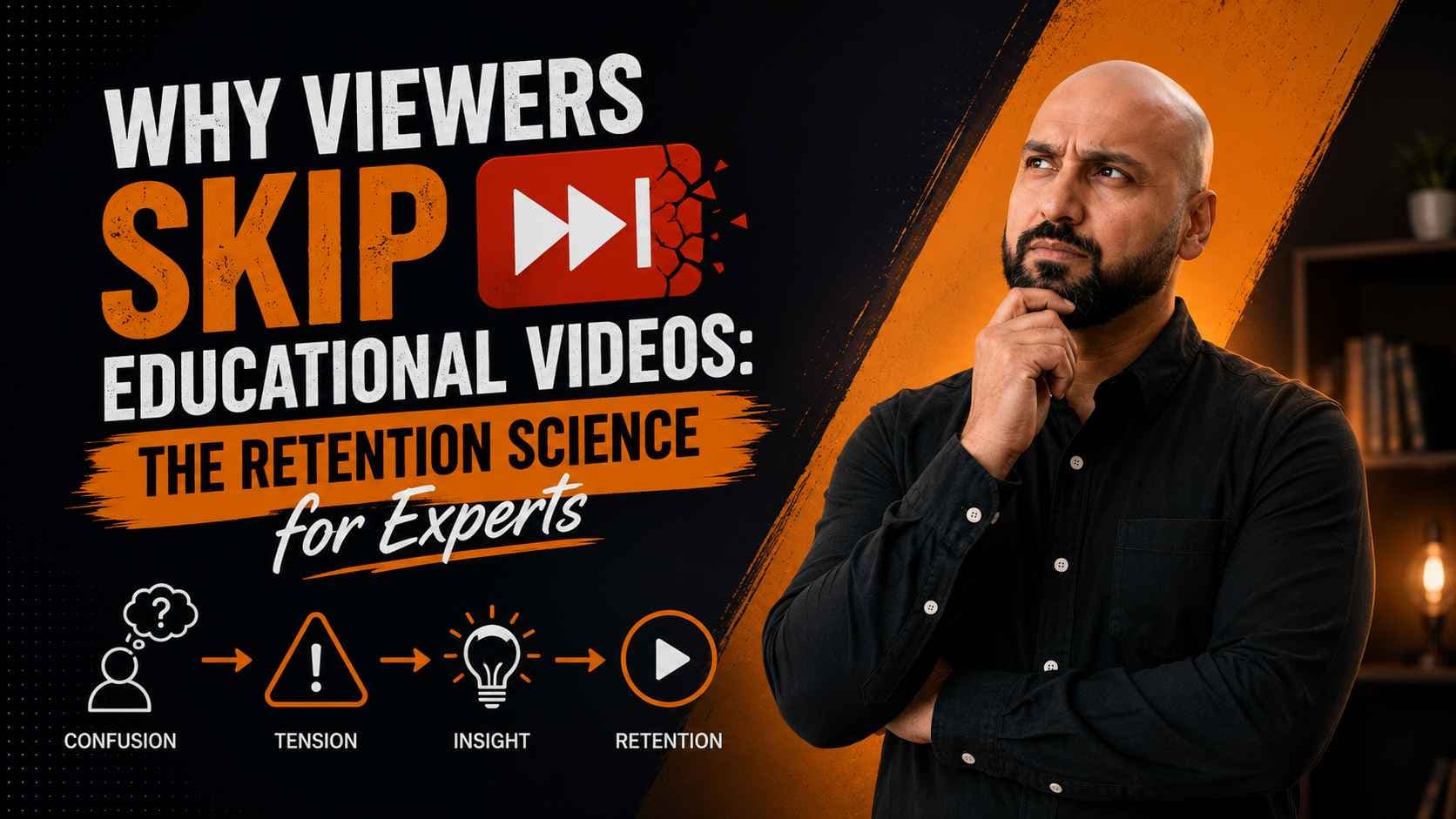
Why Do Experts Fail at Content?
Experts fail at content because each post is a standalone bet with no system connecting it to the last.
Here’s a pattern I’ve seen hundreds of times across more than 20 years of building brands.
A founder knows their subject deeply. They could talk about it for hours. They’ve helped real clients get real results. But when it comes to social media, something breaks down. The content feels scattered. It doesn’t connect to anything bigger. The audience doesn’t grow. Or it grows but nothing comes of it.
The usual advice is to post more. Be more consistent. Show up every day. And while consistency matters, it misses the bigger issue entirely.
Where most experts are stuck
Random Posting
Every post is a standalone bet
Algorithms can't categorize you
Audience has no idea what to expect
Each piece starts from scratch
You burn out because nothing builds
Views don't convert to anything
What a system unlocks
Content System
Every post reinforces the same signal
Algorithms know who to show you to
Audience develops habits around you
Each piece builds on the last
Effort stays constant, authority compounds
Content becomes business infrastructure
Posting without a system is like broadcasting on a TV channel with no programming schedule. The audience has no idea what to expect, so they don’t come back. The algorithm has no idea how to categorize you, so it doesn’t promote you. And you burn out because every piece of content feels like starting from scratch.
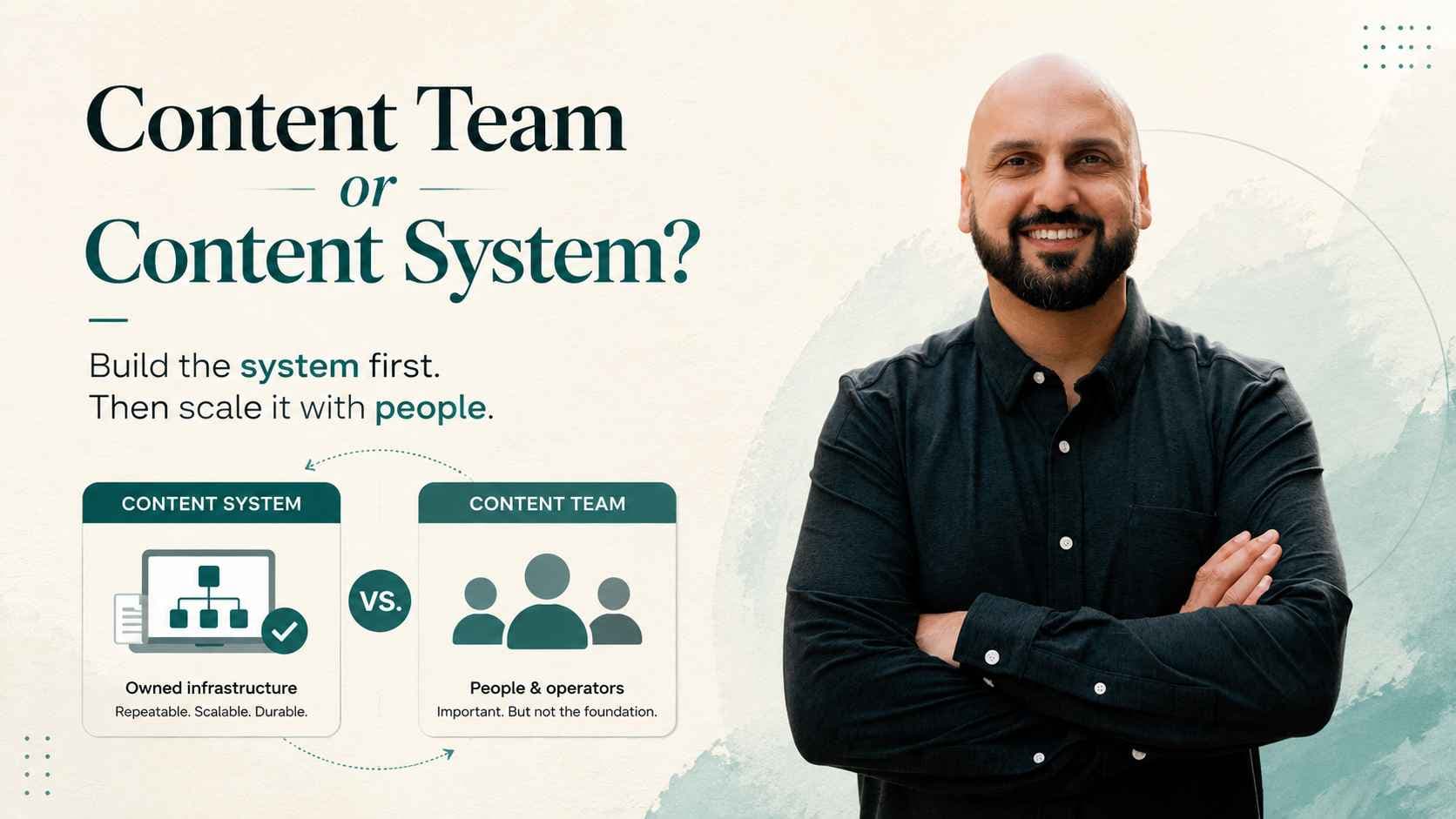
The shift that changes everything isn’t working harder at content. It’s building a system where every piece reinforces the same authority signal.
“But even among the most driven and accomplished people I've worked with, one surprising pattern kept showing up: They couldn't stand social media. They viewed it like an entry-level position that they could offload onto their college-aged niece or nephew.”
— AJ Kumar, GURU, INC.
// The Shift That Changes Everything
What Is the Personal Media Company Model?
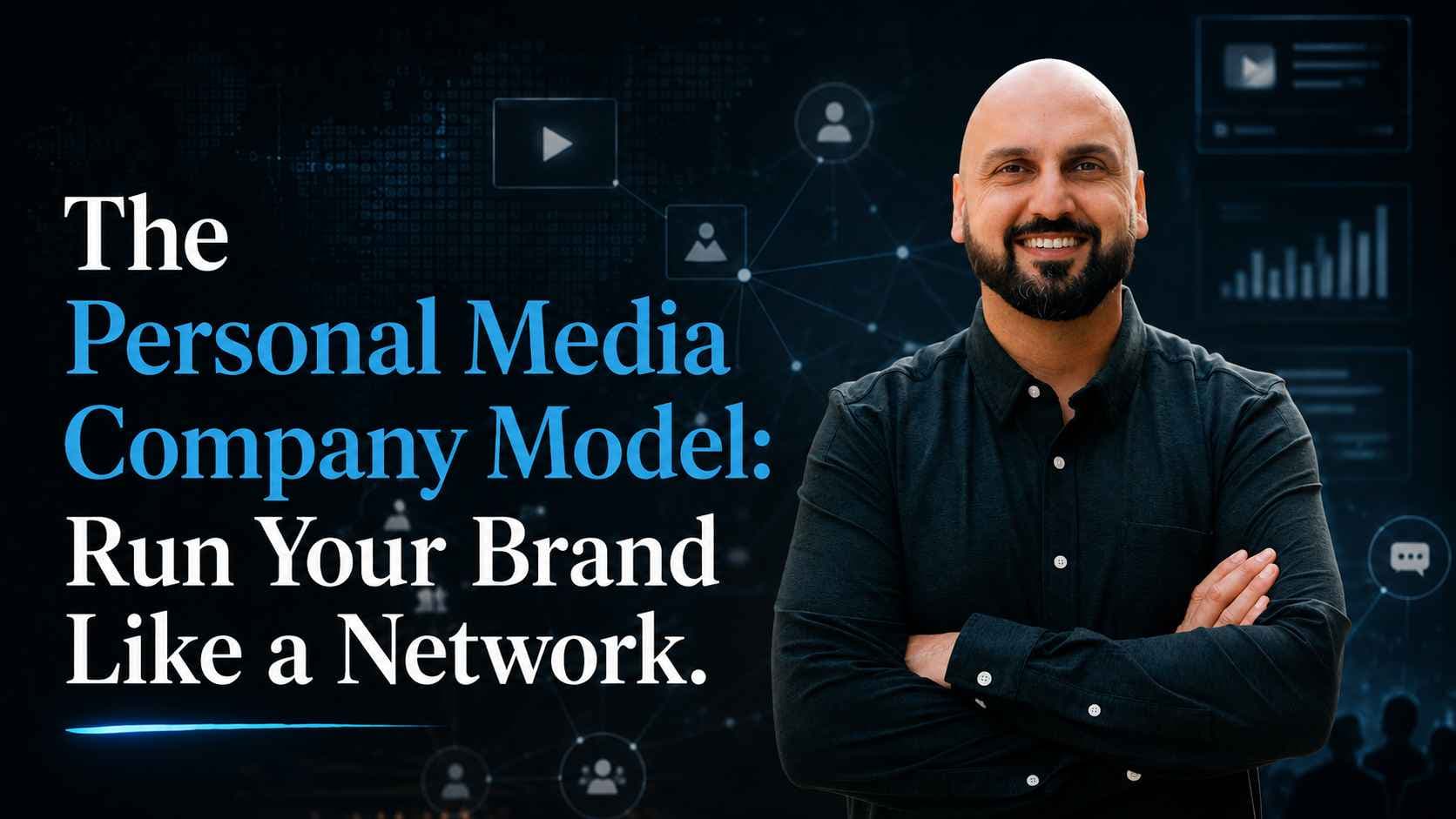
The Personal Media Company Model is a four-stage system, developed by AJ Kumar in GURU, INC., for building content the way a television network develops shows.
We live in an era where social media is the new television. TikTok, YouTube, and Instagram are the networks. Your phone is the screen. And every expert creating content is running their own channel — whether they realize it or not.
Television has always relied on formats. Game shows. Talk shows. Sitcoms. The most successful creators today use the same DNA, adapted for platforms where content lives in someone’s pocket. MrBeast turned game show dynamics into bingeable digital stunts. Erika Kullberg turned legal explainers into a two-character format that’s instantly recognizable. These aren’t random posts. They’re shows.
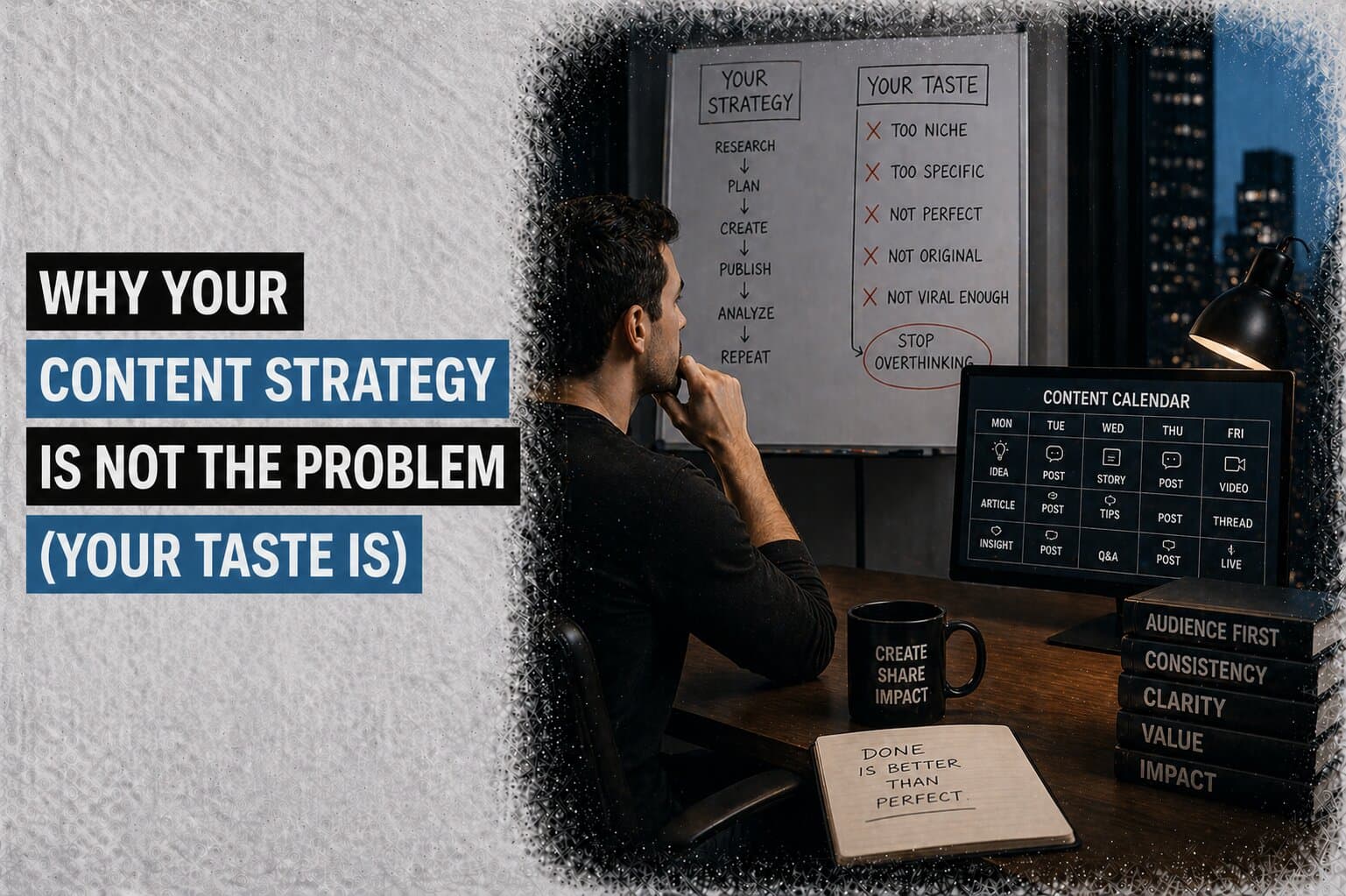
The difference between experts who build audiences and experts who stay invisible is this shift in thinking. When you think like a content creator, every post is a standalone bet. When you think like a media executive, every post is an episode in a series people learn to recognize and return to.
In GURU, INC., I mapped this into a four-stage system called the Personal Media Company Model. It mirrors how real TV networks develop hit shows — and it’s the same progression every expert needs to follow.
1
2
3
4
Most experts try to jump straight to Stage 4 without going through the first three. That’s why their content feels scattered and growth stalls. The stages build on each other. Skip one and the whole thing falls apart.
// One Idea, Multiple Assets, One Authority Signal
How Does One Idea Become a Content Ecosystem?
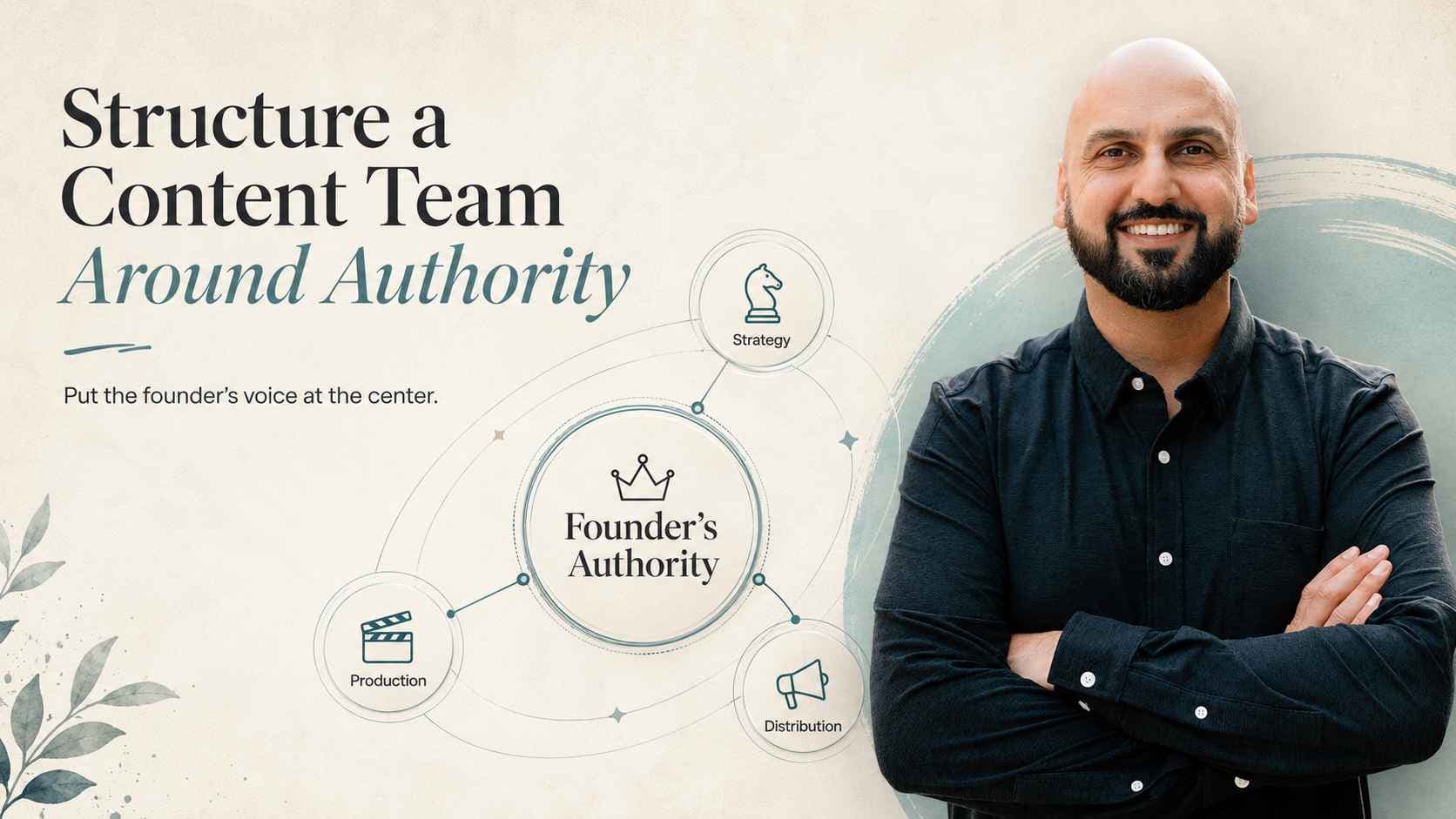
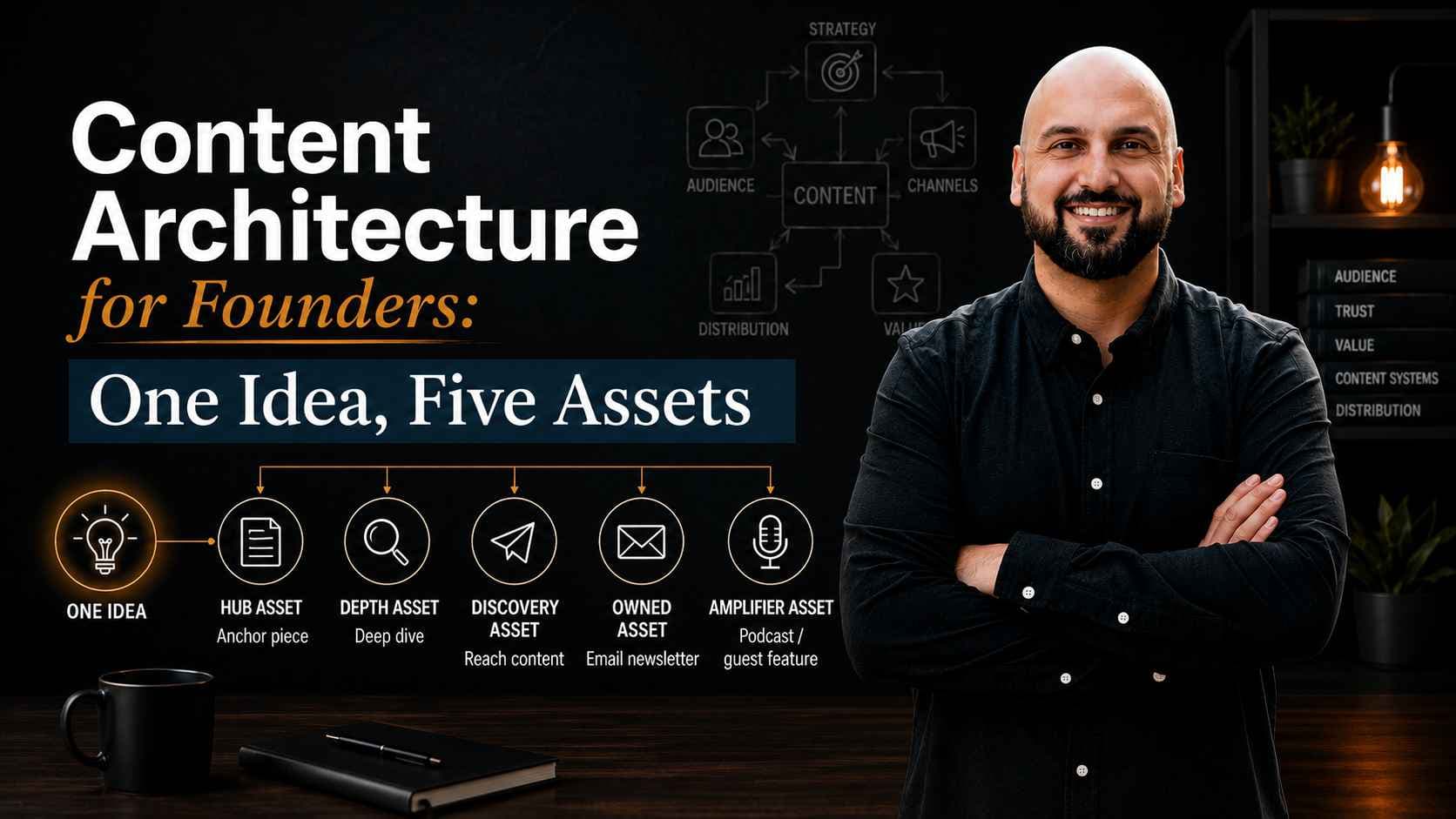
One core idea becomes assets across five layers: the website as hub, YouTube and long-form as depth, short-form social as discovery, email as owned audience, and PR, podcasts and speaking as credibility.
Most experts create content in silos. A blog post here. A social video there. A newsletter when they remember. Each piece exists in isolation, disconnected from everything else. That’s not how media companies work.
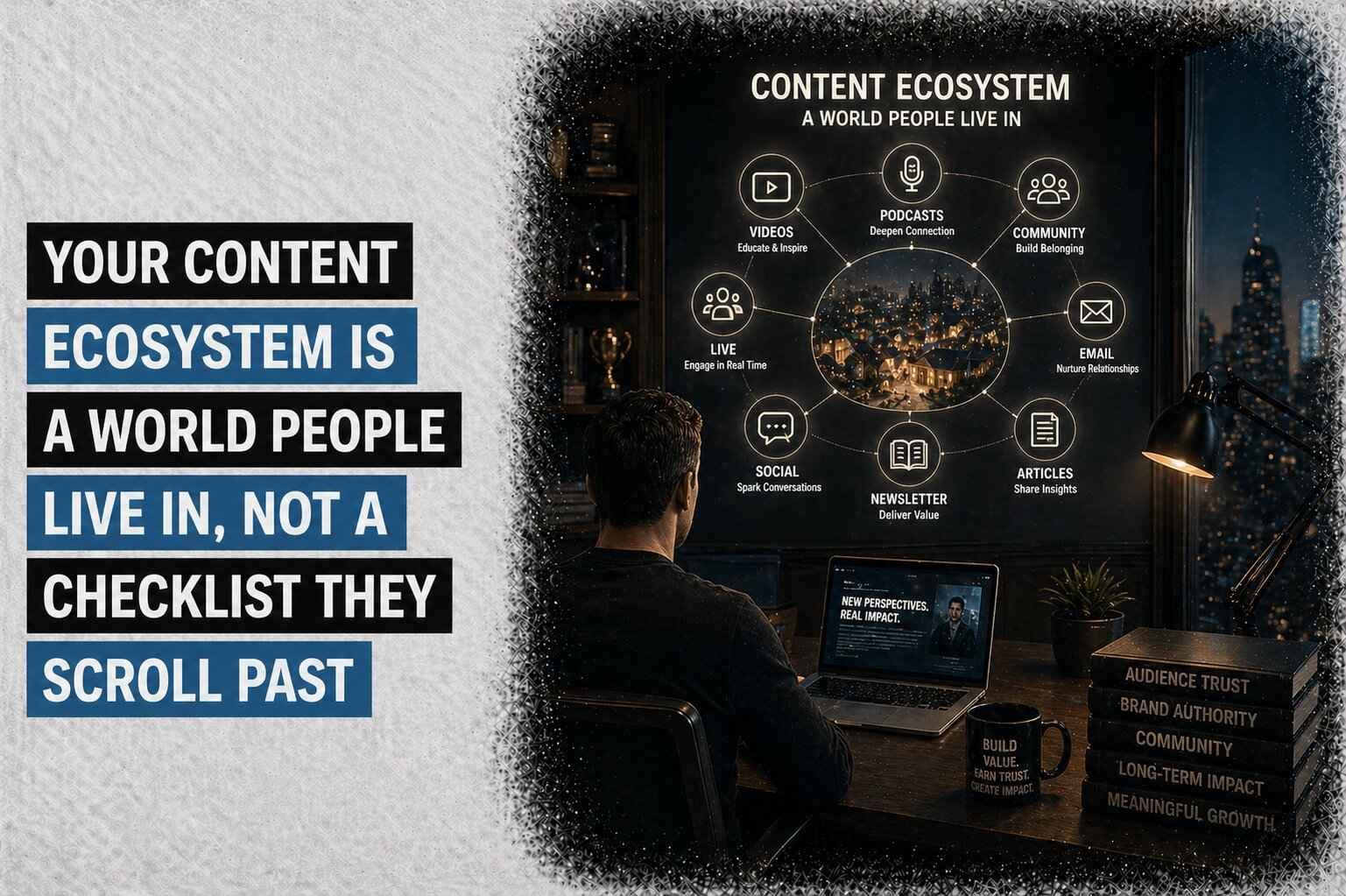
A media company thinks in ecosystems. One core idea becomes multiple assets, each formatted for a different platform, each reinforcing the same authority signal, and all pointing back to the same center: your brand. The ecosystem has five layers, and they need to work together. Click each one to see how it fits.
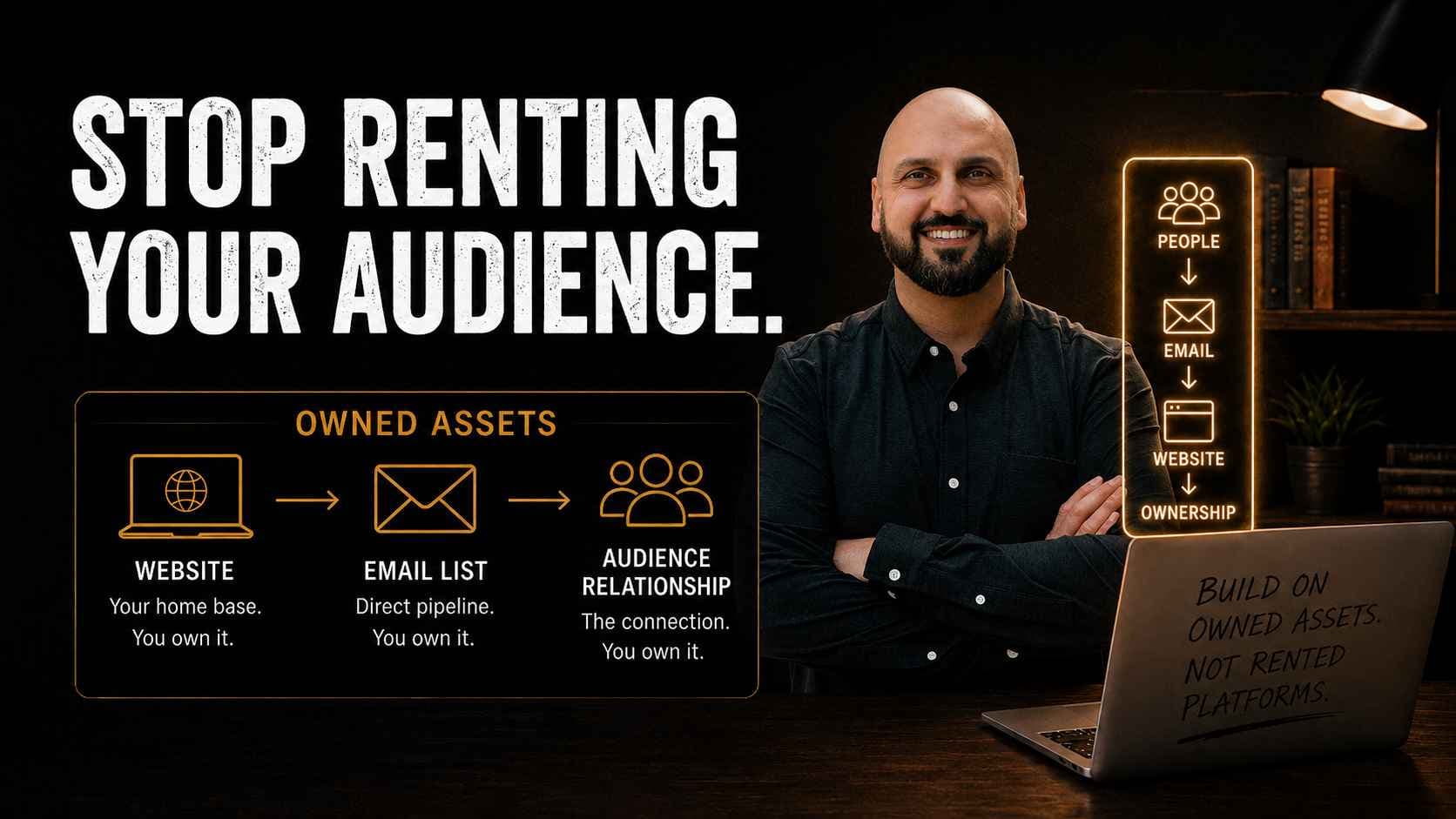
When these layers work together, each one feeds the others. A podcast appearance drives newsletter signups. The newsletter promotes your YouTube video. The video gets clipped for social. Social drives website traffic. The website captures leads. And across all of it, the same positioning, the same frameworks, and the same voice reinforce one coherent identity.
That’s not a content strategy. That’s a media company.
// Content Strategy in the Age of AI
How Does AI Evaluate a Founder's Content?
AI systems aggregate signals from YouTube transcripts, LinkedIn posts, blog content and podcast appearances at the same time to decide whether a founder is a topical authority.
Here’s what changed: your content isn’t just being seen by your audience anymore. It’s being read by AI systems that decide which experts get recommended to millions.
YouTube transcripts feed Gemini. LinkedIn posts feed Perplexity. Blog content feeds ChatGPT. These systems don’t evaluate your content platform by platform. They aggregate signals across all your platforms simultaneously to determine whether you qualify as a topical authority.
The old content strategy focused on one platform at a time. Rank on Google. Grow on Instagram. Get views on YouTube. That approach is outdated. AI doesn’t care which platform you’re strongest on. It cares whether the signals are consistent across all of them.
The experts who build structured content ecosystems now will be the ones AI recommends for the next decade.
“Social media is a game. And like any good game, it's meant to challenge you, stretch your imagination, and reward those who learn how to play it well. The real shift isn't in how hard you work. It's in who you're working for. This time, you're not climbing someone else's ladder — you're building your own.”
— AJ Kumar, GURU, INC.
// Where Are You Right Now?
What Are the Signs of a Broken Content Strategy?
Four patterns signal a broken content strategy: random posting, plateaued growth, zero AI presence and delegation failure.
Most content problems aren’t creative problems. They’re architecture problems. See which of these patterns you recognize.
If any of these feel familiar, the solution isn’t more content. It’s the system that makes every piece of content compound.
That’s what the articles below are designed to help you build.
// Go Deeper
The Content & Social Media Strategy Series
Each article breaks down a specific piece of the content system. Start wherever you feel the biggest gap.
What Founders Ask About Content and Social Media Strategy
Your Expertise Deserves Content That Actually Compounds
The difference between experts who build audiences and experts who stay invisible isn't talent or posting frequency. It's structure. GURU, INC. gives founders the complete system.