
The founders winning at scale sound less corporate, not more. This post breaks down the eight voice mechanics that turn content into a conversation a stranger arrives at by accident.
Key Takeaways
Founders do not lose attention because they are uninteresting. They lose it because their voice belongs to a broadcast medium that no longer exists.
Every social platform is a relevance engine optimizing one variable: deliver the right thing to the right person at the right moment.
Polished does not mean professional. Polished means distant. Alex Hormozi sold 2.9 million copies of his book in 24 hours sounding less corporate, not more.
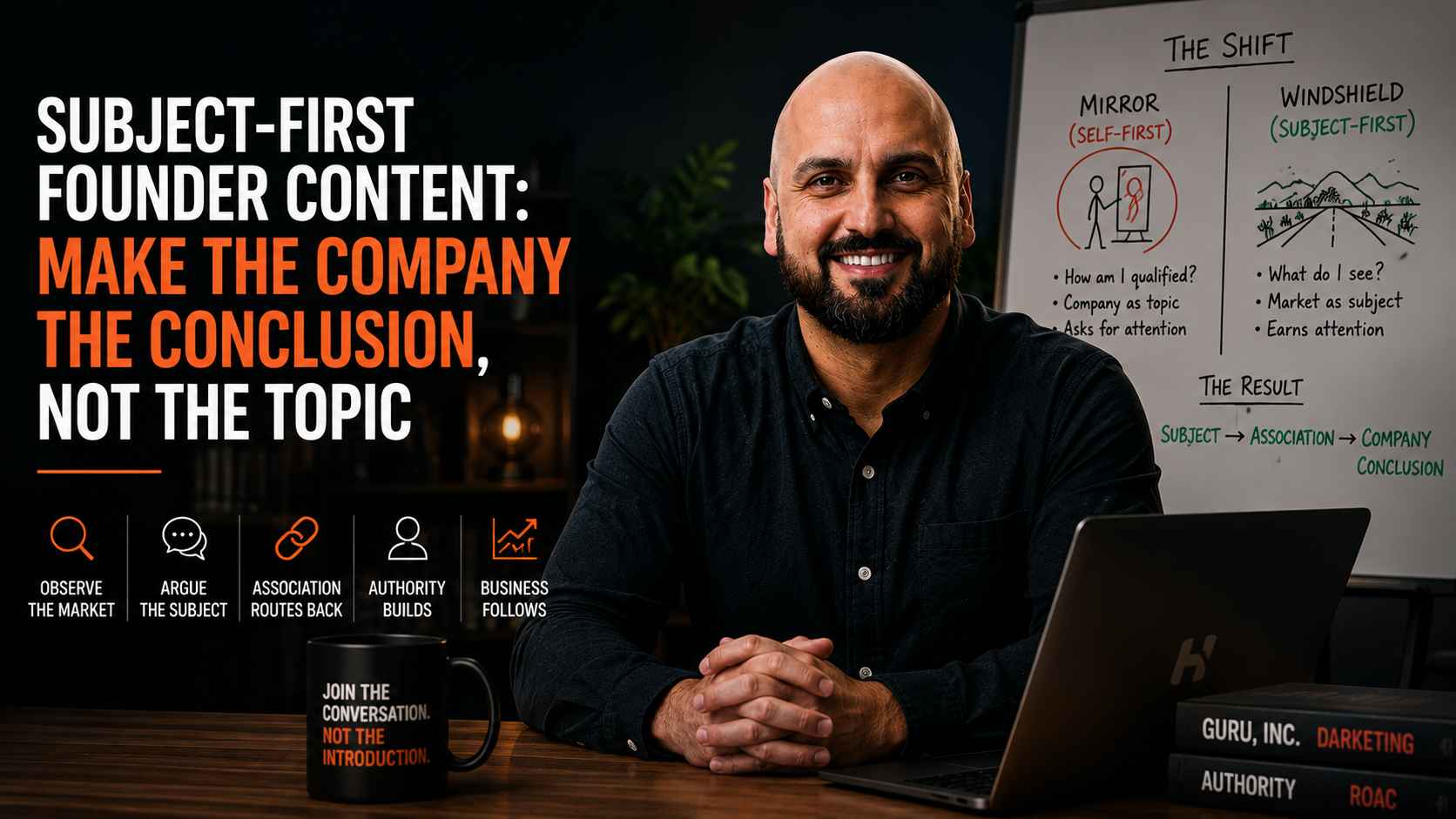
The Founder Signal is the strategic frame: founders should evolve expressive to intentional, not human to corporate.
Eight voice mechanics turn presentation voice into conversation voice. Each one removes one layer of distance between you and the reader.
NonToxicDad pulled 30 million monthly views and 1 million followers using a peer voice, not an expert voice. Specificity beats authority.
The Real Reason Founder Content Fails Is Tone, Not Topic
Founders blame the topic when their content does not work. Or the algorithm. Or the niche being too saturated. The actual problem is almost never the topic. It is the tone.
Watch a founder open their phone and start filming. The voice changes. The shoulders stiffen. They start performing a version of themselves they think the audience expects. The audience scrolls past.
I have spent more than 20 years helping founders build authority brands. The pattern repeats at every revenue tier. Founders at $1M sound like they are pitching to a board. Founders at $50M sound like they are reading a press release. Founders at $500M sound like a brand, not a person. They lose to creators with one-tenth their expertise. The creators sound like a friend who happens to know things.
Tone is the first filter. Topic is the second.
Every Platform Is a Communication Tool. The Medium Changed. Most Founders Did Not.
Every product on the internet is a communication tool. The phone was communication. Radio was communication. TV was communication. Each one was one-way: a broadcaster speaking to a passive audience.
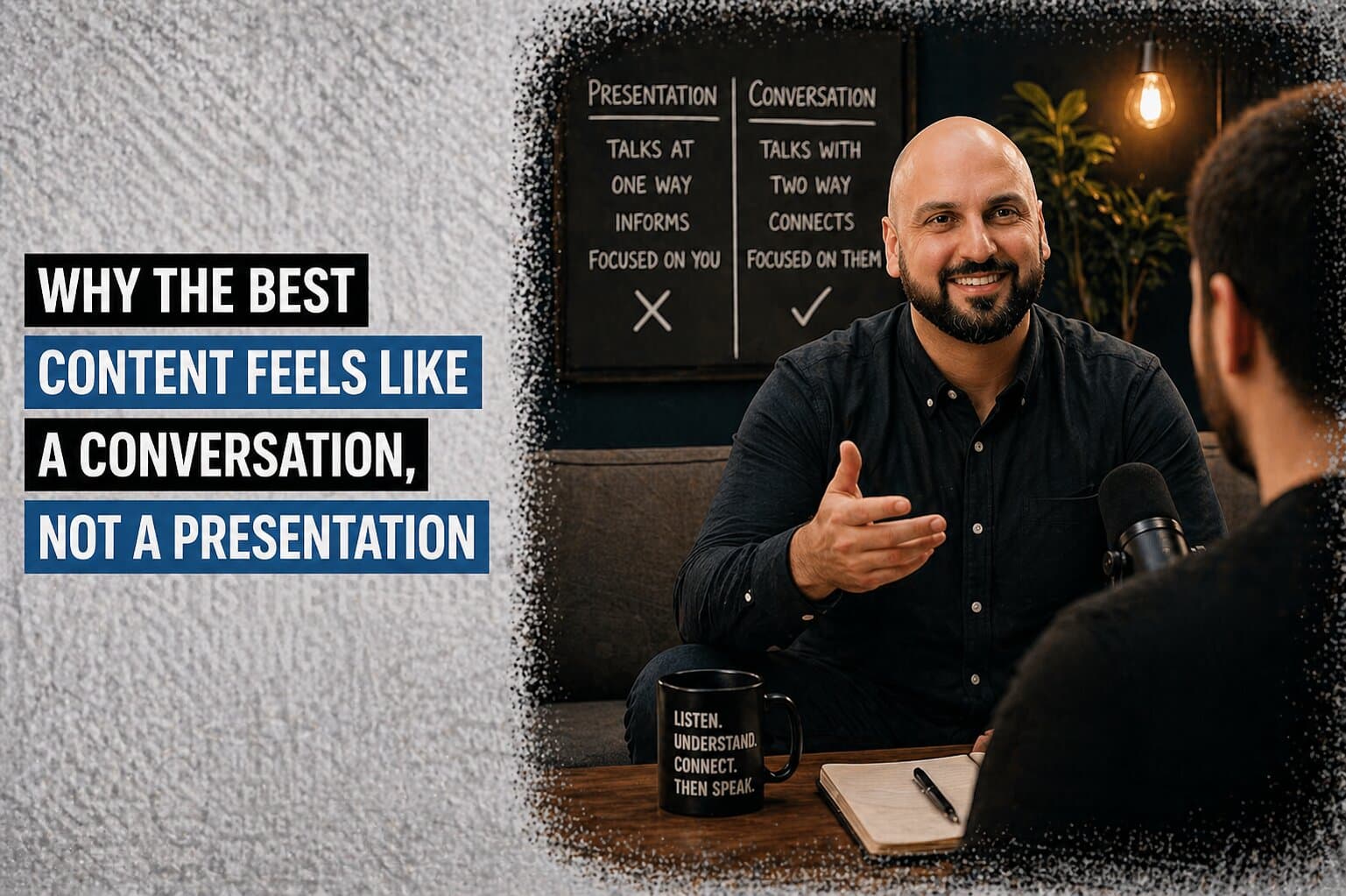
Social platforms are different. They are two-way. They are one-to-many at the same time. Closer to a coffee shop than a stadium. The audience is not seated. They are walking past. They stop only when something matches the thought already in their head.
Every platform algorithm has one job. Surface the right thing at the right time to the right person. That is not broadcasting. That is matchmaking. The algorithm is a relevance engine, not a megaphone.
Founders trained on broadcast media still treat social like television. They produce content as if the audience is sitting still, waiting to be informed. That audience does not exist anymore. The medium changed. Most founders did not. I have written about social media as a strategic game. The platforms set the rules. The players who refuse to learn them get filtered out.
The voice that wins on a relevance engine sounds like a peer mid-thought. Not a host introducing a segment.
The Lecture Trap: How to Diagnose Presentation Voice in Your Own Content
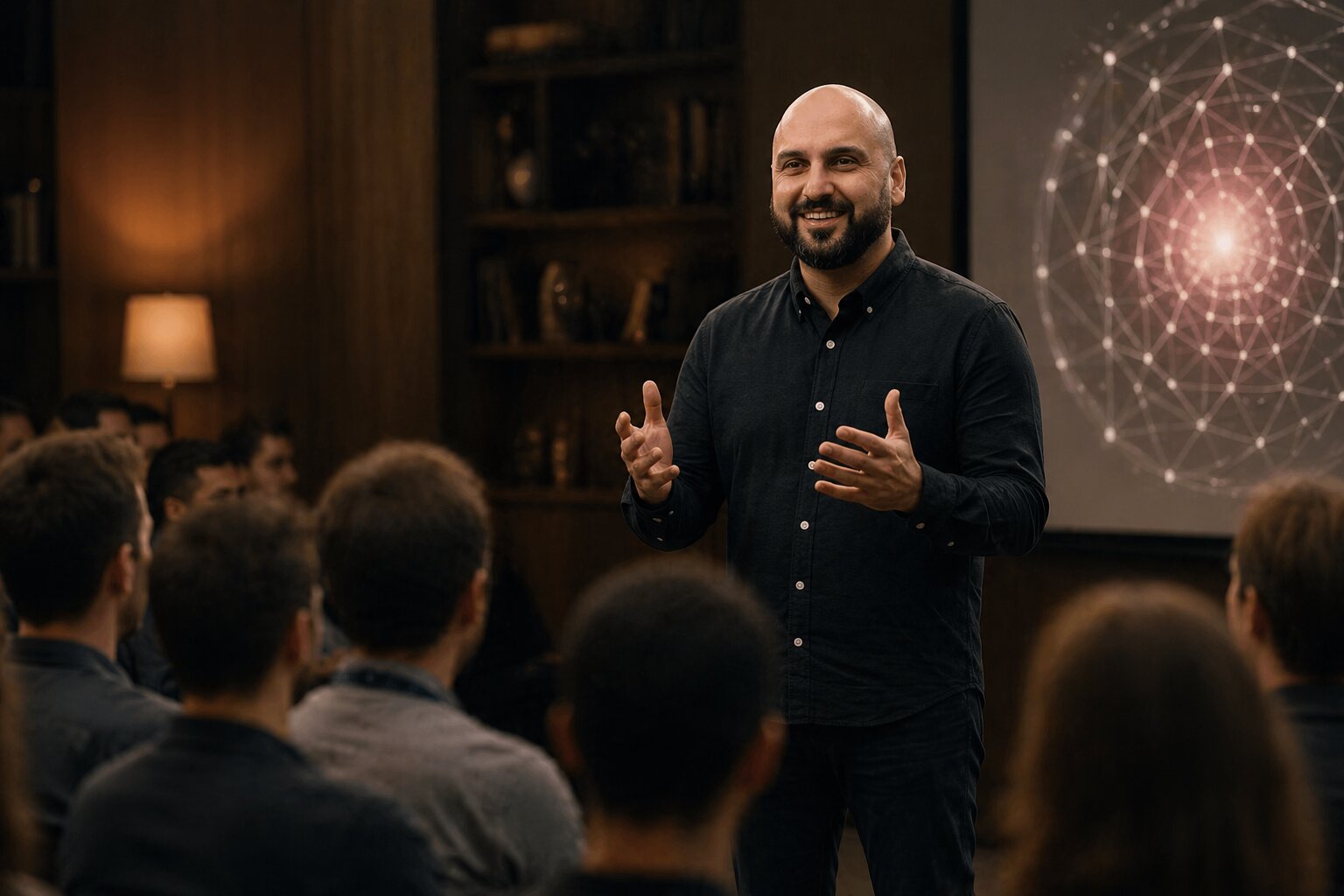
Polished does not mean professional. Polished means distant. The lecture trap is the assumption that the bigger your business, the more buttoned up your content should sound. That assumption is wrong. It is the reason most enterprise founder content underperforms a creator with a webcam.
A relevance engine cannot match a broadcast voice to a private thought. The signal does not fit. Lecture voice is general. It lives in the abstract. It speaks to "the audience." Conversation voice is specific. It lives in a moment. It speaks to one person.
Run this diagnostic on your last five posts. If three or more come back yes, you are stuck in presentation mode.
Did you open with setup instead of tension?
Did you address the audience as "everyone" instead of one person?
Did you list credentials before the idea?
Did you write any sentence you would never say out loud?
Did you sound more polished than you do at dinner with a friend?
This diagnostic is the entry point to content and social media strategy for founders. Casual is a tone. Present is a posture. The diagnostic is not asking you to be casual. It is asking you to be present.
The Neuroscience of Serendipity: Why Conversational Content Feels Like a Friend

The brain does not draw a hard line between a real friend and a digital one. When content arrives at the right moment in a familiar voice, the same trust circuits fire. The same dopamine release. The same sense of "this person understands me."
Researchers call this parasocial connection. The audience feels they know the speaker even though the relationship is one-sided. Voice familiarity, repeated exposure, and conversational intimacy produce loyalty similar to in-person friendships. I unpack the same mechanism in edutainment content strategy where teaching and entertainment compound trust faster than either alone.
Now layer the algorithm on top. The platform surfaces your content to a person already thinking about the topic. The voice sounds like a friend. The timing feels accidental. The brain experiences serendipity. Serendipity is one of the most powerful trust mechanisms the brain has.
I write about this in GURU, INC. through a framework I call ROAC: Return on Attention Created. ROAC tracks how attention moves through four neurological gates: Register, Retention, Resonate, Reinforce. Conversational voice is what wins the Resonate gate. Lecture voice fails Retention. Without Retention, nothing else matters.
You are not interrupting the feed. You are arriving inside a thought.
The Founder Signal: Expressive to Intentional, Not Human to Corporate
The mistake at scale is over-corporatization. Founders assume the bigger the brand gets, the more polished the voice should become. The opposite is true. The founders winning at scale sound less corporate, not more.
The Founder Signal is the strategic frame I use with growth-stage clients. Founders evolve expressive to intentional. Not human to corporate. Expressive means raw, unfiltered, sometimes messy. Intentional means deliberate, structured, repeatable, still recognizably human. The voice gets sharper. It does not get colder.
I see the failure mode constantly. Founders cross $20M and a brand consultant tells them to "professionalize the content." The voice flattens. The audience disengages. Inbound drops. The consultant calls it "brand evolution." The data calls it suicide.
Alex Hormozi sold 2.9 million copies of his book in 24 hours at $0.99 pricing. He sounds less buttoned up running Acquisition.com than he did launching his first gym. The polish moved into his frameworks, his production, his clarity. The voice stayed expressive. I broke this down in Hormozi's acquisition empire.
At scale, your content should not become more corporate. It should become more meaningful.
Eight Voice Mechanics That Make Content Feel Like a Conversation
Conversation voice has mechanics. Specific moves you can practice. None require charisma. All require attention.
Open with tension, not setup. No "today we are going to talk about." Start where you would start a story to a friend. Mid-thought.
Speak in fragments. Real conversation does not run in complete sentences. Fragment. Pause. Continue.
Address one person, not a crowd. Replace "everyone" with "you." Replace "people often" with "I noticed yesterday."
Name specifics. Not "a client." Kimberly Snyder. Not "a lot of revenue." Multi-million dollar brand. Specificity is what relevance engines reward.
Drop the credentials. Expertise should be obvious from the substance. Lead with credentials and the substance is not strong enough.
Show your thinking in real time. "I noticed something this week." "Here is what I keep coming back to." Process voice over polished voice.
Pause where you would pause out loud. Periods are pauses. Use them. Long sentences kill rhythm. Short sentences breathe.
End on a punch. Last line should land. Not summarize. Not soften. Land.
These eight mechanics are not personality choices. They are signals. Each one tells a relevance engine, and a reader, that you are inside a moment, not on a stage.
Founders Who Talk Like People: Hormozi, Snyder, NonToxicDad
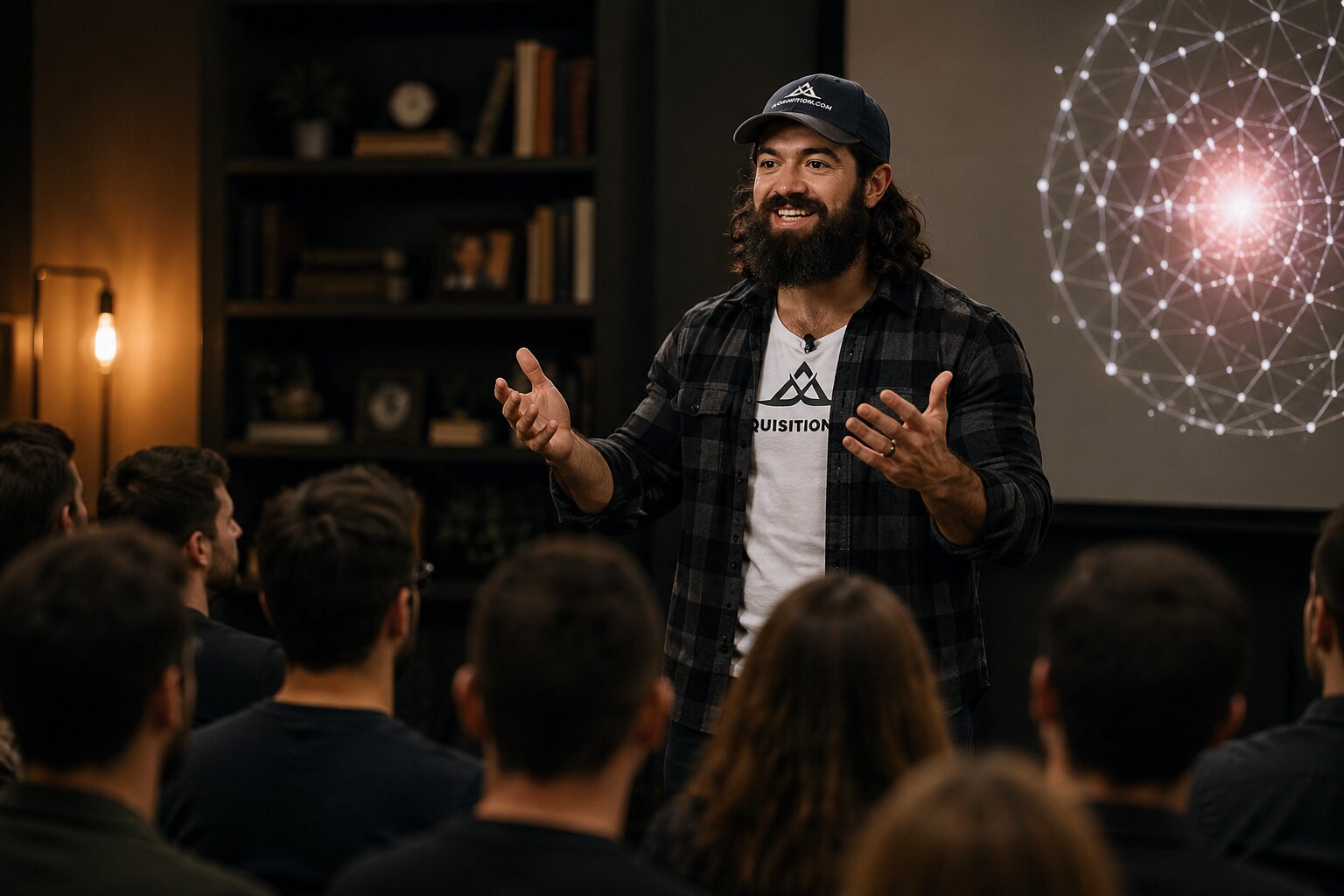
The founders building the largest authority brands online sound like people, not brands. Three examples make the pattern obvious.
Alex Hormozi sold 2.9 million copies of his book in 24 hours at $0.99 pricing. His content opens with tension. He fragments sentences. He uses second person. He does not lead with credentials. The audience feels like a private conversation.
Kimberly Snyder went from $500-per-hour celebrity nutritionist to a multi-million dollar authority brand. 16 million unique visitors. 150,000 email subscribers. Three New York Times bestsellers. Co-author with Deepak Chopra. I built that brand. The work started by rewriting how she spoke.
Every line that sounded like a press release got cut. The voice that worked was the one she used with her closest friend. That voice was the multiplier.
Warren Phillips, known as NonToxicDad, has 1 million followers and 30 million monthly views. He sounds like a dad you trust. His hook line is "this product is canceled." Five words. Spoken like he is telling you across a kitchen counter.
None of these founders sound like a corporation. All of them are larger than most corporations.
Authority Is Built on Presence, Not Performance
Authority is not built on performance. It is built on presence. Presence at the right moment, in the right voice, for the right person.
The medium has changed. The economics have changed. The brain has not. Audiences still trust people who sound like people. Algorithms still surface content that matches a thought already in motion. The founders who understand this stop trying to be impressive and start trying to be present.
Performance asks the audience to admire you. Presence lets the audience recognize you. Recognition is the foundation of trust. Trust is the foundation of every business outcome you want.
I work with founders at the inflection point. The next move is either professionalize the voice or sharpen it. Professionalize is the wrong move. Sharpen is the right move. Keep the human signal. Add structural intentionality. That is the Founder Signal applied to scaling brands.
Stop presenting. Start talking. Your business is not on a stage. It is in a conversation. The conversation rewards anyone willing to show up as a person and trust the medium to do the rest.
The audience does not need another expert. They need a voice that sounds like the one inside their own head.
Frequently Asked Questions
Should founder content sound the same on LinkedIn and TikTok?
The voice stays the same. The format adapts. A founder voice that sounds like a person performs across every platform because every platform is a relevance engine that rewards specificity over polish.
How long does it take to develop a conversational content voice?
Most founders find their voice in 30 to 60 days of consistent posting. The mechanics can be applied in a single session. The internal permission to drop the polish takes longer.
Does conversational voice work for B2B founders selling to enterprise buyers?
Yes. Enterprise buyers are humans before they are titles. The CFO scrolling LinkedIn at 9pm wants the same parasocial trust as a consumer. The substance changes. The voice mechanics do not.
Is conversational content less authoritative than formal content?
The opposite. Formal content reads as performance, which signals distance. Conversational content with strong substance signals confidence, and confidence reads as authority faster than credentials do.
How does conversational voice affect SEO and AI citation?
Conversational voice paired with structured content gets cited more by AI systems because it produces clearer extractive summaries. Specificity, named entities, and direct claims rank better in semantic search than vague broadcast language.
What is the difference between conversational and casual?
Casual is a tone choice. Conversational is a posture choice. You can be conversational and serious at the same time. You cannot be lecturing and present at the same time.