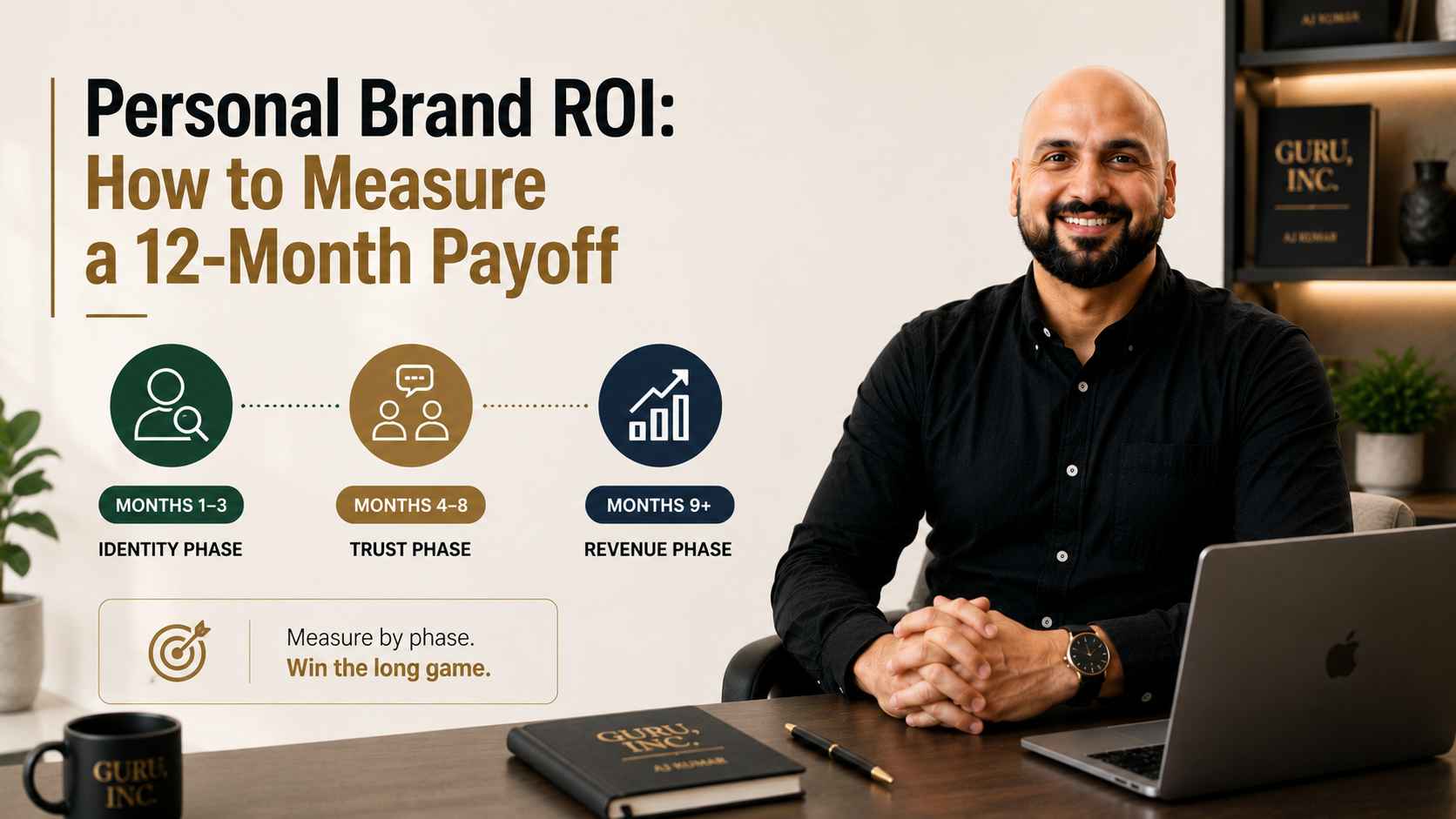


The attention audit ranks pieces by outcome and hands the founder a map of what the business earned. The procedure below takes one afternoon and reorganizes the next four quarters.
Key Takeaways
An attention audit scores content by what it created, never by what it reached.
The audit runs once across the full library. Ongoing measurement is a separate, monthly discipline.
Five steps move a founder from raw library to reallocation map: inventory, score, tag, concentrate, decide.
Every piece lands in one of three verdicts: keep, kill, or multiply.
Value concentrates. A small minority of pieces holds most of the identity, trust, and leverage value in nearly every library.
Do not audit what performed. Audit what it produced.
An Attention Audit Scores What Content Created, Not What It Reached
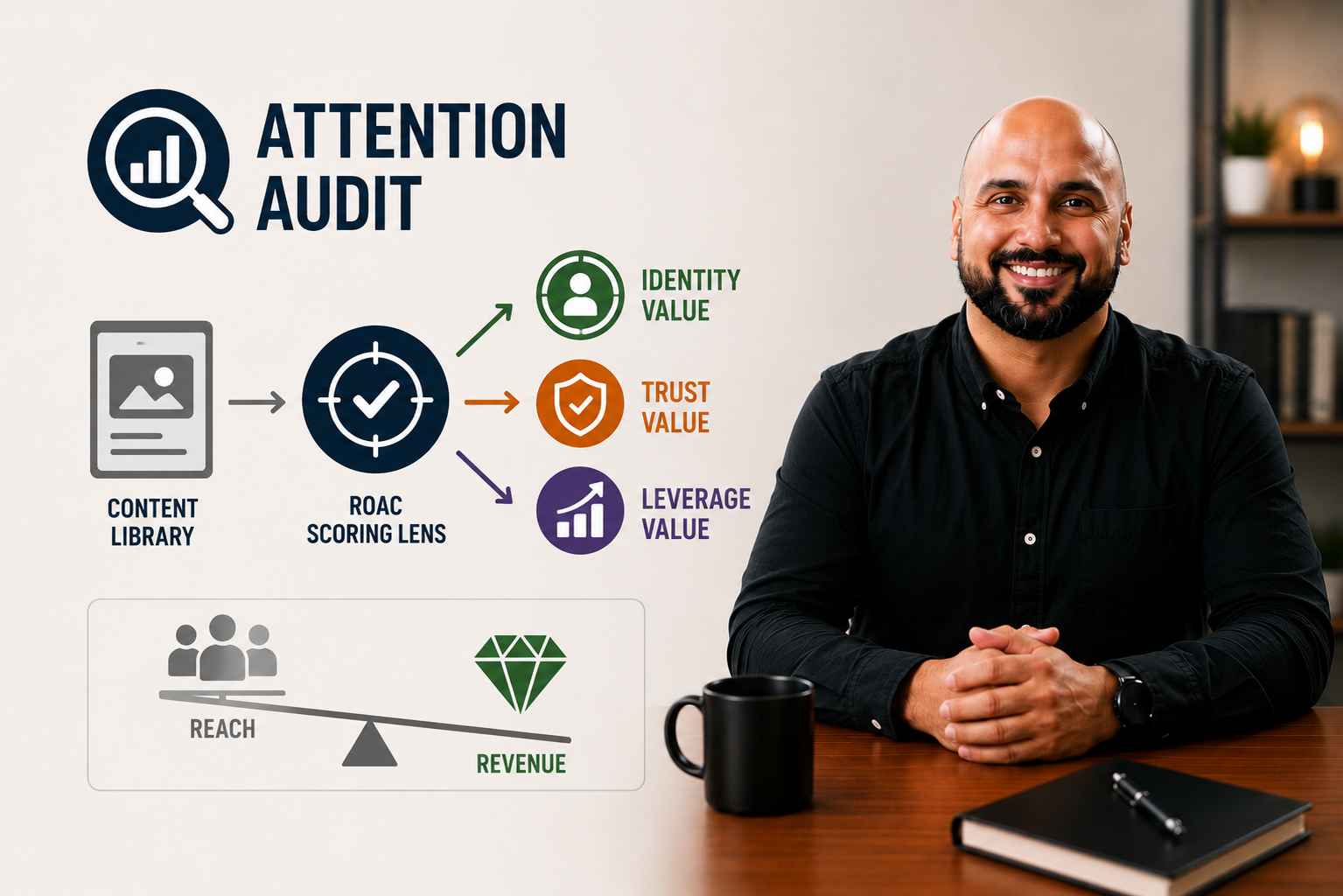
The attention audit inverts the standard content audit. A standard audit opens with the performance report: "Here are our top posts by impressions this year." The sentence ranks the library by the algorithm's preferences and says nothing about the business.
Auditing for reach finds the content the platform rewarded. Auditing for revenue finds the content the market believed. The scoring lens is ROAC, Return on Attention Created, the framework from GURU, INC. by AJ Kumar.
Every piece faces the same three questions: did it build identity, did it earn trust, did it create leverage. A post with the year's highest reach and none of the three values is, on this audit, a failure with good numbers.
Every consulting engagement I run opens with this audit, and the finding repeats across libraries of every size: the pieces founders are proudest of and the pieces that built the pipeline are rarely the same pieces.
The Inputs: What a Founder Gathers Before Scoring
The audit runs on evidence, and the evidence lists five sources. The five inputs are given below:
The content inventory. Every piece published in the last 12 months: posts, videos, talks, podcast appearances, newsletters.
Platform analytics exports. Views and reach per piece, used as context for the leverage question, never as the verdict.
Inbound records. Calls booked, messages with intent, email replies, and what each one cited or referenced.
Sales conversation notes. Where buyers first encountered the founder, in their own words.
Comment archives. The places where audience members repeat the founder's position back, which is identity value speaking.
The inbound and sales records matter most and get gathered least. Founders track what platforms measure and lose what buyers say, and the audit reverses that priority on day one.
The Audit Procedure: Five Steps From Library to Map
The procedure runs the same way for a solo founder or a full content team. The five steps are given below:
Inventory the last 12 months. One row per piece: date, topic, format, platform.
Score each piece across the three values. High or low on identity, trust, and leverage, using the per-piece judgment defined in how to measure ROAC. The audit is that judgment applied retroactively at library scale.
Tag each piece by topic, format, and position. The tags turn individual scores into patterns.
Find the concentration. Sort by score and read the tags: which topics, formats, and positions hold the high-value pieces, and which hold none.
Build the keep, kill, multiply map. Every topic-format combination lands in one of three verdicts, and the map becomes the next quarter's production plan.
Step four is where the afternoon pays for itself. Value concentrates hard in almost every library, and the founder discovers that a small minority of pieces built most of the pipeline while the majority produced motion.
Reading the Map: Keep, Kill, Multiply
The three verdicts convert the audit into budget decisions. Keep covers content earning steady value at sustainable cost: it continues unchanged. Kill covers content scoring low across all three values regardless of its reach: it loses production budget immediately, and the reach argument does not save it.
Multiply covers the concentration zone: the topics and positions holding high scores get more formats, more depth, and more frequency.
The map also locates the problem that the gap between content output and pipeline diagnoses. Output without pipeline means the calendar is weighted toward kill-verdict content, and the audit shows exactly which pieces carry the dead weight. A founder who reallocates against the map fixes the gap at the source instead of publishing harder into it.
The Audit Is the On-Ramp, Not the Destination
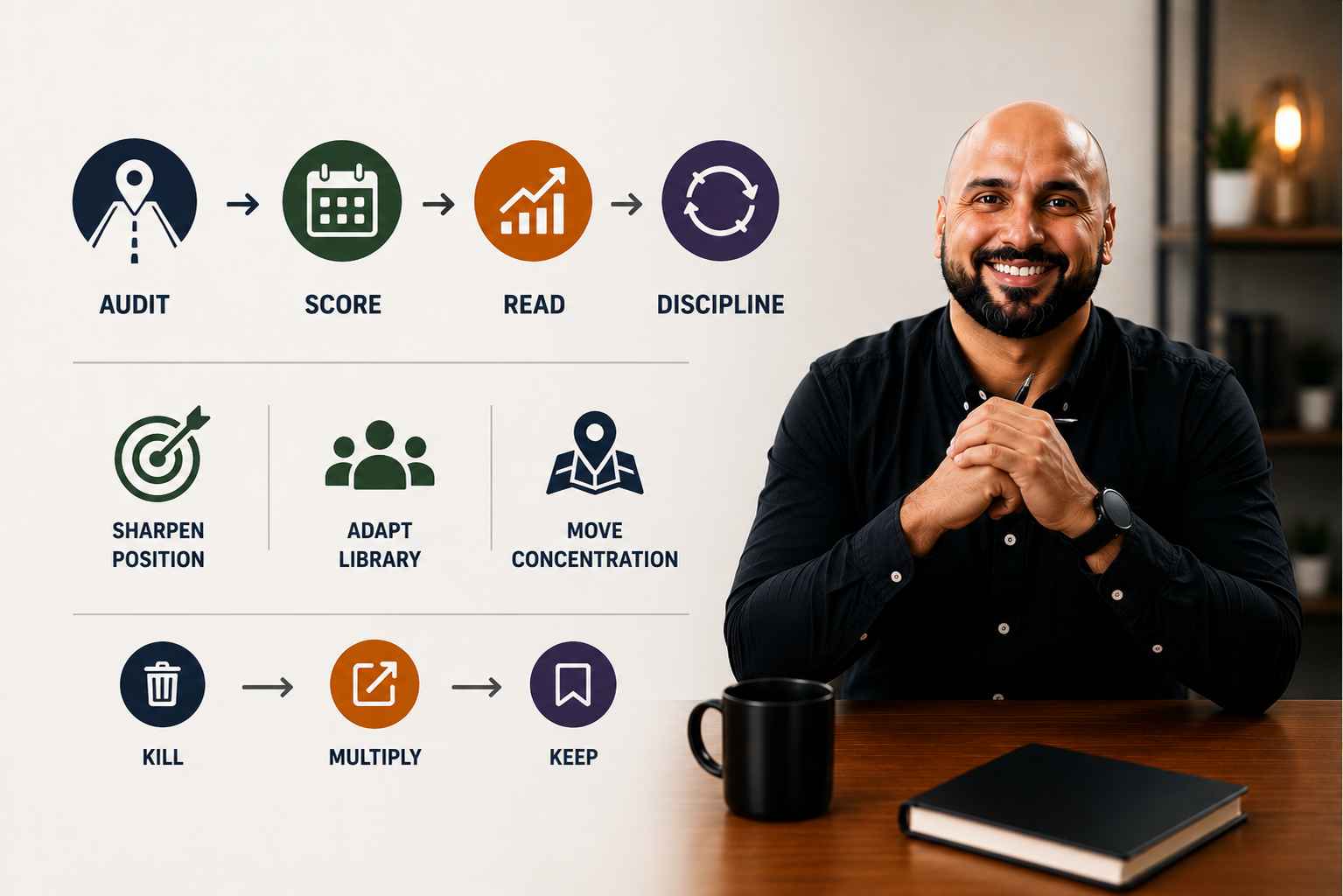
The attention audit runs once and hands off to an ongoing discipline. The one-time audit resets the production plan. Monthly scoring and quarterly reads keep the plan honest afterward, so the audit becomes the entry point to permanent ROAC measurement rather than a yearly ritual.
Libraries change, positions sharpen, and the concentration zone moves, which is why the discipline outlives the event. Running the audit together is the first working session of personal brand consulting for founders: the library scored, the map built, and the next quarter planned against evidence instead of instinct.
Founders arrive believing they have a content volume problem. The audit usually proves they have a concentration problem, and concentration problems are cheaper to fix.
An attention audit scores a founder's full content library across identity, trust, and leverage value, then converts the scores into a keep, kill, multiply map. Reach audits find what the algorithm liked. The attention audit finds what the business earned. Do not audit what performed. Audit what it produced.
Is an Attention Audit the Same as a Content Audit
No. A standard content audit ranks the library by performance metrics: traffic, reach, engagement. An attention audit ranks the library by created outcomes: identity, trust, and leverage value. The first serves the platform strategy. The second serves the revenue plan.
How Long Does an Attention Audit Take
A solo founder with 12 months of content finishes in one afternoon. A team with multi-platform libraries budgets a full day, with most of the time spent gathering inbound records and sales notes rather than scoring.
What Data Does the Audit Use Without Full Analytics Access
The audit runs on outcome evidence platforms never track: inbound messages and what they cited, sales conversations naming first contact, and comments repeating the founder's position. Analytics exports add context. The banked outcomes carry the verdicts.
How Often Do Founders Repeat the Attention Audit
The full audit repeats annually or at the start of an engagement. Between audits, the monthly per-piece judgment and quarterly pattern read carry the measurement. Repeating the full audit more often re-scores a library that has not changed enough to matter.