
The Personal Media Company Model is a framework for operating a founder's personal brand like a media network. The model is built on three components: programming, distribution, and revenue architecture. The model differs from a personal brand by adding the operating structure of a company.
The model treats the founder as an operator, not a personality. The model serves founders with real expertise and no media system around them.
Key Takeaways
The Personal Media Company Model runs a founder's brand like a media network, not like an influencer account.
The model is built on three components: programming, distribution, and revenue architecture.
A personal brand stops when the founder stops. A Personal Media Company runs on systems.
The model keeps the founder as the brand and adds company structure around the person.
The founder operates the network. The founder stops being the bottleneck.
The model serves founders rich in expertise and short on visibility.
Owned assets outlast rented platforms, so the model favors owned distribution.
What the Personal Media Company Model is
The Personal Media Company Model is a framework for operating a founder's personal brand like a media network. A media network programs content, distributes it across channels, and converts attention into revenue. The model applies that same structure to one founder.
Most founders treat their brand as a posting habit. The model treats the brand as an operation. I have built media-style operations for founders for more than 20 years, and the structured brands compound while the personality-led ones plateau. I documented the model in GURU, INC.
The three components of the Personal Media Company Model
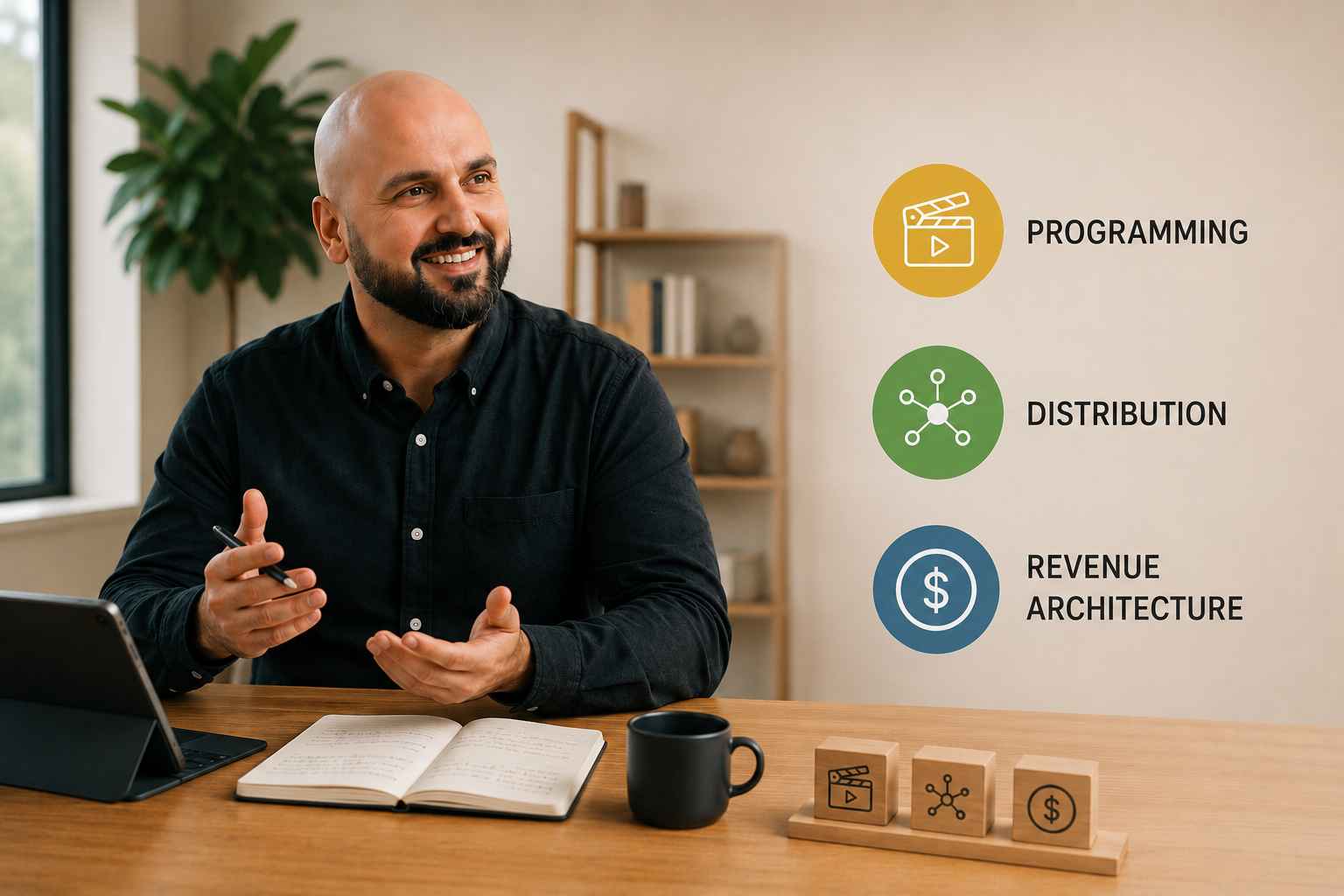
The Personal Media Company Model is built on three components. Each component answers a different question about the brand. The three components are given below.
Programming
Programming is what the brand makes. A media network runs shows, not random posts. The founder defines recurring formats, core ideas, and signature IP that an audience returns for.
Distribution
Distribution is how the work travels. A media network moves one idea across many channels through a hub-and-spoke structure. The founder routes attention from rented platforms toward owned assets like a newsletter or a site.
Revenue architecture
Revenue architecture is how attention converts to income. A media network monetizes by design, not by accident. The founder builds an offer structure so trust turns into revenue without a large following.
How the Personal Media Company Model differs from a personal brand
The Personal Media Company Model differs from a personal brand by adding the operating structure of a company. The market frames this as a choice. A personal brand is the person. A media company runs without the person.
The model rejects the choice. The founder stays the brand, and the brand runs on systems. Trust stays personal, and the operation stays structured. The brand compounds instead of stalling when the founder steps back for a week.
How the Personal Media Company Model differs from an influencer
The Personal Media Company Model treats the founder as an operator, not a personality. An influencer carries every post personally and becomes the bottleneck. An operator builds a system that protects and amplifies the core ideas.
The difference shows up in resilience. An influencer depends on one rented platform and one daily effort. A Personal Media Company owns its audience and runs on a repeatable structure.
Who the Personal Media Company Model is for
The Personal Media Company Model is built for founders with real expertise and no media system around it. The buyer is the expert with a track record and little public recognition. The model gives that founder the operating structure to convert proven expertise into visible authority.
How a founder runs the Personal Media Company Model
A founder runs the Personal Media Company Model by treating content as a programmed slate, not a posting habit. The founder sets the programming, builds the distribution, and attaches the revenue architecture. The three move together as one operation.
Most founders stall at the same point. The expertise is real, and the structure is missing. The gap there is usually the operating system, and that is where I help founders find clarity on the right next move. The model touches three domains, and each one is a discipline of its own.
The programming layer behind the network
Programming is the identity layer of the Personal Media Company Model. A network is known for its shows, and a founder is known for recurring ideas. The programming decides what the brand stands for and what an audience returns for.
This layer is where positioning becomes content. A clear point of view, repeated across formats, builds the recognition that turns an expert into a name. The work of building the expert identity audiences recognize sits inside this component.
The distribution layer that moves the work
Distribution is the systems layer of the Personal Media Company Model. A network does not rely on one channel, and a founder does not rely on one platform. The standard structure routes attention from social channels toward owned media through a hub-and-spoke design.
The four media types of owned, shared, earned, and paid give the field its distribution language. The founder builds content systems that grow a founder audience so one idea reaches many places without daily improvisation.
The revenue layer that turns attention into income
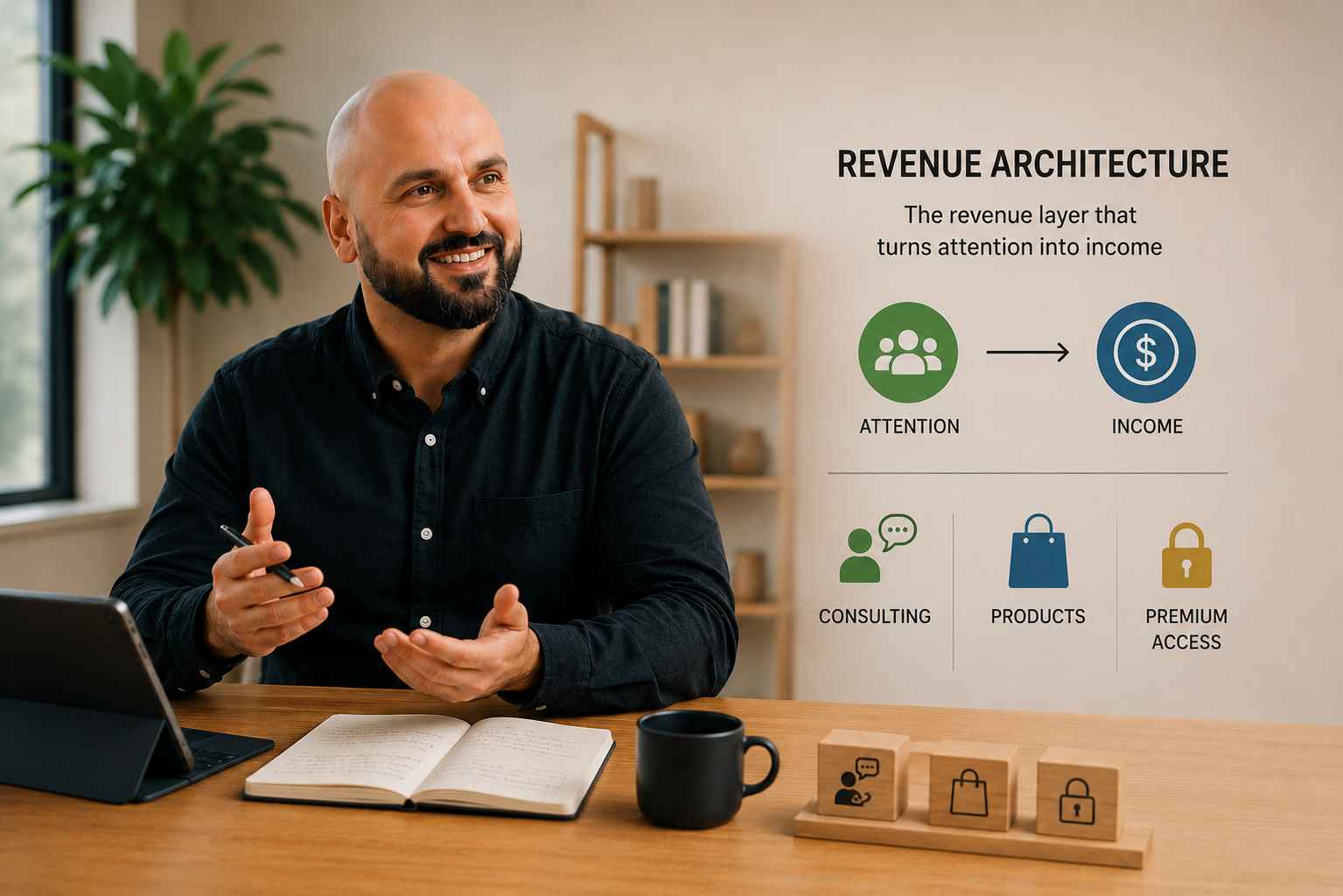
Revenue architecture is the income layer of the Personal Media Company Model. A network monetizes its audience through structured offers, and a founder does the same. Foodgod built a following past 10 million and converted it into licensing and partnership deals, not ad scraps.
The model favors owned offers over borrowed reach. Consulting, products, and premium access turn attention into measurable revenue more reliably than sponsorships alone.
Personal media company versus a media company
A Personal Media Company is not a corporate media company. A corporate media company removes the person and sells content and ad space. A Personal Media Company keeps the founder as the brand and sells trust.
The distinction matters for ownership. A media company changes hands through acquisition or franchise. A Personal Media Company belongs to the founder, because the founder is the differentiator no competitor copies.
Frequently Asked Questions
What is the Personal Media Company Model?
The Personal Media Company Model is a framework for operating a founder's personal brand like a media network. The model runs on three components: programming, distribution, and revenue architecture. The structure replaces personality-led posting with a repeatable operation.
What is the difference between a personal brand and a media company?
A personal brand depends on the person, and a media company runs without the person. The Personal Media Company Model resolves the split. The founder stays the brand, and the brand runs on company structure.
What are the components of a Personal Media Company?
A Personal Media Company has three components: programming, distribution, and revenue architecture. Programming is what the brand makes. Distribution is how the work travels. Revenue architecture is how attention becomes income.
Do you need a large team to run a Personal Media Company?
A founder does not need a large team to start. The model begins as a small operation the founder runs, then adds help where a bottleneck appears. Structure matters more than headcount.
How does a Personal Media Company make money?
A Personal Media Company makes money through a revenue architecture of owned offers. Consulting, products, and premium access convert trust into revenue. The model does not depend on ad revenue or sponsorships.