
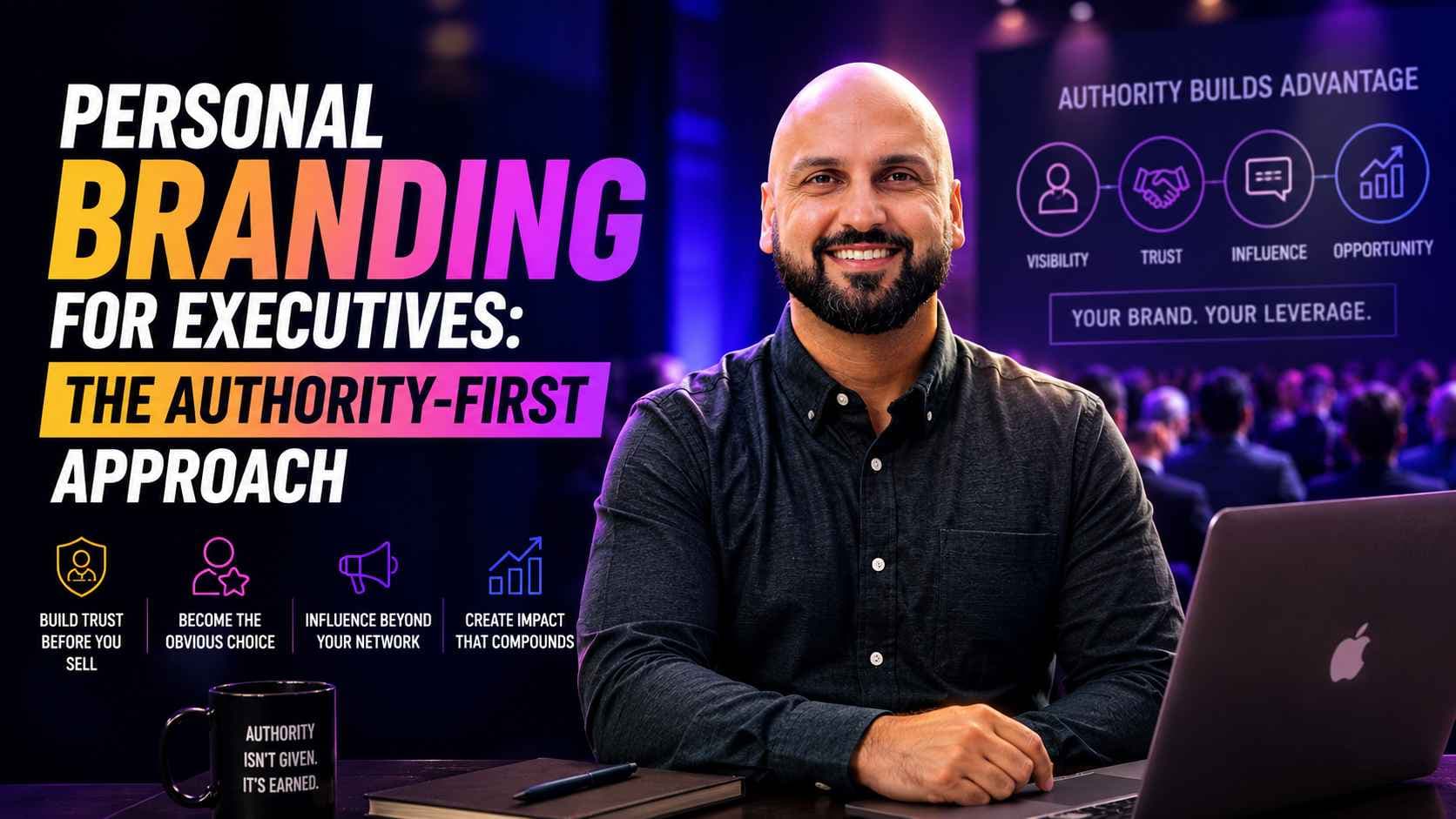
The authority-first approach starts with positioning and intellectual property, not content volume. Executives who build personal brands report 3x higher inbound inquiry rates and shortened sales cycles because the trust-building happens before the first meeting.
Key Takeaways:
Personal branding for executives starts with positioning and named frameworks, not social media posting schedules.
73% of B2B buyers research the founder or CEO online before making a purchasing decision, according to the 2024 Edelman Trust Barometer.
The authority-first approach prioritizes depth on three platforms (website, LinkedIn, one video channel) over presence on eight.
Executive personal branding generates measurable ROI: inbound leads, speaking invitations, media features, and acquisition interest.
The five components of executive personal branding are positioning clarity, intellectual property, content architecture, search visibility, and trust measurement.
Executives who invest 5 hours per month in authority-first personal branding outperform executives who invest 20 hours per month in volume-first content.
Personal Branding for Executives Starts With Positioning, Not Posting
Executive personal branding is the process of making leadership judgment visible to the market before the first conversation happens.
Most executives approach personal branding backwards. They hire a social media manager, start posting three times per week, and wonder why nothing changes after six months. The content looks polished. The engagement is modest. The business impact is zero.
The problem is sequence. Posting without positioning produces noise. Positioning without posting produces nothing. The authority-first approach fixes the sequence.
I have built executive personal brands for Fortune 500 leaders, venture-backed founders, and independent consultants. The pattern that works starts with three questions:
What specific problem does the market associate with this executive's name?
What named framework or methodology distinguishes this executive from every other voice in the space?
What proof exists that the framework produces measurable results?
Executives who answer all three questions before publishing a single piece of content build authority that compounds. Executives who skip the positioning step build a content library that nobody remembers.
Why Executives Need Personal Branding in 2026

The executive who is invisible online loses deals, talent, and partnerships to the executive who is visible.
Three market forces make executive personal branding non-optional in 2026:
Buyers research the leader before the company.
73% of B2B buyers research the founder or CEO online before making a purchasing decision, according to the 2024 Edelman Trust Barometer.
The executive's LinkedIn profile, website presence, and search results form the first impression. A weak online presence signals low credibility regardless of the company's actual capabilities.
AI systems surface recognized entities.
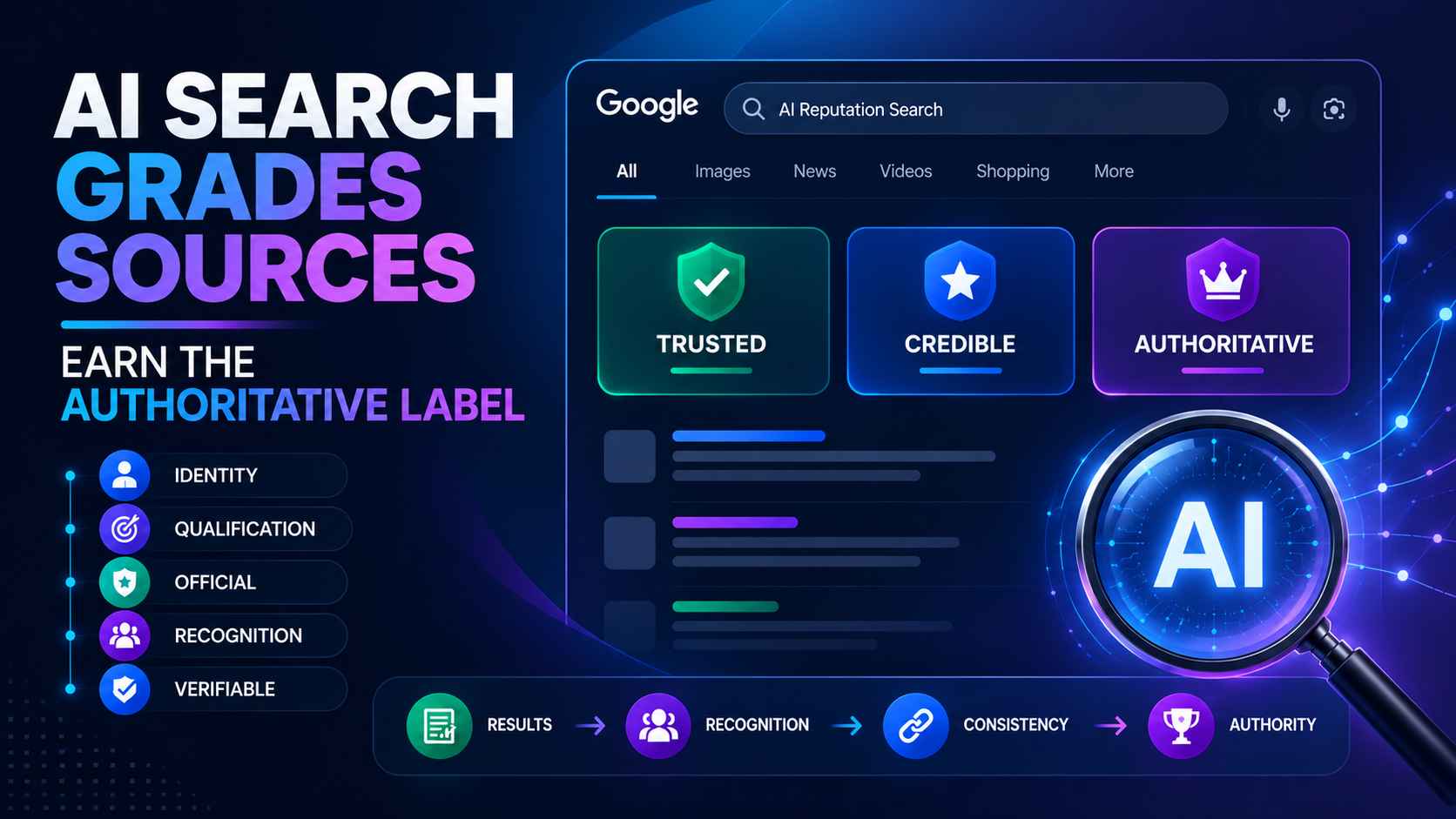
Google AI Overviews, ChatGPT, and Perplexity cite executives who have structured content and entity recognition in search systems. Executives without a content footprint do not appear in AI-powered discovery.
The 2025 BrightEdge study found that 42% of domains lost visibility in AI Overviews after algorithm updates. Executives with strong personal brands retained or gained citation share.
Talent evaluates leadership before applying.
The 2024 LinkedIn Global Talent Trends report found that 75% of candidates research company leadership before applying. Executive personal branding attracts senior talent that recruiting alone cannot reach.
I watched this dynamic play out across every industry I work in. The Fortune 500 CEOs who invest in personal branding consistently outperform their peers in talent acquisition, media coverage, and partnership opportunities.
The Five Components of Executive Personal Branding
Executive personal branding has five components. Each one builds on the previous.
Positioning Clarity
Positioning answers one question: what does the market associate with this executive's name? The answer is specific, not general. "I help companies grow" is not positioning. "I build authority brands for founders scaling from $1M to $10M" is positioning.
The positioning statement for an executive personal brand contains three elements: the audience served, the specific outcome delivered, and the methodology that distinguishes the approach.
Intellectual Property
Named frameworks are the highest-leverage asset in executive personal branding. A framework transforms general expertise into citable, repeatable intellectual property.
The executive who has a named methodology gets invited to speak. The executive who has general knowledge gets invited to listen.
I developed frameworks like ROAC (Return on Attention Created) specifically because named concepts travel further than unnamed expertise. A prospect remembers "the ROAC framework" long after they forget a generic blog post about attention metrics.
Content Architecture
Executive personal branding requires a content architecture, not a content calendar. The architecture defines which platforms serve which function.
Three platforms with strategic depth produce more authority than eight platforms with surface-level presence:
Website. The only platform the executive owns. Hosts long-form content, framework documentation, and the structured data that search engines and AI systems index.
LinkedIn. The highest-intent professional platform. Hosts positioning signals, short-form authority content, and the profile that prospects check before every meeting.
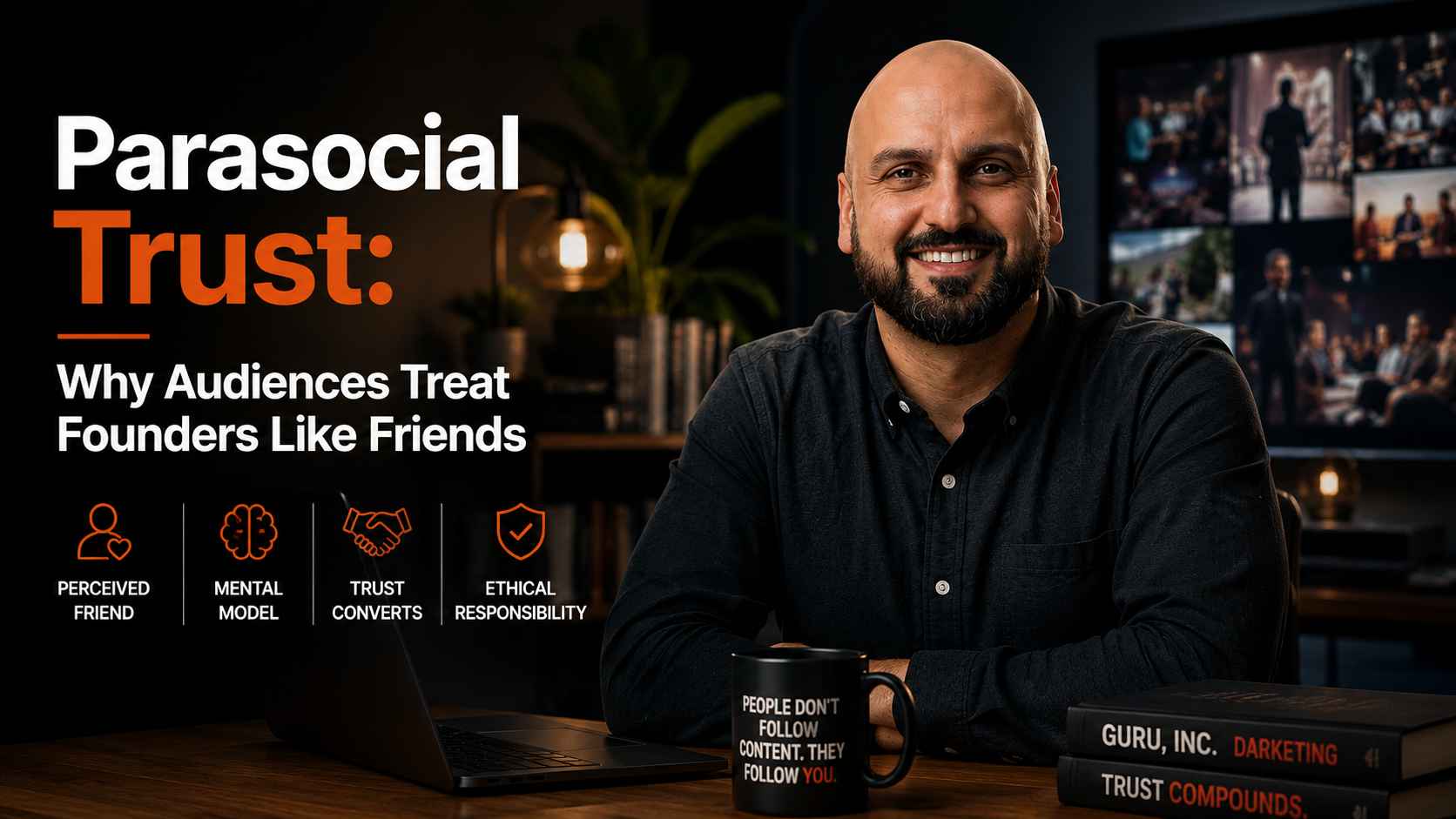
One video channel (YouTube or podcast). Long-form video or audio builds parasocial trust at a depth that written content alone cannot match.
Search Visibility
Executive personal branding requires search visibility, not social visibility alone. The executive who ranks on page 1 for their name plus their industry generates inbound demand 24 hours a day. Social posts disappear in 48 hours. Search results compound for years.
The search visibility layer includes website architecture, schema markup, entity recognition signals, and content that targets the specific queries the executive's prospects search.
Trust Measurement
Executive personal branding produces measurable trust signals. The five metrics that matter:
Inbound inquiry volume (prospects reaching out without outbound effort)
Speaking invitation frequency
Media mention and citation count
AI system citation appearances
Sales cycle length (shorter cycles indicate higher pre-existing trust)
Follower count, impression volume, and engagement rate do not measure authority. They measure awareness. Awareness without trust generates traffic. Trust generates revenue.
The Authority-First Approach vs the Volume-First Approach
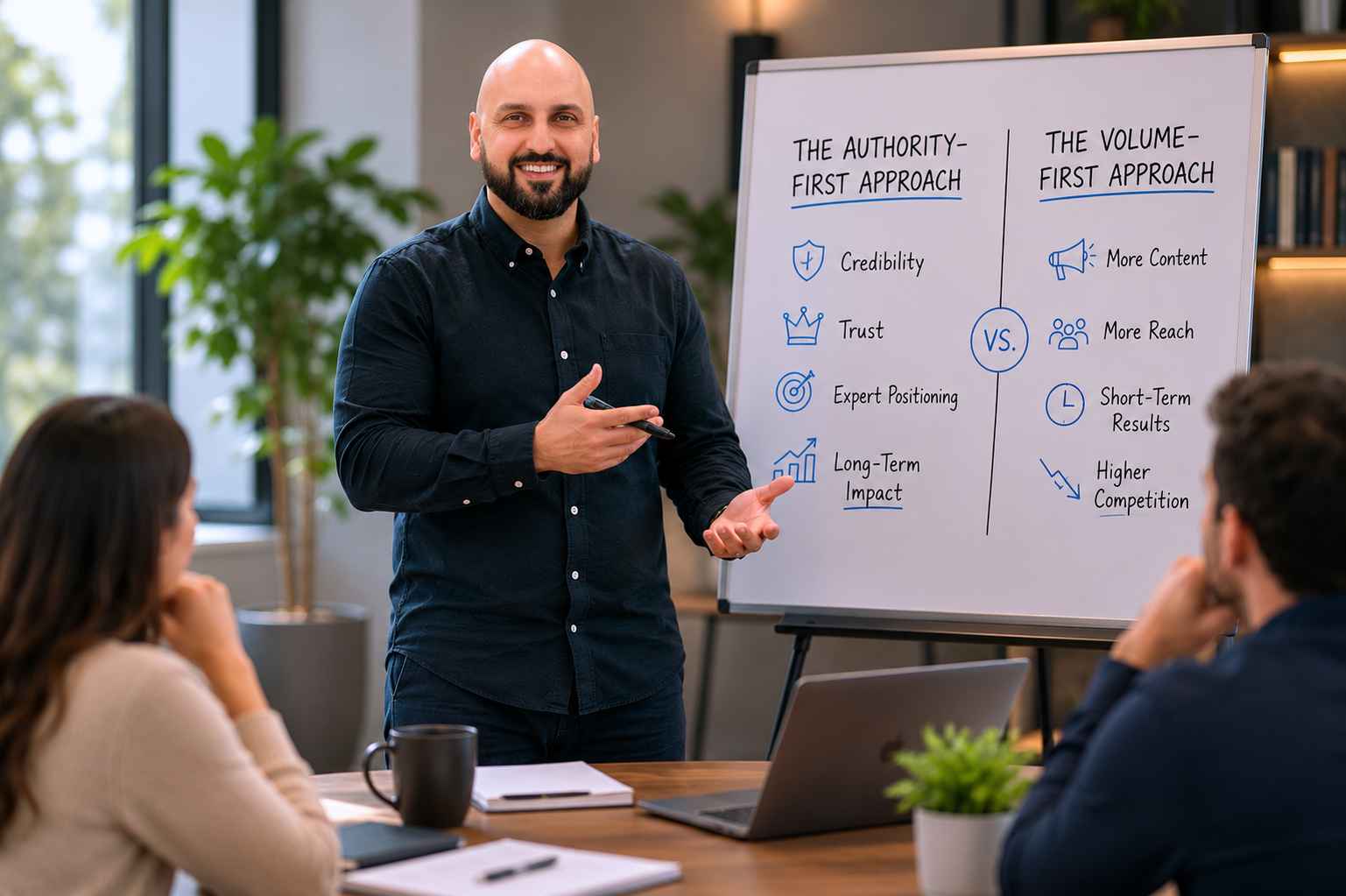
The authority-first approach invests 80% of effort in positioning and IP, 20% in content. The volume-first approach inverts the ratio.
Two executives. Same industry. Same expertise. Different approaches.
Executive A (volume-first):
Posts daily on LinkedIn, Instagram, Twitter, and TikTok. Produces 20 pieces of content per week. Engagement is moderate. Inbound inquiries are rare. The audience recognizes the face but cannot articulate what the executive stands for.
Executive B (authority-first):
Publishes one long-form article per week on their website. Repurposes key insights into three LinkedIn posts. Records one 15-minute video per month. Total content output: 5 pieces per week. Inbound inquiries arrive weekly. Prospects reference specific frameworks by name in the first conversation.
The difference is not talent or budget. The difference is architecture. Executive B built positioning and intellectual property before producing content. Every piece of content reinforces a single, specific authority claim. Executive A produced content without a positioning foundation. Every piece exists in isolation.
I have seen this pattern repeat across dozens of executive brands. The executives who invest 5 hours per month in authority-first personal branding outperform executives who invest 20 hours per month in volume-first content. Hours spent do not determine outcomes. Strategic architecture determines outcomes.
Common Mistakes Executives Make With Personal Branding
The three most common executive personal branding mistakes are delegation without direction, generality, and measurement by vanity metrics.
Mistake 1: Delegating without strategic direction.
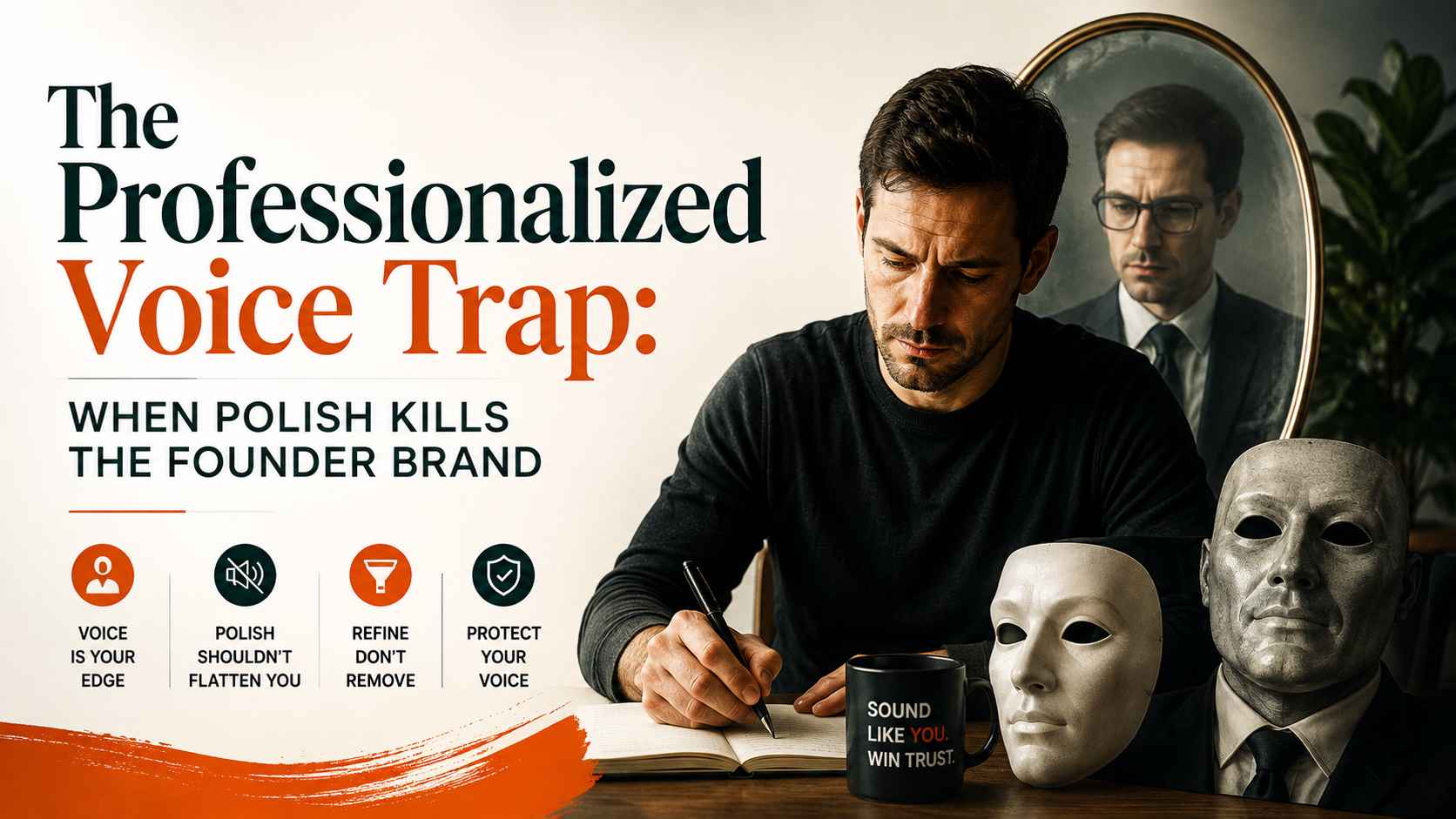
The executive hires a ghostwriter or social media manager and hands over the entire process. The content sounds generic because the strategic positioning was never defined. Delegation works after the positioning, frameworks, and voice are locked. Delegation without direction produces content that belongs to anyone.
Mistake 2: Positioning too broadly.
"I am a leadership expert" competes with 100,000 other leadership experts. "I build authority brands for founders in the creator economy" competes with a handful. Specificity is the mechanism that makes executive personal branding effective. The narrower the positioning, the stronger the authority signal.
Mistake 3: Measuring by vanity metrics.
An executive with 50,000 LinkedIn followers and zero inbound consulting inquiries has an audience, not authority. The metrics that matter for executive personal branding are inbound leads, speaking invitations, media features, and sales cycle compression. Every other metric is a distraction.
How Executives Build a Personal Brand in 5 Hours Per Month
Executive personal branding requires 5 focused hours per month, not 20 scattered hours per week.
The 5-hour executive personal branding system:
Hour 1: Monthly positioning review.
Review the three core questions: What problem does the market associate with my name? What framework distinguishes my approach? What proof exists? Refine as needed.
Hour 2: One long-form piece.
Write or record one 1,500-word article or one 15-minute video that demonstrates expertise on a single topic within the positioning. This piece becomes the source material for all other content.
Hour 3: LinkedIn content extraction.
Extract three key insights from the long-form piece. Publish each as a standalone LinkedIn post across the month. Each post links back to the full article.
Hour 4: Relationship building.
Engage meaningfully with 10 posts from peers, prospects, and industry voices on LinkedIn. Leave substantive comments that demonstrate expertise, not generic reactions.
Hour 5: Measurement and adjustment.
Review the five trust metrics: inbound inquiries, speaking invitations, media mentions, AI citations, and sales cycle length. Identify what produced results. Do more of that. Stop doing what produced nothing.
Frequently Asked Questions
What is the difference between personal branding for executives and personal branding for influencers?
Executive personal branding targets business outcomes: inbound leads, partnerships, talent acquisition, and premium pricing power. Influencer personal branding targets audience growth: followers, engagement, and sponsorship revenue. The metrics, platforms, and content strategies differ fundamentally because the end goals differ.
How long does executive personal branding take to produce results?
Early indicators (inbound inquiries, speaking invitations, media interest) appear within 60 to 90 days of consistent authority-first execution. Measurable revenue impact typically emerges within six months as content compounds in search results and entity recognition builds across AI discovery systems.
Is LinkedIn the only platform executives need for personal branding?
LinkedIn is the highest-priority platform for executive personal branding because the audience intent matches the business outcome. A website is the second priority because the executive owns and controls the content, search ranking, and structured data.
A video channel (YouTube or podcast) is the third priority for building parasocial trust at depth. Three platforms with strategic depth produce more authority than eight platforms with surface presence.
Can an executive build a personal brand without showing their face on video?
Written content builds executive authority effectively without video. Long-form articles, LinkedIn posts, published frameworks, and a well-structured website generate search visibility, AI citations, and inbound demand.
Video accelerates trust formation because viewers process facial expressions, vocal tone, and body language simultaneously. Video is a multiplier, not a requirement.
What is the ROI of executive personal branding?
Founders with established personal brands report 3x higher inbound inquiry rates and 40% lower customer acquisition costs compared to founders without personal brands, according to a 2024 LinkedIn B2B Institute study.
The ROI compounds because authority assets (frameworks, ranked content, entity recognition) do not depreciate the way paid advertising does.