
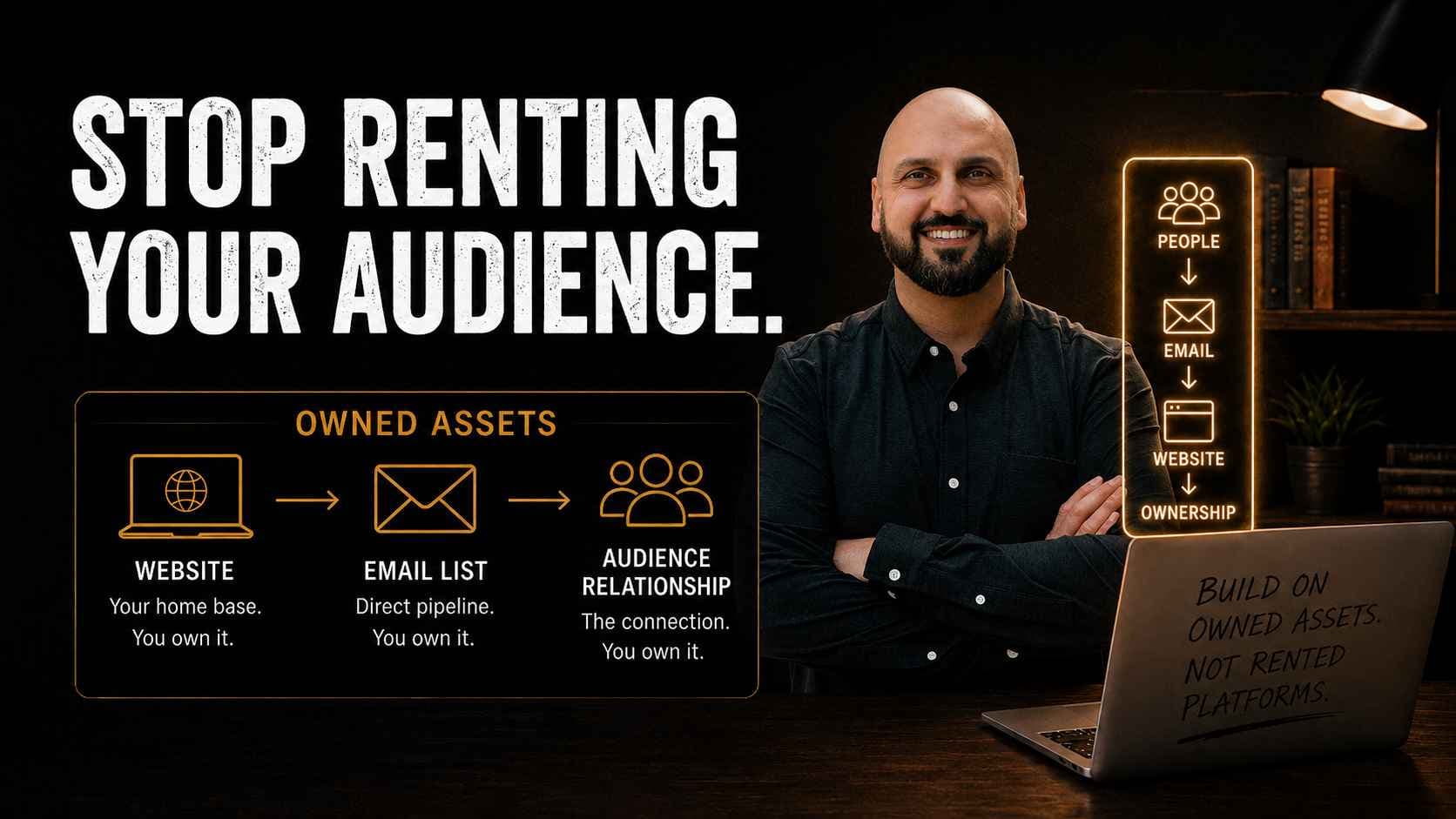
A one-person media company owns its audience. The founder builds on owned assets, a website and an email list, rather than renting reach from social platforms. Rented platforms control the algorithm, the access, and the relationship.
An owned asset stays the founder's property through every platform change. Authority that lives on a rented platform is access the platform grants. Authority that lives on an owned asset compounds into a real business. The owned-versus-rented decision separates a media company from a follower count.
Key Takeaways
A one-person media company owns its audience through a website and an email list.
Rented platforms control the reach. Owned assets belong to the founder permanently.
Authority on a rented platform is access the platform grants, not an asset the founder owns.
An algorithm change erases rented reach overnight. An owned asset survives it.
Owned assets compound into authority. Rented reach expires.
The automation crowd optimizes production. A founder optimizes ownership.
What a One-Person Media Company Actually Is
A one-person media company is a founder who runs a personal brand as a media business and owns the assets underneath it. The founder owns the website, owns the email list, and owns the direct relationship with the audience.
The term carries three wrong meanings. One frames it as an AI-automation setup, one person producing content like a ten-person team. One frames it as the legal one-person company entity. One frames it as a simple email-list tactic. None of those is the meaning here.
The meaning here is ownership. A one-person media company controls its distribution. The founder reaches the audience without asking a platform for permission.
Why Owned Assets Beat Rented Platforms
Owned assets beat rented platforms because the founder controls them completely. An owned asset includes the website, the email list, and the owned content library. A rented platform includes every social channel where the algorithm decides the reach.
The difference is control. On a rented platform, the founder operates as a tenant. The platform sets the rules, throttles the reach, and owns the follower data. The landlord changes the terms whenever it chooses.
An algorithm change erases rented reach in a single day. A platform suspension erases it permanently. An owned asset survives both. The email list moves with the founder to any platform, and the website answers to no algorithm. Owned assets build equity. Rented platforms rent it back to the founder one quarter at a time.
Why a Founder Cannot Build Authority on Rented Land
A founder builds real authority only on owned ground. Authority that lives on a rented platform is access the platform grants, not authority the founder owns. The platform giveth the reach, and the platform taketh it away.
A founder with a million followers and no email list owns nothing. The followers belong to the platform. The relationship runs through a gatekeeper. The day the algorithm shifts, the authority the founder thought they built proves to be borrowed.
A founder with an owned audience owns the authority outright. The relationship runs direct, with no gatekeeper between the founder and the reader. The ownership argument sits at the center of GURU, INC., where authority is treated as an asset a founder builds, not a metric a platform lends.
The Owned Assets a One-Person Media Company Builds First
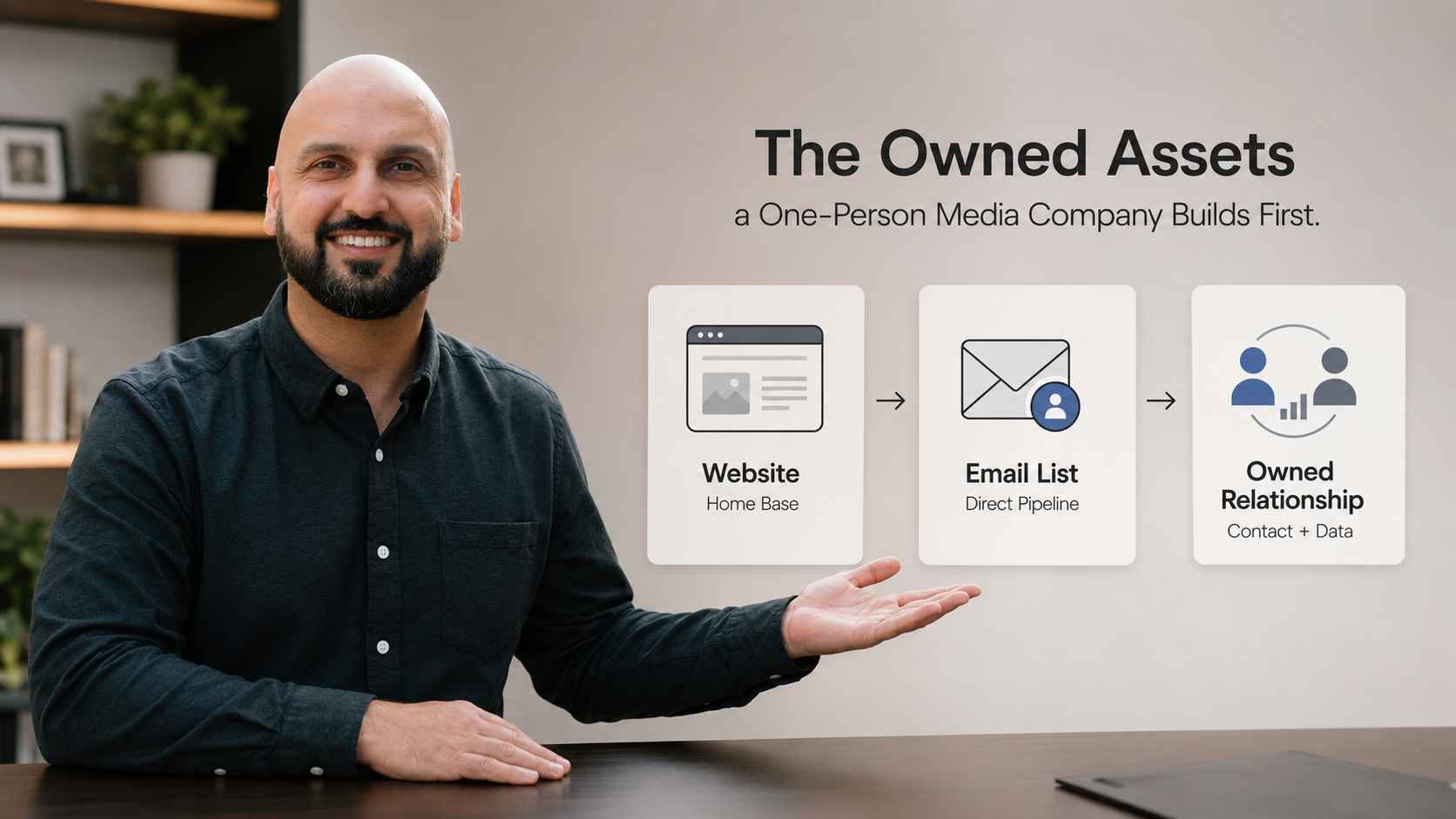
A one-person media company builds three owned assets first. The three assets are given below, in the order a founder builds them.
The Website: Your Home Base
The website is the home base the founder controls fully. The founder owns the code, the design, the content, and the search presence. The website hosts the flagship work, and it answers to no platform. Every other channel points back to it.
The Email List: Your Direct Pipeline
The email list is the direct pipeline to the audience. The message lands in the inbox with no algorithm deciding who sees it. The founder owns the contact, exports it freely, and reaches the audience on command. The email list is the single most valuable owned asset a founder builds.
The Owned Audience Relationship: The Contact and the Data
The owned audience relationship is the founder's direct connection to the people who trust the work. The founder owns the data, the permission, and the line of communication. The relationship runs founder to reader, with no platform standing in the middle.
These three assets form the media company a founder operates. The brand runs like a network the founder owns, not a feed the founder rents.
How Owned Assets Compound Into Authority
Owned assets compound into authority because each one feeds the next. The website earns the search traffic. The traffic converts into email subscribers. The email list deepens trust. The trust becomes authority that commands pricing power.
Kimberly Snyder built her brand on exactly this foundation. She owns her website, her email list, and her community, and those owned assets compounded into an audience measured in tens of millions of pageviews and a six-figure subscriber base. The owned assets carried the authority. The rented platforms only pointed toward them.
Rented reach expires the moment the algorithm moves. Owned assets compound the longer the founder holds them. Most founders stall on which asset to build first and in what order, and that sequencing decision is where clarity on the right next move changes the outcome.
Why the Automation Story Misses the Point
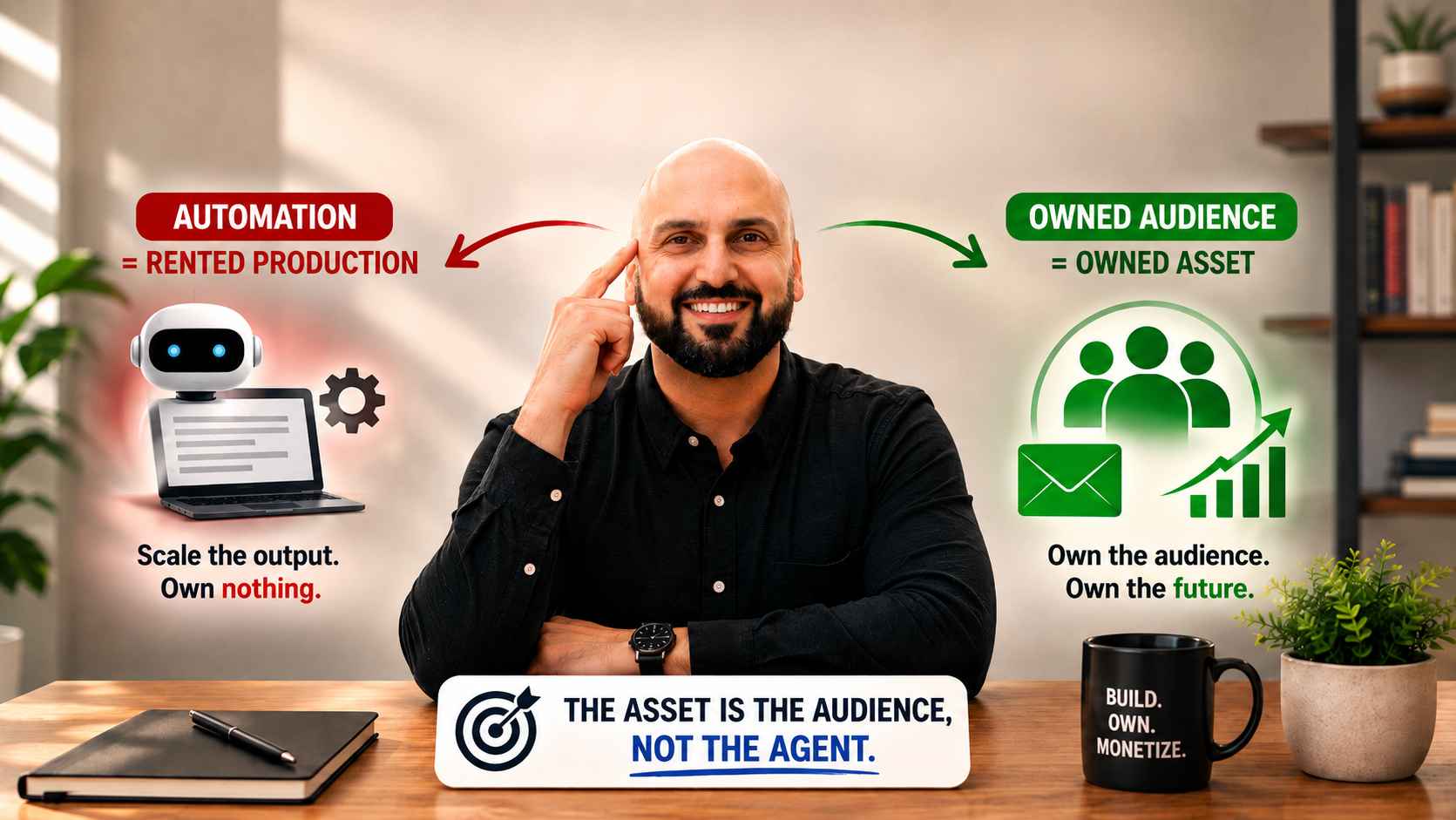
The automation story misses the point because it optimizes production, not ownership. The dominant advice frames a one-person media company as one person using AI agents to produce content like a full team. The framing answers the wrong question.
Production is rented leverage. The founder rents the model, and every competitor rents the same one. A founder who automates production but rents the audience has built nothing they own. The output scales, and the ownership stays at zero.
The asset is the audience, not the agent. A founder rents the intelligence and owns the audience. The automation crowd asks how one person produces more. A one-person media company asks whether the audience belongs to the founder at all.
The owned assets are the foundation. A few questions decide how a founder holds them.
Owned Audience Versus Rented Audience
An owned audience and a rented audience differ at the level of the relationship. An owned audience consists of people the founder contacts directly, through email or a website, with no gatekeeper in between. A rented audience consists of followers the platform controls.
The founder owns the contact data for an owned audience. The platform owns the contact data for a rented audience. The founder exports an owned audience to any new channel. The founder exports nothing from a rented one. An owned audience is a permission-based relationship the founder keeps. A rented audience is borrowed attention the platform lends and recalls at will.
Common Mistakes Founders Make With Rented Platforms
Founders make four predictable mistakes with rented platforms. The mistakes are listed below.
First, they treat followers as assets, when followers belong to the platform. Second, they build only on social and skip the website hub entirely. Third, they grow a large following with no email list to capture it. Fourth, they mistake reach for ownership, and confuse a big audience with a controlled one. Each mistake shares one root. The founder built on rented land and called it a business.
Does a One-Person Media Company Need AI Tools?
AI tools help a founder produce content faster. The tools do not make the audience the founder's property. A tool drafts a newsletter, edits a video, and schedules a post. The ownership question sits outside the toolset entirely.
The asset question is ownership, not tooling. A founder with the best AI stack and a rented audience still owns nothing. A founder with a simple email list and an owned audience owns a real business. The tools change how the content gets made. Ownership decides who the content belongs to.
How Long Does It Take a Founder to Build an Owned Audience?
An owned audience grows slower than a follower count. The first email subscribers arrive within weeks of launching a website and a signup form. Meaningful authority compounds over months and years, because trust accrues at the speed of consistent value, not viral reach.
Can a Founder Still Use Social Media as a One-Person Media Company?
Yes. Social media works as top-of-funnel discovery for a one-person media company. The founder uses the rented platform to reach new people, then moves them to an owned asset. The social channel is the invitation. The owned asset is the destination.