

Content-led marketing for founders turns expertise into the growth engine. Most advice treats content as a lead funnel. That model produces volume, not trust. The best founder content demonstrates expertise, runs as a personal media company, and converts attention into pipeline. Positioning comes first.
Key Takeaways
Content-led marketing for founders makes the founder's expertise the growth engine.
The best content demonstrates expertise instead of pitching.
Trust builds the demand that a sales funnel used to chase.
Founder-led content stalls when it depends on the founder alone.
A personal media company moves trust off the founder's feed.
ROAC measures trust and pipeline, not post counts.
Positioning comes before content, never after.
What Content-Led Marketing Means for a Founder
Content-led marketing for a founder is founder-led content run as a system, where expertise becomes the primary growth engine. The term carries two meanings, so I separate them. The corporate version treats content as a channel a marketing team operates. The founder version puts the founder's own thinking at the center.
Content-led marketing is not product-led content, where the product demonstrates itself. It is not a lead funnel, where content captures emails. Content-led marketing for founders earns trust first, and trust produces the demand.
The Best Founder Content Demonstrates Expertise. It Does Not Pitch.

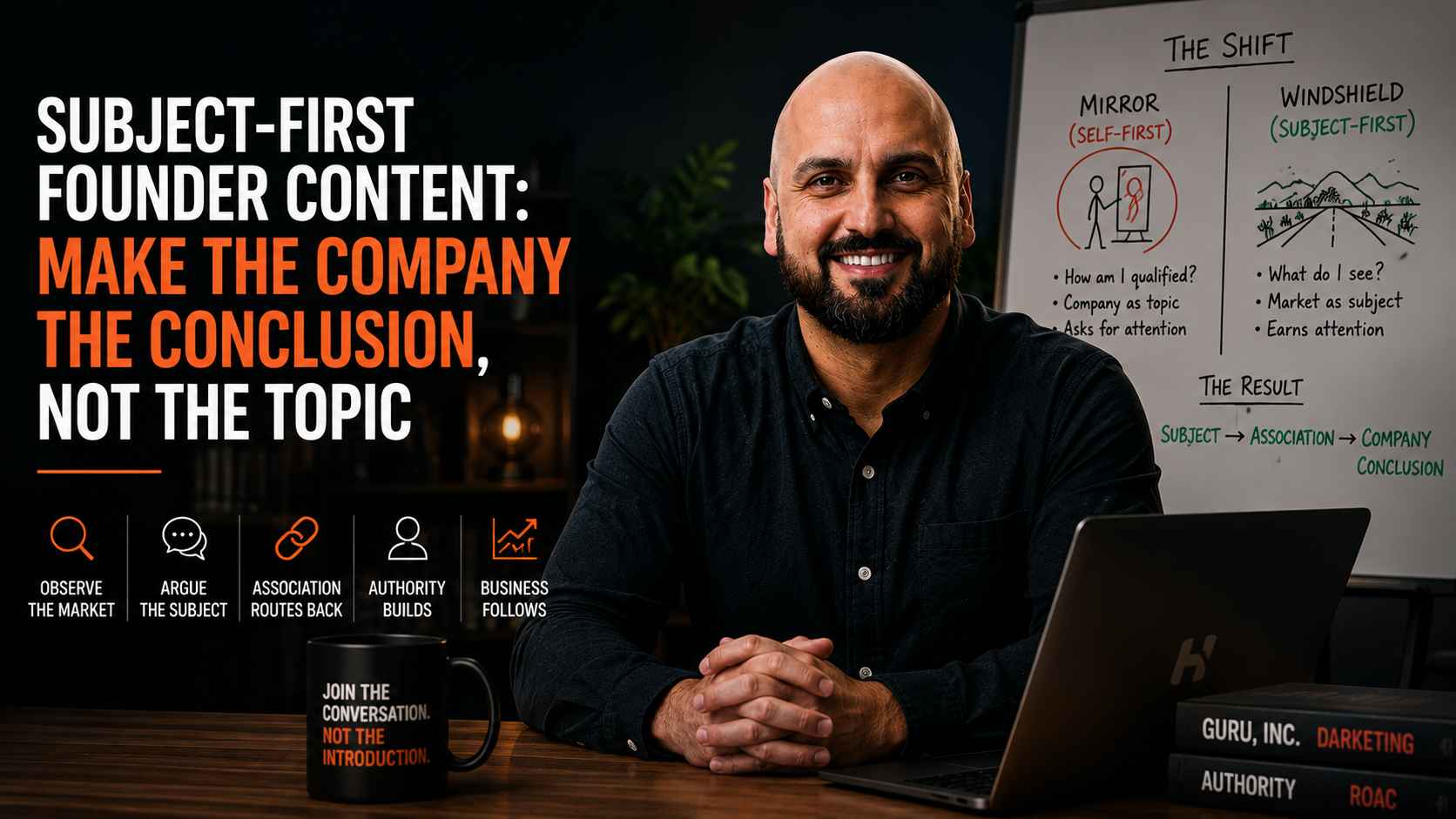
Content sells without selling when it demonstrates expertise instead of persuading. A pitch asks for the sale. Demonstration earns the trust that makes the sale later. The founder who shows their thinking becomes the obvious choice before any offer appears.
Reputation replaced the funnel. A doctor you trust does not get comparison-shopped. A founder who teaches the method becomes that trusted source for the market.
I watched this with Kimberly Snyder. She ran a private nutrition practice charging by the hour. She taught her method in public instead of advertising it. That content built an eight-figure brand and three New York Times bestsellers.
Why Teaching Outperforms Promoting
Teaching gives the audience something before asking for anything. Promotion asks first. People remember the founder who taught them, and they buy from the source they already trust.
Founder-Led Content Builds Trust. A System Turns That Trust Into Demand.
Founder-led content builds trust, and a system converts that trust into demand. Trust alone produces awareness. A system produces pipeline.
The question founders ask is fair: does founder-led content drive demand? The answer depends on the system underneath it. Posting builds familiarity. A structure turns familiarity into booked calls.
I call that structure a personal media company. The founder produces, distributes, and monetizes content by design, the way a network runs programming. The model is documented in GURU, INC.
Founder-Led Content Stalls When It Depends on the Founder
Founder-led content stalls when the entire motion depends on the founder posting. Reach flattens. Momentum ties to one person's energy. The company stays invisible while the founder gets remembered.
A personal media company solves this. The model moves trust off the founder's personal feed and into an owned hub the founder controls. Owned assets outlast rented platforms.
Why Owned Media Outlasts a Personal Feed
A social feed belongs to the platform. An algorithm change erases years of reach overnight. A website, an email list, and a content library belong to the founder. The trust stored there compounds even when the founder goes quiet.
Measure Trust and Pipeline, Not Content Volume
A founder measures the trust and pipeline that content produces, not the number of posts published. Volume is a vanity number. Trust and revenue are the real return.
I built a framework for this called ROAC, Return on Attention Created. One side measures the attention the content captures. The other side measures what that attention produces: trust, intent, and revenue.
Strong attention with weak return signals a conversion problem. The audience exists. The system that turns it into demand does not.
Content-Led Marketing Works After Positioning, Not Before

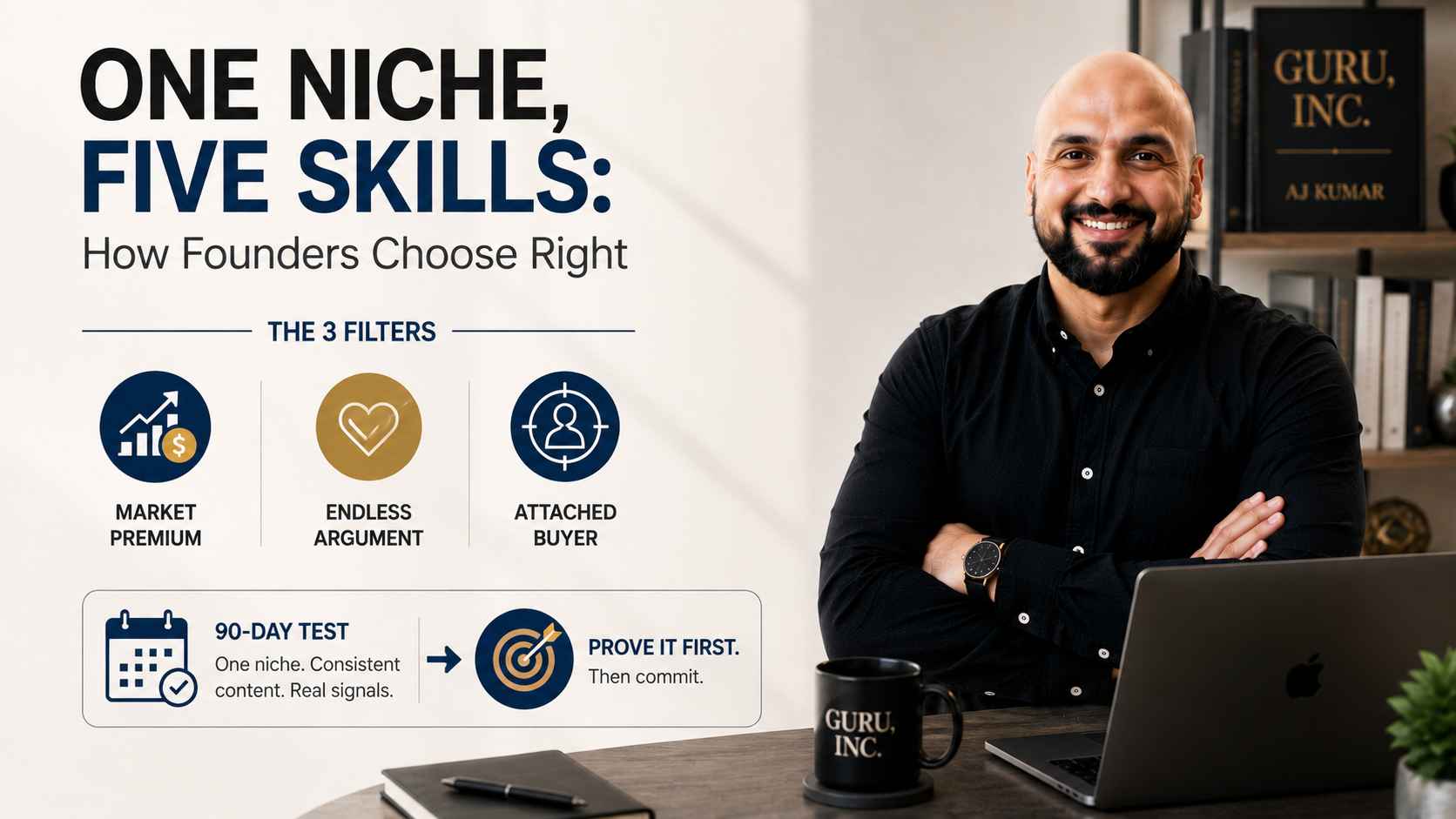
Content-led marketing produces demand only after a founder's positioning is set. The sharpest practitioners agree. Sharpen the offer before scaling the marketing.
A founder who publishes before positioning produces volume with no recall. The content gets views and forgets to convert. The market never ties one idea to one name.
Most founders carry a positioning problem, not a content problem. One conversation names the gap, and clarity on the next move is the place to start.
A few related questions shape how far founder-led content travels.
Content-Led Marketing Versus Founder-Led Content Versus Content-Led Growth
Three terms sit close together and get confused. Content-led growth is the company-wide strategy, where content drives acquisition, retention, and expansion across the whole business. Content-led marketing is the motion where content becomes the primary channel for demand. Founder-led content is the founder's version of that motion, where the founder's expertise leads.
A founder needs the third one first. The company-wide strategy follows once the founder's authority is established. The full framework sits on the content systems that compound founder authority pillar.
Founder-Led Content Versus Influencer Content
Founder-led content and influencer content look similar and work differently. An influencer chases reach and engagement metrics. A founder demonstrates expertise tied to the problem they solve and the thing they built.
The difference is the source of trust. People follow an influencer for entertainment. People follow a founder for competence. A founder who copies an influencer playbook abandons the one advantage they hold. Depth proves expertise, and long-form video that demonstrates expertise builds it faster than short clips.
How Founders Source Content Without Burning Out
The time objection is the most common one, and a system answers it. A founder does not become a full-time creator. The founder records once, and a team repurposes the rest.
Three sources fill a content engine. Client calls reveal the objections worth answering. A recorded conversation becomes a month of assets. A keynote or podcast becomes clips, articles, and posts. The founder supplies expertise, and the system supplies reach. Building founder authority on LinkedIn starts with the same record-once principle.
Common Founder-Led Content Mistakes
Several patterns stall founder-led content. The first is chasing volume over quality, where a founder posts often and says little. The second is copying influencer playbooks, where the founder abandons their own voice. The third is quitting early, where a founder stops at ten weeks before trust compounds.
Each mistake shares one root. The founder treats content as output instead of an asset. The revenue side of that gap appears in what a founder's content returns.
Frequently Asked Questions
What is content-led marketing?
Content-led marketing is an approach where content becomes the primary channel for earning trust and demand, rather than a support function for ads. For a founder, that content is led by the founder's own expertise and point of view.
Does founder-led content drive real demand?
Founder-led content drives demand when a system converts the trust it builds into pipeline. Alone, it builds trust and awareness. The system, a personal media company, turns that trust into booked calls and revenue.
How is content-led marketing different from content-led growth?
Content-led marketing is the marketing motion, where content is the primary demand channel. Content-led growth is the company-wide strategy that results when the motion scales across sales, retention, and expansion. The marketing comes first.
How long does founder-led content take to work?
Founder-led content shows engagement within the first months and pipeline over two to three quarters. Trust compounds over time, unlike paid ads that stop the moment spending stops. Consistency matters more than speed.
How does a founder do this without becoming an influencer?
A founder builds authority by demonstrating expertise tied to the problem they solve, not by chasing reach. The goal is recognition from the right audience, not a large following. Demonstration beats performance.