
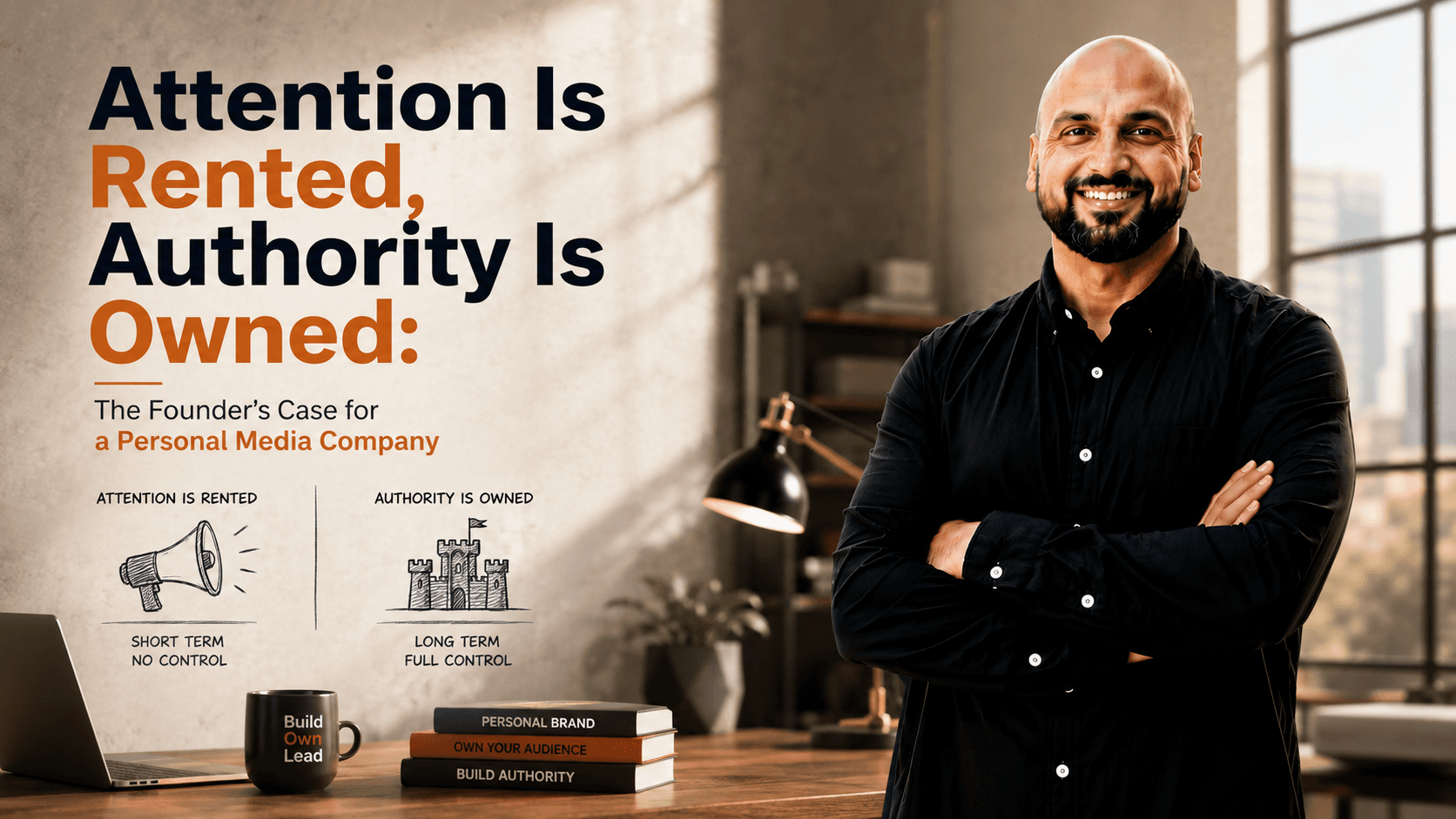
The case below is not an argument against platforms. Platforms are where attention lives. The argument is against renting without converting, and it reads like a lease review, because that is what a content strategy is.
Key Takeaways
Platform reach is rented: the algorithm sets the terms, moves the rent, and holds the eviction rights.
Founders own five assets no platform touches: the position, the library, the direct list, the named IP, and the recognition itself.
The strategy question is conversion: every piece of rented attention either becomes an owned asset or expires with the scroll.
The personal media company is the conversion machine, operating on the founder's schedule instead of the platform's mood.
ROAC, Return on Attention Created, meters the conversion: what the rented attention became.
Rent the attention. Own what it becomes.
Every Platform Is a Landlord, and the Rent Moves
A follower count is a lease, and the platform is the landlord. The strategy meeting sounds solid: "We have a strong following, our channel is growing, we are safe." Every clause in that sentence belongs to someone else.
The algorithm decides what share of the following sees each post, the terms change without notice or negotiation, and the account itself exists at the landlord's discretion. Platform history is a list of reach cliffs, and every cliff arrived as a surprise to the tenants.
Rented attention versus owned authority is the split underneath every content decision. Rented reach is real value, the same way a leased office is a real office. The failure is treating the lease as a deed: building the entire operation on distribution the founder controls no part of, then calling the building an asset.
What Founders Own: The Five Assets Rent Cannot Touch
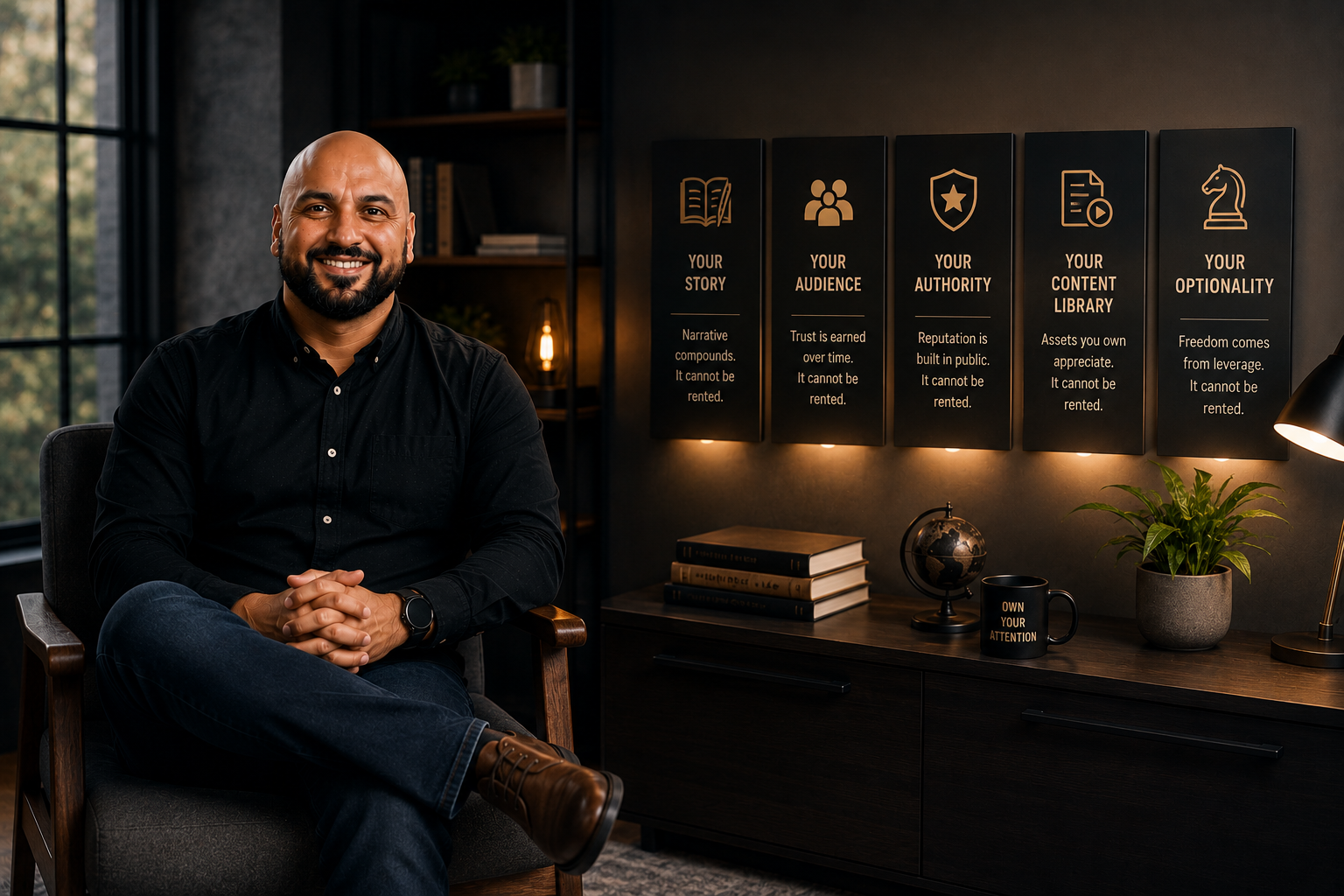
Ownership in founder branding covers five assets, and no algorithm prices any of them. The five owned assets are given below:
The position. The market judgment the founder is known for, living in the audience's memory. Platforms distribute it. Nobody repossesses it.
The content library. The evergreen body of work, addressable on owned property and compounding as it ages.
The direct list. Email and community access the founder reaches without asking an algorithm's permission.
The named IP. Frameworks, methods, and language the founder authored, citable by anyone and owned by one.
The recognition. Branded search, accurate introductions, and inbound that names the founder. The residue of every rented impression that converted.
Authority is the compound of the five. A founder strong on all five survives any platform change intact, because the assets live off the leased land, and follower count fails to predict revenue precisely because a follower is the one asset on this map the founder never owned.
The Conversion Argument: Rent Attention, Own the Residue
The strategy is never to stop renting. The strategy is to stop renting without converting. Attention lives on platforms, so the founder goes where it lives and pays the rent gladly: content produced, algorithms served, reach earned.
The discipline is what happens to each rented impression afterward. Every piece either converts attention into an owned asset, a stronger position, a library entry, a list subscriber, a memorized name, or the attention expires with the scroll and the rent was paid for nothing.
The meter on that conversion is ROAC, Return on Attention Created, the framework from GURU, INC. by AJ Kumar. Identity, trust, and leverage value are, in this argument's terms, the ownership ledger: what the rented attention deposited into assets the founder keeps. A high-reach quarter that deposited nothing was a quarter of rent with no equity, however good the platform report looked.
The Personal Media Company Is the Conversion Machine
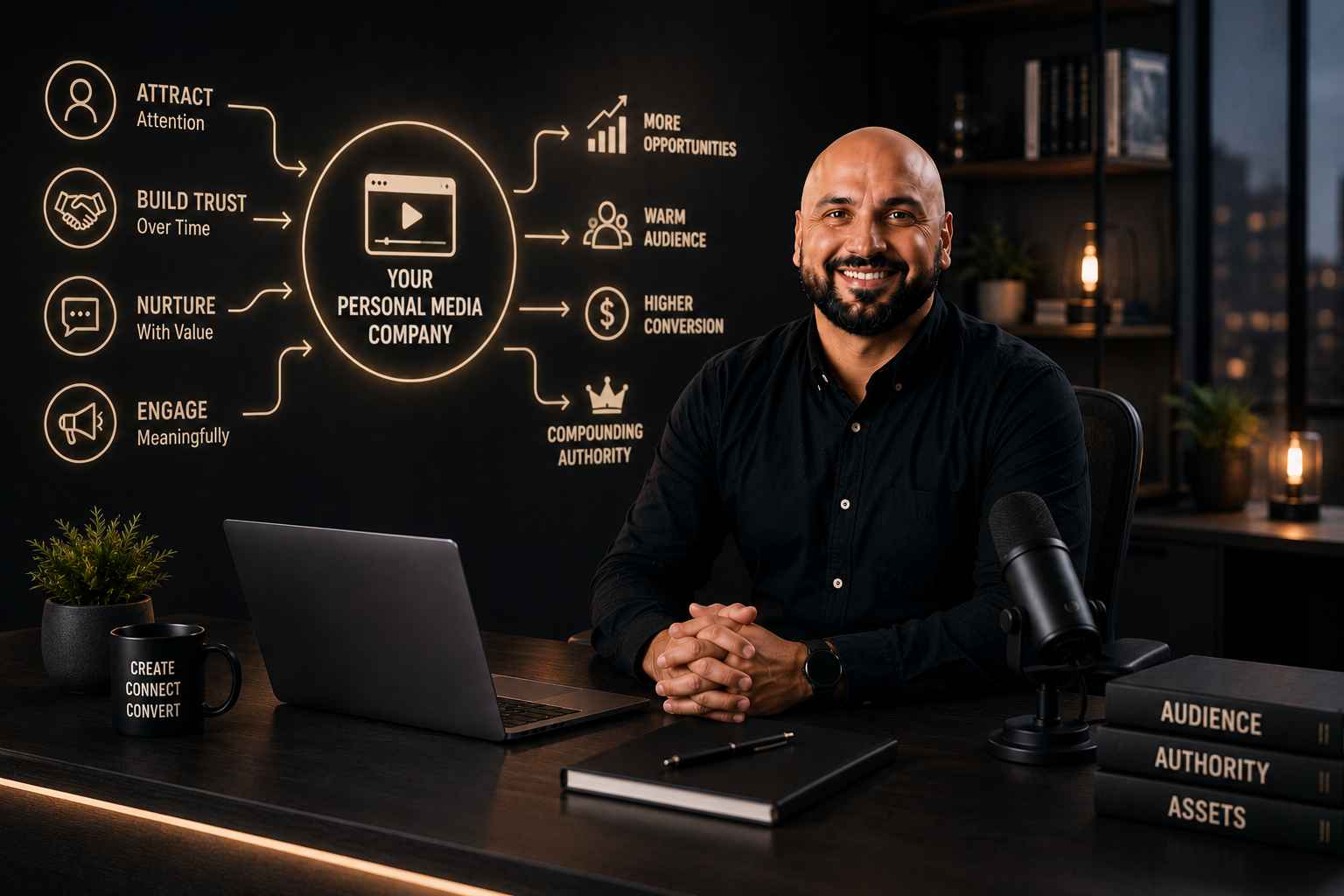
Converting rented attention at scale requires an operation, not a posting habit. The architecture is the Personal Media Company Model: the founder runs programming, distribution, and measurement like a media executive, on a schedule the founder controls. The full model lives on that page.
The point here is what the model is for: it is the machine that stands between rented reach and owned assets, converting one into the other deliberately instead of occasionally.
The difference shows in how each founder answers a platform change. The poster loses distribution and loses the strategy with it, because the strategy was the platform.
The media operator loses one distribution channel out of several, while the position, the library, the list, and the recognition keep working. Same algorithm change, different exposure, and the difference was built years earlier.
The Lease Review: Auditing a Strategy for Ownership
Three questions audit any founder strategy for ownership, and the answers arrive fast. If the main platform halved organic reach tomorrow, what survives? What share of the audience is reachable directly, today, without an algorithm's consent? What did last quarter's attention convert into owned assets, named specifically? A strategy that fails all three is a tenancy with good numbers, and the numbers belong to the landlord.
Building the conversion machine, the position, the capture paths, the library architecture, and the measurement, is the standing work of personal brand consulting for founders. Founders arrive owning expertise and renting everything else. The engagement moves the equity across, one asset at a time, until the platform is a distribution channel instead of a landlord.
Attention is rented one scroll at a time, and authority is owned: the position, the library, the list, the IP, and the recognition compound off the leased land. The personal media company is the machine that converts one into the other. Rent the attention. Own what it becomes.
Does Owned vs Rented Mean Leaving Social Platforms
No. Platforms are where attention lives, so founders rent reach there deliberately. Ownership describes what happens next: every piece routes attention toward assets the founder keeps. The sequence is rent, convert, own, repeated on schedule.
What Is the Most Valuable Owned Asset for a Founder
The position outranks every other asset, because the rest rebuild from it. A founder who loses the list, the library, and the following, while keeping the market's memory of what they stand for, rebuilds. The reverse never holds.
How Does a Founder Start Owning the Audience
Three first moves: state one position and repeat it everywhere, open one direct channel and treat it as the primary asset, and attach a capture path to every piece of content. Ownership starts as a routing decision, never a platform exit.
Is SEO Owned or Rented
Both, in layers. The website and its library are owned property. The rankings are rented from an algorithm, the same as feed reach. The honest read: search is a landlord with longer leases, and the library keeps its value even when a ranking moves.