


The brain releases dopamine when someone discovers a new insight, creating a biological incentive for audiences to keep watching. Most educational content fails because creators wrap dry information in a flashy package rather than rebuilding the format itself.
Expert creators who master edutainment build evergreen content assets that compound authority and generate measurable business outcomes.
Key Takeaways:
Edutainment sits in the middle of the education-entertainment spectrum, where people learn without realizing it
The brain's dopaminergic reward system, the Zeigarnik effect, and reinforcement loops are the three biological mechanisms that make edutainment work
The chocolate-covered broccoli trap is the most common failure: adding entertainment on top of education instead of rebuilding the format
Pure entertainment creators start from zero with every post. Edutainment creators build assets that compound.
Edutainment follows a five-part architecture: narrative hooks, paced insight delivery, character and voice, visual language, and emotional arc
Return on Attention Created (ROAC) measures if edutainment content produces business value, not vanity metrics
Your Audience Does Not Need More Information. They Need a Reason to Pay Attention.
Think about every teacher you had growing up.
You probably cannot name most of them. But one or two made you want to show up. They made it interesting. They made it feel less like class and more like something you would have chosen on your own.
Your audience has every piece of human knowledge available in seconds. They do not need more information. They need a reason to pay attention to yours.
That reason is edutainment.
Where Edutainment Sits on the Spectrum
Edutainment is content where the learning and the engagement are inseparable.
Pure education sits on one end:
Textbooks. Lectures. Structured curriculum.
Dense and information-rich
Nobody shares their professor's slide deck on Instagram
Pure entertainment sits on the other end:
Movies. Comedy specials. Reality TV.
Highly watchable but light on takeaways
Edutainment lives in the middle:
Bill Nye the Science Guy
Neil deGrasse Tyson
Shark Tank
Mark Rober teaching engineering through elaborate YouTube projects
In the middle, people learn and do not realize it. Or they realize it and love it. Either way, they keep watching.
Social media platforms sit on the entertainment side by design. The algorithm does not reward you for being smart. It rewards you for holding attention. That is why I wrote about treating social media as a strategic game. Once you understand the rules, edutainment becomes your primary move.
The Neuroscience Behind Why Edutainment Works
The reason edutainment works is biological.
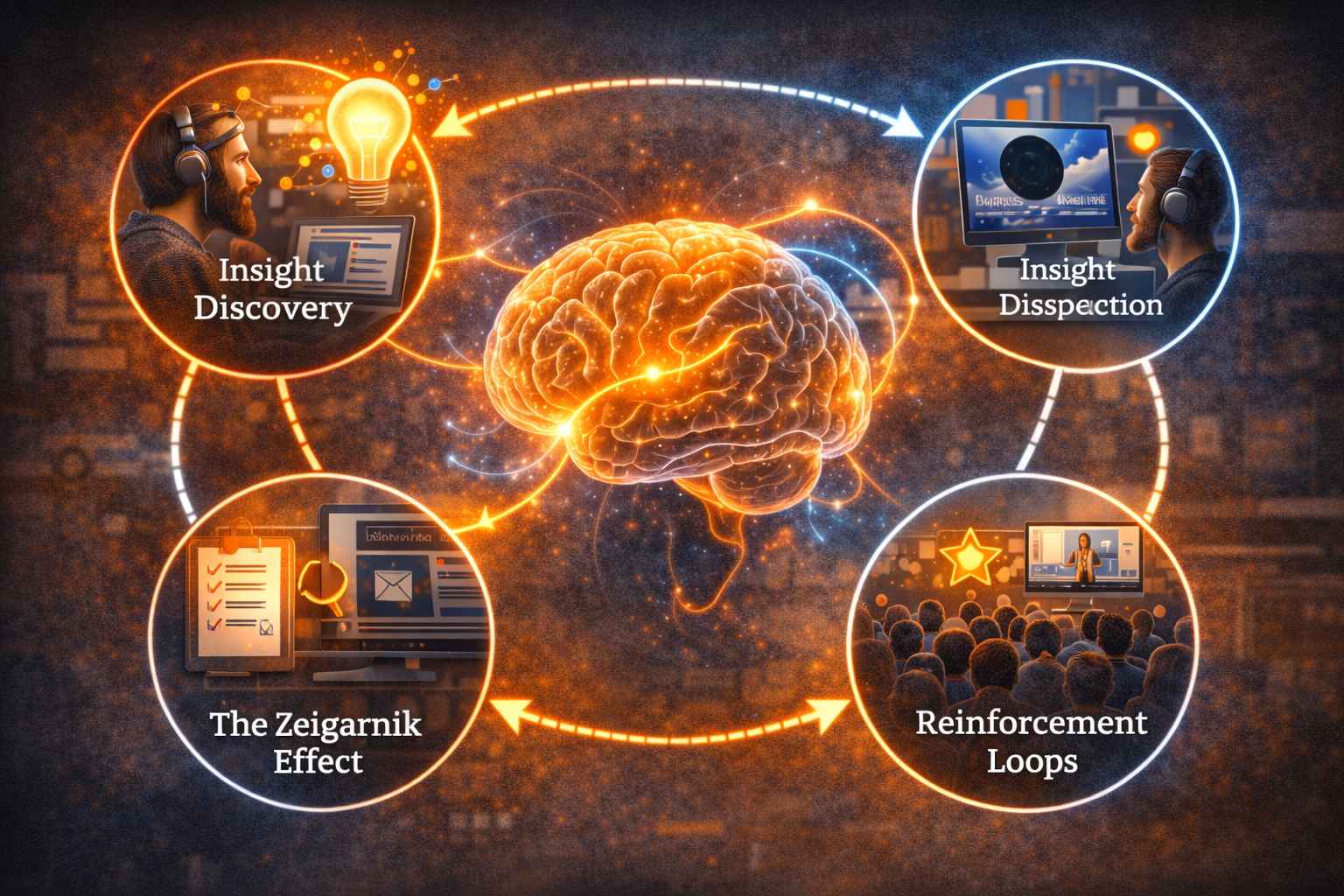
The brain's dopaminergic reward system fires when someone discovers a new insight. Dopamine releases. The brain marks the moment positively. The viewer wants more.
Three mechanisms drive this:
Dopamine from insight discovery. When a concept clicks into place, the brain rewards the experience. A ten-minute Kurzgesagt video on black holes feels more educational than a two-hour documentary because insights are timed for maximum reward.
The Zeigarnik effect. Discovered in 1927. The brain holds onto unresolved information more powerfully than resolved information. Open loops create cognitive tension. That tension keeps people watching until they get the answer. This is the same mechanism that drives YouTube watch time and viewer retention.
Reinforcement loops. When someone consistently gets value from your content, the brain builds a shortcut: this person reliably delivers. That shortcut turns one-time viewers into recurring audiences.
These three mechanisms map directly to the 5-Stage Biological Attention Sequence I documented in GURU, INC.:
Stage 2 (Salience): Edutainment passes through novelty and emotional framing
Stage 4 (Reward): Delivers through genuine insight
Stage 5 (Reinforcement): Trains the audience to associate your brand with the feeling of learning something valuable
You are not dumbing anything down. You are giving the brain a reason to stay.
Why Most Educational Content Fails
The chocolate-covered broccoli problem: creators wrap dry educational content in a flashy package without rebuilding the format itself.
The information stays unchanged. There is a cartoon character presenting it now. Or upbeat music underneath. The result feels artificial. Audiences recognize the coating immediately.
What Chocolate-Covered Broccoli Looks Like
Same lecture, different background music
Dry script read over trendy visuals
"Educational" carousel that reads like a textbook slide
Talking head repeating information available on Wikipedia
What Real Edutainment Looks Like
Mark Rober: The elaborate engineering project IS the explanation. The entertainment IS the education.
Oregon Trail: Taught westward expansion and resource management because it was a game. Learning was inseparable from playing.
Shark Tank: Drama about money, power, and ego that teaches deal structure, risk evaluation, and founder pitching. Millions learned more business from Shark Tank than from any classroom.
You are not an educator trying to be entertaining. You are building an experience that delivers insight through engagement.
How Edutainment Builds Authority That Compounds
Expert creators who master edutainment have a fundamentally different business than pure entertainment creators.
The Pure Entertainment Problem
Only as good as the last piece of content
Comedian needs a new joke. Trend chaser needs the next trend.
No compounding. Every video starts from zero.
The Edutainment Advantage
A video explaining electrolytes in a new way does not expire
Keeps building trust months and years after publication
Creates Return on Attention Created (ROAC), a framework from GURU, INC. that measures if content produces business value
ROAC tracks how content converts attention into trust, audience growth, and revenue
I have clients in health and wellness where someone watches a video about hydration, has their understanding shifted, and buys a product within minutes. Not because the video was an ad. Because it was educational enough to change their perspective and entertaining enough to hold their attention all the way through.
That conversion mechanism is not persuasion. It is perception shift.
Personal Brand Authority matters more now than ever. People are not looking for institutions to tell them what to think. They are looking for people they trust to help them see clearly.
The Five Structural Elements of Edutainment Content
Edutainment follows a five-part architecture:
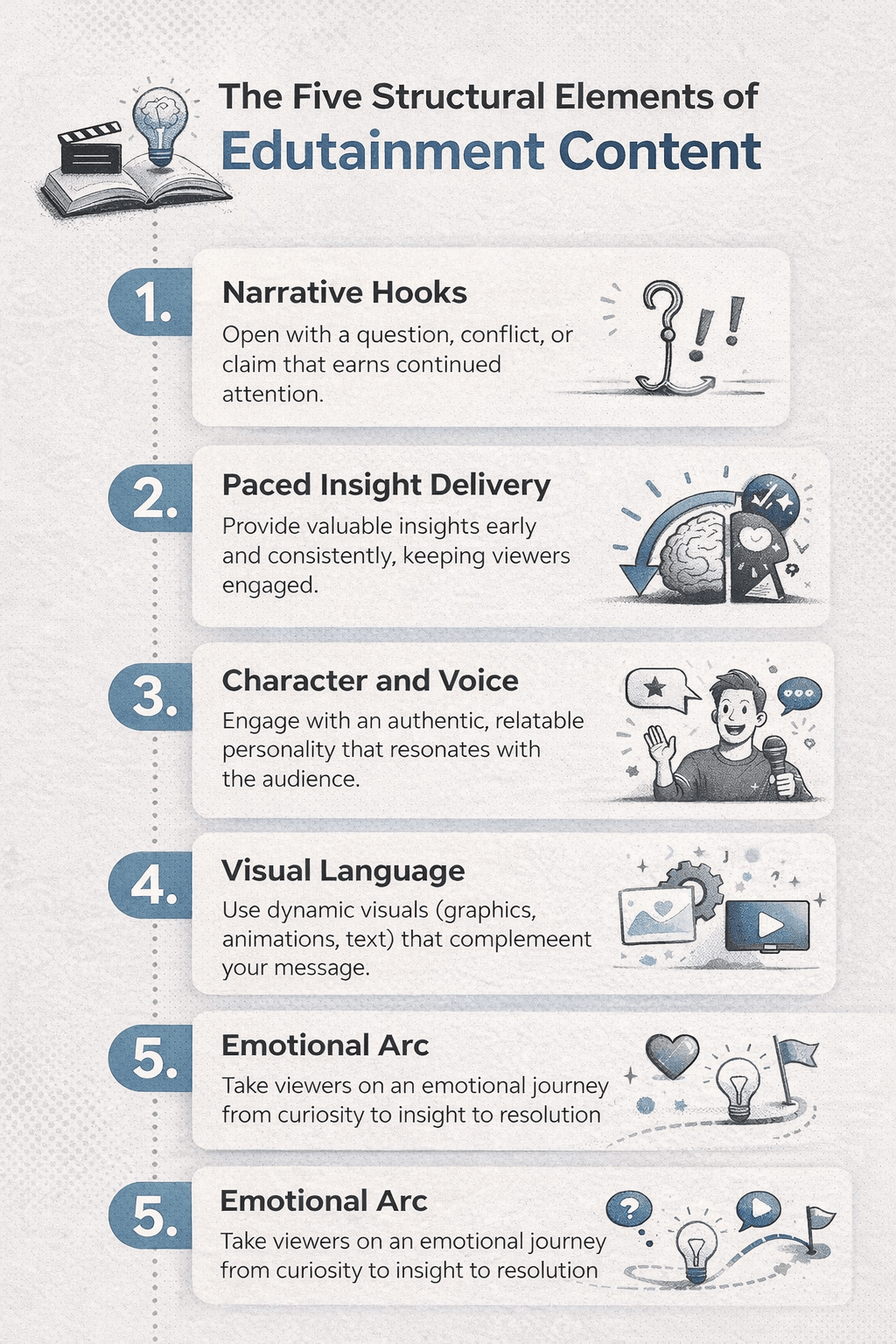
1. Narrative Hooks
Opens with a question, conflict, or claim that earns continued attention. Not a topic. A tension. The viewer needs to feel a pull toward resolution before committing.
2. Paced Insight Delivery
Satisfaction retains viewers, not action alone. When the first real insight arrives, the brain marks it positively. The sooner that first value hit comes, the more likely someone is to stay
for the second and third.
Think of it as time to satisfaction. How far into your content does someone have to go before they get something that makes them glad they stayed?
3. Character and Voice
People watched Bill Nye for him. His energy. His commitment. The sense that this person genuinely loves the material.
In the creator economy, the host is the brand. Information is everywhere. The experience of learning through you is not.
4. Visual Language
Even a talking head video is an emotional experience shaped by pacing and what appears on screen. The brain processes visual information far faster than text. When visuals and words reinforce the same idea, retention increases.
5. Emotional Arc
Great edutainment takes you somewhere:
Start curious
Move through surprise or challenge
Arrive at a different understanding than where you began
That journey is what people remember. That is what they share.
Edutainment as a Personal Media Company Strategy
The most impactful edutainment operates on two levels simultaneously:
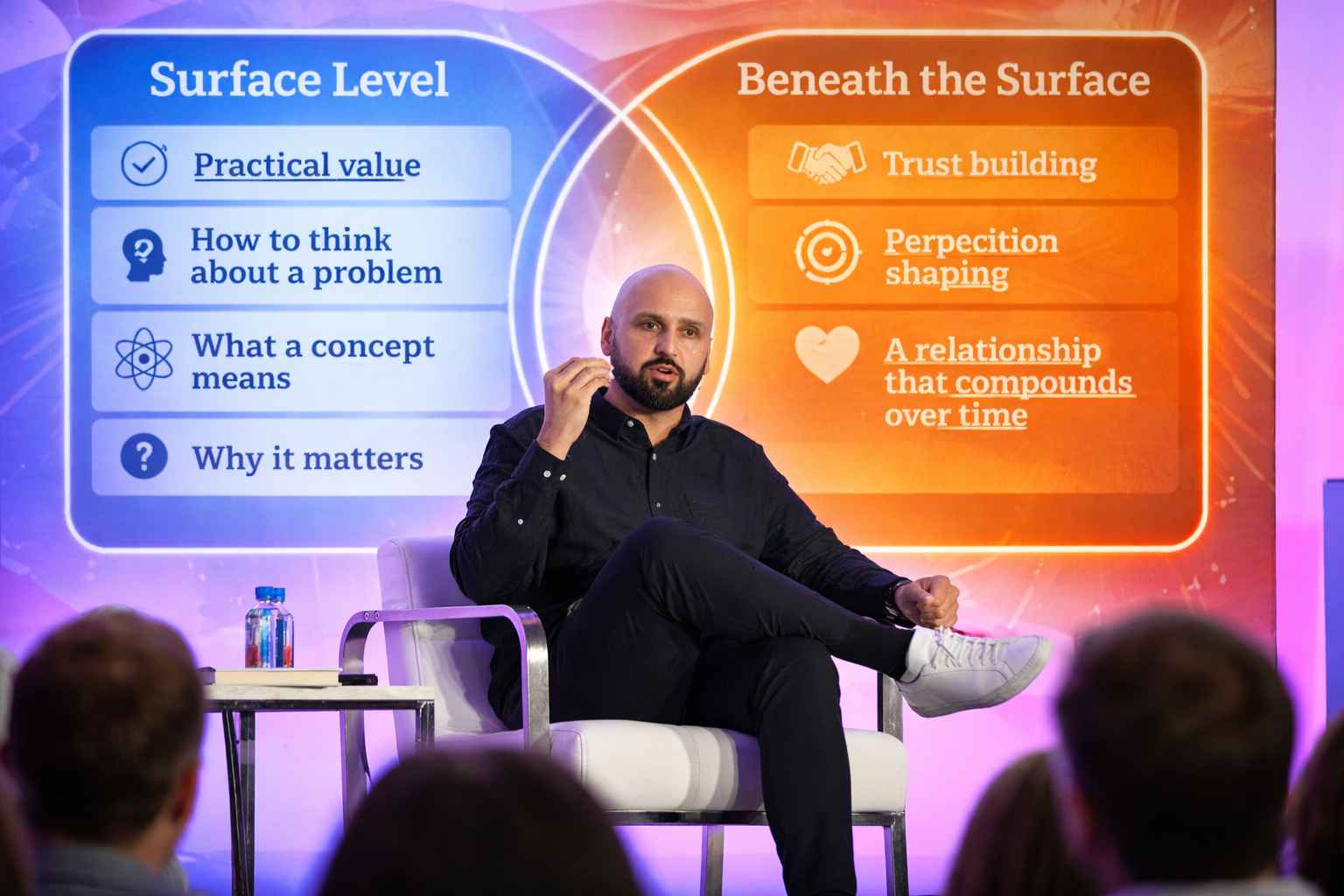
Surface level:
Practical value
How to think about a problem
What a concept mean
Why it matters
Beneath the surface:
Trust building
Perception shaping
A relationship that compounds over time
That is what changes a content creator into a personal media company. Not production value. Intentionality.
I developed the Personal Media Company Model in GURU, INC. around this principle: founders and experts should run their content like a media executive producing a show, not a creator guessing at what to post.
This connects to how the attention economy works at a structural level. Attention is not free. It is not owed to you because you have credentials. Attention goes to creators who respect it enough to make every second worthwhile.
ROAC measures exactly that. Not how much attention you captured. How much value does that attention create for your business and your audience?
Why Edutainment Is the Expert Creator's Competitive Advantage
Your audience lives in the most attention-competitive environment in human history. They are not short on knowledge. They are short on reasons to pay attention to you specifically.
Edutainment is how you give them that reason:
Not by being a comedian
Not by chasing trends
By caring enough about your audience's experience to build content that earns attention rather than demanding it
The Content & Social Media Strategy that wins is the one treating every piece of content as both a teaching moment and an experience worth choosing.
Frequently Asked Questions About Edutainment
What is edutainment?
Content that educates and entertains simultaneously. The learning and engagement are fused into one experience. Uses storytelling, humor, visual design, and pacing to make information memorable.
What are the best examples of edutainment?
Sesame Street, Bill Nye the Science Guy, Shark Tank, Mark Rober, Kurzgesagt, and Oregon Trail. Each teaches complex subjects through entertainment mechanics.
Is edutainment only for kids?
No. Shark Tank, TED Talks, and the majority of successful YouTube educational channels serve adults. Neuroscience applies equally to all ages.
What is the chocolate-covered broccoli problem?
When a creator wraps dry content in a flashy package without changing the format. Real edutainment rebuilds the experience so the entertainment IS the education.
How does neuroscience explain why edutainment works?
Dopamine is released when someone discovers a new insight. The Zeigarnik effect keeps the brain engaged with unresolved information. Both create biological incentives to keep watching.
How do expert creators use edutainment to build authority?
Edutainment content has an evergreen value that compounds. Unlike entertainment creators who start from zero, edutainment continues building trust and generating Return on Attention Created (ROAC) long after publication.
What is the difference between edutainment and infotainment?
Edutainment has a specific educational objective. Infotainment presents information entertainingly without structured learning outcomes. Edutainment builds topical authority. Infotainment builds momentary attention.


