


AJ Kumar examines how Osteen engineered guru-level authority through six strategic layers and introduces the Guru Responsibility Framework, a five-point system for founders and creators navigating the line between authority and manipulation.
Key Takeaways:
Osteen creates one piece of content per week. That single 30-minute sermon becomes the source asset for every platform his brand operates on.
Five days of rehearsal before every Sunday delivery. Every gesture, pause, and joke is mapped in advance.
His operation runs on a visual identity manual and high-frequency sentiment tracking that calibrates content to the audience's emotional state
On-camera technique is engineered around slow-blinking neuroscience that deepens parasocial trust at scale
The Guru Responsibility Framework has five rules: Serve Before You Sell, Transparency Over Mystique, Independence as the Goal, Ritualize Results Not Identity Alone, and Know Your Line
The same mechanics that build legitimate authority can be weaponized. The difference between a guru and a cult leader is the moral standard, not the method.
Joel Osteen Built a Content Empire From One Weekly Talk
Most people think Joel Osteen is a preacher. He is. But that is like saying Oprah was a talk show host or MrBeast is a YouTuber. Technically accurate. Strategically incomplete.
What Osteen built is one of the most sophisticated personal media companies on the planet.
In GURU, INC., I break down the difference between spiritual gurus and business gurus, how they position themselves, and why followers develop such deep loyalty. Growing up, my family followed Baba Ji, and I watched firsthand how presence alone could silence an entire auditorium. That same magnetic pull is something Osteen has mastered better than almost anyone alive.
He is, in many ways, the guru's guru.
How One Sermon Becomes a Multi-Platform Content Operation
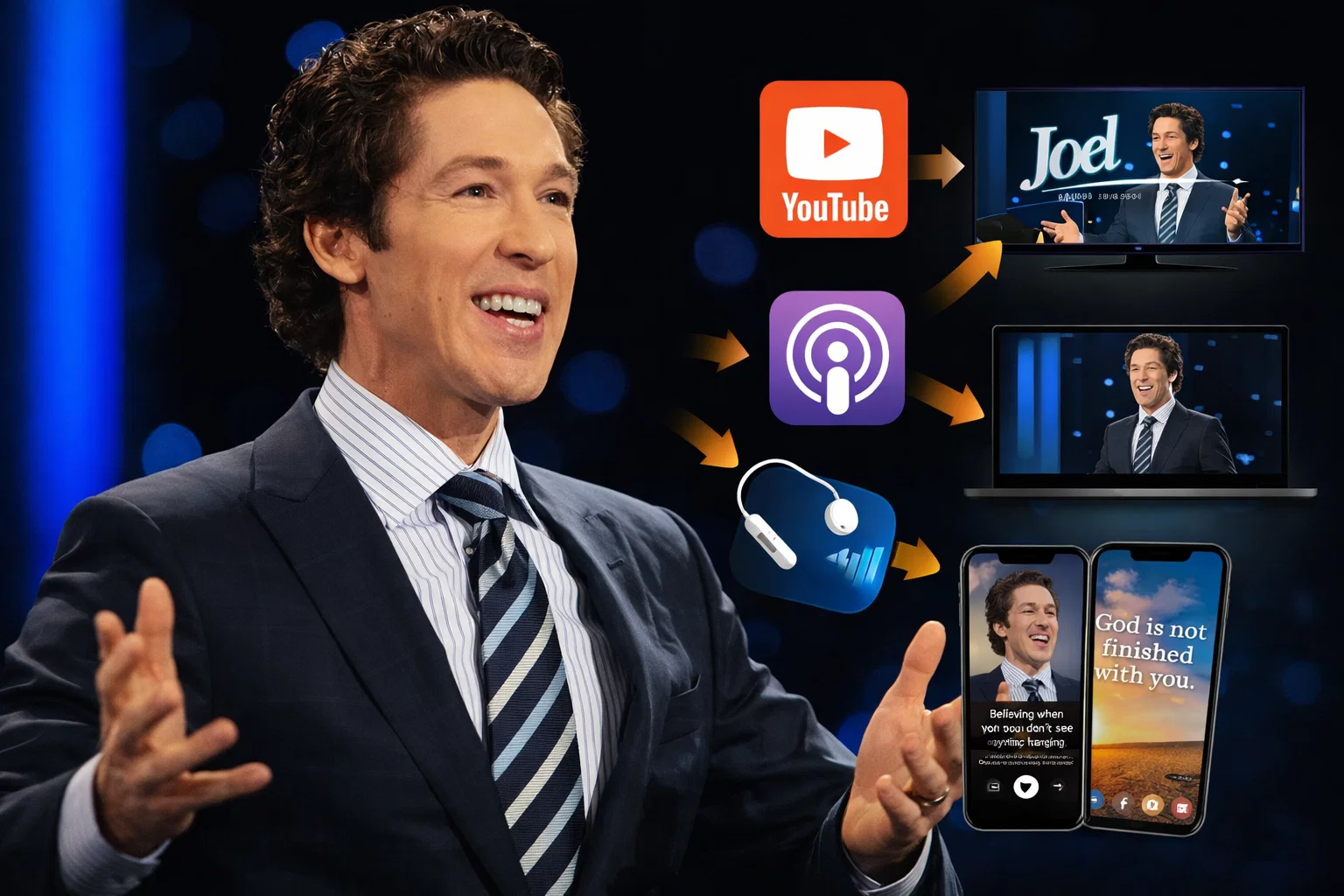
Osteen does not create dozens of pieces each week. He creates one. That single 30-minute sermon becomes the source asset for every platform.
The production process:
Starts preparing on Wednesday for Sunday's delivery
Five days of rehearsal
Every gesture, pause, joke, and transition is mapped in advance
By Sunday, he is not improvising. He is performing refined content.
The distribution system:
Full sermon → YouTube video
Full sermon → podcast episode
Full sermon → television broadcast
Extracted moments → social media clips optimized per platform
Key lines → quotable graphics
Content does not stop circulating after Sunday. Clips travel all week. What once felt like a weekly event functions as an always-on content ecosystem.
This is the same architecture Martha Stewart pioneered through TV, magazines, and product lines. Different era. Different media. Same biology.
One weekly keynote. Repurposed into every format. That is not a preacher's workflow. That is a media company's programming schedule.
The Brand Identity System Behind the Operation
Most viewers only see the sermon. They do not see the offices, dashboards, or strategy meetings.
Visual Identity Manual
Osteen's operation runs on what insiders have described as a visual identity manual. An internal rulebook standardizing how he looks and sounds across every platform:
Color palettes stay uniform
Stage layouts follow repeatable patterns
Wardrobe choices avoid distraction
Camera angles favor familiarity
From televised sermons to book covers to social clips, the image stays cohesive. Brand strategists call this identity control. The same discipline used by Fortune 500 companies. Not local churches.
Sentiment Tracking
His team employs high-frequency sentiment tracking to measure audience reaction to weekly messages.
Economic anxieties trending → message leans into hope and achievement
Social unrest in the news → sermons emphasize unity and calm
Cultural topics gaining attention → content calibrates in real time
Critics call it turning spirituality into a data-driven product. Supporters call it meeting people where they are. Either way, the approach is methodical.
This is the part most creators miss. Content strategy at the highest level is not about what you want to say. It is about understanding what your audience needs to hear, tracking how they respond, and refining delivery in a continuous feedback loop. The same principle drives the Content & Social Media Strategy framework, building systems, not random posts.
Why Osteen's On-Camera Presence Creates Trust at Scale
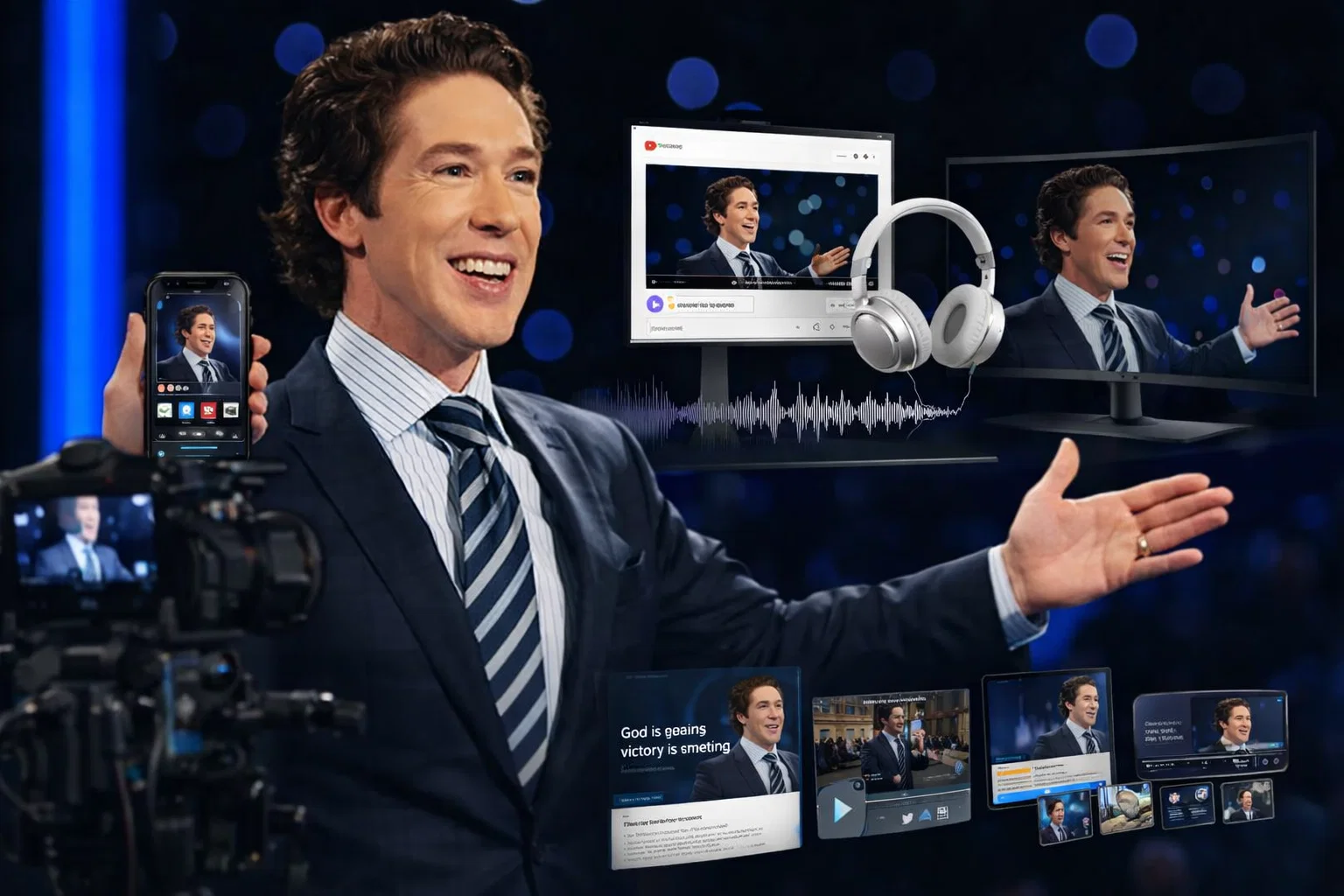
Communication researchers studying nonverbal trust signals have observed that slow, deliberate blinking functions as a comfort signal that deepens perceived intimacy.
If you have watched Osteen, you have noticed something unusual about his facial expressions. A softness and intentionality to his eye movements that feels magnetic. Most people cannot articulate what it is. They feel it.
The neuroscience:
Slow blinking while making eye contact → brain interprets as openness and safety
The opposite of rapid blinking is associated with nervousness or deception
People unconsciously mirror the blinking patterns of individuals they feel connected to
Creates a feedback loop of perceived intimacy
His facial expressions, pacing, posture, and the way he locks onto the camera with signature softness are all designed to create a one-to-one feeling. In a room of 45,000 people, or through a screen to millions, he makes you feel like he is speaking directly to you.
The brain does not distinguish between someone you met in person and someone you watched on screen for hundreds of hours. This is the foundation of parasocial relationships. Osteen's technique is specifically designed to deepen that bond.
How Edutainment Turns Sermons Into Binge-Worthy Content
Joel Osteen is not primarily in the preaching business. He is in the edutainment business.
He rarely says "turn in your Bibles to" or "our text teaches us." Instead:
Personal anecdotes about his family
Stories about people he has met
Humorous observations about everyday life
Hope and self-belief packaged as a polished talk show
The brain's dopaminergic reward system releases dopamine when someone discovers a new insight. The sooner that first hit of value arrives, the more likely someone is to stay.
Osteen's delivery mechanics:
Opens every sermon with a joke (immediate reward)
Introduces a clear theme within 60 seconds ("I want to talk to you today about staying passionate about life")
Delivers small satisfaction moments throughout
Never let the audience wait too long for the next payoff
The most impactful content operates on two levels simultaneously. On the surface: practical value. Beneath the surface: trust building, perception shaping, a relationship that compounds over time.
How Authority Brands Turn Viewers Into True Believers
Every successful authority brand creates a version of the same conversion mechanism Osteen uses: identity formation through ritual, community, and results that reinforce belief.
Osteen does not attract viewers alone. He converts people into believers of his personal brand. They hold up their Bibles on command. Recite his opening declaration in unison. "This is my Bible. I am what it says I am." That is identity formation happening in real time.
The same dynamic exists in every authority brand:
When I worked at the Mike Ferry Organization early in my career, I saw the identical pattern. Mike's followers adored him. They would follow his system, get results, then show up at live events wearing ribbons and awards they had earned. They joked about "drinking the Kool-Aid." But it was not a shame. It belonged.
The compounding cycle:
You create a system
People follow the system
They get results
Results reinforce belief in you
Belief attracts more people
The cycle compounds
The question is never if you should build this kind of loyalty. The question is whether you will use it responsibly.
The Guru Responsibility Framework, Five Rules for Ethical Influence
The difference between a guru and a cult leader is not the method. It is the moral standard.
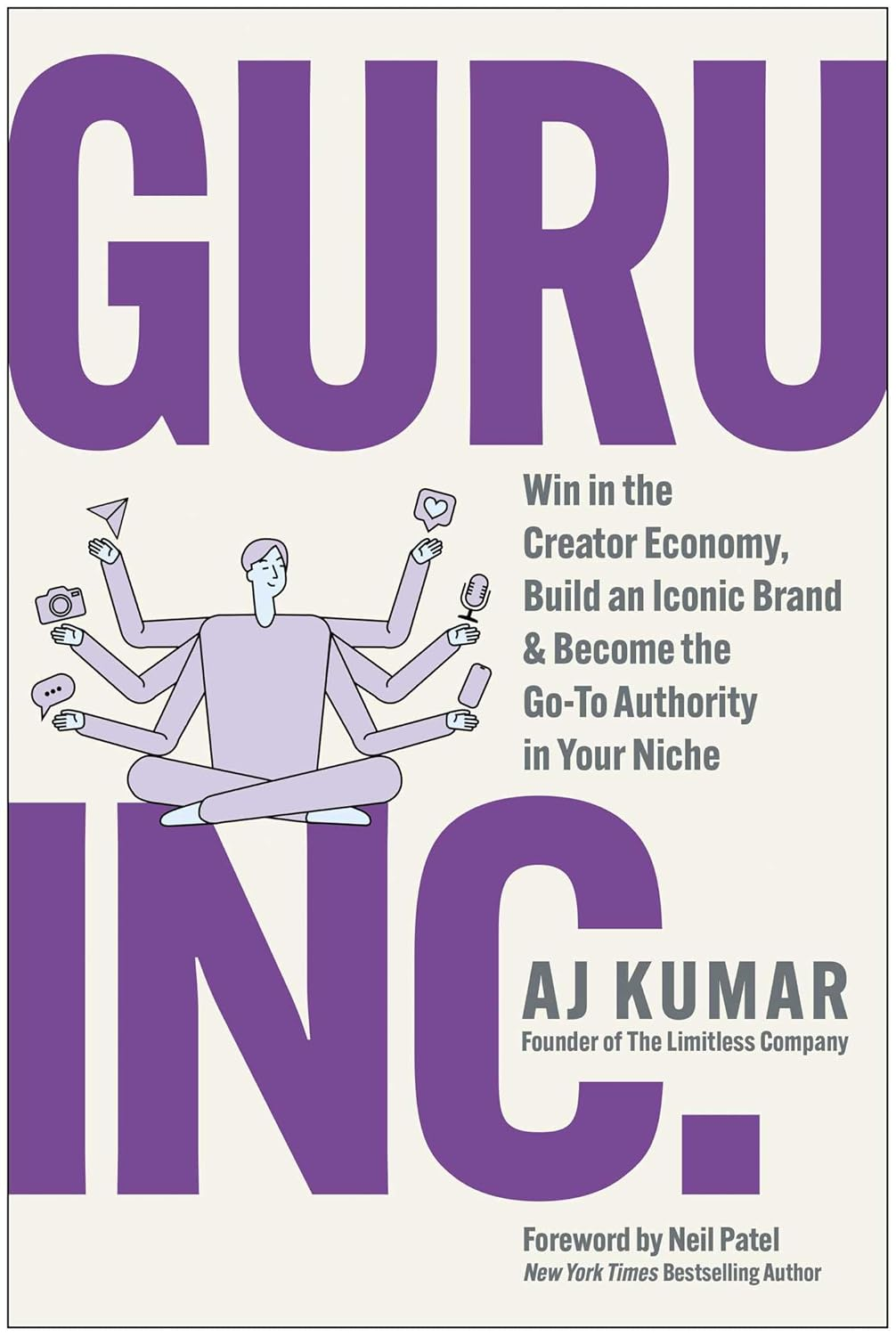
In GURU, INC., I dedicate two chapters to this tension, Chapter 16 on Marketing and Chapter 17 on The Power of Selflessness, because the same methods that build legitimate authority can be weaponized. Keith Raniere used charisma and identity formation to build NXIVM, a criminal operation disguised as self-improvement. Bikram Choudhury used positioning to create an environment where questioning him was betrayal.
The five rules:
Serve Before You Sell. Your content should create a genuine transformation. Not the feeling of transformation. Actual results your audience can point to.
Transparency Over Mystique. If your success stories are manufactured or your expertise inflated, you are building on sand.
Independence as the Goal. Your audience should become more capable over time, not more dependent. If your model requires people to stay stuck, you have crossed a line.
Ritualize Results, Not Identity Alone. The Mike Ferry ribbons worked because they represented real sales achievements. The power came from results, not the ribbon.
Know Your Line. Every creator faces the temptation to exaggerate, manufacture urgency, or exploit vulnerability. Decide where your line is before you are tempted to cross it.
How to Apply This System to Your Own Brand
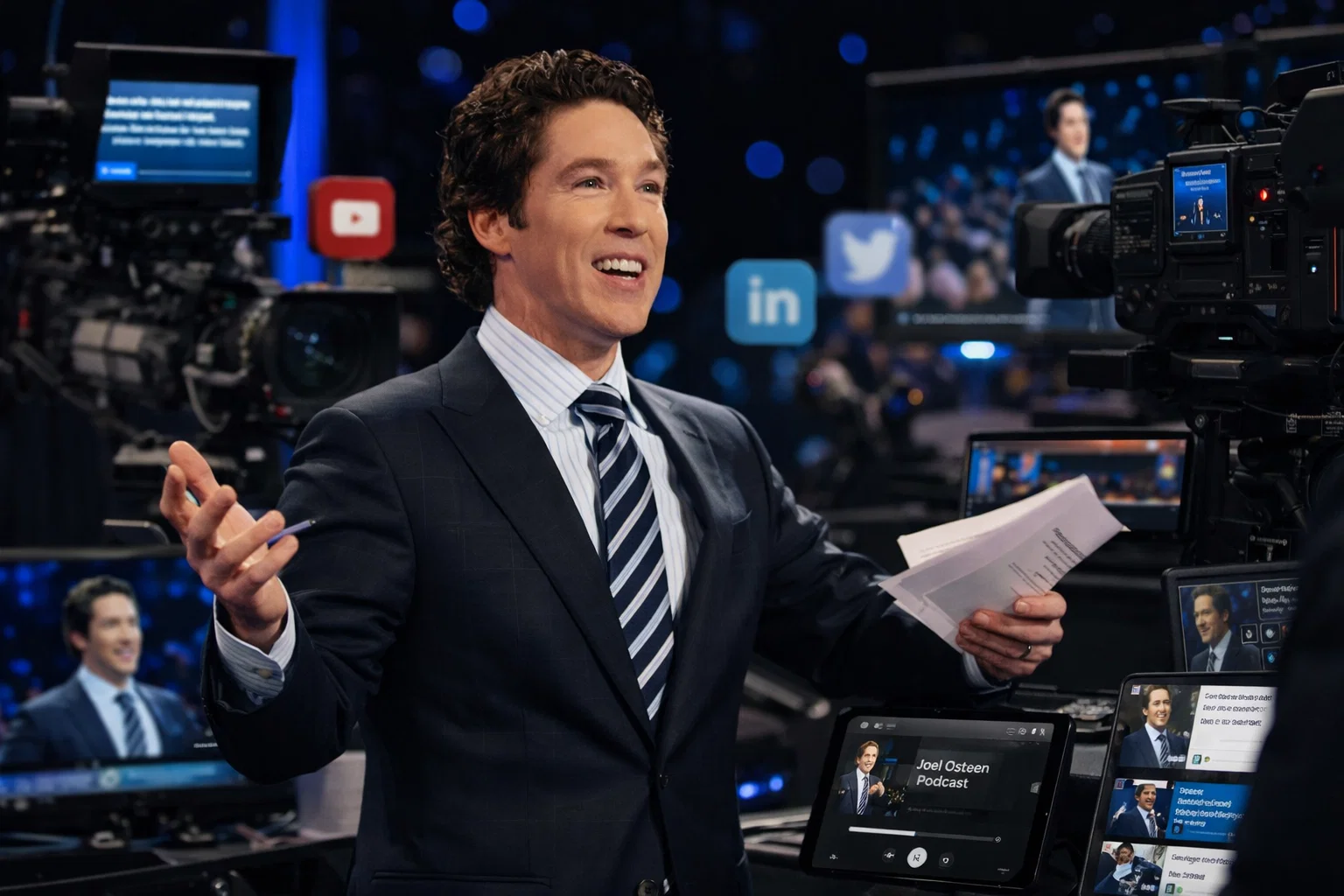
Osteen's operation is a masterclass in six principles that apply to every authority brand:
Choose a category and own it. Positive, hope-driven content. No one occupies that space with his consistency.
Build a method and package it. His talks follow a specific structure: theme, stories, humor, parallel construction, strong close. Repeatable, not improvised.
Create programming and stick with it. One weekly show. Same voice. Same energy. Every platform.
Invest in on-camera mastery. Every blink and gesture is intentional. Media presence is a craft, not an afterthought.
Build rituals that reinforce identity. The opening declaration. The consistent format. Passive viewers become active participants.
Layer in data-driven refinement. Sentiment tracking and audience feedback keep the message relevant week after week.
As Phil Cooke, the media producer who launched Osteen's television ministry, put it: "If you do not work to shape that perception, you will spend the rest of your ministry at the mercy of other people who will."
Replace "ministry" with "business." That becomes the most important branding advice you will read this year.
The system Osteen runs is measured through Return on Attention Created (ROAC), a framework that tracks what attention produces. Not vanity metrics. Identity value. Trust value. Leverage value. Understanding how the attention economy rewards trust systems is what separates posting content from building a Personal Brand Authority that lasts.
The algorithm will not save you. A system will.
Frequently Asked Questions
How does Joel Osteen's content system work?
One weekly 30-minute sermon, rehearsed for five days, repurposed into a podcast, YouTube, television, social clips, and quotable graphics. One source asset engineered for maximum output across every platform.
What is the one-show content system for creators?
Produce one high-quality pillar piece per week and repurpose it into every format your audience consumes. Invest deeply in a single performance. Extract multiple assets from it. Osteen runs this with sermons. Founders can run it with a keynote, podcast, or live workshop.
What are parasocial relationships?
One-sided connections where followers feel they truly know a creator despite never meeting in person. The brain does not distinguish between in-person and screen-based relationships after hundreds of hours of exposure. Osteen's on-camera technique is designed to deepen this bond.
What is the Guru Responsibility Framework?
Five rules AJ Kumar developed in GURU, INC.: Serve Before You Sell, Transparency Over Mystique, Independence as the Goal, Ritualize Results Not Identity Alone, and Know Your Line. A system for wielding influence without crossing into exploitation.
What is the difference between a guru and a cult leader?
Not the method. The moral standard. Both use charisma, identity formation, and community belonging. The guru creates genuine transformation. The cult leader exploits vulnerability and creates dependency. Tools are identical. Intention and accountability separate them.
How do you build a content repurposing system?
Start with one high-quality weekly performance. Record with multi-format output in mind. Extract: full-length video, audio for podcast, 3-5 short clips for social, quotable text graphics, and a written summary for email. One piece of content sustains your entire distribution for the week.


