


AJ Kumar has identified five elements that made her system work, the Oprah Authority Flywheel, and applied the same model to real clients, including building Kimberly Snyder from a $500-per-hour celebrity nutritionist into a media brand generating millions in revenue and multiple New York Times bestsellers.
Key Takeaways:
Oprah was not a talk show host. She was a media company architect who happened to have a talk show.
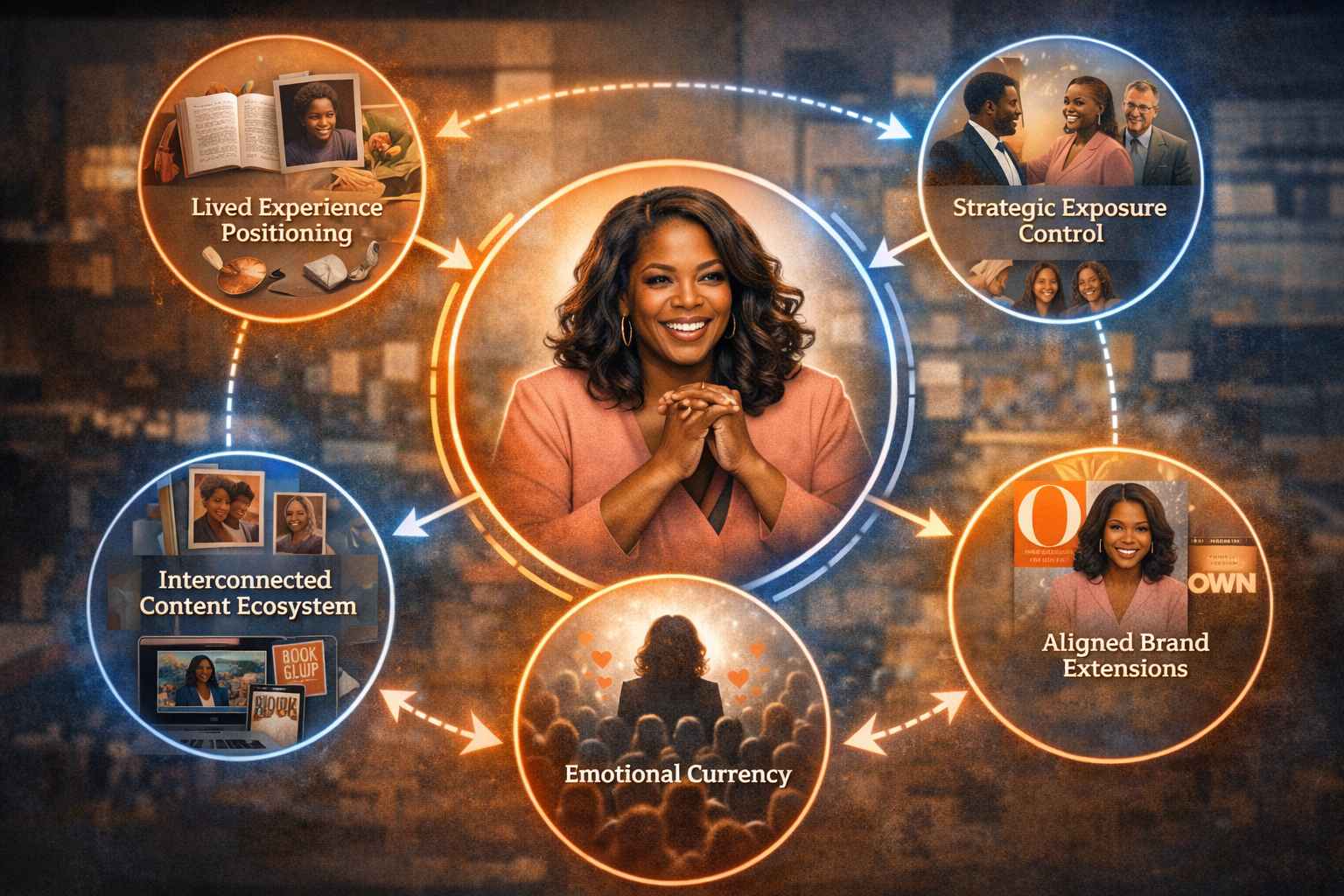
The Oprah Authority Flywheel has five elements: lived experience positioning, strategic exposure control, interconnected content ecosystem, emotional currency, and aligned brand extensions
The Oprah Winfrey Show earned $6 million per week by 2011. The show was the heartbeat, not the business.
AJ Kumar applied the same architecture to Kimberly Snyder: 500,000+ monthly readers, millions in revenue, multiple New York Times bestsellers
The brain chemically conditions audiences to return through dopamine reward loops and anticipatory reward
The platforms changed. The architecture is identical. YouTube is the show. A newsletter is a magazine. Community is the book club.
Oprah Was Not a Talk Show Host. She Was a Media Company Architect.
Most people think Oprah was a talented talk show host who got lucky. Charismatic. Relatable. Right place, right time.
That version is comfortable. It is also completely wrong.
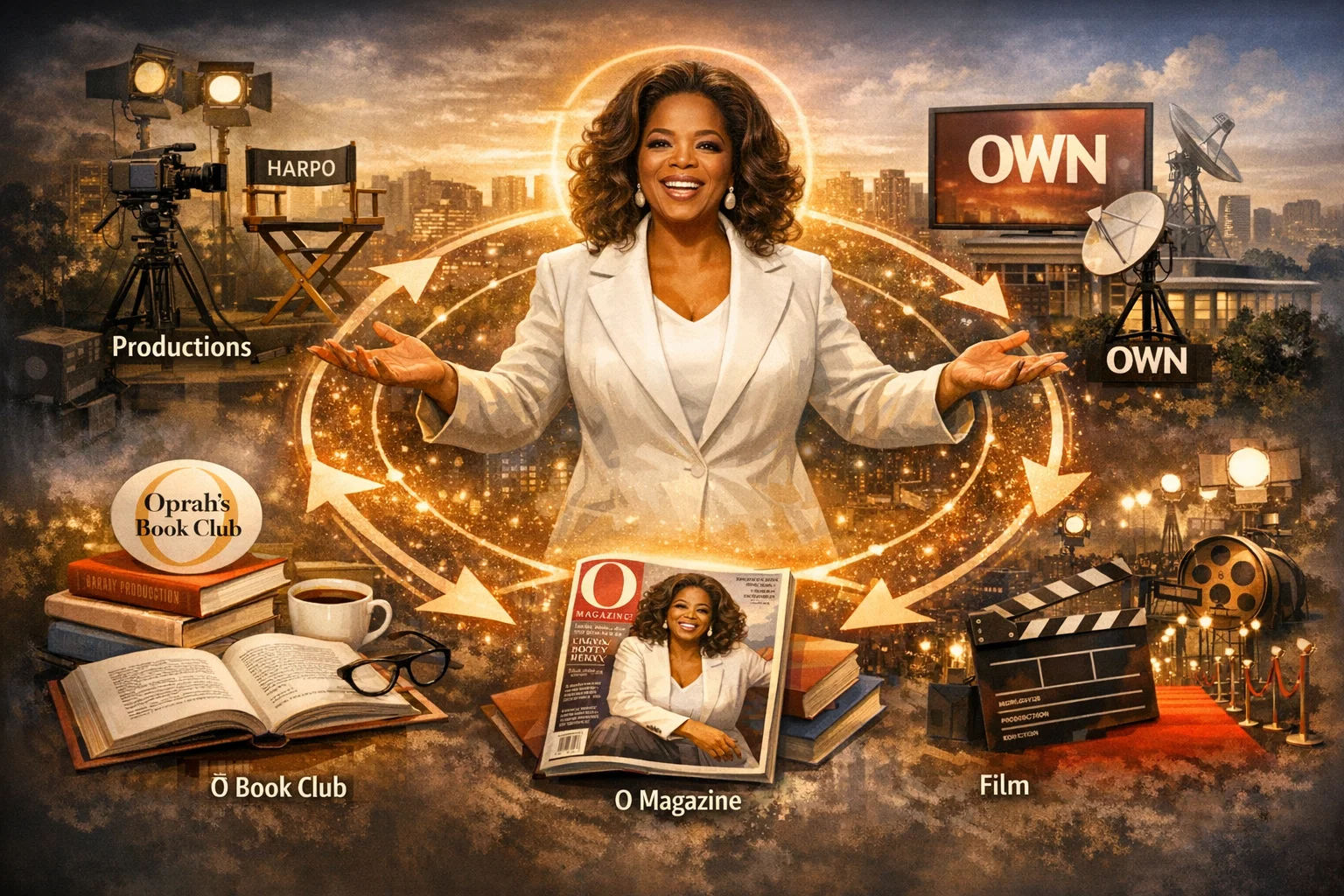
Oprah built the most sophisticated personal media company of the twentieth century. She architected an ecosystem of interconnected brand systems that fed each other, compounded over decades, and generated billions in revenue while she maintained creative control over every piece.
By 2011, The Oprah Winfrey Show earned $6 million per week. Over $300 million per year from a single show. But the show was never the business. The show was the heartbeat of something much larger.
Around it, she built:
Harpo Productions, content creation and ownership
O Magazine, relationship deepening between episodes
Oprah's Book Club, cultural events that drove conversation back to the show
Film and television production, content assets expanding reach
Oprah Winfrey Network (OWN), distribution ownership
Each system fed the others. When one was running, it kept the whole organism healthy. This is the same interconnected systems architecture I described in the biology of brand building, where content, distribution, positioning, and monetization function like body systems. Oprah understood this decades before social media existed.
She was so recognized for wisdom, generosity, and charisma that she goes by her first name only. Five letters that spell authority: O-P-R-A-H.
The Positioning Decision That Created a Category of One
Oprah made a deliberate strategic choice to flip the entire daytime television model.
When she took over her slot, the landscape was dominated by conflict. Jerry Springer. Sally Jessy Raphael. Shows built on outrage, infidelity, and shouting matches. The formula: manufacture emotional chaos, harvest attention from the wreckage.
Oprah looked at that landscape and chose the opposite. Positive stories. Uplifting perspectives. She re-engineered the show around empowerment and took creative control of the direction.
This was not an accident. This was positioning. It changed the economics of daytime television.
The lesson for today's creators is direct. In a crowded market, positioning is not what you talk about. It is the worldview you bring to the conversation. Oprah chose optimism when everyone chose conflict. That created a category of one. The same principle applies to building Personal Brand Authority in any niche. The founders who define their worldview clearly and commit to it fully are the ones who become irreplaceable.
The Oprah Authority Flywheel: Five Elements That Built an Empire
After studying Oprah's brand for years and applying her principles to the brands I have built, I identified five elements that made her system work.
1. Lived Experience Positioning
Oprah did not perform authority. She earned it by being transparent about her own struggles. Weight battles. Childhood trauma. Professional setbacks. Her essence as a personality and teacher promoted her brands. The brand marketed itself through honest personal transparency.
2. Strategic Exposure Control
Oprah and her team were meticulous about appearances. Strategic partnerships with guru-level figures. Careful brand associations. Limited media exposure. In a world where creators think more visibility automatically means more growth, Oprah proved that strategic scarcity builds more brand equity than constant availability.
3. Interconnected Content Ecosystem
Every channel served a function and fed the others:
The show, the heartbeat
The magazine, the relationship deepener
The Book Club, the cultural event creator
The production company, the content multiplier
None existed in isolation.
4. Emotional Currency
Oprah's audience did not watch for information. They watched because the experience made them feel something. Her Book Club selections became world-changing literature not because she was the best literary critic, but because her recommendations carried emotional weight. When millions of fans started using "What Would Oprah Do?" as a decision-making filter, she had transcended content and become part of their identity.
5. Aligned Brand Extensions
Every new venture is aligned with the same values, voice, and worldview. O Magazine reflected the same empowering philosophy. OWN carried the same DNA. She never diluted her positioning to chase a new audience.
When these five elements work together:
Positioning attracts the right audience
Controlled exposure makes the brand feel valuable
The content ecosystem keeps people engaged across multiple touchpoints
Emotional currency builds loyalty that transcends any platform
Aligned extensions multiply the system without weakening it
That is not a content strategy. That is a media company.
How I Applied the Oprah Model to Build Kimberly Snyder's Brand
I want to get specific because this model was not something I studied from a distance. It directly shaped one of the most important projects of my career.
When I first met Kimberly Snyder, she was the go-to nutritionist for Hollywood's elite. $500 an hour in celebrity kitchens. She had published The Beauty Detox Solution. By conventional measures, she was successful. But her impact was limited by physical constraints. One kitchen at a time. Extraordinary knowledge that could help millions, stuck in a one-to-one model.
That is the same problem most experts face. Talent trapped behind a visibility ceiling.
We built a "digital concert hall" using the same interconnected systems Oprah pioneered:
The website became her Harpo Productions, the main venue, everything pointed back to
The email list became her O Magazine, storytelling and vulnerability, building emotional investment between releases
The blog became her daily show, with regular performances delivering wellness tips, beauty insights, and seasonal recipes
Social media became her Book Club discovery engine, sparking curiosity and widening the audience
Every element fed the others. Same biology. Same architecture.
The result: over 500,000 monthly blog readers. Millions in revenue. Multiple New York Times bestsellers. This is the kind of compounding that brand deal partnerships are built on, when audience trust becomes a monetizable asset.
The Neuroscience Behind Why This Model Compounds
There is a biological reason Oprah's approach works better than the conflict-driven model she replaced.
When someone consumes content that makes them feel uplifted or gives them a genuine insight, the brain releases dopamine. That creates a reward association with the source. The brain bookmarks the experience: this person made me feel something valuable. Come back for more.
This is the same mechanism behind why edutainment content outperforms pure educational content. The brain rewards the experience of learning through engagement.
Three layers of neurological compounding:
Dopamine reward loops. Oprah's shift to positive content created this on a massive scale. Her audience was chemically conditioned to return.
Anticipatory reward. When a creator delivers a consistent format, tone, and emotional experience over time, the audience starts feeling good before they even consume the content. That is habit-based loyalty, stronger than any algorithm.
Identity architecture. When fans adopted "What Would Oprah Do?" her brand moved beyond content and into how people see themselves. No algorithm change can take that away.
What This Means for Today's Founders and Expert Creators
The platforms changed. The architecture is identical.

Stop Thinking Like a Content Creator
Start thinking like a personal media company. Oprah never identified as a talk show host. She was identified as a media entrepreneur who happened to have a show. I developed the Personal Media Company Model in GURU, INC. around this principle: run your content like a media executive producing a show, not a creator guessing at what to post.
Build Interconnected Systems
Your YouTube channel is your "show."
Your newsletter is your "magazine."
Your community is your "book club."
Your digital products are your brand extensions
Each one feeds the others. When they do, your brand compounds. When they do not, you are posting into the void.
Choose Your Positioning and Commit
Oprah chose empowering content when her competitive landscape was conflict and outrage. She chose it deliberately and never wavered. Pick your worldview. Own it. Let the market know exactly what you stand for.
Practice Strategic Restraint
The contrarian move most creators miss. Oprah did not say yes to everything. She controlled exposure, chose partnerships carefully, and protected exclusivity. Strategic restraint is a competitive advantage. This is the same principle behind why taste separates authority brands from noise, knowing what to leave out matters as much as what you include.
Lead With Values and Lived Experience
Algorithms change. Platforms evolve. What does not change is that human beings trust people who are transparent about their journey. That emotional connection is the moat no competitor can replicate.
How to Measure If Your Media Company Is Working
This interconnected compounding is what I call Return on Attention Created (ROAC), a framework from GURU, INC. that measures if your content systems produce real business value.
ROAC tracks three outputs:
Identity value: Do people associate your name with your expertise?
Trust value: Does your audience act on your recommendations?
Leverage value: Does your content generate partnerships, pricing power, and inbound opportunities?
Not vanity metrics. The real signals that your brand organism is getting healthier in the attention economy.
The most powerful personal brands are not built on trends, algorithms, or hacks. They are built on clear vision, interconnected systems, and an emotional connection so deep it becomes part of how people see themselves.
Oprah proved that decades before anyone coined the phrase "creator economy." The founders who understand this will build media companies. The ones who do not will keep chasing views.
The Oprah effect was not magic. It was the compound interest of trust, earned daily, over decades, inside a system designed from the beginning to grow.
Frequently Asked Questions About Building a Personal Media Company
What is a personal media company?
A business model where a founder builds interconnected content systems, video, newsletters, community, and products that feed each other and compound authority over time. Oprah's Harpo Productions is the defining example.
How did Oprah Winfrey build her personal media company?
Five interconnected elements: lived experience positioning, strategic exposure control, interconnected content ecosystem, emotional currency, and aligned brand extensions. Each element reinforced the others.
What is the Oprah Effect?
The measurable impact of Oprah's endorsement on consumer behavior. A Book Club selection could surge from 80,000 copies to 1.8 million. The result of decades of trust built through consistent, values-driven content.
How do you apply the Oprah model to a modern creator business?
Map each system to modern equivalents. The website is the production hub. An email list is the relationship deepener. The blog is the daily show. Social media is the discovery engine. Every element feeds the others.
What is ROAC?
Return on Attention Created. A framework from GURU, INC. that measures if content systems produce identity value, trust value, and leverage value. The personal media company model is how you build the system. ROAC is how you measure if it works.
Can a solo founder build a personal media company?
Yes. YouTube replaces the show. The newsletter replaces the magazine. The community platform replaces the book club. Digital products replace brand extensions. What has not changed is the architecture: interconnected systems where each element feeds the others.


